
Many leaders assume decline is inevitable after 40, but targeted strategies can sustain peak performance for decades. Chronic stress, cognitive shifts, and cardiovascular risks threaten executive resilience, yet evidence-based approaches to exercise, nutrition, sleep, and stress management can counteract these forces. This guide unpacks practical, research-backed longevity tactics tailored for busy professionals who demand sustained edge and consistency in high-pressure roles.
Table of Contents
- Key Takeaways
- Understanding longevity challenges for leaders
- Evidence-based longevity frameworks: exercise, nutrition, and sleep
- Balancing cutting-edge biohacking with practical leadership routines
- Stress management and emotional resilience for longevity
- Enhance your longevity journey with VIRIDOS
- FAQ
Key Takeaways
| Point | Details |
|---|---|
| Integrated longevity plan | Combining exercise, nutrition, sleep, and stress management creates a practical plan for sustained leadership performance. |
| Biometrics guide plan | Tracking baseline diagnostics and biometrics helps tailor interventions to each leader's risk profile and goals. |
| Stress management matters | Chronic stress accelerates aging and cardiovascular risk, so deliberate stress reduction is essential for resilience. |
| Short daily habits | 15 to 30 minute daily habits can be stacked into existing routines to support longevity without sacrificing leadership responsibilities. |
| Social connection boost | Engaging social connections supports emotional health and longevity in high pressure roles. |
Understanding longevity challenges for leaders
Chronic stress experienced by leaders elevates cortisol levels, accelerating aging by shortening telomeres and increasing CVD risk comparable to hypertension. Executives often face low control and high demands, which biological stress research shows directly impacts cellular aging mechanisms. Elevated stress correlates with metabolic syndrome, creating a cascade of cardiovascular disease risks that compound over time.
Cognitive decline can begin subtly after 40, emphasizing the need for proactive monitoring and intervention. Processing speed, working memory, and executive function show measurable changes even in high-performing leaders who appear outwardly sharp. Understanding these factors clarifies why targeted longevity strategies are not optional but necessary for sustained leadership effectiveness.
Key aging challenges include:
- Telomere shortening from sustained cortisol elevation
- Metabolic syndrome risk driven by chronic stress patterns
- Subtle cognitive shifts in processing speed and memory
- Cardiovascular disease progression accelerated by inflammation
- Muscle mass loss beginning in the fourth decade
"The biological impact of chronic stress in executive roles mirrors the physiological damage of clinical hypertension, yet leaders rarely receive comparable medical attention for stress management."
These interconnected factors create a vulnerability cycle where stress drives inflammation, inflammation accelerates cellular aging, and aging reduces stress resilience. Breaking this cycle requires deliberate intervention across multiple domains simultaneously.
Evidence-based longevity frameworks: exercise, nutrition, and sleep
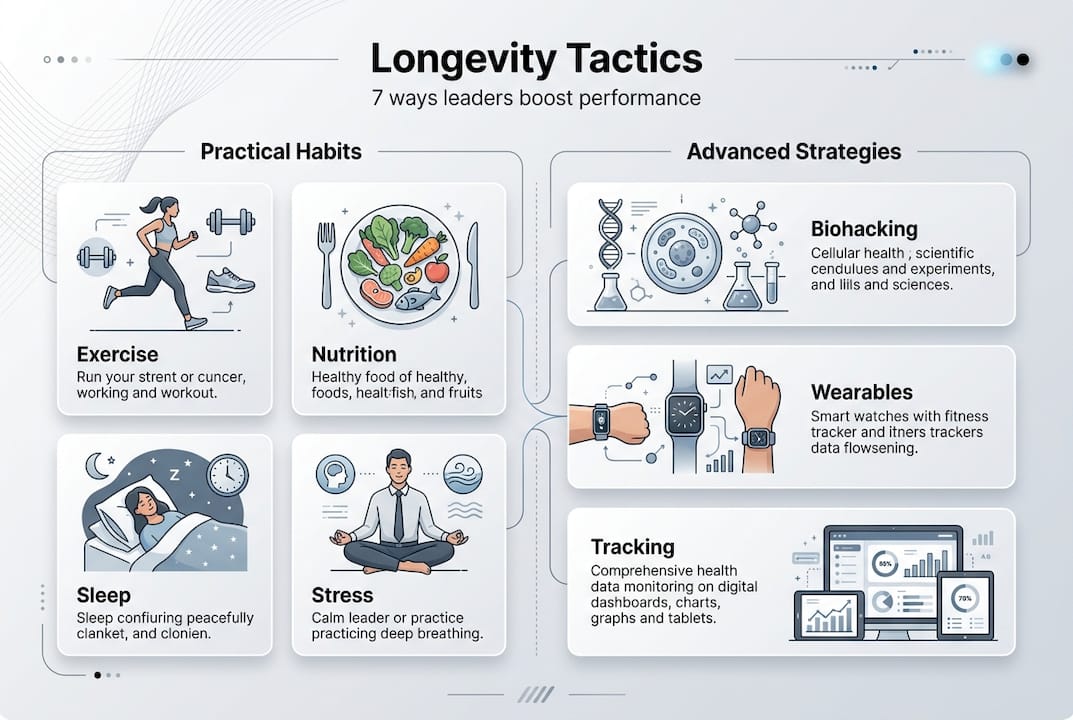
Peter Attia's framework emphasizes exercise pillars including Zone 2 cardio for endurance, strength training for muscle mass preservation, and anaerobic intervals for VO2 max improvement. Zone 2 cardio trains the aerobic system at an intensity where you can sustain conversation but feel challenged, typically 60-70% of maximum heart rate. This builds mitochondrial density and metabolic flexibility critical for sustained energy in long leadership days.
Strength training counteracts sarcopenia, the age-related muscle loss that begins around 40 and accelerates without intervention. Maintaining muscle mass supports metabolic health, insulin sensitivity, and physical resilience under stress. Anaerobic capacity work through high-intensity intervals preserves the ability to respond to acute demands, both physical and cognitive.
Protein intake at 1.6-2.2 grams per kilogram of body weight supports muscle maintenance and metabolism stability. For a 90 kg executive, this translates to 144-198 grams daily, distributed across meals to optimize muscle protein synthesis. Quality matters: prioritize complete proteins from fish, poultry, eggs, and plant combinations that provide essential amino acids.
Sleep optimization strategies enhance recovery, cognitive function, and emotional health critical for decision-making. Consistent sleep-wake times regulate circadian rhythms, while environmental controls like temperature, darkness, and noise reduction improve sleep architecture. Leaders often sacrifice sleep for productivity, yet research shows cognitive performance degrades significantly below seven hours nightly.

| Exercise Type | Primary Benefit | Frequency | Intensity |
|---|---|---|---|
| Zone 2 Cardio | Aerobic capacity, metabolic health | 3-4x weekly | 60-70% max heart rate, 45-60 min |
| Strength Training | Muscle mass, bone density, metabolism | 2-3x weekly | Progressive overload, compound movements |
| Anaerobic Intervals | VO2 max, peak power, stress response | 1-2x weekly | 90-100% max effort, 4-8 intervals |
| Flexibility/Mobility | Injury prevention, movement quality | Daily | Gentle, 10-15 min |
Pro Tip: Stack these habits into existing routines by scheduling Zone 2 cardio during morning calls via walking meetings, strength training during lunch blocks, and sleep optimization by setting a consistent evening alarm for wind-down rituals.
Leaders can track progress and tailor programs using biometric journals and wearable tech. A performance journal centralizes exercise data, sleep metrics, and subjective energy ratings to identify patterns and optimize interventions. This data-driven approach transforms vague wellness goals into measurable performance outcomes.
Balancing cutting-edge biohacking with practical leadership routines
Extreme biohacking involves high-cost, experimental interventions requiring constant monitoring and dedicated time resources. Bryan Johnson's protocol exemplifies this approach with dozens of daily supplements, frequent medical testing, and regimented schedules that demand full-time commitment. While generating compelling data, this model proves impractical for leaders managing teams, travel, and unpredictable demands.
Practical frameworks prioritize proven exercise types, nutrition, and manageable habits suited for busy leader schedules. The Attia model focuses on interventions with robust evidence and scalable implementation, emphasizing consistency over complexity. This approach recognizes that adherence drives outcomes more than theoretical optimization.
| Approach | Cost | Complexity | Evidence Level | Time Commitment |
|---|---|---|---|---|
| Extreme Biohacking | $100k+ annually | Very high, requires dedicated staff | Mixed, many experimental | 20+ hours weekly |
| Practical Framework | $2-5k annually | Moderate, self-managed | Strong, peer-reviewed | 5-7 hours weekly |
Pro Tip: Start with the practical framework's core pillars for 90 days before considering advanced interventions. Most leaders discover that consistent execution of evidence-based basics delivers 80% of potential benefits at 5% of the cost and complexity.
Consistency with practical strategies often yields sustainable benefits over flashy, unproven methods. Leaders who master Zone 2 cardio, adequate protein, and sleep hygiene build resilient foundations that compound over decades. Experimental protocols may offer marginal gains but introduce failure points through complexity and resource demands that conflict with leadership responsibilities.
Practical lifestyle changes can be initiated at any age and adapted as leadership demands evolve. A 50-year-old executive can begin strength training safely with proper progression, while a 60-year-old can improve VO2 max through structured interval work. The key lies in meeting current capacity and building gradually rather than pursuing aggressive protocols designed for younger, less time-constrained individuals.
Stress management and emotional resilience for longevity
Chronic psychological stress elevates inflammation and cortisol, advancing biological aging and raising disease risk. Suppressed emotional distress in high-pressure roles accelerates this process by preventing natural stress recovery cycles. Leaders often pride themselves on composure under pressure, yet this suppression creates physiological debt that manifests as accelerated aging.
Social connection and emotional expression counteract the effects of suppressed distress in demanding roles. Meaningful relationships provide psychological buffer against chronic stress while facilitating emotional processing that reduces cortisol burden. Leaders who prioritize social time experience measurably better health outcomes than isolated high achievers.
Practical stress reduction techniques:
- Mindfulness meditation targeting 10-20 minutes daily
- Box breathing exercises during transitions between meetings
- Scheduled breaks enforcing genuine disconnection from work
- Prioritizing weekly social activities unrelated to professional networking
- Physical activity as dual-purpose stress relief and exercise
Daily habits to integrate mental resilience practices:
- Morning routine with 15 minutes of breathwork or meditation before checking devices
- Midday walk combining Zone 2 cardio with mental reset
- Evening journaling to process daily stressors and identify patterns
- Weekly social commitment scheduled as non-negotiable calendar block
- Monthly review of stress metrics and adjustment of management strategies
"Chronic stress operates as a primary driver of accelerated biological aging in executives, yet receives far less clinical attention than traditional cardiovascular risk factors despite comparable health impact."
Using a performance tracking journal to monitor stress patterns supports better emotional regulation and longevity. Recording subjective stress levels alongside objective biometrics reveals correlations between specific stressors and physiological responses. This awareness enables targeted interventions rather than generic stress management advice.
Leaders who treat stress management as seriously as financial planning or strategic execution gain measurable advantages in sustained performance. The 15-30 minutes invested daily in deliberate stress reduction practices yields returns through improved decision-making, enhanced resilience, and reduced long-term health risks that threaten leadership longevity.
Enhance your longevity journey with VIRIDOS
Sustaining the strategies outlined requires systems that support consistent execution amid leadership demands. VIRIDOS offers a performance journal designed specifically for executives tracking biomarkers, exercise protocols, sleep quality, and stress patterns in one centralized tool. This integration transforms scattered data points into actionable insights that guide optimization decisions.
Tracking progress with VIRIDOS supports sustained motivation and data-driven adjustments to your longevity plan. The journal format encourages daily engagement while quarterly reviews reveal trends invisible in day-to-day execution. Leaders using systematic tracking report higher adherence rates and faster identification of interventions that move key metrics.
Explore the VIRIDOS homepage for additional resources designed to enhance executive health and resilience. The platform combines Swedish precision with practical frameworks tailored for high-agency professionals who demand measurable results from their health investments.
FAQ
What are the most effective longevity strategies for busy leaders?
Focus on consistent moderate exercise combining Zone 2 cardio and strength training, high-quality nutrition emphasizing adequate protein, sleep optimization with consistent schedules, and daily stress management techniques lasting 15-30 minutes. Integrate tracking tools to personalize and sustain these habits without overwhelming your schedule. These core pillars deliver the majority of longevity benefits when executed consistently.
How can executives monitor their health effectively for longevity?
Regular baseline diagnostics including cardiovascular markers, metabolic panels, and cognitive assessments establish benchmarks for tracking progress. Continuous biometrics via wearable tech capture daily patterns in heart rate variability, sleep architecture, and activity levels. Using a dedicated performance tracking journal centralizes these insights and guides adjustments based on trends rather than isolated data points.
Is it too late to start longevity strategies after 50?
It's never too late to adopt effective longevity strategies as expert frameworks emphasize meaningful benefits from starting at any age. Even small, regular habits produce measurable improvements in cardiovascular health, muscle mass, and cognitive function within months. Leaders beginning strength training at 55 can reverse years of sarcopenia, while those starting Zone 2 cardio at 60 improve metabolic flexibility significantly.
What role does stress play in aging among leaders?
Chronic stress accelerates biological aging by raising cortisol and causing inflammation, increasing cardiovascular risks comparable to clinical hypertension. This process shortens telomeres and disrupts cellular repair mechanisms critical for maintaining cognitive and physical performance. Managing stress through deliberate daily practices is essential to prolonging high-level executive function and preventing premature health decline.