
Most high-performing executives believe their physical and cognitive edge will persist naturally through their 40s and beyond. The reality is starkly different. Peak performance declines starting before age 40, with the average person losing approximately 37% of capacity by age 63. For men leading demanding organizations, these losses accelerate faster due to chronic stress and workload intensity. Yet research shows active optimization can preserve up to 80% of peak aerobic capacity, far exceeding typical decline trajectories. This guide reveals why performance longevity matters for sustained executive success and provides evidence-based strategies to extend your productive peak years.
Table of Contents
- Key Takeaways
- Understanding the natural decline of performance with age
- How targeted optimization slows decline and extends peak performance
- The crucial role of stress management in long-term vitality
- Balancing lifespan extension and quality of life: insights on morbidity compression
- Extend your peak performance with VIRIDOS
- FAQ
Key Takeaways
| Point | Details |
|---|---|
| Early decline begins | Peak physical and cognitive performance start to decline before age 40 and continue to drop with age. |
| Optimization preserves capacity | Active strategies can preserve up to 80 percent of peak aerobic capacity, significantly extending productive years. |
| Stress drives decline | Chronic stress accelerates aging more than diet or exercise, underscoring the need for stress management. |
| Integrated optimization plan | A combined approach of heavy resistance training, proper protein intake, quality sleep, and biomarker tracking yields the strongest preservation of function. |
Understanding the natural decline of performance with age
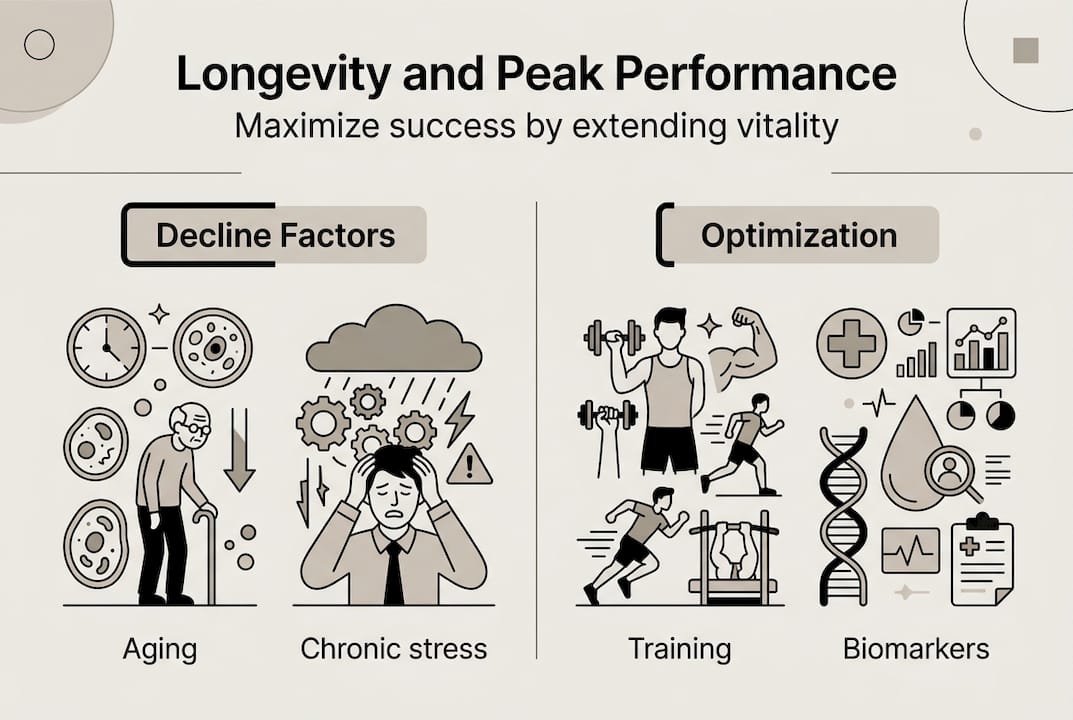
The human body reaches peak physical and cognitive performance in the late 30s, then begins a measurable descent that continues throughout life. This decline affects every system: cardiovascular capacity drops, muscle mass decreases, metabolic rate slows, and cognitive processing speed diminishes. For the general population, these losses accumulate to roughly 37% reduction in overall capacity by age 63.
What makes this trajectory particularly relevant for executives is the rate of decline. While sedentary individuals experience steep drops, elite athletes and highly active professionals retain significantly more capacity at equivalent ages. This difference highlights a crucial truth: decline is not fixed or inevitable at any specific rate. Your lifestyle choices, training protocols, and recovery practices directly influence how much function you preserve.
Key decline markers by system:
- VO2max decreases approximately 10% per decade after age 30 without intervention
- Testosterone levels drop 1-2% annually starting around age 40
- Muscle mass loss accelerates to 3-8% per decade after 30
- Cognitive processing speed declines measurably by age 45
- Recovery time from physical and mental stress lengthens progressively
The compounding effect of these changes creates substantial performance gaps over time. An executive who maintains 80% of peak capacity at 55 possesses dramatically more energy, focus, and physical resilience than one operating at 65% capacity. This difference translates directly to decision quality, stamina during long work periods, and ability to handle high-stress situations.
"The gap between optimized and unoptimized aging grows exponentially after 40. Small consistent interventions compound into massive performance advantages over decades."
Cognitive decline parallels physical losses, with working memory, processing speed, and executive function all showing measurable decreases. For professionals whose value derives from sharp thinking and rapid decision making, these cognitive changes pose serious threats to sustained high performance. Chronic stress and insufficient recovery accelerate both physical and mental decline, creating a vicious cycle where reduced capacity leads to longer work hours, which further degrades performance and physical longevity.
How targeted optimization slows decline and extends peak performance
While natural aging creates downward pressure on all systems, strategic interventions can dramatically flatten the decline curve. The most effective protocols combine resistance training, optimized nutrition, sleep quality, biomarker tracking, and stress management into an integrated system. Each element reinforces the others, creating compound benefits that preserve function far beyond typical trajectories.
Heavy resistance training stands as the single most powerful intervention for maintaining physical capacity. Training 3-4 times weekly preserves muscle within 5-10% of your 35-year-old baseline, even into your 60s. This preservation extends beyond aesthetics to metabolic health, bone density, insulin sensitivity, and functional strength for daily activities. The key is progressive overload using compound movements like squats, deadlifts, and presses that engage multiple muscle groups.

Protein intake becomes increasingly critical with age as muscle protein synthesis efficiency declines. Consuming 1.6-2g per kilogram of body weight daily provides the raw materials needed for muscle repair and growth. For a 90kg executive, this translates to 144-180g of protein spread across meals throughout the day. Timing matters: consuming 30-40g of high-quality protein within 2 hours post-workout maximizes recovery and adaptation.
Core optimization pillars:
- Heavy resistance training 3-4x weekly with progressive overload
- Protein intake 1.6-2g per kg body weight distributed across meals
- Sleep optimization targeting 7-9 hours with consistent timing
- Regular biomarker monitoring including VO2max, testosterone, and inflammation markers
- Structured stress management practices integrated into daily routine
Biomarker tracking transforms optimization from guesswork into precision. Monitoring VO2max reveals cardiovascular fitness trends, testosterone levels indicate hormonal health, and inflammatory markers like CRP show systemic stress. These objective measures guide protocol adjustments and reveal which interventions deliver results for your specific physiology. The use of health data to maintain performance enables personalized optimization rather than generic advice.
Sleep quality directly impacts recovery, cognitive function, and hormonal balance. Executives often sacrifice sleep for productivity, not recognizing that poor sleep undermines the very performance they seek to maximize. Prioritizing 7-9 hours of consistent, high-quality sleep supports muscle recovery, memory consolidation, and metabolic health. Creating a sleep-optimized environment with darkness, cool temperatures, and minimal disruption compounds benefits over time.
Pro Tip: Track your morning resting heart rate and heart rate variability as simple indicators of recovery status. Elevated morning heart rate or reduced HRV signals incomplete recovery, suggesting you need additional rest or stress reduction before intense training.
For some men, testosterone replacement therapy offers an additional optimization tool when natural levels decline below functional ranges. This medical intervention requires careful physician guidance and regular monitoring but can restore energy, muscle mass, and cognitive sharpness when implemented properly. It represents one option within a broader optimization framework, not a standalone solution.
The crucial role of stress management in long-term vitality
Chronic stress accelerates aging more aggressively than poor diet or insufficient exercise. When stress triggers sympathetic dominance, your body remains in fight-or-flight mode, promoting inflammation and suppressing immune function. For executives facing constant decision pressure, tight deadlines, and high-stakes outcomes, this chronic activation creates a biological environment hostile to longevity and performance preservation.
The physiological cost of unmanaged stress manifests across multiple systems simultaneously. Cortisol remains elevated, disrupting sleep quality and metabolic function. Inflammation increases systemically, damaging tissues and accelerating cellular aging. Immune function declines, making you more susceptible to illness and slower to recover. Cognitive performance suffers as chronic stress impairs working memory, decision quality, and emotional regulation.
Effective stress management techniques for executives:
- Daily mindfulness practice for 10-20 minutes to activate parasympathetic response
- Structured breathing exercises using 4-7-8 or box breathing patterns
- Strategic recovery periods integrated into work schedule, not added afterward
- Regular physical activity that provides psychological release beyond fitness benefits
- Clear boundaries between work and personal time to enable true mental recovery
The executive lifestyle creates unique stress challenges. Decision fatigue accumulates throughout the day as you make countless choices with significant consequences. Interpersonal demands drain mental resources as you navigate complex organizational dynamics. Time pressure creates constant urgency that keeps your nervous system activated. Without deliberate intervention, these stressors compound into chronic activation that undermines the very performance you need to sustain.
"Managing stress is not about eliminating pressure but building resilience through recovery practices that restore nervous system balance daily."
Integrating stress metrics into your health tracking enables early intervention before chronic patterns solidify. Heart rate variability provides a window into autonomic nervous system balance, revealing whether you are recovering adequately. Subjective measures like mood, energy levels, and sleep quality offer additional signals. When these indicators show degradation, you can adjust workload, increase recovery practices, or modify training intensity to prevent overreach.
Pro Tip: Schedule recovery as rigorously as you schedule meetings. Treating stress management as optional guarantees it will be deprioritized during busy periods when you need it most. Block time for breathing exercises, mindfulness, or light movement just as you would block time for strategic planning.
The relationship between stress management and longevity operates through multiple pathways. Reduced inflammation protects cardiovascular health and cognitive function. Better sleep quality enhances recovery and metabolic health. Improved immune function maintains resilience against illness. Enhanced decision quality under pressure preserves professional effectiveness. Tracking recovery and stress biomarkers makes these abstract benefits concrete and measurable.
Balancing lifespan extension and quality of life: insights on morbidity compression
Longevity science reveals a nuanced reality: extending lifespan does not automatically improve healthspan. Some interventions increase frailty duration without compressing the period of age-related illness and disability. This distinction matters enormously for executives whose value depends on sustained high function, not merely existing for additional years.
Morbidity compression refers to reducing the duration of illness and frailty at the end of life while maintaining vitality throughout the earlier years. The ideal trajectory keeps you highly functional into your 70s and beyond, then experiences a relatively brief decline before death. The problematic alternative extends total lifespan but increases years spent in diminished capacity, unable to work, travel, or enjoy activities that define quality of life.
| Approach | Lifespan impact | Healthspan impact | Frailty period |
|---|---|---|---|
| Optimized training and nutrition | Moderate increase | Significant increase | Compressed |
| Caloric restriction alone | Potential increase | Variable | May extend |
| Pharmaceutical interventions | Variable | Depends on compound | Often extended |
| Integrated lifestyle optimization | Moderate increase | Maximum preservation | Minimized |
The goal for high-performing men should be maximizing productive, energetic years rather than simply adding years to life. This requires monitoring vitality markers that predict functional capacity, not just disease absence. Can you still perform intense physical activity? Do you maintain cognitive sharpness and processing speed? Are you free from chronic pain and mobility limitations? These functional measures matter more than chronological age.
Key principles for healthspan optimization:
- Prioritize interventions that preserve muscle mass and cardiovascular capacity
- Monitor functional performance metrics, not just disease biomarkers
- Avoid extreme approaches that may extend frailty without improving vitality
- Focus on maintaining the capabilities that define your quality of life
- Integrate multiple optimization strategies rather than relying on single interventions
Some longevity interventions show promise in animal studies but lack human evidence for morbidity compression. Others extend lifespan in specific populations while potentially increasing frailty duration in others. This variability underscores the importance of personalized approaches guided by your own biomarker data and functional performance tracking.
The executive context makes healthspan optimization even more critical. Your professional value derives from sustained high performance, not merely being alive. Extending life while sacrificing the energy, cognition, and physical capacity needed for demanding work defeats the purpose. The interventions to maximize high-performance years should focus on preserving the specific capabilities your role requires.
Balancing these considerations requires ongoing assessment of your vitality trajectory. Are your optimization efforts maintaining functional capacity as you age? Do you retain the energy and cognitive sharpness needed for your professional demands? Can you still engage in the physical activities you enjoy? Regular evaluation of these questions ensures your longevity strategy delivers the outcomes that matter most.
Extend your peak performance with VIRIDOS
High-performing executives need more than generic health advice. You require precision tools, expert guidance, and tracking systems designed specifically for men maintaining peak function in demanding roles. VIRIDOS provides the specialized platform and resources to implement evidence-based longevity optimization tailored to your needs.

The VIRIDOS Performance Journal enables comprehensive tracking of training, recovery, biomarkers, and vitality metrics in one integrated system. Monitor your VO2max trends, track resistance training progression, log sleep quality, and assess stress recovery patterns. This data-driven approach transforms optimization from guesswork into precision, revealing exactly which interventions deliver results for your specific physiology. Access expert protocols for resistance training, nutrition timing, and stress management designed for executives who cannot afford generic programs.
The performance journal for health tracking provides the structure and accountability needed to maintain consistency over years and decades. Small daily inputs compound into massive performance advantages as you preserve capacity that others lose to unmanaged decline. Expert support ensures your protocols remain optimized as your needs evolve, maximizing the return on your optimization investment.
FAQ
What causes performance decline before age 40?
Performance decline begins in the late 30s due to natural aging processes affecting all physiological systems. Peak VO2max, testosterone levels, and muscle protein synthesis efficiency all start decreasing gradually. Sedentary lifestyles and chronic stress accelerate these declines, while active optimization can slow or partially reverse them. Early intervention matters because small losses compound over decades into substantial performance gaps.
Can resistance training really preserve muscle mass in your 40s and beyond?
Yes, regular heavy resistance training 3-4 times weekly preserves muscle within 5-10% of your 35-year-old baseline even into your 60s. The key is progressive overload using compound movements that engage multiple muscle groups. Adequate protein intake of 1.6-2g per kilogram body weight supports recovery and muscle maintenance. Consistency over years delivers compound benefits that dramatically exceed typical age-related decline.
How does chronic stress impact long-term vitality?
Chronic stress triggers inflammation and immune suppression by keeping your nervous system in sympathetic dominance. This biological state accelerates aging across all systems, degrading both physical and cognitive performance. For executives, unmanaged stress compounds daily, creating a hostile environment for longevity and function. Effective stress management through mindfulness, breathing exercises, and strategic recovery is as critical as training and nutrition for preserving vitality.
What is the difference between extending lifespan and compressing morbidity?
Extending lifespan means living more total years, while compressing morbidity means reducing time spent ill or frail at the end of life. Some interventions extend lifespan but increase frailty duration without improving healthspan. Effective longevity strategies focus on maximizing functional, energetic years rather than simply adding years. For executives, the goal is preserving the capabilities needed for demanding professional performance as long as possible.