
Self-optimization is often misunderstood as a collection of quick physical hacks or biohacking trends. In reality, it represents a comprehensive approach to enhancing mental clarity, physical vitality, hormonal balance, and strategic routine management. For high-performing men aged 40 and above, self-optimization offers a pathway to sustained resilience and long-term performance without burnout. This guide clarifies what self-optimization truly means, explores the critical role of testosterone in male vitality, examines the safety of hormone therapy, and provides actionable steps to integrate these principles into your demanding professional life.
Table of Contents
- Understanding Self-Optimization: Beyond The Buzzword
- The Critical Role Of Testosterone In Male Self-Optimization
- Safety And Efficacy Of Testosterone Therapy In High-Performing Men
- Practical Steps To Integrate Self-Optimization In Your Routine
- Explore VIRIDOS Resources To Elevate Your Self-Optimization Journey
- Frequently Asked Questions
Key takeaways
| Point | Details |
|---|---|
| Self-optimization scope | Encompasses mental resilience, physical health, hormonal balance, and lifestyle routines for sustainable performance. |
| Testosterone's pivotal role | Accurate morning fasting testosterone testing is essential for diagnosing low levels and optimizing energy, focus, and vitality. |
| Therapy safety profile | Research shows testosterone therapy does not significantly increase cardiovascular or prostate cancer risks in men over 40. |
| Practical application | Combine hormone testing, lifestyle adjustments, performance tracking, and professional guidance for long-term success. |
Understanding self-optimization: beyond the buzzword
Self-optimization extends far beyond popular wellness trends or isolated physical enhancements. It represents a strategic, evidence-based approach to improving mental clarity, physical energy, hormonal health, and daily routines. For executives and entrepreneurs managing high-stakes decisions and demanding schedules, this multidimensional framework provides a sustainable path to peak performance.
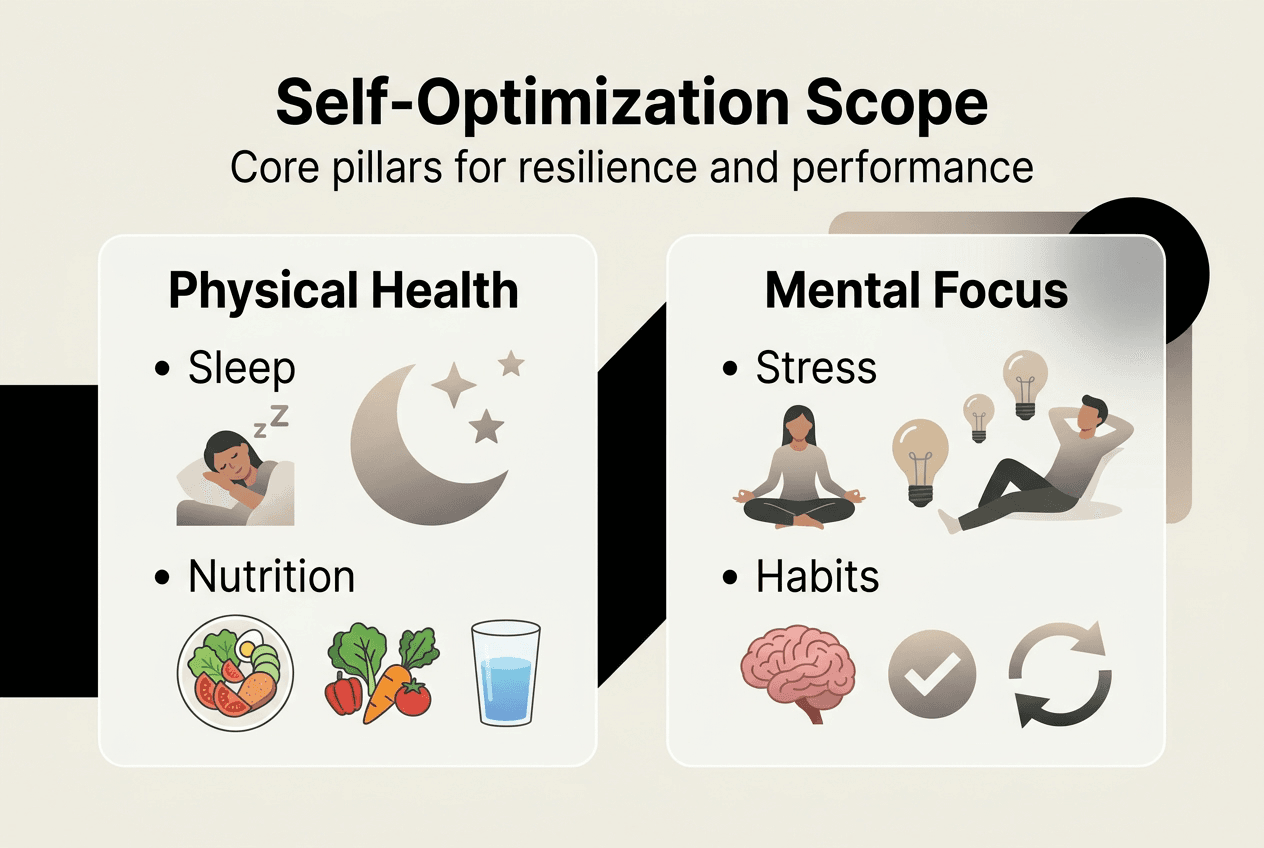
Mental resilience forms the foundation of effective self-optimization. Stress management techniques, cognitive training, and deliberate recovery practices enable you to maintain focus during prolonged pressure. Physical health encompasses strength training, cardiovascular fitness, and metabolic efficiency tailored to your specific goals. Hormonal balance, particularly testosterone levels, influences energy production, muscle maintenance, cognitive function, and emotional stability.
Lifestyle optimization involves refining sleep quality, nutrition timing, and recovery protocols. These elements work synergistically rather than in isolation. A performance journal helps track patterns and identify which interventions deliver measurable results. Many high-performing men discover that addressing hormonal health unlocks improvements across all other areas.
The strategic nature of self-optimization distinguishes it from quick fixes. You monitor key biomarkers, adjust interventions based on data, and build sustainable habits rather than chasing temporary results. This approach requires patience and precision but delivers compounding benefits over years and decades.
Pro Tip: Establish baseline measurements for testosterone, cortisol, vitamin D, and metabolic markers before implementing changes. Track these quarterly to identify genuine progress versus placebo effects.
Self-optimization is not about perfection or extreme protocols. It focuses on consistent, incremental improvements that enhance your capacity to perform at high levels while maintaining health and vitality. The goal is sustained excellence rather than short-term peaks followed by crashes.
The critical role of testosterone in male self-optimization
Testosterone serves as a cornerstone hormone for male vitality, influencing physical energy, cognitive performance, and emotional resilience. For men over 40, understanding and optimizing testosterone levels can significantly impact overall performance and quality of life. Accurate measurement and interpretation of testosterone levels require specific protocols to avoid misdiagnosis.

The Endocrine Society recommends fasting morning testosterone testing for diagnosing hypogonadism. Testosterone levels fluctuate throughout the day, with peak concentrations occurring in early morning hours. Testing at other times or without fasting can produce misleadingly low results. Transient factors such as illness, stress, poor sleep, or recent intense exercise can temporarily suppress testosterone production.
Precise testosterone measurement is critical to avoid misdiagnosis and inappropriate treatment decisions. A single low reading does not confirm hypogonadism. Clinical guidelines recommend confirming low levels with at least two separate morning tests before considering therapy. This careful approach prevents unnecessary interventions while ensuring men with genuine deficiencies receive appropriate treatment.
Testosterone influences multiple performance domains. Physically, it supports muscle protein synthesis, bone density maintenance, and metabolic efficiency. Cognitively, optimal testosterone levels correlate with improved executive function, processing speed, and working memory. Emotionally, testosterone contributes to motivation, initiative, and stress resilience. Low levels often manifest as fatigue, reduced drive, difficulty concentrating, and diminished recovery capacity.
"Testosterone measurement requires rigorous protocols to distinguish true hypogonadism from transient suppression caused by acute stressors or improper testing conditions."
For executives managing complex decisions and sustained workloads, suboptimal testosterone can create a performance ceiling. You may compensate through willpower and discipline, but addressing underlying hormonal deficiencies often unlocks capacity you did not realize was constrained. Understanding your testosterone testing protocols and working with knowledgeable clinicians ensures accurate diagnosis and appropriate interventions.
Pro Tip: Request total testosterone, free testosterone, and sex hormone-binding globulin tests simultaneously. This comprehensive panel provides clearer insight into bioavailable testosterone levels and helps identify specific patterns requiring intervention.
Safety and efficacy of testosterone therapy in high-performing men
Testosterone replacement therapy generates questions about cardiovascular and cancer risks. Recent comprehensive research provides clarity on the safety profile, helping you make informed decisions about hormone optimization.
Meta-analyses examining thousands of patients show testosterone therapy was not linked to a significant increase in major cardiovascular or prostate cancer events. These large-scale studies tracked men over multiple years, monitoring for myocardial infarction, stroke, and cancer diagnoses. The data supports short to mid-term safety for men with clinically diagnosed low testosterone.
Additional research confirms TRT does not increase all-cause mortality or myocardial infarction but may raise cardiac arrhythmia risks. This nuanced finding highlights the importance of individual risk assessment. Men with pre-existing arrhythmia conditions or significant cardiovascular disease require closer monitoring and may need alternative optimization strategies.
| Risk Category | Finding | Clinical Implication |
|---|---|---|
| All-cause mortality | No significant increase | Supports overall safety profile for appropriate candidates |
| Myocardial infarction | No significant increase | Cardiovascular concerns largely unsubstantiated in current evidence |
| Prostate cancer | No significant increase | Long-standing fears not supported by meta-analyses |
| Cardiac arrhythmias | Potential modest increase | Requires individual risk assessment and monitoring |
The safety profile for testosterone therapy in men over 40 with documented low testosterone appears favorable when properly administered and monitored. However, therapy is not risk-free, and individual factors matter significantly. Pre-existing conditions, family history, and baseline cardiovascular health influence your risk-benefit calculation.
"Current evidence supports the cardiovascular safety of testosterone replacement therapy for men with hypogonadism, though vigilance regarding arrhythmia risk remains prudent."
Proper administration involves regular monitoring of testosterone levels, hematocrit, prostate-specific antigen, and cardiovascular markers. Dosing should achieve physiologic testosterone ranges rather than supraphysiologic levels. Working with experienced clinicians who understand hormone optimization outcomes ensures you maximize benefits while minimizing potential risks.
Pro Tip: Schedule comprehensive health assessments every six months during the first two years of therapy, then annually if stable. Monitor for changes in energy, mood, physical performance, and any adverse symptoms. Adjust protocols based on objective data rather than subjective feelings alone.
Testosterone therapy represents one tool within a broader self-optimization strategy. It works synergistically with proper nutrition, exercise, stress management, and recovery practices. Viewing hormone optimization as part of an integrated approach yields superior long-term results compared to relying on therapy alone.
Practical steps to integrate self-optimization in your routine
Transforming self-optimization principles into sustainable practices requires systematic implementation. These actionable steps provide a framework for beginning or refining your optimization journey.
-
Schedule comprehensive baseline testing with a qualified provider experienced in hormone optimization. Request fasting morning testosterone, free testosterone, estradiol, thyroid panel, vitamin D, and metabolic markers. Ensure testing occurs under proper conditions to obtain accurate results.
-
Evaluate your current lifestyle across sleep, nutrition, exercise, and stress management domains. Identify specific areas requiring improvement rather than attempting wholesale changes simultaneously. Prioritize interventions based on which factors most limit your current performance.
-
Implement a performance tracking method to monitor subjective and objective metrics. Track energy levels, cognitive clarity, workout performance, sleep quality, and mood patterns. Correlate these with interventions to identify what genuinely moves the needle for you.
-
Partner with clinicians who understand the unique demands faced by high-performing executives and entrepreneurs. Generic protocols rarely account for travel schedules, high-stress periods, or performance peaks requiring optimization. Personalized approaches deliver superior results.
-
Establish quarterly reassessment cycles to review progress and adjust strategies. Hormone levels, body composition, performance metrics, and subjective well-being should inform protocol modifications. Self-optimization is iterative rather than static.
-
Build sustainable habits rather than relying on motivation or willpower. Design your environment and routines to make optimal behaviors the path of least resistance. Automate decisions around sleep schedules, meal timing, and exercise sessions.
Avoid one-size-fits-all programs promising universal results. Your genetics, current health status, stress load, and performance goals create a unique optimization equation. What works exceptionally well for one executive may prove mediocre for another. Data-driven personalization separates effective optimization from generic wellness advice.
Pro Tip: Identify your three highest-leverage optimization opportunities rather than attempting to perfect everything simultaneously. Master those interventions until they become effortless habits, then expand to additional areas. This focused approach prevents overwhelm and delivers faster results.
Integrating self-optimization into demanding professional lives requires viewing it as performance infrastructure rather than an additional obligation. The time invested in testing, tracking, and protocol refinement pays dividends through enhanced energy, sharper decision-making, and sustained capacity over decades. Self-optimization programs designed specifically for executives account for real-world constraints while delivering measurable improvements.
Maintain realistic expectations about timelines. Meaningful hormonal changes require 8 to 12 weeks. Habit formation takes months. Building a truly optimized system spans years. The compounding benefits justify this patient approach, delivering performance advantages that accumulate over your entire career.
Explore VIRIDOS resources to elevate your self-optimization journey
VIRIDOS provides precision tools and expert guidance designed specifically for high-performing men pursuing sustainable optimization. The performance journal tool enables systematic tracking of health metrics, energy patterns, and performance indicators. This data-driven approach helps you identify which interventions deliver genuine results versus placebo effects.

Access personalized VIRIDOS self-optimization programs tailored for executives and entrepreneurs managing demanding roles. These programs integrate hormone optimization, lifestyle refinement, and performance tracking into cohesive systems. VIRIDOS combines Swedish precision with evidence-based methods to support your long-term vitality and resilience. Whether you are beginning your optimization journey or refining existing practices, VIRIDOS offers the expertise and resources to sustain peak performance across decades.
Frequently asked questions
What exactly does self-optimization encompass?
Self-optimization represents a comprehensive approach integrating mental resilience, physical vitality, hormonal balance, and lifestyle management. It focuses on evidence-based interventions that enhance sustainable performance rather than quick fixes. For high-performing men, this means optimizing testosterone levels, refining sleep and nutrition, building stress resilience, and tracking progress through objective metrics.
How does testosterone influence self-optimization?
Testosterone affects energy production, muscle maintenance, cognitive function, and emotional resilience. Optimal levels support executive function, motivation, and recovery capacity. Low testosterone creates a performance ceiling that discipline alone cannot overcome. Accurate testing and appropriate optimization unlock capacity across multiple performance domains.
Is testosterone therapy safe for men over 40?
Research shows testosterone therapy does not significantly increase cardiovascular or prostate cancer risks in men with diagnosed low testosterone. However, therapy may modestly increase cardiac arrhythmia risk, requiring individual assessment. Proper monitoring and working with experienced clinicians ensures safety while maximizing benefits. Regular testing of hormone levels and cardiovascular markers maintains optimal risk-benefit balance.
What steps should I take before starting hormone therapy?
Schedule comprehensive baseline testing including fasting morning testosterone measured on at least two separate occasions. Evaluate overall health status, cardiovascular risk factors, and lifestyle optimization opportunities. Partner with a clinician experienced in hormone optimization for personalized assessment. Establish performance tracking systems to monitor therapy effectiveness objectively.
How do I sustain self-optimization practices long-term?
Build systems and habits rather than relying on motivation. Use performance journals to track progress and identify high-leverage interventions. Schedule quarterly reassessments to adjust protocols based on data. View optimization as performance infrastructure requiring ongoing investment. Focus on sustainable practices that fit your professional demands rather than extreme protocols requiring constant willpower.