
High-performing executives face a relentless challenge: maintaining peak mental and physical performance while managing increasing demands and navigating midlife. The stakes are high. Your decisions impact teams, investors, and outcomes worth millions. Yet cognitive decline, chronic stress, and physical wear threaten the edge you've built over decades. This article delivers science-backed, practical strategies to sustain elite performance in 2026, covering structured interventions, combined training modalities, nutrition, and tracking systems that keep you sharp, resilient, and consistent.
Table of Contents
- The Problem: Challenges To Sustaining Elite Performance
- Preparing To Sustain Elite Performance: What You Need
- Executing Your Elite Performance Plan: Step-By-Step Strategies
- Verifying And Maintaining Your Elite Performance Over Time
- Elevate Your Performance With VIRIDOS
- FAQ
Key takeaways
| Point | Details |
|---|---|
| Structured interventions outperform self-guided efforts | Higher-intensity, structured programs deliver significantly greater cognitive gains than independent routines. |
| Combined training boosts brain and body | Concurrent aerobic and resistance training enhances cognitive health, especially for men over 50. |
| Tailored approaches maximize results | Interventions benefit individuals with lower baseline cognition or older age groups most effectively. |
| Practical steps integrate multiple domains | Sustainable performance requires physical training, targeted nutrition, cognitive exercises, and consistent tracking. |
The problem: challenges to sustaining elite performance
Maintaining elite performance becomes harder after 40. Age-related cognitive decline risks accelerate in midlife, threatening decision-making speed, memory, and executive function. Leadership roles compound this with relentless mental and physical stress. You're managing complex problems, navigating high-stakes negotiations, and balancing personal health with professional demands. The cognitive load is immense.
Physical health and neurocognitive health are inseparable. Sedentary work, poor sleep, and suboptimal nutrition erode both. Many executives attempt self-guided fitness or productivity hacks, but these efforts often lack the intensity and structure needed for measurable gains. Structured interventions provide significantly greater cognitive benefits than self-guided approaches, yet most professionals never access them.
Key challenges include:
- Cognitive decline starting in the 40s and 50s, impacting memory and processing speed
- Chronic stress from leadership responsibilities, reducing resilience and decision quality
- Physical deconditioning from sedentary work, weakening cardiovascular and metabolic health
- Lack of structured, evidence-based programs tailored to executive demands
Without intervention, performance plateaus or declines. The gap between your potential and your output widens. You notice slower recall, reduced stamina, or diminished motivation. These aren't inevitable. They're signals that your current approach isn't enough. Structured, multi-domain strategies can reverse these trends and restore your edge. Performance journal strategies help track these patterns and guide adjustments.
Preparing to sustain elite performance: what you need
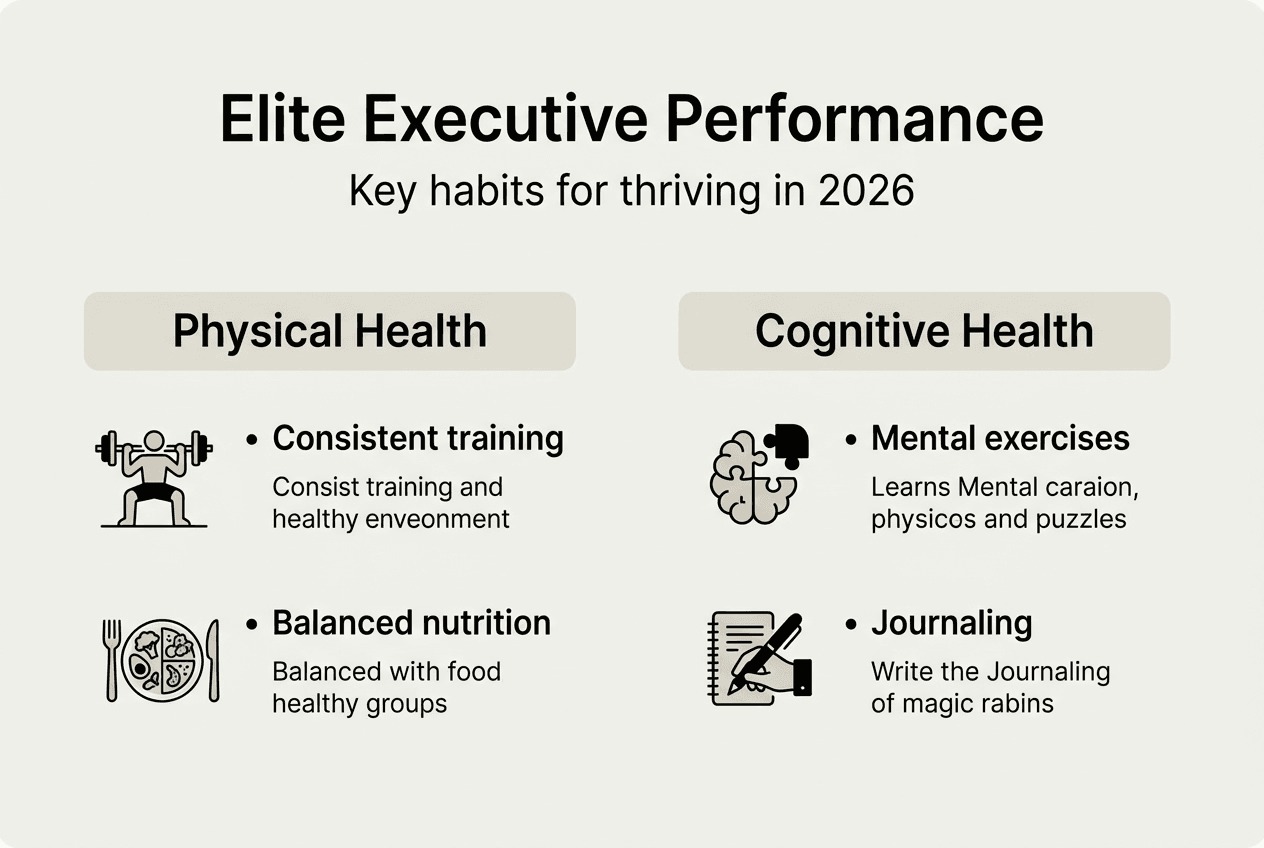
Sustaining elite performance requires a structured, multi-domain approach. Random workouts or sporadic cognitive exercises won't cut it. You need a disciplined system that integrates physical training, nutrition, cognitive work, and recovery. The foundation is combined aerobic and resistance training. Concurrent aerobic and resistance training enhances cognitive health, particularly for men over 50. This combination improves brain-derived neurotrophic factor levels, cerebral blood flow, and neuroplasticity, all critical for sustained mental performance.
Physical training must be consistent and progressive. Aim for three to four sessions per week, alternating between aerobic work like running or cycling and resistance training targeting major muscle groups. Intensity matters. Moderate to high-intensity intervals deliver superior cognitive benefits compared to low-intensity steady-state exercise. Don't just go through the motions.
Nutrition fuels both brain and body. Prioritize whole foods rich in omega-3 fatty acids, antioxidants, and high-quality proteins. Fatty fish, leafy greens, berries, nuts, and lean meats support cognitive resilience and metabolic health. Avoid processed foods, excessive sugar, and alcohol, which impair cognitive function and recovery. Hydration is non-negotiable. Even mild dehydration reduces focus and decision-making quality.
Cognitive exercises complement physical training. Engage in activities that challenge memory, attention, and problem-solving. Learn a new skill, practice a second language, or use brain-training apps with evidence-based protocols. Variety prevents adaptation and keeps your brain plastic. Stress management and recovery are equally critical. High performers often neglect sleep, but seven to eight hours nightly is essential for memory consolidation and hormonal balance.
Pro Tip: Track your training, nutrition, and cognitive work daily using a performance journal tool. Consistent logging reveals patterns, accountability gaps, and opportunities for optimization.
Essential tools and requirements:
| Tool/Requirement | Purpose | Frequency |
|---|---|---|
| Combined aerobic and resistance training | Enhance cognitive and physical health | 3-4 sessions/week |
| Whole-food, nutrient-dense diet | Support brain function and metabolic health | Daily |
| Cognitive exercises and skill learning | Maintain neuroplasticity and mental sharpness | 3-5 sessions/week |
| Performance tracking journal | Monitor progress and identify optimization opportunities | Daily |
| Sleep optimization (7-8 hours) | Enable recovery, memory consolidation, hormonal balance | Nightly |
Executing your elite performance plan: step-by-step strategies
Execution separates intention from results. Start by establishing a daily routine that integrates cognitive and physical work. Morning sessions work best for most executives. Wake at a consistent time, hydrate immediately, and begin with 10 to 15 minutes of cognitive work. This could be memory drills, language practice, or strategic problem-solving exercises. The goal is to activate your brain before the day's demands hit.
Follow cognitive work with physical training. Alternate between aerobic and resistance sessions:
- Monday and Thursday: 30 to 45 minutes of moderate to high-intensity aerobic training (running, cycling, rowing). Include intervals: 5-minute warmup, 20 minutes alternating 2-minute high-intensity bursts with 2-minute recovery, 5-minute cooldown.
- Tuesday and Friday: 40 to 50 minutes of resistance training targeting major muscle groups (squats, deadlifts, presses, rows). Use progressive overload: increase weight or reps each week.
- Wednesday: Active recovery (yoga, stretching, light walking) or additional cognitive work.
- Weekend: One longer aerobic session (60 to 90 minutes at moderate intensity) and one cognitive challenge (learning session, strategic planning, creative project).
Nutrition timing matters. Consume a protein-rich breakfast within an hour of waking to stabilize blood sugar and support muscle recovery. Include healthy fats and complex carbohydrates. Pre-training, eat a small carbohydrate source for energy. Post-training, prioritize protein and carbohydrates to replenish glycogen and support repair. Avoid heavy meals before cognitive work, as digestion diverts blood flow from the brain.

Tailor strategies to your baseline. Intervention benefits are greater for adults with lower baseline cognition. If you're noticing cognitive slippage, prioritize higher-intensity interventions and more frequent cognitive exercises. If you're maintaining strong performance, focus on consistency and progressive challenge to prevent decline.
Stress management is non-negotiable. Incorporate daily breathing exercises, meditation, or mindfulness practices. Even five minutes of focused breathing reduces cortisol and improves decision-making. Schedule recovery weeks every six to eight weeks: reduce training intensity, increase sleep, and engage in low-stress activities. Recovery prevents burnout and sustains long-term gains.
Pro Tip: Use structured performance improvement steps to document daily execution, track adherence, and adjust your plan based on energy levels, stress, and performance feedback.
"The difference between good and great isn't talent. It's the discipline to execute a structured plan every single day, even when motivation fades."
Verifying and maintaining your elite performance over time
Verification ensures your plan works. Track cognitive and physical markers every three to six months. Cognitive markers include memory recall speed, problem-solving accuracy, and sustained attention duration. Use standardized tests or apps that measure these domains objectively. Physical markers include cardiovascular fitness (VO2 max, resting heart rate), strength benchmarks (one-rep max or bodyweight ratios), and body composition (lean mass, body fat percentage).
Journaling is your most powerful tracking tool. Daily entries capture subjective performance: energy levels, focus quality, decision-making confidence, and stress resilience. Over time, patterns emerge. You'll see which training weeks correlate with peak cognitive performance or which nutrition changes improve recovery. Performance maintenance tracking makes this process systematic and actionable.
Comparing maintenance approaches reveals why structure matters:
| Approach | Cognitive Gains | Physical Gains | Sustainability | Best For |
|---|---|---|---|---|
| Self-guided routines | Low to moderate | Moderate | Variable, often inconsistent | Beginners or low-demand periods |
| Structured, higher-intensity programs | High | High | High with accountability systems | Executives seeking measurable, sustained gains |
| Hybrid (structured + self-guided) | Moderate to high | Moderate to high | Moderate, requires discipline | Experienced individuals with strong self-regulation |
Structured approaches consistently benefit APOE ε4 carriers and noncarriers alike, demonstrating their broad applicability. Genetic predispositions don't undermine the value of disciplined intervention. Consistency trumps genetics.
Maintaining motivation over years requires measurable milestones. Set quarterly goals: improve VO2 max by 5%, increase working memory capacity by 10%, or reduce resting heart rate by 3 beats per minute. Celebrate progress, but don't become complacent. Elite performance is a moving target. As you age, the interventions that worked at 45 may need adjustment at 55. Reassess, adapt, and stay committed.
Key maintenance practices:
- Reassess cognitive and physical markers every 3 to 6 months
- Adjust training intensity and volume based on recovery and progress
- Refine nutrition as metabolic needs change with age and activity level
- Maintain daily journaling to capture subjective performance and identify trends
Pro Tip: Schedule annual performance reviews with yourself. Analyze your journal data, test results, and subjective assessments. Identify what worked, what didn't, and where to focus next. This ritual keeps you accountable and forward-focused.
Elevate your performance with VIRIDOS
Sustaining elite performance demands more than good intentions. It requires tools that integrate seamlessly into your demanding life. VIRIDOS helps executives maintain the edge through precision-designed resources built for disciplined, high-agency professionals. The Performance Journal is your essential companion, providing a structured system to track training, nutrition, cognitive work, and recovery. Daily accountability transforms sporadic effort into consistent gains.

Beyond tracking, VIRIDOS offers insights and strategies tailored to men in demanding roles. Explore resources at VIRIDOS to optimize your performance, resilience, and vitality. Your edge depends on the systems you build today.
FAQ
How often should high-performing executives reassess their cognitive and physical fitness levels?
Reassess every three to six months to track progress and adjust your plan. Consistent monitoring identifies trends early, allowing you to intensify interventions or celebrate gains. Annual reviews provide a broader perspective on long-term sustainability. Without regular reassessment, you're flying blind, missing opportunities to optimize or correct course.
What role does nutrition play in sustaining elite performance?
Nutrition fuels both brain and body performance. A balanced diet rich in omega-3 fatty acids, antioxidants, and high-quality proteins supports cognitive resilience, metabolic health, and recovery. Poor nutrition impairs focus, decision-making, and physical stamina. Prioritize whole foods, avoid processed junk, and time meals to support training and cognitive work. Nutrition is non-negotiable for sustained elite performance.
Can self-guided performance routines be effective for busy executives?
Self-guided routines help, but they're less effective than structured programs. Structured interventions significantly outperform self-guided approaches in cognitive improvements. Busy executives benefit from higher-intensity, evidence-based protocols that deliver measurable gains efficiently. Self-guided efforts often lack accountability, intensity, and progression. If you're serious about results, invest in structure.
How important is physical training for cognitive health in executives over 50?
Physical training is critical for cognitive health, especially after 50. Concurrent aerobic and resistance training significantly enhances cognitive function in older adults by improving brain-derived neurotrophic factor, cerebral blood flow, and neuroplasticity. Sedentary executives experience faster cognitive decline. Regular, progressive physical training reverses this trend, boosting memory, processing speed, and decision-making quality. Physical fitness is brain fitness.