
Most executives believe relentless hustle equals lasting success. You push harder, sleep less, and sacrifice recovery for output. Yet energy crashes, focus wavers, and burnout looms. True high-performance living isn't about grinding yourself into the ground. It's about sustaining exceptional results through intentional systems that preserve vitality, sharpen mental clarity, and extend your career longevity. This guide reveals the frameworks, health essentials, and balance strategies that keep demanding professionals operating at peak capacity well into their 60s and beyond.
Table of Contents
- Key Takeaways
- Defining high-performance living for executives
- Core frameworks and methodologies behind high-performance living
- Health and longevity essentials for men 40-65 in high-performance roles
- Balancing optimization with well-being: avoiding burnout and finding true excellence
- Enhance your path to high-performance living with VIRIDOS
- FAQ
Key Takeaways
| Point | Details |
|---|---|
| Structured routines sustain performance | Predefined routines automate tasks and stabilize recovery to prevent decision fatigue and keep momentum. |
| Biomarker tracking health trends | Quantifying biomarkers helps detect declining health early and guide adjustments to routines. |
| Energy management domains | Managing physical emotional mental and spiritual energy creates balance and preserves capacity for peak work. |
| Deep work blocks protect cognition | Scheduling dedicated deep work preserves cognitive resources for high value decisions. |
| Personal Operating Systems automate decisions | Predefined routines and decision filters reduce cognitive load and protect against overwhelm. |
Defining high-performance living for executives
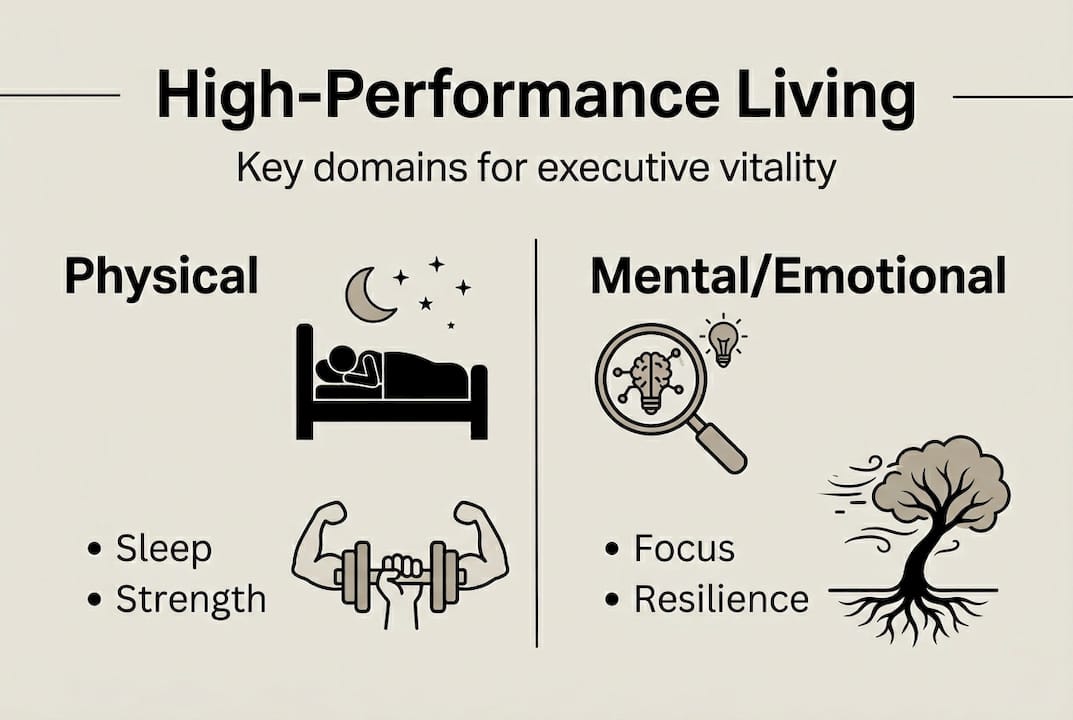
High-performance living is the consistent ability to achieve exceptional results in demanding careers while sustaining vitality, energy, health, and well-being through intentional systems, habits, and energy management. This definition separates sustainable excellence from the burnout-prone grind culture that dominates executive circles. You need more than sporadic effort or weekend recovery binges. You need systematized habits that regenerate capacity daily.
The Corporate Athlete Framework provides the foundation. It divides energy into four domains: physical, emotional, mental, and spiritual. Physical energy fuels your body through nutrition, exercise, and sleep. Emotional energy stabilizes your mood and resilience through relationships and stress management. Mental energy sharpens focus via deep work and cognitive recovery. Spiritual energy aligns your actions with purpose and values. Managing these four dimensions through deliberate rituals creates oscillation between stress and recovery, preventing the depletion that kills long-term performance.
Traditional hustle culture glorifies constant output. High-performance living rejects this fragility. You build systems that protect energy reserves while maximizing impact during work sprints. This shift transforms how you structure days, prioritize tasks, and recover between high-stakes projects. Your performance journal becomes the tool that tracks these rhythms and reveals patterns.
Key components of high-performance living systems include:
- Predefined routines that eliminate decision fatigue and automate recovery
- Energy management protocols that match task intensity to your capacity
- Biomarker tracking to quantify health trends and catch declines early
- Deep work blocks that protect cognitive resources for high-value activities
- Physical training schedules that build resilience and metabolic health
- Sleep optimization practices that ensure 7-9 hours of quality rest
Consistent vitality and well-being aren't luxuries for executives. They're competitive advantages that extend your productive years and amplify decision quality when stakes are highest.
Core frameworks and methodologies behind high-performance living
Several proven frameworks structure high-performance living for busy professionals. The Corporate Athlete Framework remains the gold standard, emphasizing physical, emotional, mental, and spiritual energy managed through rituals and oscillation. Personal Operating Systems layer on top, providing predefined routines, decision filters, and deep work blocks that reduce cognitive load. The 4C Framework adds clarity, capacity, courage, and connection as pillars. The G3 Method focuses on goals, guardrails, and growth loops. These methodologies synergize to create a comprehensive system.
Personal Operating Systems deserve special attention for executives drowning in complexity. You design routines that handle recurring decisions automatically. Morning rituals might include cold exposure, protein-rich breakfast, and 20 minutes of strategic planning before meetings. Evening routines might feature device cutoff times, gratitude journaling, and sleep preparation. Decision filters pre-commit you to saying no to low-value requests. Deep work blocks reserve your peak cognitive hours for strategic thinking, not email.
Adopting a Personal Operating System follows these steps:
- Audit your current energy drains and identify recurring decision points that waste mental resources
- Design morning and evening routines that automate physical and cognitive preparation
- Establish decision filters based on your strategic priorities and long-term goals
- Schedule deep work blocks during your peak mental clarity hours, protecting them fiercely
- Build recovery rituals between intense work sprints to maintain oscillation
- Track adherence and outcomes in your performance journal to refine the system
| Framework | Core focus | Key benefit | Practical output |
|---|---|---|---|
| Corporate Athlete | Physical, emotional, mental, spiritual energy | Sustained capacity through oscillation | Daily energy rituals and recovery protocols |
| Personal Operating System | Routines, filters, deep work | Reduced decision fatigue | Automated morning/evening sequences |
| 4C Framework | Clarity, capacity, courage, connection | Holistic performance foundation | Aligned goals and relationship health |
| G3 Method | Goals, guardrails, growth loops | Continuous improvement | Feedback systems and iteration cycles |
Pro Tip: Integrate energy rituals every 90 minutes during work sprints. Stand, stretch, hydrate, or take a brief walk. This oscillation prevents the cumulative depletion that tanks afternoon performance and decision quality.
Health and longevity essentials for men 40-65 in high-performance roles
Your body changes after 40. Muscle mass declines through sarcopenia, testosterone drops, and metabolic flexibility decreases. Strength training 3 times weekly combats these shifts directly. Compound movements like squats, deadlifts, and presses preserve lean tissue, maintain bone density, and boost metabolic rate. You need progressive overload, gradually increasing weight or volume to signal growth.
Cardiovascular training splits into two categories. Zone 2 cardio builds aerobic base and mitochondrial density. You maintain a conversational pace for 30-60 minutes, training your body to burn fat efficiently. High-intensity interval training pushes VO2 max higher, improving your body's peak oxygen utilization. VO2 max correlates strongly with longevity. Every 1 MET increase in VO2 max reduces mortality risk significantly. Combine both approaches weekly.
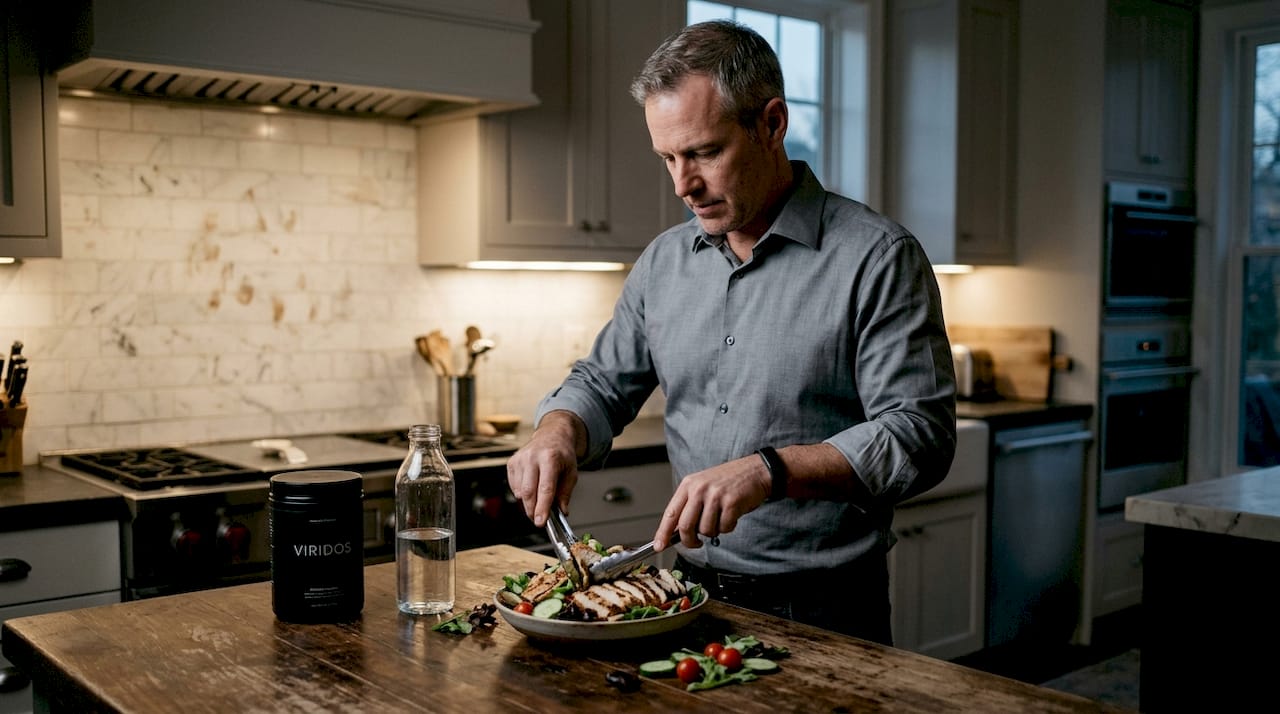
Nutrition fundamentals for executives prioritize protein and calorie control. Aim for 0.8-1 gram of protein per pound of body weight to support muscle retention and satiety. If fat loss is the goal, maintain a modest calorie deficit of 300-500 calories daily. Avoid extreme cuts that sacrifice muscle and tank energy. Limit alcohol to 2-3 drinks weekly. Alcohol disrupts sleep architecture, lowers testosterone, and impairs recovery.
Sleep remains the most underrated performance lever. You need 7-9 hours nightly for cognitive function, emotional regulation, and physical recovery. Sleep deprivation below 6 hours chronically elevates cortisol, reduces testosterone, impairs glucose metabolism, and accelerates aging. Prioritize consistent sleep and wake times, blackout curtains, cool room temperature, and device-free wind-down routines.
Biomarker tracking informs personalized adjustments. Key markers include testosterone (total and free), heart rate variability, HbA1c, lipid panels, and vitamin D. Testosterone naturally declines post-30, impacting energy, muscle retention, and motivation. HRV reflects autonomic nervous system balance and recovery status. HbA1c reveals average blood sugar control over three months, catching prediabetes early. Regular testing every 6-12 months lets you course-correct before problems compound.
Key health protocols for sustained vitality:
- Resistance training 3 sessions weekly with progressive overload
- Zone 2 cardio 2-3 sessions weekly for aerobic base
- HIIT 1-2 sessions weekly to maximize VO2 max
- Protein intake of 0.8-1g per pound of body weight daily
- Sleep optimization targeting 7-9 hours with consistent timing
- Biomarker testing every 6-12 months to track trends
- Alcohol limitation to 2-3 drinks weekly maximum
| Exercise type | Primary benefit | Longevity impact | Frequency |
|---|---|---|---|
| Strength training | Muscle retention, bone density, metabolic rate | Reduces sarcopenia and frailty | 3x weekly |
| Zone 2 cardio | Aerobic base, fat oxidation, mitochondrial health | Improves cardiovascular efficiency | 2-3x weekly |
| HIIT | VO2 max, peak power, insulin sensitivity | Strong correlation with reduced mortality | 1-2x weekly |
| Flexibility/mobility | Joint health, injury prevention, movement quality | Maintains functional independence | Daily |
Pro Tip: Prioritize strength training over cardio if time is limited. Muscle loss accelerates after 40, and resistance work provides metabolic and hormonal benefits that cardio alone cannot match.
Balancing optimization with well-being: avoiding burnout and finding true excellence
Over-optimization creates fragility. You track every macro, test every supplement, and chase marginal gains while neglecting relationships and rest. This approach backfires. Excellence is deep engagement, not perfectionism. You accept trade-offs, focus on high-impact fundamentals, and recognize that extreme protocols rarely outperform consistent basics.
Balance is a myth. You cannot maintain perfect equilibrium across work, health, relationships, and hobbies simultaneously. Instead, manage seasons of intensity and recovery. During a product launch or acquisition, work intensity spikes. You accept reduced social time and lighter training. After the sprint, you shift focus to recovery, family connection, and rebuilding physical capacity. This oscillation prevents chronic depletion.
True excellence involves consistent engagement with purposeful priorities. You show up daily for the few things that matter most, accepting that other areas will receive less attention. This mindset eliminates guilt and prevents the scattered effort that produces mediocrity everywhere. Flow states emerge when challenge matches skill and distractions disappear. You cannot force flow, but you can create conditions that invite it: clear goals, immediate feedback, and protected time blocks.
Research shows basics outperform extreme optimization for longevity and happiness. Strength training, quality sleep, whole foods, and strong relationships add decades to lifespan. Exotic supplements, biohacking gadgets, and obsessive tracking add marginal value at best. Happiness itself increases lifespan by roughly 10 years, highlighting the importance of psychological well-being alongside physical health.
Practical ways to recognize and prevent burnout:
- Monitor resting heart rate and HRV trends for early signs of overtraining or chronic stress
- Schedule mandatory recovery weeks every 8-12 weeks with reduced work intensity
- Maintain social connections outside work to preserve emotional energy
- Set hard boundaries on work hours and protect evening recovery time
- Track subjective energy levels in your performance journal to catch declines
- Accept that some seasons require dialing back training or social commitments
- Prioritize sleep above all else when stress escalates
Happiness and psychological well-being add years to life, proving that relentless optimization without joy undermines the longevity you're chasing.
Enhance your path to high-performance living with VIRIDOS
Sustaining executive vitality requires more than knowledge. You need practical tools that translate frameworks into daily action. The VIRIDOS Performance Journal provides structured tracking for biometrics, habits, energy levels, and recovery metrics aligned with high-performance living principles. You log testosterone levels, HRV trends, training sessions, and sleep quality in one place, revealing patterns that inform adjustments.
The VIRIDOS platform takes a holistic approach to longevity, vitality, and executive energy management. You access resources on strength protocols, biomarker interpretation, and energy optimization tailored to demanding professionals. Key benefits include structured habit tracking that builds consistency, biomarker logging that quantifies health trends, and personalized insights that guide course corrections before problems escalate.
Pro Tip: Journal daily for 90 days to establish baseline patterns. Review weekly to identify energy drains, recovery gaps, and opportunities for protocol refinement. Consistent measurement drives sustained improvements.
FAQ
What is the corporate athlete framework and how does it help executives?
The Corporate Athlete Framework manages physical, emotional, mental, and spiritual energy through deliberate rituals and stress-recovery oscillation. It helps executives sustain peak performance by preventing the chronic depletion that leads to burnout, poor decisions, and health decline. Track your energy domains in your performance journal to optimize rituals.
How can biomarker tracking improve vitality for men over 40?
Tracking testosterone, HRV, and HbA1c detects declines early and informs targeted lifestyle changes before problems compound. These markers support tailored nutrition, exercise, and recovery plans that maintain vitality as natural aging processes accelerate. Regular testing every 6-12 months provides the data needed for personalized adjustments.
What are the best exercises to maintain strength and vitality after 40?
Strength training 3 times weekly combats sarcopenia by preserving muscle mass, bone density, and metabolic rate. Zone 2 cardio builds aerobic base and fat-burning capacity, while high-intensity interval training improves VO2 max, which correlates strongly with longevity. Combine all three modalities for comprehensive health benefits.
Why is sleep more important for executives than most realize?
Sleep deprivation below 7 hours chronically elevates cortisol, reduces testosterone, impairs glucose metabolism, and degrades decision quality. Executives make high-stakes choices daily, and cognitive function depends on adequate rest. Prioritize 7-9 hours with consistent timing to maintain mental clarity, emotional stability, and physical recovery.
How do I avoid burnout while pursuing high performance?
Manage seasons of intensity and recovery rather than chasing constant balance. Accept trade-offs, focus on high-impact fundamentals, and monitor HRV and resting heart rate for early stress signals. Schedule mandatory recovery weeks every 8-12 weeks and protect sleep above all else when demands spike.