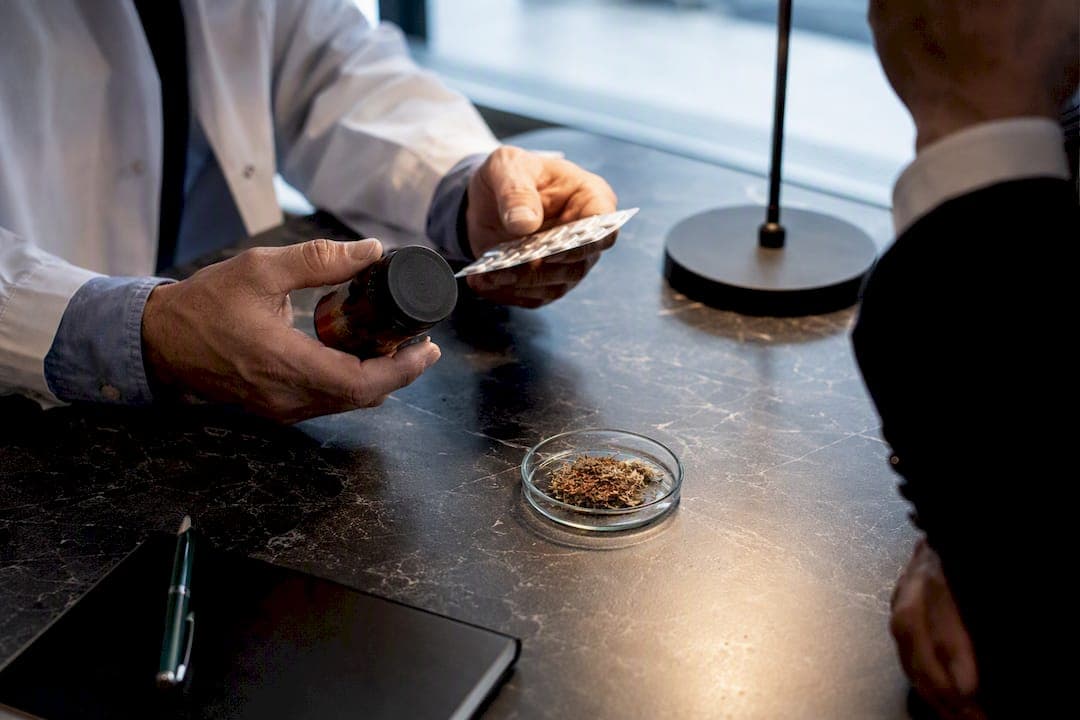
Yes, plant extracts interact with prescription drugs, and the effects range from lost efficacy to dangerous toxicity. St John's wort is the clearest case, but it is not the only one. The immediate action for any man managing a medication regimen: disclose every supplement to your prescriber, document the product and dose, and check the interaction against FASS or Läkemedelsverket guidance before you combine anything new with an existing prescription.
TL;DR:
- St John's wort is the most documented herb with drug interactions, mainly inducing enzymes that decrease blood levels of critical medications like warfarin and immunosuppressants.
- High-dose green tea extracts and botanicals like ginkgo and garlic can cause bleeding risks or alter drug absorption, especially when combined with anticoagulants or liver-processed drugs.
- Patients on narrow therapeutic index drugs, older adults, and those with organ impairments face the highest danger from herb-drug interactions, requiring careful monitoring and disclosure.
- Clinicians should routinely verify supplement details, check interaction sources, and monitor drug levels or organ function tests, considering herb effects can persist weeks after stopping.
- Quality control, transparent sourcing, and product documentation are essential for safety, especially when using botanical products for performance or health benefits alongside prescriptions.
Table of Contents
- How Do Herb–Drug Interactions Actually Happen?
- Which Herbs Carry the Most Documented Interaction Risk?
- Who Faces the Highest Risk From These Interactions?
- What Should Happen at the Point of Care?
- What Should Executives Check Before Combining a Botanical Product With Medication?
- Can Combining Herbs and Drugs Ever Work in the Patient's Favor?
- Where Is Herb–Drug Interaction Research Heading Next?
- A Clinician-Minded Take on Performance and Medication Safety
- Why Product Transparency Matters More Than Marketing Claims
- Where to Verify Interaction Information Directly
- Sources
- FAQ
How Do Herb–Drug Interactions Actually Happen?
Herb–drug interactions describe the effects that herbs, plants, or plant extracts have on how a pharmaceutical drug is metabolized, how it acts, or how toxic it becomes, according to the Svensk MeSH definition. Two distinct mechanisms drive nearly every clinically relevant case, and understanding both is more useful than memorizing a list of banned combinations.
The first is pharmacokinetic. A plant compound can alter how a drug is absorbed, metabolized, or cleared from the body. The liver's cytochrome P450 enzymes, particularly CYP3A4, CYP2C9, CYP2C19, and CYP2D6, process most prescription drugs, and certain botanical compounds either induce these enzymes (speeding up drug clearance) or inhibit them (slowing it down). P-glycoprotein and OATP transporter proteins add a second layer, controlling how much of a drug gets absorbed in the gut or crosses into liver cells. Renal excretion changes can compound the effect further.
The second mechanism is pharmacodynamic. Here the herb does not touch drug metabolism at all. Instead it adds to or fights against the drug's own action, most commonly through additive bleeding risk, additive sedation, or excess serotonergic activity when combined with certain antidepressants.
Clinically, these two mechanisms produce opposite problems. Enzyme induction can cause treatment failure, a transplant patient's immunosuppressant levels dropping below the threshold needed to prevent rejection, for instance. Enzyme inhibition does the reverse, pushing a normal dose into toxic territory. Both effects can persist for weeks after the herb is stopped, which matters enormously for how long you monitor a patient after a supplement change.
Which Herbs Carry the Most Documented Interaction Risk?
Six botanicals account for most of the clinically significant interaction reports clinicians encounter, and each behaves differently.
- St John's wort (johannesört): the single most documented herb–drug interaction in the literature. It induces CYP3A4 and intestinal P-glycoprotein, reducing blood levels of warfarin, cyclosporine, digoxin, oral contraceptives, and several antidepressants. Documented contraceptive failures and transplant rejections tied to this herb are why most clinical guidance recommends avoiding it entirely alongside critical medications.
- Green tea extracts: high-dose EGCG (above roughly 800 mg per day) has been linked to elevated liver enzymes in trials, and it inhibits OATP transporters, which can alter absorption of drugs like atorvastatin and nadolol. The hepatotoxicity risk is dose-dependent and worse when taken fasting or as a single large dose rather than split across the day.
- Ginkgo biloba: carries a bleeding risk when stacked with anticoagulants or antiplatelet drugs, through platelet-aggregation effects that add to a blood thinner's own action.
- Garlic (Allium sativum): shares that same additive bleeding profile, particularly relevant before surgery or alongside warfarin.
- Ginseng: evidence here is genuinely mixed. Some formulations affect blood glucose, and interactions with anticoagulants and digoxin have been reported, but batch-to-batch variability in ginsenoside content makes generalized dosing advice unreliable.
- Milk thistle (Silybum marianum): modest and inconsistent effects on CYP enzymes appear across studies. If a patient on warfarin starts milk thistle, an INR check is a reasonable precaution rather than an overreaction.
Pro Tip: When a patient mentions "I just take a natural supplement," ask for the product label and the botanical Latin name. "St John's wort" and "Hypericum perforatum" sound different to a patient but are the same interaction risk to you.
Who Faces the Highest Risk From These Interactions?
Certain patients carry a disproportionate share of the risk, and recognizing them early changes how urgently you need to act.
- Patients on polypharmacy, especially those managing multiple prescriptions simultaneously.
- Older adults, whose hepatic and renal clearance is often reduced.
- Anyone on a narrow therapeutic index drug: warfarin, digoxin, immunosuppressants, antiepileptics, or certain oncology agents, where small concentration shifts have outsized consequences.
- Patients with existing liver or kidney impairment, which slows clearance of both the drug and the herb.
Watch for specific red flags: a sudden seizure in a well-controlled epilepsy patient, unexplained organ rejection symptoms, an INR that suddenly drifts out of range, unexplained liver enzyme elevation, or any new adverse symptom appearing shortly after a supplement was started. Primary care research consistently finds that patients frequently under-report supplement use, which means the burden of asking falls on the clinician, not on the patient volunteering it, especially important to address given concerns that influencer prescription drug promotion may spread misinformation.
Pro Tip: Frame the question as "what else are you taking, including anything from a health food store or online," rather than "are you on any supplements." The first phrasing catches far more disclosures.
What Should Happen at the Point of Care?
A structured screening conversation catches most risk before it becomes a problem. Ask for five things every time a patient mentions supplement use:
- The exact product name and its botanical Latin name.
- The dose, formulation, and how long they've used it.
- The source or manufacturer, since quality control varies widely between products.
- The start date and the reason they began taking it.
- Any other over-the-counter drugs or supplements taken alongside it.
Once you have that information, cross-check it against FASS product monographs and current Läkemedelsverket guidance. If a narrow-index drug is involved, a pharmacist consult is worth the extra step. Where it's safe to do so, pausing the herb while you assess is often the simplest path forward, paired with closer monitoring, INR checks, drug-level tests, or liver function panels depending on what's at stake.
One timing detail matters more than clinicians often expect: enzyme induction from herbs like St John's wort can persist for one to three weeks after stopping, so drug levels will not normalize immediately. Plan follow-up monitoring accordingly rather than assuming the interaction ends the day the supplement stops.
| Step | Action | Why it matters |
|---|---|---|
| Screen | Ask about all supplement use at every visit | Patients rarely volunteer this information |
| Document | Record product name, dose, and start date | Creates a traceable record for future reference |
| Verify | Check FASS and Läkemedelsverket sources | Confirms known interaction profiles |
| Monitor | Track INR, drug levels, or LFTs as indicated | Catches toxicity or treatment failure early |
| Report | Submit suspected interactions to pharmacovigilance | Strengthens the evidence base for future patients |
What Should Executives Check Before Combining a Botanical Product With Medication?
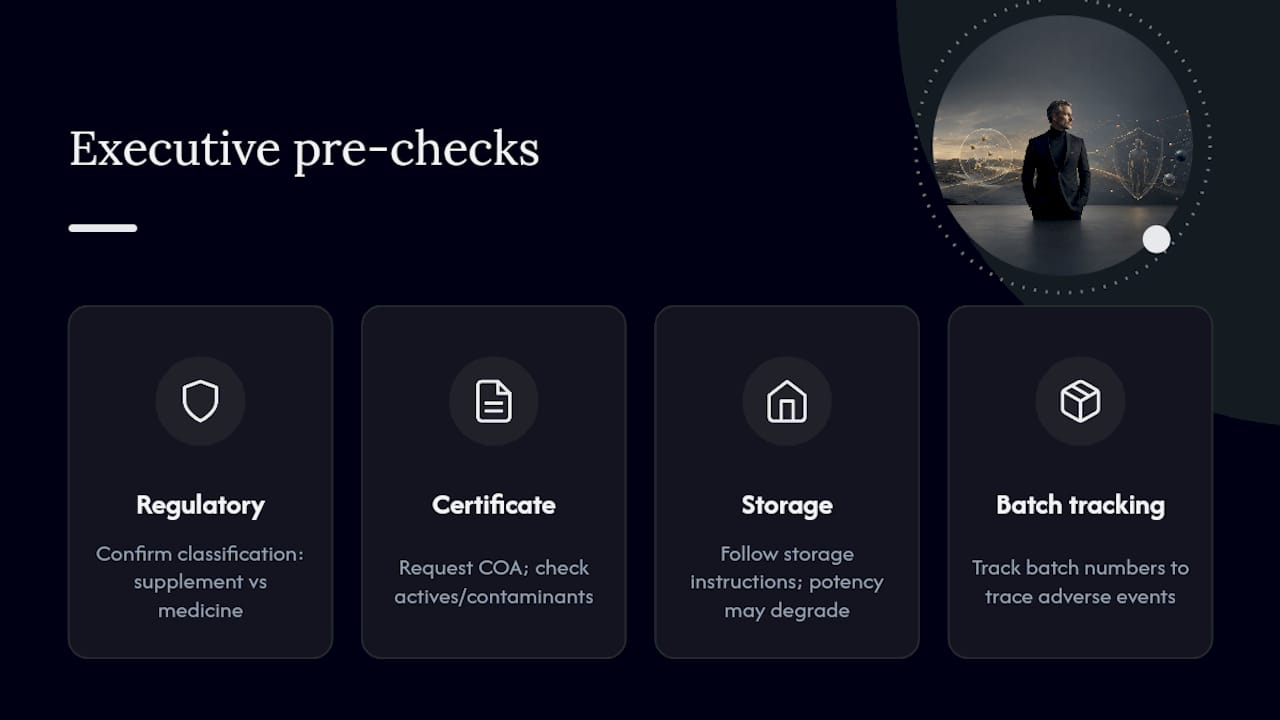
Men managing demanding schedules and existing prescriptions need a shorter, sharper version of the same discipline clinicians use. Four checks matter most: confirm the product's regulatory classification (dietary supplement versus växtbaserat läkemedel), request a certificate of analysis to rule out undeclared actives or contaminants, follow storage instructions precisely since potency degrades with poor storage, and track batch numbers so any adverse event can be traced to a specific production run.
Sublingual formats, which bypass first-pass liver metabolism, warrant particular attention to timing relative to medication doses. If you're on a prescription with any narrow therapeutic window, raise the product with your prescriber before starting it, not after. Viridos maintains internal storage and safety documentation for exactly this reason: precision sourcing means little without a clinician able to review what's actually in the product.
Pro Tip: Keep a single running list of every supplement, dose, and start date on your phone. It takes thirty seconds to update and it's the first thing worth handing to a physician at any appointment.
Can Combining Herbs and Drugs Ever Work in the Patient's Favor?
Interaction is not always a synonym for harm. Some combinations are studied precisely because the herb might complement a drug's intended effect, and a smaller subset of the herb–drug literature focuses on this angle rather than on risk alone.
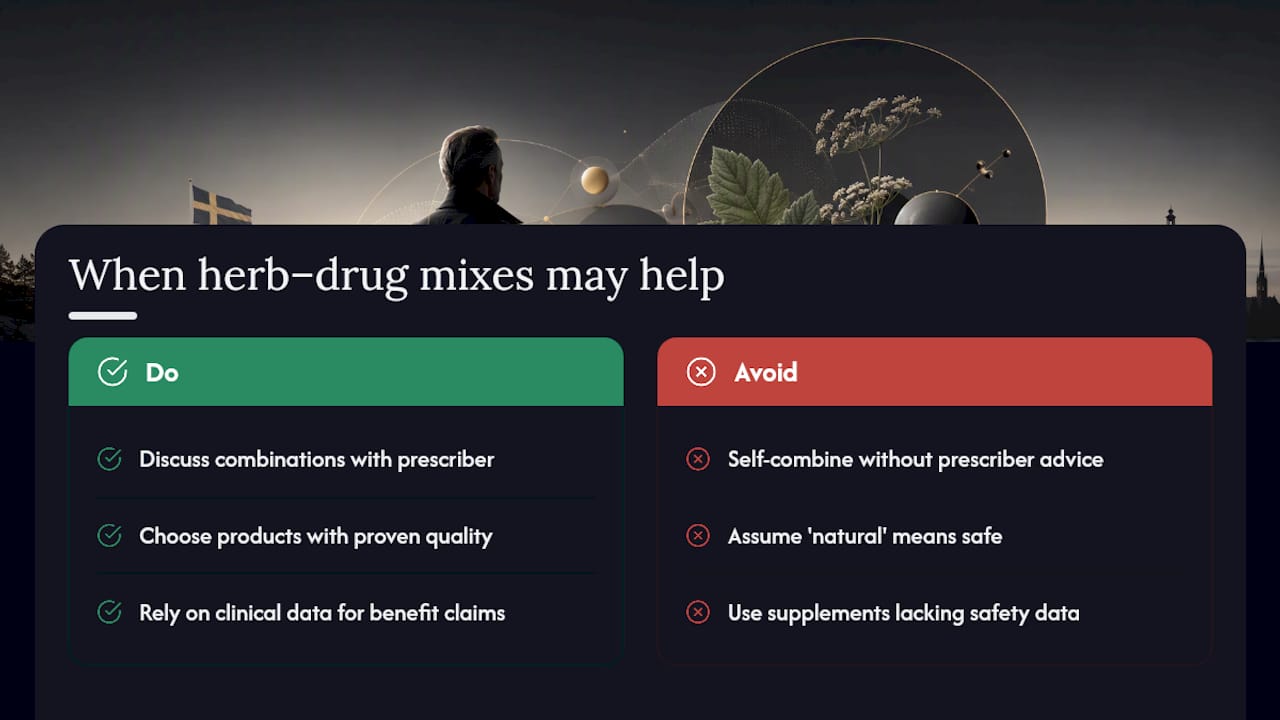
Milk thistle has been studied alongside certain hepatotoxic medications for its potential hepatoprotective properties, though the clinical evidence remains preliminary and inconsistent across trials. Ginger has occasionally been paired with antiemetic regimens in oncology settings to support nausea control, again with mixed trial quality. These are considerations worth discussing with a prescriber, not reasons to self-combine.
The ESCOP position on rational herbal use is instructive here: prioritize products with established proof of quality, safety, and efficacy, and treat the absence of that evidence as a reason for caution rather than optimism. A supplement without a documented safety profile does not get the benefit of the doubt just because it is plant-derived. This is the same logic that should govern any performance-oriented botanical: real benefit claims should rest on real data, not on the fact that a compound occurs naturally. The gap between "theoretically synergistic" and "clinically proven beneficial" is wide, and most herb–drug combinations sit closer to the first category than the second.
Where Is Herb–Drug Interaction Research Heading Next?
The research base is shifting from case reports toward more systematic prediction tools, and that shift matters for anyone trying to stay ahead of a risk rather than react to it after the fact.
Pharmacogenomic profiling is starting to explain why the same herb produces a serious interaction in one patient and none in another. Genetic variation in CYP2D6 and CYP2C19 activity means two people taking identical doses of the same botanical can experience meaningfully different drug clearance rates. This partly explains why case reports on herbs like ginseng have been so inconsistent: the herb's effect may depend as much on the patient's enzyme genotype as on the product itself.
Standardization of extracts is the other major front. Batch variability, particularly in ginsenoside content in ginseng and hyperforin content in St John's wort, has made it difficult to compare study results across products. Better standardization would let researchers attribute effects to specific compounds rather than to a loosely defined "extract." Larger primary care studies are also underway to close the reporting gap that PMC research has identified as a persistent barrier to catching interactions before they cause harm. None of this replaces the current standard of care: disclosure, documentation, and a monograph check remain the most reliable tools available today.
A Clinician-Minded Take on Performance and Medication Safety
The men who most need this guidance are often the least likely to seek it out. Performance-driven executives tend to treat supplements as low-stakes optimization tools, when the honest framing is that any pharmacologically active compound deserves the same scrutiny as a prescription drug. Precision sourcing and clinician transparency are not marketing language. They are the actual difference between a supplement that supports a demanding career and one that quietly undermines the medication protecting it.
— Joakim
Why Product Transparency Matters More Than Marketing Claims
Viridos is built on small-batch Swedish production and that scale exists for a reason: it allows tighter control over sourcing, testing, and batch documentation than mass-market supplement manufacturing typically permits.

Production runs carry traceable certificates of analysis, and documentation is available on request for review by your prescriber or pharmacist. That's a deliberate design choice for men who already manage complex medication regimens and want a plant-derived performance product they can actually hand to a clinician without a shrug. Before combining any Viridos product with an existing prescription, talk to your prescriber, the same standard this article applies to every botanical extract discussed above. The supplement combination checklist outlines a five-step disclosure process clinicians use, adapted for personal use. Request a batch COA or start a membership review at Viridos to see the documentation for yourself.
Where to Verify Interaction Information Directly
Bookmark these for point-of-care use: Läkemedelsverket for regulatory classification, FASS for product monographs, Läkemedelsboken for clinical summaries, and ESCOP for phytotherapy guidance.
This article is general information, not a substitute for advice from a qualified doctor. Consult a qualified healthcare professional about your own circumstances before acting on anything here.
Sources
- Herb-Drug Interactions — MeSH (Svensk MeSH entry)
- Interaktioner med andra läkemedel — Läkemedelsboken
- Drug–herb interactions: a challenge and clinical concern in primary healthcare — PMC article
- ESCOP: Interactions herb–drug guidance
FAQ
What Is a Herb–Drug Interaction?
It is an effect that a plant extract has on how a pharmaceutical drug is absorbed, metabolized, or acts in the body, often through liver enzymes, transport proteins, or additive pharmacological effects.
Which Plants Are Commonly Used as Medicinal Extracts?
St John's wort, ginkgo, garlic, ginseng, milk thistle, and green tea extract are among the most widely used and most studied for interaction potential, alongside many others used in traditional herbal medicine.
When Should You Avoid Taking St John's Wort?
Avoid it alongside oral contraceptives, immunosuppressants, warfarin, digoxin, and most antidepressants, since it induces CYP3A4 and P-glycoprotein strongly enough to cause documented treatment failures.
Which Medications Commonly Clash With Herbal Supplements?
Narrow therapeutic index drugs carry the highest risk: warfarin, digoxin, immunosuppressants, antiepileptics, and certain oncology medications, because small changes in blood concentration from an interacting herb can cause treatment failure or toxicity.
Can a Man on Medication Safely Use a Plant-Based Performance Supplement?
It depends entirely on the specific drug and extract involved. Always disclose the product to a prescriber, request its certificate of analysis, and monitor for any new symptoms after starting it.