
For most men, a well-formulated sublingual phytoandrogen spray produces mild, manageable effects, not medical emergencies. The real variable is quality control, not the botanical category itself. If you take prescription medication, have a cardiovascular condition, or have a history of prostate concerns, screen with a physician before you start, then run a short, monitored trial rather than committing blind.
TL;DR:
- The quality of extraction and formulation controls whether a sublingual phytoandrogen product is safe and predictable; sloppy extraction increases unpredictability.
- Sublingual delivery causes faster onset of effects and side effects, making proper pH buffering and excipient choice crucial for tolerability.
- Men with prostate issues, cardiovascular conditions, or on prescription androgen therapy should avoid self-administering without medical oversight.
- Short-term trial protocols with baseline testing and clear endpoints help evaluate individual response and safety before long-term use.
- Reliable products should provide third-party testing, explicit sublingual formulation details, and controlled batch access to ensure quality and consistency.
Table of Contents
- Common Fytoandrogener Biverkningar and Why They Happen
- How Sublingual Delivery Changes the Risk and Onset
- Who Should Avoid Phytoandrogens or Seek Medical Oversight
- A Practical Trial and Product-Selection Checklist
- What the Clinical and Preclinical Evidence Actually Shows
- Joakim's View: Trial It Like an Operating Decision, Not a Leap of Faith
- Where the Conventional Safety Advice Falls Short
- The Viridos Approach: Precision Formulation, Controlled Access
- Sources
Common Fytoandrogener Biverkningar and Why They Happen
The phytoandrogener biverkningar reported most often are minor and predictable once you understand the mechanism behind them. These compounds work through modest receptor-level activity rather than the forceful hormonal override you get from exogenous androgens, which is precisely why the side-effect profile tends to run lighter.
Reported issues typically include:
- Mild gastrointestinal discomfort, usually tied to extract concentration and timing relative to meals.
- Transient shifts in mood or energy in the first one to two weeks as the body adjusts.
- Changes in libido, which can move in either direction depending on the individual and the specific botanical.
- Oral mucosa irritation or a metallic or bitter aftertaste, specific to sublingual and spray formats.
Clinical research into phytoandrogenic botanical extracts found generally mild adverse events compared with pharmaceutical androgen therapies, alongside improved exercise capacity and hormonal markers in trial populations. That comparison matters: the ceiling on harm is lower than with exogenous hormones, but it is not zero.
The more serious risk sits outside the botanical mechanism entirely. Reviews of multi-ingredient testosterone booster supplements document endocrine dysregulation and adverse events tied to adulterated or unauthorized ingredients, not the phytoandrogens themselves. Extraction precision separates a controlled product from an unpredictable one. Eucommia ulmoides research shows that triterpenoids and lipidic augmenters work in concert to produce phytoandrogenic activity. Strip out that synergy through sloppy extraction, and you get a product whose effects, and side effects, become genuinely unpredictable.
How Sublingual Delivery Changes the Risk and Onset
Route of administration is not a footnote. It rewrites the side-effect timeline. Sublingual absorption bypasses first-pass liver metabolism, which means peak plasma concentration can arrive within minutes rather than the delayed, blunted curve of a swallowed capsule. That speed cuts both ways: faster onset of intended effects, but also a faster onset of any tolerability issue, since the active reaches systemic circulation before dilution and enzymatic breakdown soften the initial dose.
Formulation is what determines whether that speed is a benefit or a liability:
- pH and buffering, which keep the active in its unionized, mucosa-permeable state.
- Solvent system and excipient choice, which govern taste, irritation, and dissolution.
- Partition coefficient, which determines how readily the compound crosses the sublingual membrane rather than simply being swallowed.
A sublingual ergogenic spray study found that maintaining actives in a permeable, unionized state through correct pH control reduces mucosal irritation and stabilizes absorption. Get the formulation right, and you can often use a lower nominal dose. Get it wrong, and the same active becomes unpredictable, both in effect and in side effect.
Pro Tip: Ask any brand you are evaluating whether their spray is pH-buffered for sublingual absorption specifically, not just flavored for oral use. That distinction is the difference between a precision delivery system and a tincture with a spray cap.
Who Should Avoid Phytoandrogens or Seek Medical Oversight
Some men should not experiment here without a clinician involved first, full stop. The categories below carry enough risk that self-directed trial and error is the wrong approach.
- Prostate history. A known prostate cancer diagnosis or an unresolved elevated PSA reading warrants medical clearance before introducing any androgen-signaling compound.
- Cardiovascular disease. Untreated or severe cardiovascular conditions change the risk calculus for any product that interacts with hormonal pathways.
- Concurrent androgen therapy. Men already on prescription testosterone or related treatment should not layer in a botanical without their prescribing physician's input.
- Medication interactions. Anticoagulants, narrow-therapeutic-index drugs, and CYP-metabolized medications all carry interaction potential that a pharmacist should review before you start.
- Regulated professionals. Athletes and executives under anti-doping or compliance testing should treat unstandardized botanical products as a career risk, not just a health one. EU novel-food status for some extracts remains unsettled, which adds a further layer of uncertainty.
A Practical Trial and Product-Selection Checklist
Treat a phytoandrogen trial the way you would treat any operational change with unknown downside. Set a window, define your endpoints, and decide in advance what causes you to stop.
A trial period lasting several weeks is a reasonable starting point. Track subjective markers, energy, mood, sleep quality, libido, alongside objective ones where practical. Baseline liver function tests, a basic metabolic panel, and PSA where clinically indicated give you something concrete to compare against if anything feels off.
Before you buy anything, check for:
- Third-party testing and published extract specifications, not just a proprietary blend label.
- Explicit sublingual-optimized formulation descriptors, buffered pH, defined solvent system.
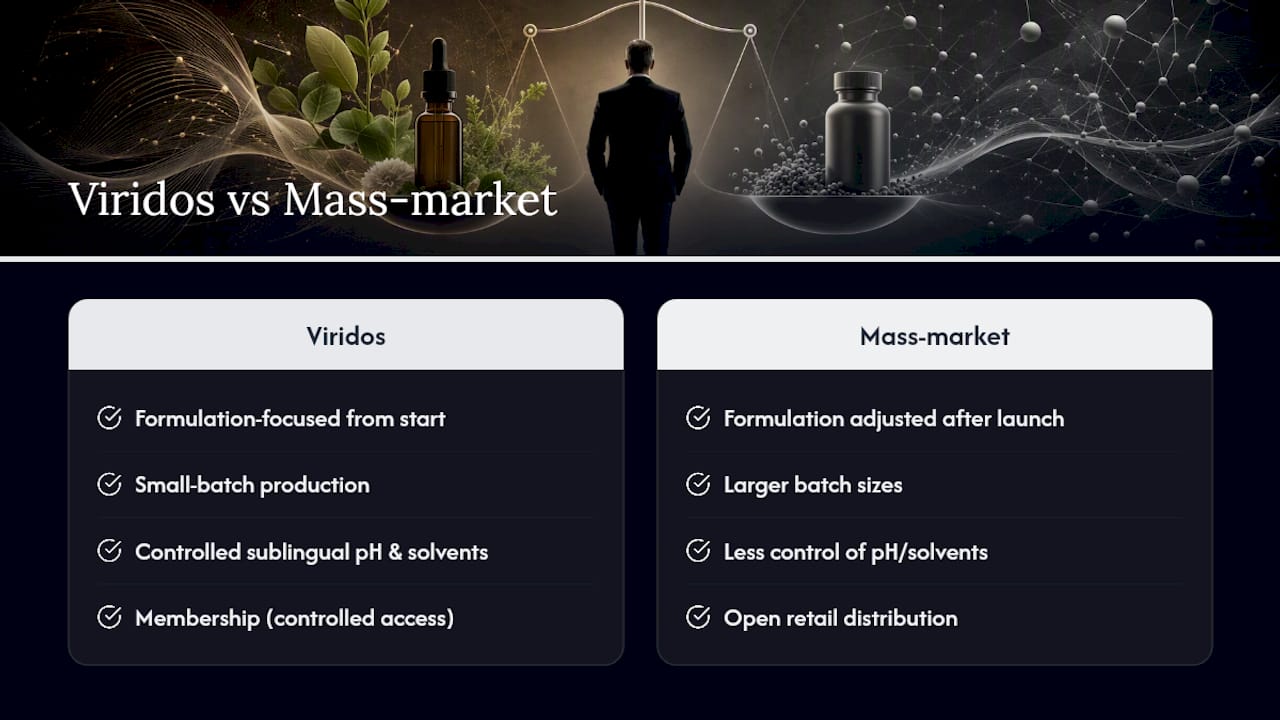
- Controlled or membership-based access, which tends to correlate with tighter batch consistency than open mass-market retail.
Pro Tip: Log your baseline for one week before you start anything. Without a "before" picture, you cannot reliably judge the "after," and most men overestimate how much they remember about their own pre-trial state.
What the Clinical and Preclinical Evidence Actually Shows
The evidence base is real but narrow, and an executive weighing this decision deserves the honest version of that statement.
- A 14-day randomized trial of sublingual nucleotides reported modest ergogenic benefits with no reported side effects during the trial window, supporting the broader pattern that short-term sublingual nutraceutical studies tend to show acceptable tolerability.
- Preclinical work on Eucommia ulmoides demonstrates that its triterpenoids and lipidic augmenters can potentiate androgen receptor signaling in vitro and in animal models, which explains both the modest efficacy signals and why sensitive tissues deserve monitoring.
- Fenugreek extract meta-analyses show measurable effects on testosterone-related endpoints, but heterogeneous dosing and extraction methods across studies make direct comparison difficult.
What is missing is long-duration human data, standardized extract comparisons across brands, and consistent EU regulatory classification. None of that undermines the tolerability signal so far. It does mean claims of certainty, in either direction, outrun what the research currently supports.
Joakim's View: Trial It Like an Operating Decision, Not a Leap of Faith
If you run a company, you already know how to evaluate an unproven input: small pilot, clear metrics, defined exit criteria. Apply that same discipline here. I recommend a four-week window, a baseline log kept before day one, and two or three tracked endpoints, nothing exotic.
Formulation quality is the lever that matters most. A precision sublingual product, correctly buffered and sourced from a controlled batch, behaves differently than a mass-market capsule with a vague blend label. That is the whole argument for controlled access: it is not exclusivity for its own sake, it is quality control you can actually verify.
— Joakim
Where the Conventional Safety Advice Falls Short
Most coverage of phytoandrogens either dismisses the entire category as unproven or treats it as a shortcut with no downside. Both framings are lazy. The research supports a narrower, more useful judgment: tolerability is generally favorable, but it is contingent on formulation quality and personal medical context, not a fixed property of the ingredient class.
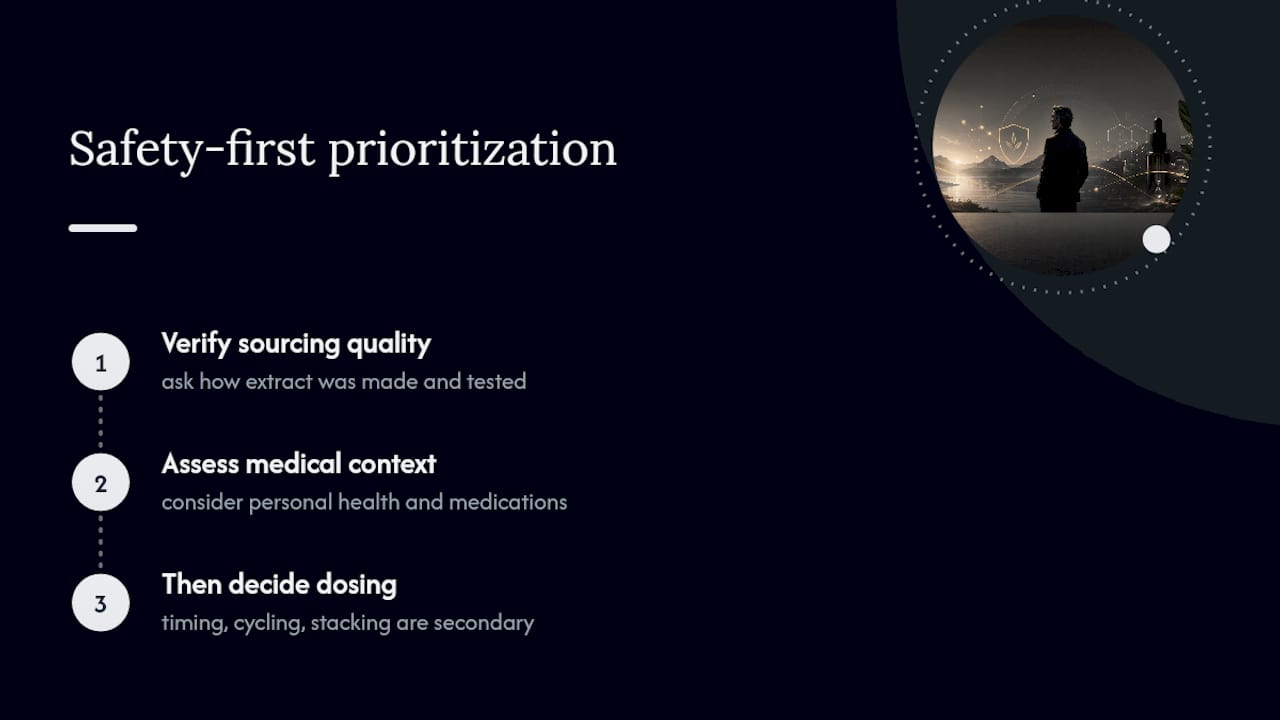
The gap in conventional advice is that it rarely distinguishes between the compound and the product. A phytoandrogen extract handled with extraction precision and preserved constituent integrity is a different proposition than the same compound diluted into an unregulated blend. Readers who skip that distinction end up either overly cautious about a well-made product or overly casual about a poorly made one.
Prioritize the sourcing question before the dosing question. Ask how the extract was made and tested before you ask how much to take. Everything else, timing, cycling, stacking, is secondary to that first filter.
— Joakim
The Viridos Approach: Precision Formulation, Controlled Access
A premium men's performance brand exists because most of the risk in this category comes from formulation, not the botanical class itself. Some brands emphasize small-batch production with controlled sublingual pH, solvent system, and extract specification from the start, rather than adjusting after the fact for mass-market production.

Access to the product often runs through a controlled membership rather than open retail. This approach can help keep batch sizes small and consistency high, aligning with standards clinicians might prefer before recommending botanical support. If you want to see how this fits into a longer-horizon approach to performance and vitality. Review the longevity performance strategy that shapes how Viridos designs its formulation and trial protocols.
For a disciplined man evaluating whether this belongs in his routine, the next step is straightforward: check current membership availability and review the application criteria before your next planning cycle begins.
This article is general information, not a substitute for advice from a qualified doctor. Consult a qualified healthcare professional about your own circumstances before acting on anything here.
Sources
- Clinical research into phytoandrogenic botanical extracts (Wiley)
- Novel phytoandrogens and lipidic augmenters from Eucommia ulmoides (BMC Complement Med Ther, 2007)
- Sublingual absorption science for supplement brands (Atrium Scientific Group)
- Sublingual nucleotides trial (2013) (MDPI Nutrients)
- Analysis of dietary testosterone booster supplements and safety (2023)