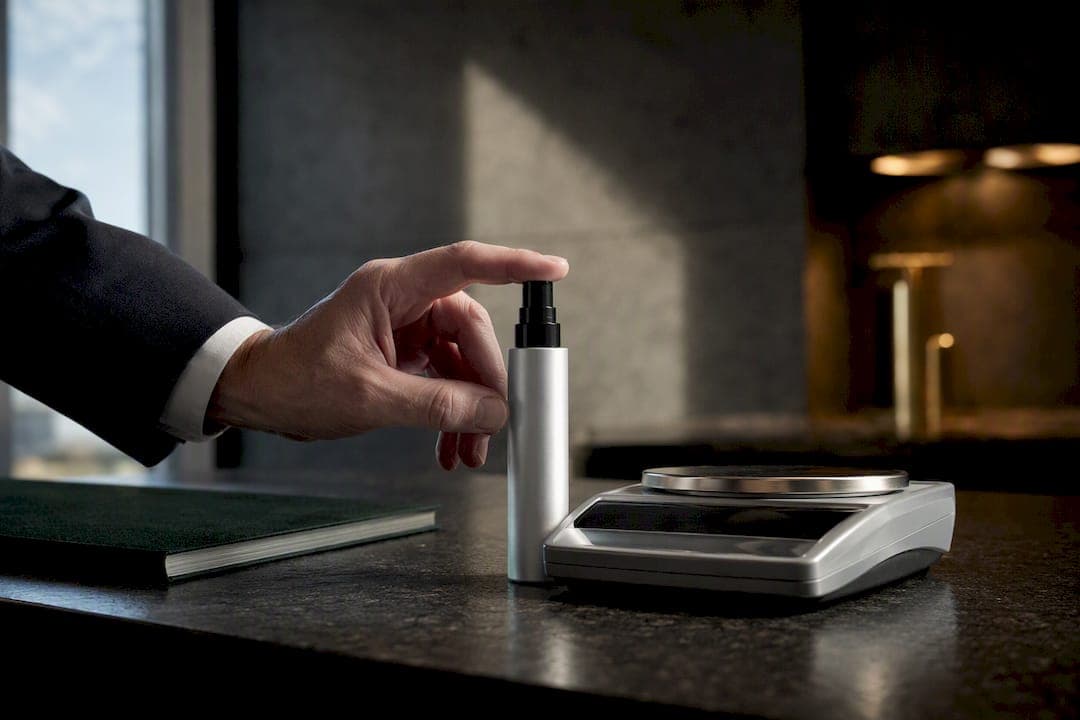
Yes, many premium sublingual performance sprays use a small amount of ethanol as a functional solvent and penetration enhancer, and a single metered dose typically exposes you to far less ethanol than a standard alcoholic drink. For most healthy adults, this amount will not raise blood alcohol concentration or impair judgment. If you manage a medical condition, take prescription medication, or are pregnant, request a certificate of analysis and speak with a clinician before use.
TL;DR:
- Most sublingual performance sprays contain ethanol at concentrations around 1.0%, but the actual amount per dose is the critical factor, not the percentage label.
- A single dose from a well-formulated spray exposes users to far less ethanol than a standard alcoholic beverage and is unlikely to impact blood alcohol levels or cognition for healthy adults.
- Regulatory disclosure requirements differ between medicinal products and food supplements, making it essential to verify actual ethanol content and request third-party documentation before purchase.
- Ethanol's role is functional, acting as a solvent and penetration enhancer, with volatility and evaporation limiting systemic absorption and effects.
- Alternatives like glycerin are available, but they may require higher doses for absorption; formulator transparency on solvent choice is key to assessing safety and efficacy.
Table of Contents
- Why formulators use ethanol in sublingual performance sprays
- What EU and regional rules require for alcohol disclosure
- Will trace ethanol affect BAC, cognition, or driving?
- An executive checklist before you buy or use
- How often and how long you should use an alcohol-containing spray
- What the evidence base actually shows
- Ethanol alternatives and when they make more sense
- Irritation, toxicity, and interaction risks worth knowing
- Does the ethanol change how the spray feels or works
- Our approach to formulation transparency
- Where to verify our formulation before you decide
- Sources
- FAQ
Why formulators use ethanol in sublingual performance sprays
Ethanol earns its place in a formulation for practical reasons, not convenience. It dissolves plant-derived compounds that resist water, carries them across the mucosal membrane beneath the tongue, and then largely evaporates, leaving behind a concentrated dose rather than a diluted one. This is the same principle that governs tincture-making, refined for precision dosing.
Formulation studies bear this out at the low end of the range. A peer-reviewed oromucosal spray formulation study describes a plant-derived spray built around 1.0% ethanol as a co-solvent, alongside other excipients chosen for stability and absorption. That is a small fraction of the alcohol content in wine or beer, present to do a specific job rather than to deliver intoxication.
Three functional roles explain most ethanol use in this category:
- Solvent: it dissolves lipophilic plant compounds that water alone cannot carry.
- Penetration enhancer: it temporarily loosens the mucosal barrier so actives absorb faster.
- Volatility: it evaporates rapidly after application, which limits how much remains to enter systemic circulation.
A single spray actuation, in most sublingual formulations, delivers a fraction of the ethanol found in one sip of wine or beer, according to EMA scientific guidance on ethanol, which notes that single-dose exposure from oral liquids is typically far lower than exposure from drinking alcoholic beverages. The actual figure depends on the metered dose volume, which is why the milligrams of ethanol per actuation matters more than the percentage on the label.
Executives evaluating a product should treat this the way they would treat any input to a decision: ask for the number, not the impression. A formulator who can state exact mg per spray has done the work of proving minimal effective concentration. One who cannot has skipped a step you should not accept.
What EU and regional rules require for alcohol disclosure
Regulation for ethanol splits along a line most consumers never see: medicinal products face one set of rules, and food supplements face another. Executives sourcing performance products need to know which bucket a given item falls into, because the disclosure obligations differ sharply.
For medicinal products, EMA guidance on ethanol as an excipient requires that ethanol be justified, that exposure be minimized, and that package leaflets state the ethanol content per dose. The guidance recommends translating that figure into familiar equivalents, such as milliliters of beer or wine, so a patient can grasp the practical impact without needing a pharmacology background.
Food supplements operate under different national and EU frameworks. Guidance summarized in Kontrollwiki's labeling rules allows liquid supplements to contain alcohol within limits, capping certain categories at up to 30 grams of ethanol per package, and requires that such products include a scent or flavor profile that discourages beverage-style consumption. These are practical safeguards, not formalities.
That standard, drawn from EMA guidance, is worth holding any manufacturer to, regardless of whether their product is classified as medicinal or supplement.
Three things follow for a disciplined buyer:
- Confirm which regulatory category a product falls under before comparing it to another.
- Ask for the per-dose ethanol figure rather than accepting a percentage alone.
- Expect explicit caution language if you are pregnant, manage alcohol dependency, take interacting medications, or have liver disease.
Our guide to legal checks for oral spray supplements walks through how these frameworks apply specifically to sublingual products.
Will trace ethanol affect BAC, cognition, or driving?
The honest answer is that at the concentrations typically used in sublingual performance sprays, the effect on blood alcohol concentration is negligible for a single dose in a healthy adult. Here is how to reason through it rather than take that on faith:
- Identify the mg of ethanol per actuation from the label or a certificate of analysis, not from the percentage alone.
- Compare it to a standard drink, which contains roughly 14 grams of pure ethanol; a well-formulated spray dose sits a fraction of that.
- Account for volatility and local absorption, since much of the ethanol in a sublingual spray evaporates or stays local rather than entering systemic circulation.
- Factor in frequency, since repeated dosing across a day changes the calculation even when any single dose is small.
A single dose from a well-formulated sublingual spray generally raises BAC far less than a dietary source of alcohol consumed in the same sitting, per EMA's assessment of oral liquid ethanol exposure, though the agency is clear that repeated dosing and sensitive populations warrant more caution than a single-use estimate implies.
If you take medications that interact with alcohol, particularly CNS depressants, request the product's technical documentation or contact the manufacturer directly rather than assuming trace exposure is irrelevant to your case. If you are scheduling doses around demanding meetings, travel, or physical training, our piece on timing a sublingual performance spray covers how to sequence dosing without second-guessing every decision.
An executive checklist before you buy or use
Diligence here takes minutes, not hours, if you know what to ask for. Treat this the way you would treat due diligence on any input to your performance: verify the claim, then decide.
- Ethanol per dose: request the milligrams of ethanol per actuation, not just a percentage on the label.
- Total ethanol per bottle: multiply per-dose figures by the labeled dose count to confirm the product sits within supplement packaging limits.
- Third-party documentation: ask for a certificate of analysis that a manufacturer did not produce internally.
- Declared excipients: a formulation that lists every ingredient, including solvents, signals a manufacturer willing to be checked.
- Driving and medical warnings: their presence or absence tells you whether the manufacturer has done the regulatory homework.
Red flags cluster around vagueness: a "proprietary blend" with no ethanol disclosure, a missing technical contact, or a certificate of analysis the company cannot produce on request.
Pro Tip: Ask any manufacturer to state per-dose ethanol as an equivalent volume of beer or wine, the same convention EMA recommends for medicinal product leaflets. If they cannot, that is your answer.
For a deeper walkthrough of verifying documentation before you commit, see our five-step COA checklist for Swedish-made supplements.
How often and how long you should use an alcohol-containing spray
Frequency guidance follows directly from dose transparency. If a manufacturer has confirmed that a single actuation contains a small, disclosed amount of ethanol, the standard once or twice daily dosing pattern common to sublingual performance sprays carries minimal cumulative exposure across a normal week.
The calculation changes with volume, not with the presence of ethanol itself. Using a spray as directed, at the labeled dose count per day, keeps cumulative ethanol intake well below any threshold of concern for a healthy adult. Exceeding the labeled frequency to chase a perceived effect is where the math shifts, both because you compound ethanol exposure and because you deviate from the dose the formulator actually tested.
Duration of use is a separate question from frequency. A well-documented product designed for sustained daily use should specify whether its formulation, including ethanol content, was evaluated for long-term dosing or only for short-term use. Products that avoid this question, or that bury dosing guidance in vague language like "as needed," leave you to guess at a decision that should be evidence-based.
The practical rule: follow the labeled frequency exactly, treat any urge to exceed it as a signal to reassess rather than a reason to increase, and revisit your usage pattern if your health status, medication list, or alcohol sensitivity changes. Discipline in dosing is no different from discipline anywhere else in a demanding life: consistency beats improvisation.
What the evidence base actually shows
The evidence for ethanol's role in sublingual sprays comes mostly from formulation science rather than large-scale consumer trials, and it is worth being precise about what that means. Peer-reviewed work, such as the oromucosal spray study referenced earlier, demonstrates that low-percentage ethanol formulations are technically achievable and stable for plant-derived actives. That is a formulation finding, not a consumer outcome study.
Regulatory guidance from EMA functions similarly: it establishes principles for justification and exposure minimization based on pharmacological and toxicological review, not on published trials of specific performance-spray brands. This is a meaningful distinction for anyone applying an evidence-based standard to a purchase decision.
What this means practically is that no credible body of consumer research exists claiming measurable performance or cognitive effects from the trace ethanol found in a well-formulated sublingual spray. The absence of such studies is not itself reassuring or alarming. It reflects a product category too diverse, and too recently developed, for standardized clinical evaluation.
The responsible position is to rely on what is verifiable: formulation transparency, regulatory conformity, and per-dose documentation, rather than testimonials or marketing claims about effects the underlying research has not measured. Treat any brand claiming clinical validation of ethanol-related benefits with the same scrutiny you would apply to any unsupported performance claim in your own field.

Ethanol alternatives and when they make more sense
Ethanol is not the only functional solvent available to formulators, and several alternatives exist for specific formulation goals. Glycerin, for instance, is commonly weighed against ethanol in mouth spray formulations, offering a non-alcoholic solvent with different solubility characteristics. Glycerin dissolves a narrower range of plant compounds than ethanol, and it does not share ethanol's volatility, which changes how quickly the active substance clears the mouth after application.

Propylene glycol and certain polysorbates serve similar co-solvent functions in some oromucosal formulations, chosen when a manufacturer wants to avoid ethanol entirely, often for regulatory simplicity, taste profile, or to accommodate users who avoid alcohol for personal or medical reasons.
The tradeoff is rarely free. A glycerin-based formulation may sacrifice some absorption efficiency for compounds that dissolve poorly without ethanol's polarity, meaning the manufacturer may need to adjust concentration or dose volume to compensate. This is a legitimate formulation choice, not evidence that one approach is categorically superior to the other.
The decision an executive should focus on is not "ethanol or no ethanol" in isolation, but whether the manufacturer can explain why they chose their specific solvent system and document the resulting dose consistency. A well-justified ethanol formulation and a well-justified glycerin formulation are both credible. An unexplained choice, in either direction, is the actual red flag.
Irritation, toxicity, and interaction risks worth knowing
Trace ethanol in a sublingual spray carries a narrow set of realistic risks, and they are worth naming plainly rather than glossing over. Local irritation is the most common, since ethanol can dry or sting sensitive oral tissue, particularly with frequent dosing or in users with existing mucosal sensitivity.
Systemic toxicity from a single, well-formulated dose is not a realistic concern for a healthy adult at the concentrations described in formulation literature and EMA guidance. The more relevant risk sits with specific populations: pregnant or nursing individuals, people in alcohol use recovery, those with liver disease, and anyone taking medications that interact with alcohol, including certain sedatives and some prescription pain management drugs.
EMA's excipient guidance specifically flags these groups as warranting caution language on medicinal product leaflets, and the same logic reasonably extends to supplement-category sprays containing ethanol, even where labeling requirements differ.
The practical response is not avoidance by default but verification. If you fall into one of these categories, request the product's technical documentation and raise it with a physician before adding a new ethanol-containing product to your routine, regardless of how small the labeled quantity appears.
Does the ethanol change how the spray feels or works
Ethanol's presence shapes the user experience in ways that go beyond the ingredient list. Its volatility produces a brief warming or slightly sharp sensation on application, which many users read as a signal that the product is "working," though that sensation reflects evaporation and mild mucosal stimulation rather than a marker of efficacy.
More substantively, ethanol's role as a penetration enhancer can influence how quickly the active plant compounds reach systemic circulation. A formulation that uses ethanol deliberately, at a justified concentration, is often optimizing for faster onset rather than simply including alcohol as filler.
The tradeoff surfaces in taste and mouthfeel. Ethanol-containing sprays tend to carry a sharper, sometimes bitter profile compared with glycerin-based alternatives, which read smoother but may require higher concentrations of active compound to achieve comparable absorption. Neither profile is inherently better: the right choice depends on whether the formulator prioritized onset speed or user comfort, and whether they can document that choice.
For an executive audience, the sensory experience matters less than the consistency behind it. A spray that delivers the same sensation and the same measurable dose every time reflects manufacturing discipline. A spray that varies from batch to batch, regardless of which solvent it uses, reflects a control-of-process problem you should treat as disqualifying.
Our approach to formulation transparency
We include ethanol only where it earns its place, at the minimum concentration that supports absorption of our plant-derived compounds, following the same justification standard EMA sets for medicinal excipients. Every batch is documented, and members can request our certificate of analysis and dosing rationale directly.
This is not a marketing gesture. It is the same evidentiary discipline we expect our members to apply in their own decisions: verify the input, understand its function, and proceed only when the reasoning holds. If you manage a specific medical condition, consult a physician before adding any new supplement to your regimen, sublingual or otherwise.
— Joakim
Where to verify our formulation before you decide
Most alcohol-containing products ask you to trust a label. We ask you to check our work. Every VIRIDOS formulation includes a documented rationale for each excipient, including ethanol where it is used, and members can request the certificate of analysis, batch notes, and metered dose data behind any given spray.

This is small-batch production from Sweden, built for men who make decisions on evidence rather than assurance. If you want to see the reasoning behind our formulation choices in full, our methodology lays out the standard we hold ourselves to. When you are ready to evaluate fit, membership plans and pricing details are available on our pricing page.
Sources
- Märkning av kosttillskott - Kontrollwiki
- Ethanol: scientific guideline references and context (EMA)
- Development and Evaluation of Oromucosal Spray Formulation Containing Plant-Derived Compounds for the Treatment of Infectious and Inflammatory Diseases of the Oral Cavity
FAQ
How much alcohol is typically in a sublingual performance spray?
It varies by formulation, but published formulation research describes oromucosal sprays using ethanol at concentrations as low as 1.0% as a co-solvent. The exact amount you are exposed to per dose depends on the metered spray volume, so ask the manufacturer for milligrams of ethanol per actuation rather than relying on the percentage alone.
Can trace ethanol in a spray raise my blood alcohol level?
At the concentrations typically used in well-formulated sublingual sprays, a single dose is unlikely to produce a measurable rise in BAC for a healthy adult, since EMA guidance notes single-dose exposure from oral liquids is usually far below that of a standard drink. Repeated dosing and specific medical conditions change that calculation, so request documentation if you have concerns.
Is glycerin a safer alternative to alcohol in mouth spray?
Glycerin is a legitimate alcohol-free solvent option, but "safer" depends on the formulation goal rather than the ingredient alone. Ethanol offers faster volatility and broader solubility for plant compounds, while glycerin avoids alcohol entirely but may require different concentrations to achieve comparable absorption.
What should I ask a manufacturer before using an alcohol-containing spray?
Request the milligrams of ethanol per actuation, a third-party certificate of analysis, and a stated rationale for why ethanol was chosen over alternatives. A manufacturer following EMA's justification standard should be able to answer all three without hesitation.
Do VIRIDOS sprays contain ethanol, and can I see the documentation?
VIRIDOS includes ethanol only when it is functionally justified at a minimal effective concentration, following the same standard EMA applies to medicinal excipients. Members can request our certificate of analysis and dosing rationale directly through our membership resources.