
TL;DR:
- Biohacking for men involves using science, data, and lifestyle changes to optimize health and performance.
- Fundamental habits like sleep, strength training, and nutrition yield greater results than advanced technology.
Biohacking for men is the deliberate use of science, personalized data, and structured lifestyle interventions to optimize health, performance, and longevity. The term is informal, but the underlying discipline draws from fields like exercise physiology, nutritional biochemistry, and endocrinology. The standard industry term is self-quantification and optimization, though "biohacking" has become the working shorthand for men who want to close the gap between where their biology is and where it could be. For men aged 30–50, the foundational pillars are consistent sleep, strength training, whole-food nutrition, and hormone awareness. Tools like Oura Ring, Garmin wearables, and clinical blood panels translate subjective feelings into objective data you can act on.
What is biohacking for men and why does it matter now?
Male biohacking is the structured practice of using measurable inputs to improve biological outputs. Testosterone begins declining after 30. Muscle mass follows. Metabolic efficiency drops. Most men notice the symptoms before they understand the cause.
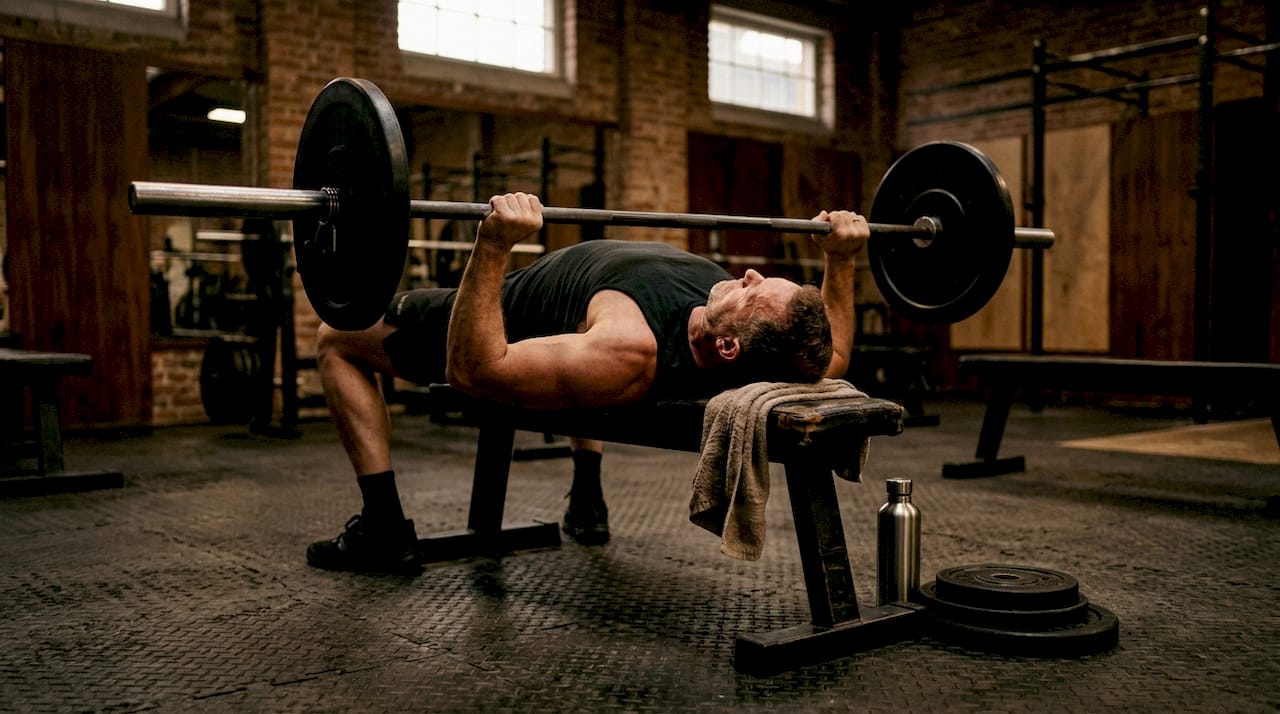
The goal is not to become a lab experiment. The goal is to reduce health blind spots. A man who tracks his resting heart rate, monitors sleep staging with an Oura Ring, and reviews a quarterly blood panel knows more about his biology than 95% of men his age. That knowledge drives better decisions.
Biohacking in 2026 centers on sleep, strength training, and hormone management as the highest-return interventions for male biology. This is not a technology story. It is a discipline story. The men who benefit most are the ones who treat their physiology with the same rigor they apply to their professional performance.
Biohacking also operates through epigenetic mechanisms. Lifestyle inputs like heat stress, optimized nutrition, and quality rest can influence gene expression related to repair, metabolism, and stress resilience. That means the habits you build today are not just affecting how you feel this week. They are shaping how your biology performs a decade from now.
What foundational biohacks offer the greatest returns?
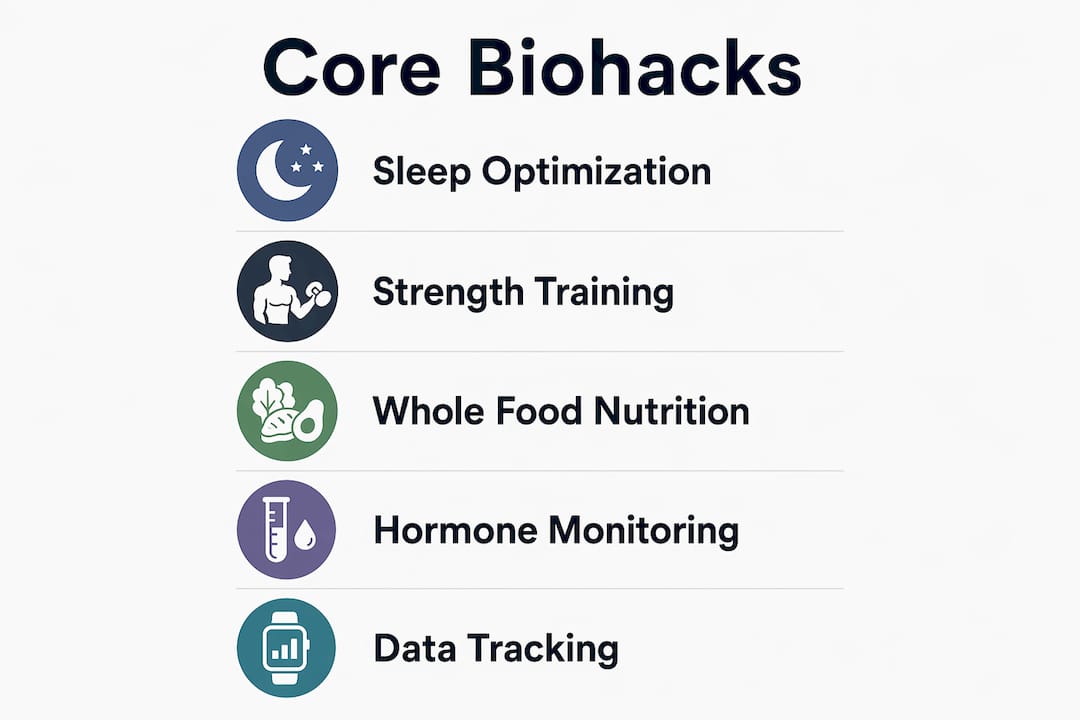
Before you consider any advanced protocol, master the fundamentals. Experts consistently confirm that whole foods, quality sleep, and regular exercise yield far superior health benefits than any wearable or experimental supplement. This is the most important insight in men's health biohacking, and it is also the most ignored.
Sleep: the highest-leverage variable
Seven to nine hours of quality sleep per night is not a recovery strategy. It is a hormonal strategy. Testosterone, growth hormone, and cortisol regulation all depend on sleep architecture. Men who consistently sleep under six hours show measurable drops in testosterone and elevated inflammatory markers. Aligning your sleep window with your natural circadian rhythm, typically a consistent bedtime between 10 p.m. and midnight, amplifies these effects.
Strength training and nutrition
- Resistance training 2–4 times per week preserves lean muscle mass, supports insulin sensitivity, and maintains metabolic rate through your 40s and 50s.
- Mediterranean-style whole-food nutrition provides the micronutrient density and anti-inflammatory profile that supports cardiometabolic health and hormone balance.
- Protein intake of 1.2–1.8 g/kg of body weight supports muscle retention and hormonal balance in active men, particularly those over 40.
- Stress management practices including structured recovery, breathwork, and deliberate downtime reduce chronic cortisol, which directly competes with testosterone production.
Wearables like the Oura Ring and Garmin Forerunner series provide useful feedback on heart rate variability, sleep staging, and recovery scores. Use them to confirm what your habits are producing, not to replace the habits themselves.
Pro Tip: Track your resting heart rate every morning for two weeks before changing anything. A rising trend over several days is one of the most reliable early signals of accumulated stress or poor recovery.
How do you measure and personalize your biohacking progress?
Personalization is what separates biohacking from generic wellness advice. Without objective data, you are guessing. The baseline phase is the critical first step: two weeks of tracking resting heart rate, sleep timing, and daily step count before making any changes.
Here is a practical sequence for building your baseline:
- Track without intervening. Spend two weeks logging sleep duration, wake time, resting heart rate, and energy levels. Use a Garmin or Oura device for objective data. Do not change your habits yet.
- Order a comprehensive blood panel. Key markers include total and free testosterone, SHBG, fasting insulin, HbA1c, vitamin D, ferritin, and a full lipid profile. These reveal true deficiencies rather than assumed ones.
- Work with a qualified clinician. A sports medicine physician or functional medicine doctor can interpret your labs in context. Self-interpreting hormone panels without clinical training leads to misguided interventions.
- Identify your highest-priority gap. Is your testosterone low? Is your vitamin D deficient? Is your sleep efficiency poor? Rank your findings and address the most impactful variable first.
- Set a review cycle. Reassess your tracked metrics every 4–6 weeks. Repeat blood panels every 3–6 months depending on what you are monitoring.
Without baseline labs, biohackers risk ineffective or harmful experimentation. This is not a theoretical concern. Men who self-prescribe testosterone or peptides without clinical oversight regularly create hormonal imbalances that take months to correct.
Pro Tip: Ask your doctor to include SHBG and free testosterone alongside total testosterone. Total testosterone alone misses the picture. Free testosterone is what your cells actually use.
What supplements and tools belong in a men's biohacking stack?
Supplements work best when they address confirmed deficiencies or support established habits. They do not replace sleep, training, or nutrition. With that framing, several compounds have strong evidence profiles for men aged 30–50.
| Supplement | Primary Benefit | Evidence Level |
|---|---|---|
| Vitamin D3 | Testosterone support, immune function, mood | Strong |
| Omega-3 (DHA/EPA) | Cardiovascular health, inflammation reduction | Strong |
| Magnesium glycinate | Sleep quality, muscle recovery, cortisol regulation | Moderate to strong |
| Creatine monohydrate | Muscle strength, cognitive function, power output | Strong |
These four compounds have established safety profiles and efficacy for supporting male performance. Creatine, in particular, is one of the most studied performance compounds in sports science, with benefits extending beyond the gym into cognitive resilience under stress.
Beyond supplements, lifestyle tools add measurable recovery value:
- Sauna use (3–4 sessions per week at 80–100°C) supports cardiovascular adaptation and growth hormone release.
- Cold exposure via cold showers or ice baths activates norepinephrine and supports mood regulation and metabolic function.
- Sleep trackers like the Oura Ring provide actionable data on deep sleep percentage and HRV trends.
Restoring sleep architecture and circadian alignment delivers more hormonal benefit than any supplement stack. This is the hierarchy that serious practitioners follow. Supplements are the final layer, not the foundation. For men looking to understand how specific nutrients support cognitive and physical function, the relationship between micronutrient status and performance is well documented.
What biohacking mistakes do men most commonly make?
The most common failure mode in men's health biohacking is not doing too little. It is doing too much, too fast, without a baseline.
- Optimization fatigue. Stacking multiple high-intensity interventions simultaneously, such as cold plunges, fasting, heavy training, and new supplements all at once, spikes cortisol and negates the benefits of each individual practice. Optimization fatigue is a documented risk, and practitioners recommend testing one new variable for 2–4 weeks before adding another.
- Skipping baseline testing. Starting a protocol without knowing your current testosterone, vitamin D, or insulin sensitivity is like adjusting a machine without reading its diagnostics. You may be solving a problem you do not have while ignoring the one you do.
- Over-relying on supplements. Supplements that mask poor sleep or inadequate nutrition create a false sense of progress. The underlying deficit remains and compounds over time.
- DIY hormone or peptide use. Testosterone replacement therapy and peptide protocols require medical supervision. Men who self-administer based on online forums regularly create suppression of natural hormone production, elevated hematocrit, or other complications requiring clinical correction.
- Chasing novelty over consistency. The biohacking space produces new protocols constantly. The men who achieve lasting results are the ones who execute the fundamentals with discipline over years, not the ones who adopt every new trend.
How do you build a practical biohacking protocol starting today?
A sustainable protocol is built in phases, not assembled all at once. Here is a framework designed for men aged 30–50 with demanding schedules.
- Establish your baseline. Two weeks of passive tracking with no changes. Log sleep, energy, resting heart rate, and training performance. Order your blood panel during this window.
- Lock in foundational habits. Consistent sleep schedule, 3–4 resistance training sessions per week, and Mediterranean-style nutrition. These three habits address the majority of performance gaps for most men. A longevity checklist for men that includes insulin sensitivity and nutrient status markers gives you a structured starting framework.
- Add targeted supplements. Based on your blood panel, address confirmed deficiencies first. Vitamin D3, omega-3s, and magnesium are the most commonly deficient in men over 35.
- Introduce recovery tools. Once your sleep and training are consistent, add sauna or cold exposure. Track HRV response to confirm benefit.
- Review and adjust every 4–6 weeks. Use your journal and wearable data to assess what is working. Change one variable at a time. Repeat blood panels every 3–6 months to track objective progress.
The men who optimize performance for lasting vitality treat this as a continuous practice, not a 30-day program. Adherence over years produces compounding returns that no single intervention can match.
Key takeaways
Biohacking for men delivers its greatest returns when foundational habits, objective baseline data, and targeted interventions are layered in sequence rather than adopted all at once.
| Point | Details |
|---|---|
| Foundation before technology | Sleep, strength training, and whole-food nutrition outperform any supplement or wearable in isolation. |
| Baseline testing is non-negotiable | Clinical blood panels covering testosterone, vitamin D, and insulin sensitivity must precede any protocol changes. |
| One variable at a time | Testing new interventions for 2–4 weeks before adding others prevents optimization fatigue and cortisol spikes. |
| Supplements address deficits | Vitamin D3, omega-3s, magnesium, and creatine have strong evidence profiles when used to correct confirmed gaps. |
| Long-term adherence wins | Consistent execution of fundamentals over years produces compounding performance and longevity benefits. |
What i have learned about biohacking after years in the field
The most common mistake I see men make is treating biohacking as a technology problem. They buy the Oura Ring, order a stack of supplements, and start cold plunging before they have slept a consistent seven hours in months. The device becomes a distraction from the discipline.
What actually moves the needle is boring. Sleep at the same time every night. Train with weights three times a week. Eat food that came from the ground or an animal. Get a blood panel twice a year. That is 80% of the result. Everything else is refinement.
The clinical data piece matters more than most men realize. I have spoken with men who spent months on aggressive supplement protocols only to discover their baseline testosterone was normal and their real issue was chronic sleep debt and elevated cortisol. A $300 blood panel would have saved them six months of misdirected effort.
The other thing I will say plainly: the men who sustain high performance into their 50s and 60s are not the ones who found the best biohack. They are the ones who built the most consistent habits and stayed curious about their data without becoming obsessed by it. Precision is useful. Obsession is a liability.
— Joakim
How Viridos supports your biohacking practice
Viridos was built for men who take their performance seriously and want tools that match that standard. The Viridos Performance Journal is designed specifically for tracking the variables that matter: sleep quality, training load, energy trends, and supplement timing. It gives structure to the baseline phase and keeps your review cycles consistent.

Viridos also produces small-batch sublingual supplement formulations developed in Sweden, with a delivery philosophy built around bioavailability and precision. For men aged 40–65 who want a premium, clinically informed approach to vitality and performance longevity, Viridos offers a membership experience that matches the discipline you already bring to your work.
FAQ
What is male biohacking in simple terms?
Male biohacking is the practice of using data, targeted lifestyle changes, and evidence-based interventions to improve health, performance, and longevity. It centers on sleep, nutrition, exercise, and hormone management as the highest-return areas.
How do you biohack your body safely as a man?
Start with two weeks of baseline tracking and a comprehensive blood panel before changing anything. Work with a qualified clinician to interpret results and address confirmed deficiencies rather than assumed ones.
What are the best biohacking supplements for men?
Vitamin D3, omega-3 fatty acids (DHA/EPA), magnesium glycinate, and creatine monohydrate have the strongest evidence profiles for men aged 30–50. All four support muscle, cognitive function, and hormonal health when used to address confirmed gaps.
What is optimization fatigue and how do men avoid it?
Optimization fatigue occurs when too many high-intensity interventions are stacked simultaneously, spiking cortisol and negating individual benefits. Avoid it by testing one new variable for 2–4 weeks before adding another.
Do i need expensive technology to start biohacking?
No. Foundational habits like consistent sleep, resistance training, and whole-food nutrition deliver the highest returns and require no technology. Wearables like the Oura Ring and Garmin devices add value once your habits are established, not before.