
TL;DR:
- Evidence-based strategies like resistance training and targeted supplementation optimize performance after 40.
- Prioritize consistency and simplicity over trend-chasing for sustainable results and long-term performance.
- Sleep quality, nutrition, and foundational habits are crucial performance levers often undervalued at this age.
The market for men's performance strategies is louder, more crowded, and more contradictory than ever. For executives and founders over 40, that noise is not just inconvenient — it's costly. Every hour spent chasing an unproven trend is an hour not invested in what actually moves the needle. Testosterone levels have declined roughly 1% per year since 1980, leaving men over 40 with up to 30% less than prior generations. What follows is a precise, evidence-based framework: criteria to use, top-performing solutions to consider, and a blueprint for building a plan that fits your actual life.
Table of Contents
- How to evaluate performance strategies for men over 40
- Top science-backed solutions for performance-focused men
- How top strategies compare: direct performance impacts
- Choosing the right interventions for your unique profile
- What most performance advice misses for executive men
- Elite performance starts with informed action
- Frequently asked questions
Key Takeaways
| Point | Details |
|---|---|
| Evidence beats trends | Only proven strategies deliver long-term boosts to vitality and resilience. |
| Sleep and recovery matter most | Getting at least 7 hours of sleep and managing stress are the foundation for executive performance gains. |
| Train smarter, not just harder | Combining resistance and aerobic training outperforms single-modality for metabolic health in men over 40. |
| Supplements support performance | Creatine, HMB, and ashwagandha help muscle, energy, and cognitive function with a safe profile for most men. |
| Customization equals results | Personalizing strategies to your health profile achieves greater, more sustainable performance improvements. |
How to evaluate performance strategies for men over 40
With an understanding of what's at stake, the next critical step is knowing how to separate genuinely effective strategies from ones riding temporary hype. Most men in demanding executive roles don't have time to run personal experiments or wait out six-month learning curves on protocols that never deliver.
The physiological landscape after 40 changes fast and in multiple directions simultaneously. Hormone output drops. Metabolic efficiency slows. Muscle protein synthesis requires more stimulus to achieve the same results as a decade ago. Sleep architecture shifts, cutting into the deep, restorative stages that fuel executive-level cognition and emotional regulation. Stress compounds every one of these processes. The men who navigate this successfully don't try harder. They select better.
Core physiological challenges to account for:
- Declining testosterone and growth hormone output, which affect muscle retention, libido, motivation, and body composition
- Increasing insulin resistance and metabolic risk, particularly visceral fat accumulation around the midsection
- Reduced sleep quality and total slow-wave sleep, impairing memory consolidation and decision-making
- Slower recovery from training and travel, raising injury risk when volume exceeds capacity
- Elevated baseline cortisol from sustained high-pressure environments, which accelerates muscle catabolism
Understanding this terrain shapes the selection criteria. Any strategy worth your investment needs to clear four gates: it must have peer-reviewed evidence behind it, it must be safe at the doses or intensities relevant to men in your health bracket, it must deliver benefits that persist over months and years rather than weeks, and it must be feasible inside a schedule already stretched to its limits.
Evidence-based means clinical trials, not testimonials. Vitality optimization for men 40–65 requires this discipline more than at any other life stage because the physiological margin for error shrinks while the number of vendors claiming solutions expands. Men who decline 1% annually in testosterone need strategies with actual dose-response data, not lifestyle influencer recommendations.
Pro Tip: Before committing to any new performance strategy, ask for the specific study population. If the trial was conducted on 25-year-old athletes, the results may not transfer to a 52-year-old managing a $50 million portfolio and four time zones.
Feasibility matters just as much as efficacy. A protocol that requires two hours of training daily, ten supplements before breakfast, and full eight-hour sleep blocks on a travel-heavy schedule isn't a strategy. It's a fantasy that creates guilt rather than results.
Top science-backed solutions for performance-focused men
With your criteria established, here are the highest-impact, evidence-supported tools available for men prioritizing performance after 40. These are not experimental. Each has a meaningful body of research supporting real-world outcomes in men who share your physiological profile.
Resistance and combined training
Structured strength training remains the single most validated intervention for men over 40. A landmark study found that strength and floorball training reduced HbA1c (a key marker of blood sugar regulation), body fat, visceral fat, and resting heart rate in older men after just 12 weeks at two sessions per week. Visceral fat, the metabolically active fat surrounding the organs, is the primary driver of insulin resistance and inflammatory load in executive men over 40.
Two sessions per week is an achievable target even on demanding travel schedules. The key is progressive overload, adding weight or difficulty incrementally so the muscular and metabolic systems continue adapting. Pairing resistance training with brief aerobic intervals compounds the benefit further, particularly for cardiovascular markers and sustained cognitive output.
Targeted supplementation: creatine, HMB, and ashwagandha
Not all supplements are created equal, and most don't survive contact with rigorous methodology. The ones below do.
Creatine monohydrate is one of the most studied performance compounds in existence. Combined with HMB (beta-hydroxy beta-methylbutyrate, a metabolite of the amino acid leucine), a six-week protocol with multicomponent exercise in adults over 60 improved gait speed, sit-to-stand performance, timed up-and-go tests, 400-meter walk performance, and basal metabolic rate, with large effect sizes across the board. Creatine supports ATP regeneration (cellular energy currency), which powers both muscular performance and short-burst cognitive demands like rapid decision-making under pressure.
Ashwagandha (Withania somnifera) has strong evidence for reducing cortisol, improving subjective stress markers, and supporting testosterone levels in men under chronic stress. For executives managing sustained pressure, cortisol suppression is not a nice-to-have. It's foundational. Explore top vitamins for vitality to identify compounds worth adding alongside these.
HMB specifically targets muscle protein breakdown, which becomes increasingly problematic after 40 as the body becomes less efficient at preserving lean mass during periods of caloric restriction, travel, or insufficient sleep.
| Supplement | Primary benefit | Onset | Evidence level |
|---|---|---|---|
| Creatine monohydrate | Energy output, muscle mass | 2–4 weeks | Very strong |
| HMB | Muscle preservation, metabolism | 4–6 weeks | Strong |
| Ashwagandha | Cortisol, testosterone support | 4–8 weeks | Strong |
| Vitamin D3 + K2 | Hormonal baseline, immunity | 6–12 weeks | Strong |
| Magnesium glycinate | Sleep depth, recovery | 1–2 weeks | Moderate |
Pro Tip: Stack creatine and HMB together during periods of reduced training volume, specifically during high-travel months. This is when muscle loss accelerates fastest in high-performing men, and these two compounds directly counter it.
Sleep optimization
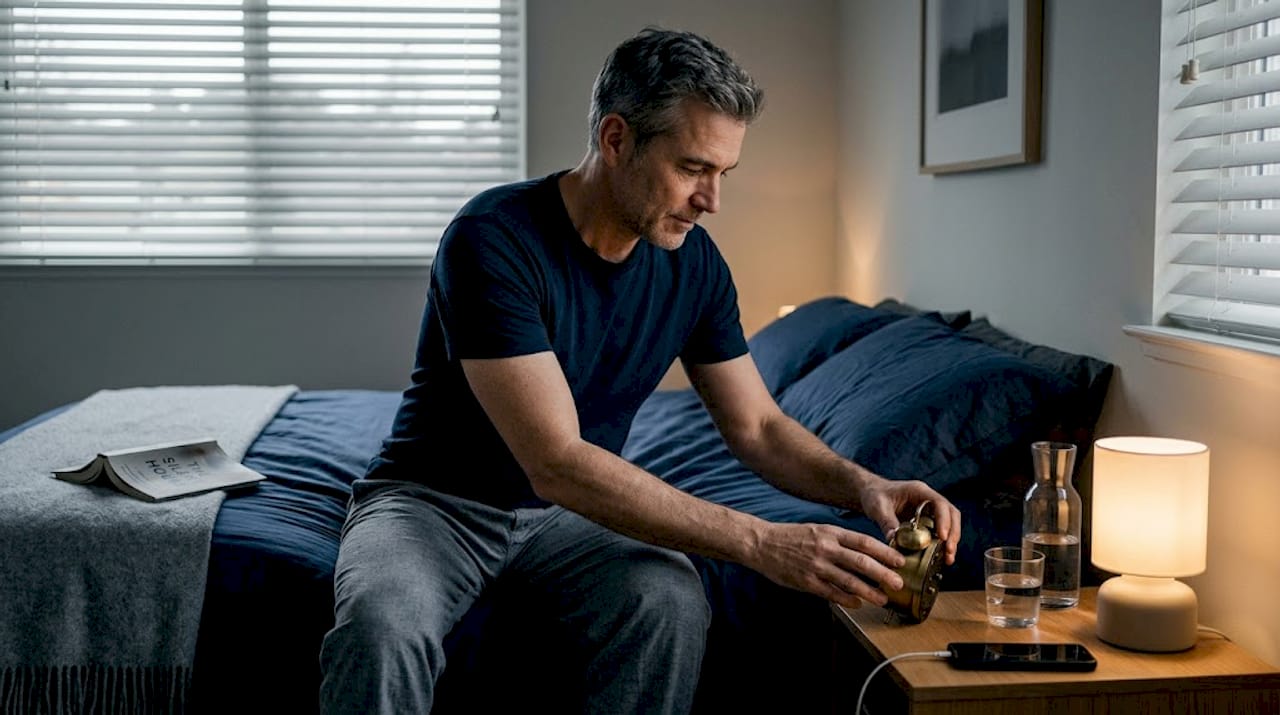
Sleep is the most undervalued performance lever available, and it's free. Less than 7 hours impairs executive function at the same level as 48 hours without sleep entirely. That means if you're routinely getting six hours on weeknights, your cognitive performance in the boardroom is genuinely compromised, regardless of how alert you feel subjectively.
Sleep extension and optimization protocols include fixed wake times, pre-sleep cooling, minimizing alcohol (which suppresses slow-wave sleep within the first half of the night), and strategic use of magnesium glycinate. Building healthy lifestyle routines around sleep rather than treating it as a residual of your schedule is a structural shift that pays compounding dividends.
Testosterone replacement therapy
TRT is increasingly accessible and aggressively marketed to men over 40. The evidence is real but nuanced. TRT augments muscle glycolysis and VO2 peak, supporting body composition and cardiovascular capacity. However, it requires physician supervision, involves regular monitoring, and does not outperform lifestyle interventions on certain critical markers. The self-optimization guide covers when TRT is a serious option versus when foundational changes make it unnecessary.
How top strategies compare: direct performance impacts
Understanding each strategy individually is helpful, but here's how they stack up head-to-head for real-world executive performance.
| Strategy | Speed of results | Sustainability | Executive feasibility | Key risk |
|---|---|---|---|---|
| Resistance + combined training | 4–8 weeks | Very high | High (2x/week minimum) | Injury with poor form |
| Creatine + HMB supplementation | 2–6 weeks | Very high | Very high (daily dose) | Minimal at clinical doses |
| Ashwagandha | 4–8 weeks | High | Very high | Mild GI sensitivity |
| Sleep optimization | 1–2 weeks | High | Moderate (requires schedule discipline) | None |
| TRT (physician-supervised) | 4–12 weeks | Moderate | Moderate (requires monitoring) | Lipid impact, dependency |
Concurrent and resistance training are superior to aerobic training alone for reducing fasting blood glucose, insulin resistance, and systolic blood pressure in inactive overweight men around age 49. That's a critical data point for executive men who have historically relied only on cardio, running or cycling, as their primary fitness outlet.
TRT is frequently overstated in performance circles. While it augments muscle glycolysis and VO2 peak, it may actually impede some lipid benefits that come from training and lifestyle optimization alone. This is not a reason to dismiss it, but it is a reason to exhaust foundational approaches first.
What high-performing men tend to prioritize, based on evidence and real-world feasibility:
- Two to three resistance training sessions per week as the non-negotiable baseline
- Creatine monohydrate as a daily staple, particularly during high-stress or high-travel periods
- Sleep as a performance input, not a recovery afterthought
- Supplementation to fill nutritional gaps, not replace foundational habits
"The fastest path to sustained executive performance is eliminating what depletes you before adding what enhances you." This is the operating logic behind a sound longevity checklist for men.
Choosing the right interventions for your unique profile
With comparative insights clear, here's how to decide which options actually fit your life and goals. No two executive profiles are identical, and applying a one-size framework is precisely the error that leads to wasted investment and inconsistent results.
A four-step process for building your personal protocol:
-
Establish your baseline. Get fasting blood glucose, total and free testosterone, HbA1c, lipid panel, and Vitamin D levels. You cannot optimize what you haven't measured. These numbers will guide whether sleep, training, or supplementation is your highest-leverage entry point.
-
Identify your primary bottleneck. Is it body composition? Recovery speed? Cognitive sharpness? Motivation and drive? Each points to a different primary intervention. Cognitive issues often trace back to sleep disruption. Body composition challenges in men over 40 frequently map to insulin resistance and low training stimulus, not just diet.
-
Match interventions to your stress load. A man managing a business through a high-growth period carries a different cortisol burden than one in a stable maintenance phase. During high-load periods, recovery-first strategies (sleep, ashwagandha, creatine for preservation) take priority over adding training volume. The high-performance living guide frames this tradeoff precisely.
-
Commit to a 12-week window before evaluating. Most interventions require 8 to 12 weeks to produce measurable results. Men who abandon protocols at week four never capture the compounding benefits that materialize in weeks eight through sixteen.
The two mistakes that derail most executives:
The first is trend-chasing. New compounds, devices, and protocols capture attention constantly. Without a stable foundation of training, sleep, and targeted supplementation, layering on additional interventions adds complexity without returns.
The second is dismissing foundational lifestyle elements in favor of medical intervention. TRT is powerful and sometimes genuinely necessary. But TRT adds no HbA1c benefit beyond lifestyle therapy and may actually blunt gains in HDL cholesterol and adiponectin, a protein that supports insulin sensitivity. For men whose testosterone is low but not clinically deficient, structured training and quality supplementation can close most of the gap without the monitoring burden or side effect profile of prescription hormone therapy.
What most performance advice misses for executive men
Here is the uncomfortable reality most performance content won't tell you: the bottleneck for high-performing men is almost never information. You have access to the same research, the same trainers, and the same supplement stacks as everyone else. The actual constraint is cognitive bandwidth for genuine implementation.
Every protocol you add competes for attention, willpower, and schedule space. When you commit to six interventions simultaneously, you don't get six times the benefit. You get diluted effort across all six, with none receiving the consistency required to produce lasting adaptation. This is true in business, and it's equally true in physiology.
The men who achieve durable performance gains are almost always the ones who chose two or three interventions and applied them with relentless consistency for twelve months. Not the ones who stacked every trending approach from January to March and then burned out.
Sustainable performance compounds like interest. Two well-executed strategies applied consistently for a year outperform ten half-executed strategies cycled quarterly. Performance longevity for peak success is not built by accumulating tactics. It is built by mastering simplicity under sustained pressure.
The most disciplined move an executive can make is not adopting a new protocol. It is rejecting the ones that don't fit his specific physiological profile, stress load, and schedule, and fully committing to the ones that do.
Elite performance starts with informed action
Equipped with your personalized performance blueprint, the next step is sustained access to evidence-based guidance calibrated to your level.

At VIRIDOS, the entire platform is built around this exact standard: precision, clinical backing, and relevance to men managing real executive demands. The Performance Journal provides ongoing, curated analysis of the strategies, compounds, and protocols that actually matter, without noise, trends, or generic wellness content. If you are serious about building a performance edge that compounds over years, not weeks, that is where to focus next.
Frequently asked questions
How much can exercise really improve executive performance after 40?
Regular strength or combined exercise significantly reduces metabolic risk, improves body composition, and supports long-term executive function. Concurrent and resistance training outperform aerobic training alone for fasting blood glucose, insulin resistance, and blood pressure in inactive overweight men around age 49.
Are testosterone boosters safer than prescription TRT?
For men without clinically low testosterone, evidence favors supplements like ashwagandha or creatine over prescription TRT unless supervised by a physician. OTC boosters are safer for non-clinical low testosterone and carry a far lower monitoring burden than hormone therapy.
What happens if I don't get at least 7 hours of sleep?
Consistently sleeping less than 7 hours impairs executive function as much as 48 hours awake, directly harming decision quality and emotional regulation. Sleep under 7 hours is not a minor inconvenience; it's a measurable performance liability in high-stakes roles.
Does TRT improve blood sugar control better than lifestyle change?
TRT does not improve HbA1c more than lifestyle alone and may blunt some of the lipid benefits from lifestyle therapy. TRT adds no HbA1c advantage over structured lifestyle intervention and may reduce HDL and adiponectin gains in the process.