
TL;DR:
- Personal vitality encompasses sustained physical energy, mental clarity, emotional resilience, and functional capacity.
- It depends on consistent habits in nutrition, movement, sleep, and circadian alignment for long-term performance.
Personal vitality is defined as the sustained state of physical energy, mental clarity, emotional resilience, and functional capacity that professionals can build and maintain through deliberate daily habits. Unlike simple energy management, vitality operates as a system-level state requiring simultaneous attention to nutrition, movement, sleep, and mindset. For professionals aged 30–60 managing demanding careers, vitality is not a luxury. It is the foundation of consistent performance and long-term career longevity. This guide to personal vitality breaks down each pillar with specificity, so you can act on what actually works.
What is a guide to personal vitality, and why does it matter for professionals?
Personal vitality is often mistaken for mere energy. True vitality includes emotional resilience and mental clarity, and a systems approach is essential to sustaining it. That distinction matters for executives and founders who push through fatigue with caffeine and willpower, only to find their decision quality eroding by Thursday afternoon. Vitality is the deeper reservoir that keeps performance consistent across weeks and months, not just hours.
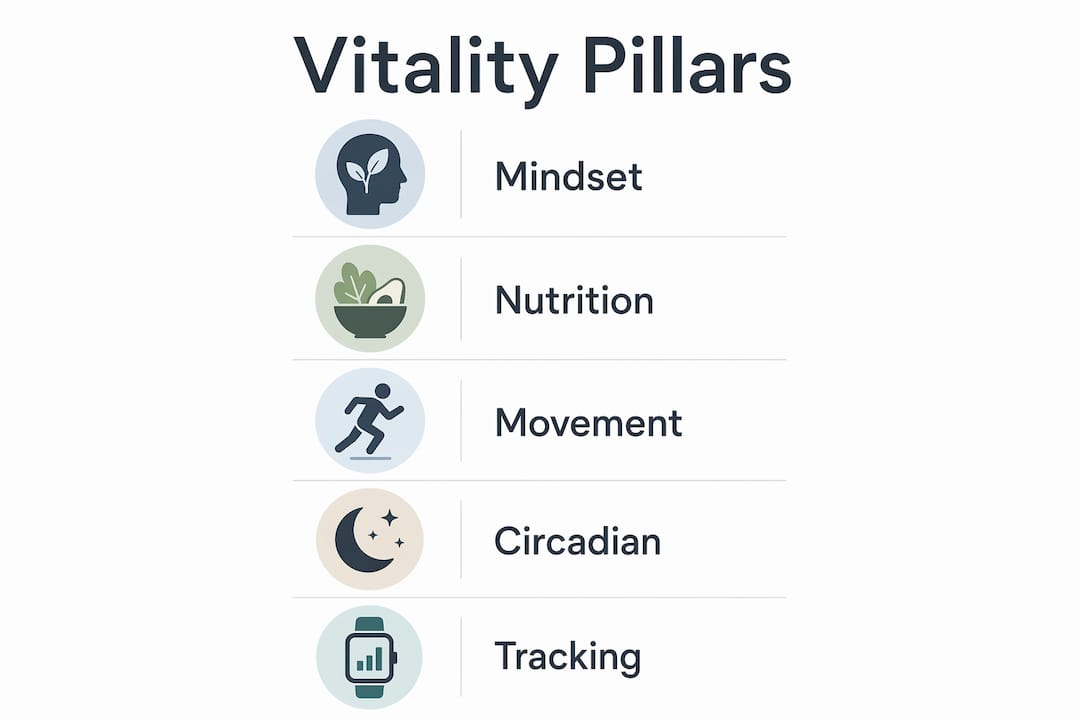
The standard framework for vitality identifies four interdependent pillars: mindset, nutrition, movement, and environment. Each pillar reinforces the others. Neglect one long enough and the entire system degrades. Professionals in demanding roles rarely collapse from a single cause. They erode gradually, across multiple pillars at once, until the cumulative deficit becomes impossible to ignore.
Improvements in vitality typically emerge after 2–4 weeks of consistent foundational habit adoption. The experience is not a dramatic energy spike. Most men describe it as simply feeling like themselves again. That is the benchmark worth targeting.
How does balanced nutrition support personal vitality?
Nutrition is the most direct lever available for vitality enhancement. The baseline standard for adults is at least 300g of vegetables and fruit daily, whole grains, lean proteins, and sodium below 6g per day. Most professionals hit none of these targets consistently. The gap between knowing the standard and meeting it is where vitality quietly deteriorates.
Protein intake deserves particular attention for men aged 35–65. The recommended target is 1.5g of protein per kilogram of body weight daily. That level supports energy output, muscle preservation, and the functional benchmarks that track physical capacity over time. A 90kg man needs 135g of protein daily. Most professionals eating three standard meals land well below that.
Targeted supplementation fills the gaps that diet alone cannot close. The most common deficiencies in this demographic are Vitamin D, B12, and omega-3 fatty acids. Each of these affects energy metabolism, neurological function, and inflammatory response. The key word is targeted. Megadoses and untested supplement stacks carry real risk and deliver no additional benefit beyond correcting a documented deficiency.
Key nutritional priorities for sustained vitality:
- Vegetables and fruit: 300g minimum daily, prioritizing fiber-dense options
- Protein: 1.5g per kilogram of body weight, distributed across meals
- Sodium: Below 6g daily to support cardiovascular and metabolic function
- Supplementation: Vitamin D, B12, and omega-3 where deficiency is confirmed
- Refined carbohydrates: Minimize before midday to stabilize blood sugar and prevent post-breakfast fatigue
Pro Tip: Delaying high-glycemic carbohydrate intake until midday leverages insulin sensitivity and prevents the mid-morning energy crash that derails focus during your most cognitively demanding hours.
What role does regular physical movement play in sustaining vitality?
Exercise is the most evidence-backed method for improving mitochondrial function, regulating cortisol, and sustaining mental clarity. The recommended weekly standard is 150 minutes of aerobic activity and two muscle-strengthening sessions. That is the floor, not the ceiling. Professionals who treat this as optional are trading long-term capacity for short-term schedule convenience.
Movement before subjective fatigue accumulates is the key principle. Physical activity before exhaustion sets in optimizes mitochondrial function and cortisol regulation. Waiting until you feel depleted to exercise produces diminishing returns. The discipline is moving consistently, not heroically.
A practical framework for building and sustaining movement habits:
- Set the weekly floor. Commit to 150 minutes of aerobic work and two strength sessions as non-negotiable minimums.
- Choose modalities you will actually repeat. Rowing, cycling, swimming, and resistance training all qualify. Consistency matters more than variety.
- Add daily movement anchors. A 10-minute walk after lunch and standing during calls accumulates meaningful activity without requiring dedicated gym time.
- Use pacing as a performance tool. The Harvard energy management framework of planning, pacing, positioning, and prioritizing applies directly to training load. Avoid abrupt volume increases that cause injury or burnout.
- Track functional progress every 8 weeks. The 6-minute walk test is a validated, low-cost benchmark for aerobic capacity. A consistent improvement trend confirms the program is working.
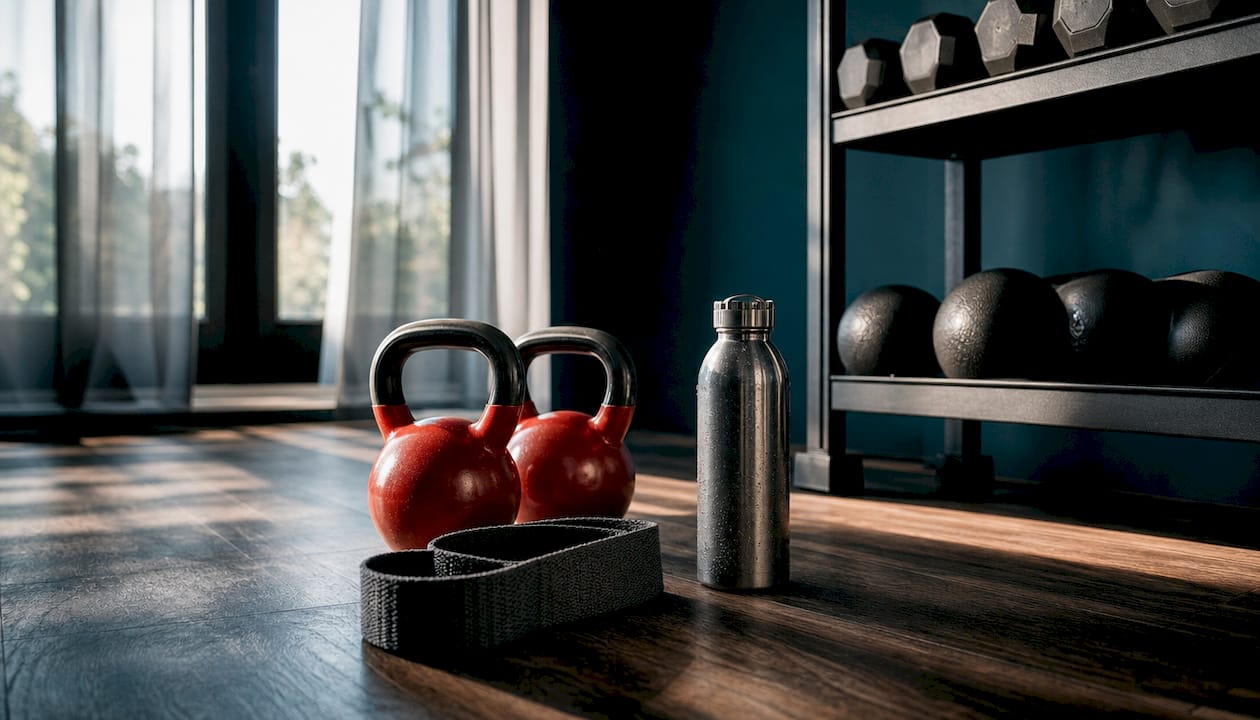
For professionals interested in functional fitness tools that support consistent movement habits, the principle is the same: choose what you will use repeatedly, not what looks most impressive.
Pro Tip: Schedule your two weekly strength sessions on your calendar the same way you schedule client calls. Treating them as fixed appointments reduces the decision fatigue that causes professionals to skip them.
How do circadian alignment and daily routines influence vitality?
Circadian alignment is the least discussed and most underestimated pillar of vitality enhancement. The body's hormonal and neurochemical systems run on a 24-hour clock. Disrupting that clock through irregular sleep, artificial light exposure, and erratic meal timing produces a cumulative energy deficit that no amount of coffee or willpower can offset.
Morning sunlight exposure is the most powerful circadian anchor available. 5–10 minutes of direct sunlight within 30–60 minutes of waking calibrates the cortisol awakening response and sets the hormonal tone for the entire day. On overcast days, cloud cover still transmits the wavelengths needed for circadian calibration, but the exposure time required increases to approximately 20 minutes. This is a free, zero-effort intervention that most professionals skip entirely.
Practical circadian habits that protect vitality:
- Morning sunlight: 5–10 minutes outdoors within 30–60 minutes of waking; 20 minutes on cloudy days
- Consistent sleep and wake times: Regular sleep schedules optimize melatonin and cortisol rhythms, which are essential for restorative sleep
- Meal timing: Eat the first substantial meal within 1–2 hours of waking; avoid large meals within 3 hours of sleep
- Evening light discipline: Reduce screen brightness and overhead lighting after 9:00 PM to support melatonin onset
- Alcohol and late caffeine: Both disrupt sleep architecture and impair the cortisol awakening response the following morning
"High-agency professionals don't need life overhauls. Foundational practices like time boundaries and recovery support the nervous system states that make vitality possible. The intervention is almost always simpler than the problem feels."
The most common circadian mistake among executives is treating sleep as a variable to compress under deadline pressure. Sleep consistency is not a recovery tool. It is a performance input. Treating it as optional is the equivalent of skipping meals before a high-stakes presentation.
What practical tools and tracking methods support long-term vitality improvement?
Tracking vitality does not require expensive technology. The most effective method is a daily energy and mood log that rates sleep quality, energy level, and focus on a simple 1–10 scale each morning. Over two to three weeks, patterns emerge that reveal which habits are producing results and which are not. The log takes 90 seconds and generates more useful data than most wearables.
Functional testing adds an objective layer. The 6-minute walk test, repeated every 8 weeks, provides a validated measure of aerobic capacity and physical function. A consistent upward trend confirms that the movement and nutrition pillars are working. A plateau or decline signals that something in the system needs adjustment.
| Tracking method | Best use case |
|---|---|
| Daily energy log (1–10 scale) | Identifying patterns in sleep, nutrition, and mood over 2–4 weeks |
| 6-minute walk test (every 8 weeks) | Objective measure of aerobic capacity and functional progress |
| Weekly habit audit | Reviewing adherence to nutrition, movement, and sleep targets |
| Supplement log | Confirming consistent intake and noting any subjective changes |
The most important principle in vitality tracking is stepwise habit integration. Add one new habit at a time, confirm it is stable, then add the next. Professionals who attempt full-system overhauls simultaneously almost always revert within three weeks. The four P's framework from Harvard Health, planning, pacing, positioning, and prioritizing, applies directly here. Pace your habit adoption the same way you pace a demanding project.
Pro Tip: Review your daily log every Sunday for 10 minutes. Look for the three lowest-scoring days of the week and identify the one variable they share. That single variable is your highest-leverage intervention point.
For a deeper look at vitality strategies for professionals, the Viridos blog covers the systems-level approach in detail, including how resilience and performance longevity connect to each pillar.
Key Takeaways
Sustained personal vitality requires consistent execution across nutrition, movement, circadian alignment, and tracking, not isolated interventions or periodic resets.
| Point | Details |
|---|---|
| Vitality is a system, not a feeling | All four pillars, nutrition, movement, sleep, and mindset, must be maintained simultaneously for lasting results. |
| Protein and vegetable targets are non-negotiable | Aim for 1.5g protein per kilogram of body weight and 300g of vegetables and fruit daily. |
| Morning sunlight is the simplest circadian anchor | 5–10 minutes outdoors within 30–60 minutes of waking sets hormonal tone for the entire day. |
| Track with simplicity, adjust with precision | A daily 1–10 energy log and an 8-week 6-minute walk test provide all the data most professionals need. |
| Habit adoption must be stepwise | Adding one habit at a time and confirming stability before adding the next prevents the reversion cycle. |
What high achievers get wrong about vitality
The most common mistake I see among executives and founders is treating vitality as a problem to solve rather than a system to maintain. They approach it the same way they approach a business challenge: identify the gap, apply maximum resources, close it fast. That works for quarterly targets. It does not work for biology.
The professionals who sustain high performance into their 50s and 60s are not the ones who found the best biohack. They are the ones who made morning sunlight, consistent protein intake, and regular movement so routine that those habits require no decision-making at all. The vitality optimization work happens below the level of conscious effort. That is the actual goal.
What I find most counterintuitive is how little is required once the system is running. The 150-minute weekly aerobic standard, the 1.5g protein target, the consistent sleep window. None of these are extreme. The difficulty is not the standard. The difficulty is the consistency. Most professionals can sustain any single habit for two weeks. The test is whether it is still in place at week twelve.
Vitality is not a destination you reach after a 30-day program. It is a dynamic state that compounds over years when you protect the inputs. The men who understand that early in their careers carry a significant performance advantage into the decades when it matters most.
— Joakim
Viridos and the tools that support sustained performance
Viridos was built for professionals who take performance longevity seriously. The Viridos Performance Journal is a structured daily tracking tool designed specifically for the habits covered in this guide: energy logging, habit adherence, and weekly review. It removes the friction from the tracking process so the data actually gets recorded.
The Viridos membership provides ongoing education, structured programs, and a community of high-agency men committed to sustained performance. For professionals who want a structured framework rather than a collection of disconnected habits, the membership delivers the accountability layer that makes consistency possible. Viridos products are produced in small batches in Sweden, with the same precision and discipline the brand asks of the men who use them.
FAQ
What is personal vitality?
Personal vitality is the sustained state of physical energy, mental clarity, emotional resilience, and functional capacity. It is a system-level condition built through consistent nutrition, movement, sleep, and mindset habits.
How long does it take to improve vitality?
Noticeable vitality improvements typically emerge after 2–4 weeks of consistent foundational habit adoption. The experience is less a dramatic energy spike and more a return to baseline function and clarity.
How much protein do I need for sustained energy?
Adults aged 35–65 benefit from 1.5g of protein per kilogram of body weight daily. That level supports energy output, muscle preservation, and functional capacity over time.
What is the best way to track vitality progress?
A daily energy and mood log rated on a 1–10 scale, combined with the 6-minute walk test every 8 weeks, provides reliable objective and subjective data without requiring expensive equipment.
Does morning sunlight actually affect energy levels?
Yes. Five to ten minutes of direct sunlight within 30–60 minutes of waking calibrates the cortisol awakening response, which sets hormonal tone for the entire day and supports consistent energy through the afternoon.