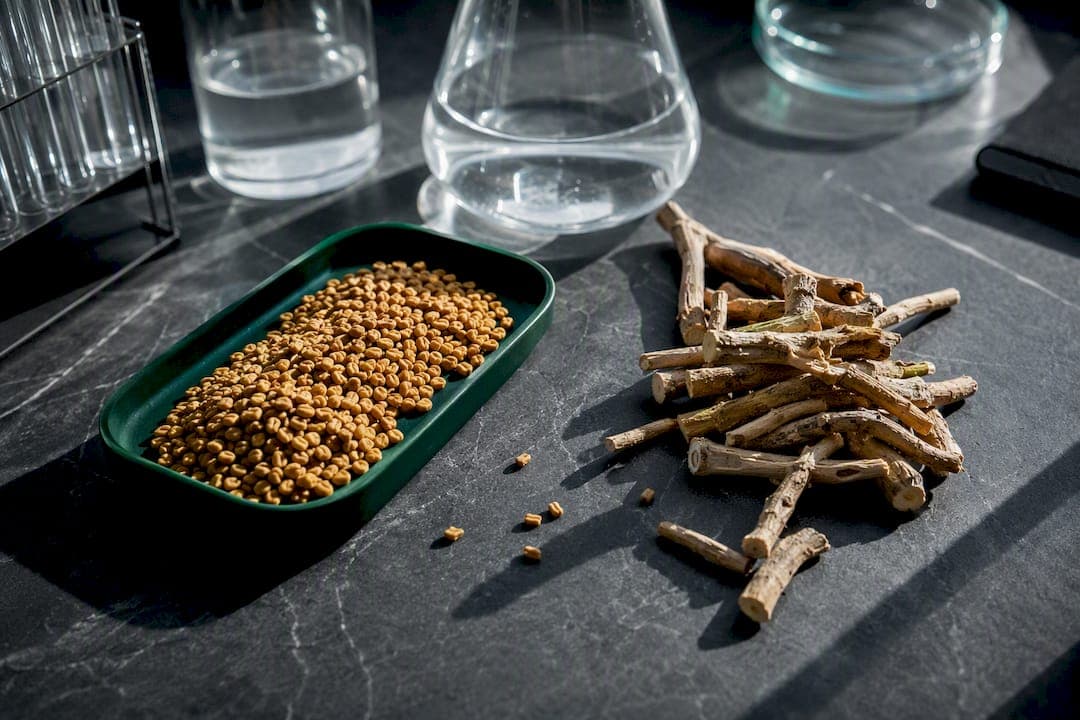
Fenugreek and ashwagandha are the two phytoandrogens with real clinical backing for men over 40, alongside targeted correction of vitamin D, zinc, and magnesium when deficient. The gains are modest and most reliable in men who start with low-normal testosterone or a documented deficiency. A 2024 randomized trial on fenugreek is the strongest recent evidence, but no botanical outperforms sleep, resistance training, and weight management as the primary lever.
TL;DR:
- Fenugreek shows a significant testosterone increase at doses of 600 to 1,800 mg daily over 12 weeks, with no major adverse effects reported.
- Ashwagandha primarily reduces cortisol and improves stress and vitality, with smaller secondary effects on testosterone at doses of 300 to 600 mg daily.
- Correcting vitamin D, zinc, and magnesium deficiencies has a stronger impact on testosterone levels than botanical supplements alone.
- Lifestyle factors like weight loss, resistance training, and quality sleep outperform botanicals in boosting testosterone for men over 40.
- Testing labs and fixing sleep issues should precede botanical trials, with supplements used as monitored, short-term interventions.
Table of Contents
- Which Phytoandrogens Have Credible Evidence for Men 40+?
- How Do These Compounds Actually Work, and How Strong Is the Evidence?
- Who Benefits, and When Should You Get Tested?
- Safety, Dosing, and Practical Precautions
- What Matters More Than Any Supplement
- The VIRIDOS Perspective: A Disciplined, Monitored Protocol
- Where the Conventional Advice Gets This Wrong
- A Monitored Path Forward With VIRIDOS
- Sources
Which Phytoandrogens Have Credible Evidence for Men 40+?
Two botanicals dominate the legitimate research on phytoandrogens for men 40+: fenugreek and ashwagandha. Everything else in this category, from tribulus to maca, has thinner or inconsistent data. Here is what the trials actually show, dose by dose.
Fenugreek (Trigonella foenum-graecum). The most rigorous recent evidence comes from a 2024 double-blind randomized controlled trial involving 95 men aged 40 to 80. Using a standardized fenugreek extract called TrigozimR, researchers tested doses between 600 and 1,800 mg per day over 12 weeks. At the highest dose, saliva testosterone rose significantly versus baseline, and the free testosterone index showed a moderate increase after 12 weeks. The trial reported no significant adverse effects at these doses, which is notable given how many "natural testosterone" products carry vague safety data.
Ashwagandha. Standardized extracts, most often the KSM-66 formulation, have shown modest testosterone increases alongside meaningful stress reduction in middle-aged and overweight men. Typical trial doses run 300 to 600 mg per day. The honest read: ashwagandha's clearest, most consistent benefit is cortisol reduction and subjective vitality, with testosterone changes as a secondary, smaller effect. For a 45-year-old executive running on five hours of sleep and back-to-back board calls, that stress-axis effect may matter more than the hormone number itself.
Micronutrients: vitamin D, zinc, magnesium. These aren't phytoandrogens, but no serious protocol skips them. Micronutrient status plays a documented role in male reproductive endocrinology, and correcting a genuine deficiency, rather than supplementing blindly, is where the benefit lives. Vitamin D repletion matters most in men with serum levels under 20 ng/mL. Zinc deficiency, more common in men with restrictive diets or heavy alcohol intake, directly impairs testosterone synthesis. Magnesium supports enzymatic pathways involved in hormone regulation and sleep quality, which loops back into testosterone indirectly.
Beyond the headline names, a handful of adjuncts show up consistently in serious protocols:
- Omega-3 (EPA/DHA): supports cardiovascular and cellular health; not a testosterone driver, but foundational to overall metabolic function.
- Creatine monohydrate: one of the best-studied compounds in sports science for preserving lean mass and strength output as men age, independent of hormone levels.
- CoQ10 and resveratrol: support cellular energy production; the evidence here is thinner and the effect size is modest at best.
None of these adjuncts move testosterone directly. They matter because performance longevity is a systems problem, not a single-hormone problem.
How Do These Compounds Actually Work, and How Strong Is the Evidence?
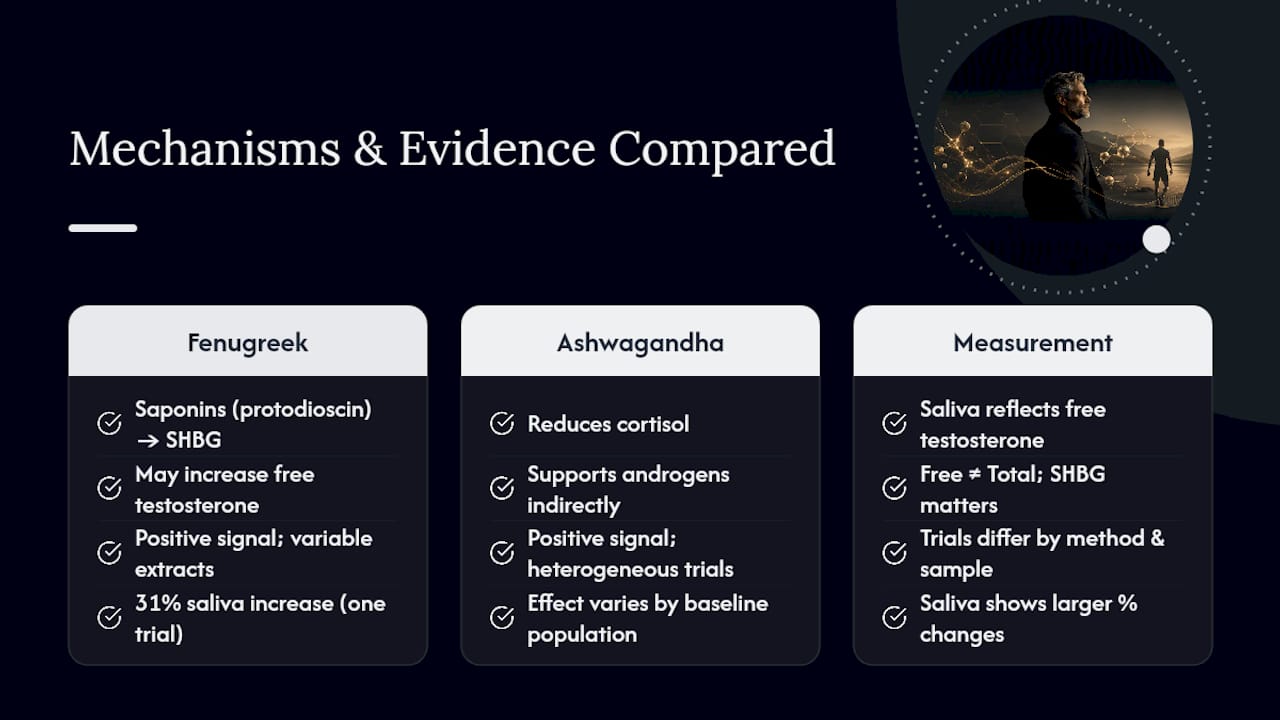
The proposed mechanisms behind fenugreek and ashwagandha are plausible but not fully settled. Fenugreek's saponin compounds, particularly protodioscin, are thought to influence sex hormone binding globulin (SHBG) and enzymatic pathways that affect free testosterone availability. Ashwagandha's primary mechanism appears to run through cortisol reduction. Chronic stress elevates cortisol, which competes with testosterone production at the adrenal and testicular level, so lowering cortisol can indirectly support androgen output.
Free testosterone and total testosterone are not the same measurement, and conflating them is one of the most common mistakes in this space. Total testosterone includes hormone bound to SHBG and albumin, most of which is biologically inactive. Free testosterone is what actually reaches receptor sites. A man can have "normal" total testosterone on a standard panel while running low on free testosterone if his SHBG is elevated, which happens more often with age.
A systematic review of herbal interventions on testosterone found that fenugreek and ashwagandha show some positive signal, but the underlying trials vary widely in sample size, extract standardization, and baseline population. A trial in men with clinically low testosterone will show different results than one in healthy young men with normal levels, and pooling those studies muddies the real effect size. Extract standardization matters too. Not every "fenugreek" product on a shelf contains the saponin concentration used in the trial that produced the 31% saliva testosterone increase.
Measurement method adds another layer of nuance. Saliva testing may better reflect free, bioavailable testosterone because saliva only carries unbound hormone, unlike blood plasma, which includes protein-bound testosterone. That is partly why the fenugreek trial reported larger percentage changes in saliva than in plasma. A "clinically meaningful" change generally means a shift large enough to move symptoms, not just a number on a lab report.
Who Benefits, and When Should You Get Tested?
Not every man over 40 needs a hormone protocol. The men most likely to see real benefit from phytoandrogens and micronutrient correction fall into a few identifiable profiles.
- Symptomatic men with low-normal labs. Fatigue, reduced libido, and slower recovery paired with total testosterone in the lower third of the reference range are the clearest candidates for a trial.
- Men with a documented micronutrient deficiency. Low vitamin D, zinc, or magnesium on a blood panel is a straightforward, correctable issue, and often produces more noticeable improvement than any botanical.
- Men under chronic stress or with poor sleep. Elevated cortisol and short sleep duration suppress testosterone independently of age, and ashwagandha's stress-axis effect fits this profile best.
Before starting anything, get a baseline. Ask for morning total testosterone, SHBG, calculated free testosterone or free androgen index, vitamin D, zinc, and magnesium. Morning timing matters, since testosterone follows a diurnal rhythm and peaks early. Saliva testing is available as a supplementary option and can offer a useful free-hormone snapshot, though it is less standardized across labs than serum testing and best used alongside, not instead of, blood work. For a deeper look at how serum testosterone testing works and what the numbers mean in practice, see this guide to testosterone support.
Certain findings warrant a direct visit to a physician rather than a supplement trial: markedly low testosterone (well below the reference range), symptoms suggesting a pituitary or testicular disorder, or current use of anticoagulants, thyroid medication, or hormone-sensitive prescriptions. Self-directed supplementation is not the right move in any of those cases.
Safety, Dosing, and Practical Precautions
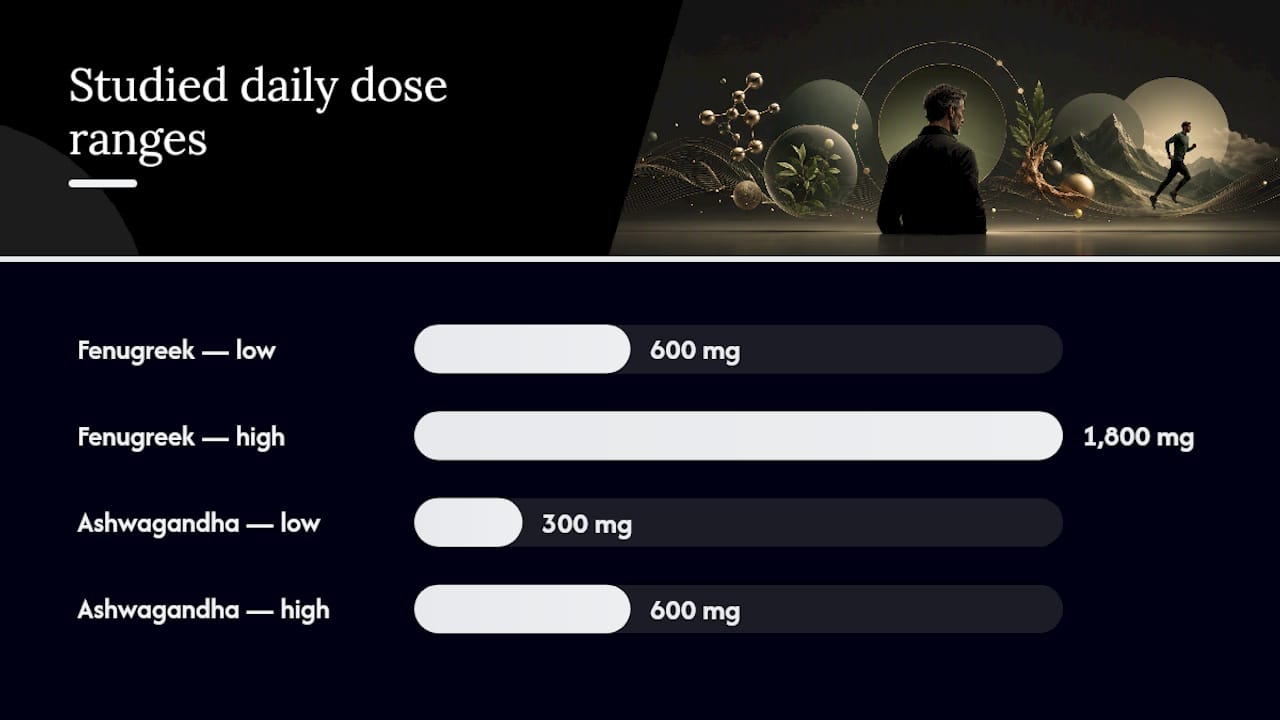
The trial doses that produced measurable results give a useful reference point, but they are not a prescription. Fenugreek trials have used 600 to 1,800 mg per day; ashwagandha trials typically run 300 to 600 mg per day. Both ranges reported good tolerability, with no major adverse events at the doses studied.
Micronutrients carry real upper limits that are easy to overlook. Vitamin D toxicity is rare but possible with sustained high-dose supplementation without monitoring. Zinc taken in excess over long periods can interfere with copper absorption and cause its own deficiency syndrome. Magnesium is generally forgiving in healthy kidneys but should be dosed conservatively in men with renal impairment.
Interactions matter more than most marketing copy admits. Men on anticoagulants or antiplatelet medication should discuss any new botanical with a physician, since several herbal compounds have mild blood-thinning properties. Men on thyroid medication should also flag any new supplement, as absorption timing can shift.
A few practical rules apply across the board:
- Start at the lower end of the studied dose range and hold there for at least four weeks before adjusting.
- Document baseline symptoms and labs before you start, so you can measure change against something real.
- Cycle botanicals rather than running them indefinitely; short breaks help you confirm the effect is still doing something rather than becoming background noise.
- Stop and consult a physician if you notice unusual symptoms, particularly with fenugreek's known cross-reactivity risk in men with peanut or chickpea allergies.
Pro Tip: Track your labs and symptoms on the same schedule every time, morning draws only. A single afternoon testosterone reading compared against a morning baseline will make any supplement look like it failed, when the difference is just the time of day.
Men with hormone-sensitive conditions, prostate concerns, or anyone currently on prescription hormone therapy should treat this entire category as a conversation with a doctor first, not a self-directed experiment.
What Matters More Than Any Supplement
No phytoandrogen outperforms the basics. Weight loss, resistance training, and quality sleep reliably raise testosterone in men who are carrying excess body fat, training inconsistently, or sleeping poorly, and the effect size on these three factors generally exceeds anything a botanical extract delivers on its own. A clinical review from University of Utah Health lists the same three levers, weight management, resistance training, and sleep hygiene, as the primary evidence-based strategies for older men, ahead of any supplement category.
The sequence matters. Fix sleep and training first, then layer in supplements to address what remains. A reasonable starting framework: target 7 to 8 hours of sleep consistently, commit to 2 to 3 resistance training sessions per week, and prioritize a modest caloric deficit if body fat is elevated. Give that four to six weeks before evaluating whether a botanical trial is worth adding. For a broader framework on sequencing these interventions, this guide to optimizing performance after 40 walks through the order of operations in more detail.
The VIRIDOS Perspective: A Disciplined, Monitored Protocol
Viridos treats phytoandrogen use as a monitored intervention, not a guess. The protocol starts with baseline testing, morning total testosterone, SHBG, and micronutrient panels, followed by lifestyle correction on sleep and resistance training. Only after that foundation is in place does a short, defined trial of an evidence-backed botanical and targeted micronutrient correction make sense, with follow-up labs to confirm the trial did something measurable.
Consistency is the variable most protocols ignore. Extract potency varies significantly across commercial products, which is exactly why standardization and small-batch, controlled Swedish production matter: a man running a trial needs to know the dose in week one matches the dose in week eight. A sublingual delivery approach reflects the same discipline applied to formulation, not chasing a bigger number, but building a repeatable, verifiable process. For executives managing limited time, a defined endpoint and a follow-up lab date, not an open-ended supplement habit, is the practical standard. For more on how androgen support fits into a broader plan, see this natural support plan for androgen deficiency.
Where the Conventional Advice Gets This Wrong
Most content on phytoandrogens for men 40+ either oversells the botanicals or dismisses them entirely, and both stances miss the actual finding. The 2024 fenugreek trial is real, dose-dependent evidence, not marketing noise, but a 12% shift in free testosterone index is a meaningful adjustment, not a transformation. Treating it as either irrelevant or miraculous misreads the data.
The bigger failure in conventional advice is sequencing. Most men reach for a supplement before they've run a single lab test or fixed a sleep deficit that's been dragging on for years. That order is backwards. Testing costs less than a bottle of any extract and tells you whether you're solving a real deficiency or chasing a placebo effect. Resistance training and sleep correction should happen before, or at minimum alongside, any botanical trial, not after it fails to work alone.
If you take one thing from the research: get tested, fix sleep and training first, and treat any phytoandrogen as a monitored, time-limited trial with a follow-up lab, not a permanent fixture.
— Joakim
A Monitored Path Forward With VIRIDOS
Viridos offers a plant-derived precision oral spray, formulated with proprietary extraction methods and delivered sublingually, built for men who want the same discipline in their supplement protocol that they apply everywhere else. The product is available through a controlled membership rather than open retail, with small-batch Swedish production is designed for dosing consistency across shipments, not variable potency from batch to batch.

That structure matters against the backdrop of everything above: extract standardization and dose consistency are exactly what separate a trial that shows a real signal from one that produces noise. A membership model with limited cohort access can address the reproducibility problem that undermines so much of the botanical supplement category. If the decision criteria in this guide, tested baseline, evidence-backed compounds, monitored use, match how you want to approach your own protocol, review the longevity performance strategy and apply to see if the membership fits your situation.
This article is general information, not a substitute for advice from a qualified doctor. Consult a qualified healthcare professional about your own circumstances before acting on anything here.
Sources
- Effect of a plant extract of fenugreek (Trigonella foenum-graecum) on testosterone in blood plasma and saliva in a double blind randomized controlled intervention study | PLOS One
- How can you increase testosterone naturally? - Examine
- NCBI review article (micronutrients and male reproductive health)
- Lifestyle Changes That Can Increase Testosterone Levels in Older Men | University of Utah Health