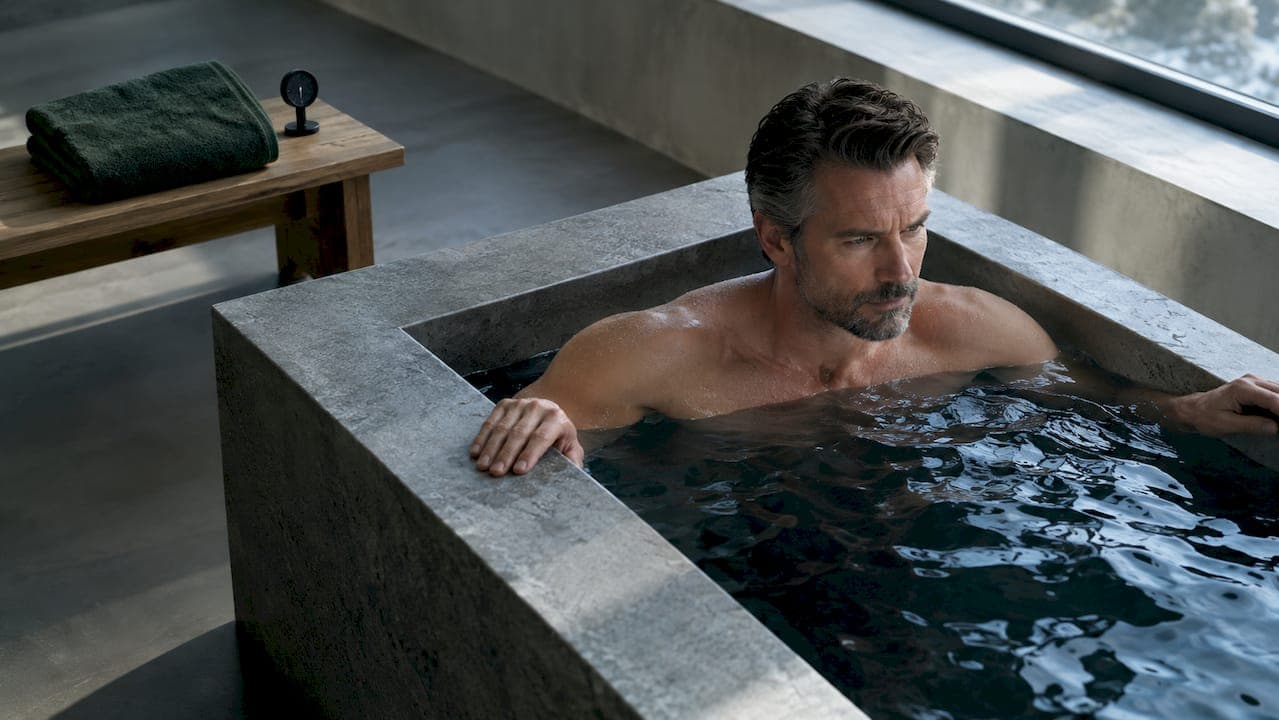
Cold baths do raise dopamine, but only in the bloodstream, and only for a limited window. Studies measuring peripheral catecholamines show sharp spikes in plasma dopamine and norepinephrine during cold immersion, yet those readings do not confirm a matching surge in brain dopamine or a lasting mood lift. For most men, expect a genuine short-term alerting effect. Durable mood change depends on protocol, consistency, and individual physiology, not the cold alone.
TL;DR:
- Cold immersion causes sharp spikes in plasma dopamine and norepinephrine, but peripheral hormone levels do not directly translate to lasting mood or motivation changes.
- The primary alerting and anti-inflammatory effects are driven by norepinephrine, which remains elevated longer than dopamine, and the blood-brain barrier limits dopamine's impact on the brain.
- Most studies show perceived stress reduces noticeably only about 12 hours after cold exposure, with mood and immunity effects remaining inconsistent across protocols.
- Starting with short (30-60 seconds), warmer water immersions and progressing gradually to 2-3 minutes, with sessions two to four times weekly, minimizes cardiovascular risks and promotes adaptation.
- Cold baths should be integrated into a broader routine, with emphasis on tracking personal outcomes such as sleep and alertness rather than relying solely on hormone level figures.
Table of Contents
- Kallbad Dopamin: How Cold Exposure Moves Your Hormones
- What the Evidence Says: Reviews, Trials, and Their Limits
- Building a Cold Bath Protocol: Temperature, Duration, Frequency
- Safety, Contraindications, and What Happens With Repeated Exposure
- Fitting Cold Exposure Into an Executive Performance Routine
- An Evidence-First View on Cold Exposure
- Sources
- FAQ
Kallbad Dopamin: How Cold Exposure Moves Your Hormones
The mechanism starts with the sympathetic nervous system, not the brain's reward circuitry directly. When skin temperature drops fast, the body reads it as a threat and fires off a stress response that floods the bloodstream with catecholamines, the family of hormones that includes dopamine, norepinephrine, and epinephrine.
The most cited figures on this come from a controlled immersion study: an hour in 14°C water raised plasma noradrenaline by roughly 530% and plasma dopamine by about 250% compared with warmer immersions. Those numbers get repeated across wellness content constantly, often stripped of context. Here is the context that matters.
- Plasma dopamine reflects circulating hormone in the blood, not synaptic activity in the brain's reward pathways.
- Norepinephrine tends to show the more sustained elevation of the two, and researchers increasingly treat NE as the likely driver of the alertness and anti-inflammatory effects people report.
- The blood-brain barrier limits how much peripheral dopamine actually reaches central nervous system tissue, which is why a 250% plasma spike cannot be read as a 250% mood or motivation increase.
A 250% plasma dopamine increase is a real physiological event, but it measures your bloodstream, not your mind. That distinction is the single most misunderstood part of the "cold plunge dopamine" conversation, and it is worth holding onto before you build a routine around a number that was never designed to describe how you'll feel three hours later.
Cold-water immersion also drives measurable shifts in metabolic rate and cardiovascular markers, with metabolic rate increases reported at colder temperatures. Dopamine release here functions as part of a broader stress and thermoregulation cascade, working alongside norepinephrine to mobilize energy and sharpen attention, not as an isolated reward signal.
What the Evidence Says: Reviews, Trials, and Their Limits
A 2025 systematic review and meta-analysis pooling 11 studies and 3,177 participants found that cold-water immersion reduced perceived stress, but only about 12 hours after exposure, not immediately. The same review found improved sleep quality in men but no consistent evidence that cold exposure reliably boosts mood or immune function across studies.
That delayed pattern matters more than the headline hormone figures. It suggests the practical benefit of a cold bath may not be the plunge itself but what happens in the twelve hours after it.
The evidence base shows a time-dependent effect: an early inflammatory response, followed by a delayed reduction in perceived stress. Mood and immunity findings across the pooled studies remained mixed, with quality varying considerably by protocol and sample size.
Several gaps limit how confidently anyone can extend these findings to daily practice:
- Most foundational hormone studies use small samples, often young, healthy men in controlled lab settings, not broad or older populations.
- Peripheral blood draws remain the standard measurement tool; almost none of the available research captures central dopamine activity directly in humans.
- Protocols vary widely across studies, from 30 seconds to 15 minutes, making cross-study comparison difficult.
- Winter-swimmer cohort data, while suggestive of metabolic benefits, comes from self-selected populations that may already differ physiologically from the general public.
Stronger research would need standardized immersion protocols, larger and more diverse samples, and ideally some proxy for central catecholamine activity rather than blood plasma alone. Until then, treat the reviewed findings as a coherent but limited signal, not a settled verdict.
Building a Cold Bath Protocol: Temperature, Duration, Frequency
Published studies cluster around a fairly narrow physiological range. Most immersion research uses water at cold temperatures within a moderate low range, with exposure times varying from brief to moderate durations. Shorter, colder exposures tend to produce a sharper catecholamine spike, while longer exposures at moderately cold temperatures shift more toward metabolic and cardiovascular strain.
For a man starting out, a conservative progression beats an aggressive one:
- Weeks 1 to 2: Begin with 30 to 60 second exposures at the warmer end of the range, around 14 to 15°C, ideally under supervision or with someone nearby.
- Weeks 3 to 4: Extend gradually toward 2 to 3 minutes if tolerance and recovery both feel stable.
- Ongoing: Settle into a frequency of 2 to 4 sessions per week rather than daily exposure, allowing the nervous system time to recover between sessions.
- Reassess monthly: Track whether alertness, sleep, and mood are trending in a useful direction before extending duration further.
Monitor sleep quality, morning alertness, and any symptoms like dizziness, chest tightness, or irregular heartbeat during or after a session. Do not chase the popularized "two-hour dopamine high." That claim stretches a single controlled study about plasma hormone levels into a promise about sustained mood duration that the underlying research never made.
Pro Tip: Stop a session the moment you notice numbness spreading beyond your hands or feet, or if your breathing becomes uncontrolled. The goal is a disciplined stimulus, not an endurance contest.
Safety, Contraindications, and What Happens With Repeated Exposure
Cold immersion triggers a real cardiovascular load. Blood pressure and heart rate both spike during the initial cold shock response, which is why medical guidance recommends clearance from a physician before starting if you have heart disease, hypertension, arrhythmia, diabetes, or another serious cardiovascular condition.
Repeated exposure changes the picture over time. Cortisol and other HPA-axis markers show measurable habituation after roughly two weeks of regular practice, meaning your stress-hormone response blunts with consistency. Norepinephrine's response tends to persist longer, which is part of why regular practitioners often report the alerting effect holds up even after the initial stress novelty fades.
Practical safety measures worth building into any protocol:
- Never plunge alone, particularly during the first several sessions.
- Keep exposures time-limited and avoid extending duration purely to chase intensity.
- Avoid full head submersion if you carry any arrhythmia risk, since the diving reflex can trigger dangerous heart rhythm changes; face-only exposure still activates the sympathetic response without that risk.
- If you train for strength or hypertrophy, schedule cold exposure on rest days rather than immediately post-lift, since cold immersion right after resistance training can blunt the signaling your muscles need to grow.
Fitting Cold Exposure Into an Executive Performance Routine
Cold baths work best as one lever in a broader system, not a standalone fix. Schedule sessions early in the day when the alerting effect supports focus, and keep them separate from strength training days if hypertrophy is a priority. Pair the practice with habits that support dopamine and recovery more durably over weeks rather than hours.
- Protect sleep architecture, since the meta-analytic evidence for cold immersion's benefits leans heavily on improved sleep quality rather than acute mood change.
- Layer in structured stress management practices so cold exposure isn't your only regulatory tool.
- Consider a two-week protocol built around natural dopamine support rather than relying on a single intervention.
- Track a genuine experiment: two weeks of baseline data on sleep, mood, and morning alertness, then a 2 to 4 week cold-bath protocol, then an honest review of what actually changed.
This kind of disciplined experiment suits men who prioritize evidence over popular claims. If cold exposure earns a place in your routine, it should earn it on evidence you personally track, not on a headline percentage.
An Evidence-First View on Cold Exposure
The loudest claims about cold plunges and dopamine come from people who never distinguish blood from brain. That gap is where most of the hype lives. Build a routine on measurable outcomes and consistency, not on a single lab number, and treat resilience over months as the real target, not a mood spike over minutes. Viridos exists to support that kind of disciplined recovery practice.
— Joakim
This article is general information, not a substitute for advice from a qualified doctor. Consult a qualified healthcare professional about your own circumstances before acting on anything here.
Sources
- Effects of cold-water immersion on health and wellbeing: A systematic review and meta-analysis | PLOS One
- Human physiological responses to immersion into water of different temperatures
- Cold water therapy review (PMC article)
- Is cold exposure a viable lifestyle intervention for mental health? Reviewing evidence and mechanisms | Molecular Psychiatry
FAQ
Is cold bathing good for anxiety?
Evidence is mixed. The largest meta-analysis found a reduction in perceived stress roughly 12 hours after immersion, but no consistent evidence that cold exposure reliably improves mood or anxiety symptoms across studies. Anyone using cold baths for anxiety management should treat it as a possible complement to other tools, not a replacement for clinical care.
What happens in the body during a cold bath?
Skin temperature drops trigger the sympathetic nervous system, releasing catecholamines including dopamine and norepinephrine into the bloodstream. One controlled study found plasma noradrenaline rose about 530% and plasma dopamine about 250% during an hour-long immersion in 14°C water, alongside increases in metabolic rate and heart rate.
What are the positive effects of cold baths?
The strongest documented benefits are a delayed reduction in perceived stress and improved sleep quality in men, both identified in a pooled analysis of 11 studies. Some small cohort studies of habitual winter swimmers also report improved insulin sensitivity, though those findings come from limited samples and shouldn't be generalized broadly.
Is it good to cold bathe every day?
Daily exposure is not what the research supports. Most published protocols use sessions several times per week rather than daily, and cortisol-related stress responses show habituation after roughly two weeks of regular practice. A frequency of two to four sessions weekly, with medical clearance for anyone with cardiovascular risk factors, aligns better with the current evidence than daily immersion.