Cortisol is not the enemy. It is the hormone that gets you out of bed, sharpens focus before a board meeting, and mobilizes energy when a deal falls apart at the last minute. The goal is balance, not suppression. For most men carrying real operational load, the single highest-leverage action is deceptively simple: consistent sleep timing and quality, night after night, without exception.
Three signals tell you where you stand right now:
- Morning energy — do you wake alert, or do you need thirty minutes and two coffees before you're functional?
- Afternoon slump — is there a predictable crash between 2 and 4 PM that no amount of caffeine fixes?
- Sleep continuity — are you falling asleep fine but waking at 3 AM with your mind racing?
Track these three for two weeks before changing anything else. As Joakim, founder-aligned voice behind Viridos, has argued in the brand's approach to executive vitality: precision beats intensity. Small, measured interventions outperform dramatic overhauls that collapse under a demanding schedule.
Key Takeaways
Cortisol balance in men depends on synchronizing sleep, training, and light exposure with the hormone's natural rhythm, not on suppressing it outright.
| Point | Details |
|---|---|
| Sleep timing comes first | Fixed wake and sleep times produce the fastest measurable shift, typically within 2 to 4 weeks. |
| Test in the morning, repeat it | Draw blood between 7 and 10 AM and retest before drawing conclusions from one result. |
| Watch for symptom overlap | High and low cortisol symptoms can mimic thyroid issues or sleep apnea, so persistent signs warrant a medical evaluation. |
| Sequence interventions | Sleep and light first, then training and nutrition, then selective supplements like ashwagandha after 8 to 12 weeks. |
| Support the plan structurally | Viridos offers a membership-based framework of small-batch, sublingual formulation designed to support disciplined execution of these same priorities. |
Table of Contents
- What Cortisol Balance Means for Men's Performance
- When Should You Test Cortisol and What Time Matters?
- Recognizing High Versus Low Cortisol Symptoms
- How to Lower Cortisol Naturally: A Priority Sequence
- Tracking Progress Without Over-Testing
- Applying This as a Weekly Program
- Age and Lifestyle Factors That Shift Cortisol in Men
- Long-Term Health Risks of Cortisol Imbalance in Men
- The Discipline Gap Nobody Talks About
- A Structured Path for Disciplined Men
- Sources
What Cortisol Balance Means for Men's Performance
Cortisol comes from the adrenal glands, released on command from the hypothalamic pituitary adrenal axis, or HPA axis, your body's central stress management system. The hypothalamus signals the pituitary, the pituitary signals the adrenals, and cortisol enters the bloodstream within minutes. This is not a flaw in your biology. It is the mechanism that let your ancestors outrun predators and lets you function on four hours of sleep before a critical presentation.
Cortisol performs several jobs simultaneously. It drives the cortisol awakening response (CAR), the sharp rise in the first 30 to 45 minutes after you open your eyes, which is what makes you feel alert instead of groggy. It mobilizes glucose from stored energy so your brain and muscles have fuel on demand. It also acts as your body's primary anti-inflammatory agent and keeps you wakeful during the day.
The complication for men specifically is cortisol's seesaw relationship with testosterone. When cortisol stays elevated for extended periods, testosterone production tends to decline, a pattern that becomes more pronounced with age and chronic sleep disruption. This is not a design defect. It is the biological trade-off between short-term survival and long-term anabolic maintenance, and it is why men over 40 in high-stress roles often notice both problems arrive together: rising fatigue and declining recovery capacity.
Cortisol balance, then, is not about driving the hormone to zero. It is about matching its rhythm to your actual demands, so it rises when you need it and falls when you don't.
When Should You Test Cortisol and What Time Matters?
Cortisol follows a diurnal rhythm: it peaks shortly after waking, then declines steadily through the day, reaching its lowest point around midnight. This rhythm is why the timing of any test matters as much as the result itself. A cortisol level that looks alarming at 4 PM might be entirely normal. The same number at 8 AM tells a different story.
Clinical guidance is consistent on this point: a single cortisol reading is rarely diagnostic on its own, because levels shift naturally throughout the day and react to short-term stressors like poor sleep, intense exercise, or even a stressful morning commute.
Here is the practical sequence worth following:
- Schedule blood draws between 7 and 10 AM, when cortisol is near its daily peak and results are most comparable to reference ranges.
- Repeat the test rather than acting on one number. Werlabs' own testing guidance recommends retesting to account for day-to-day variability before drawing conclusions.
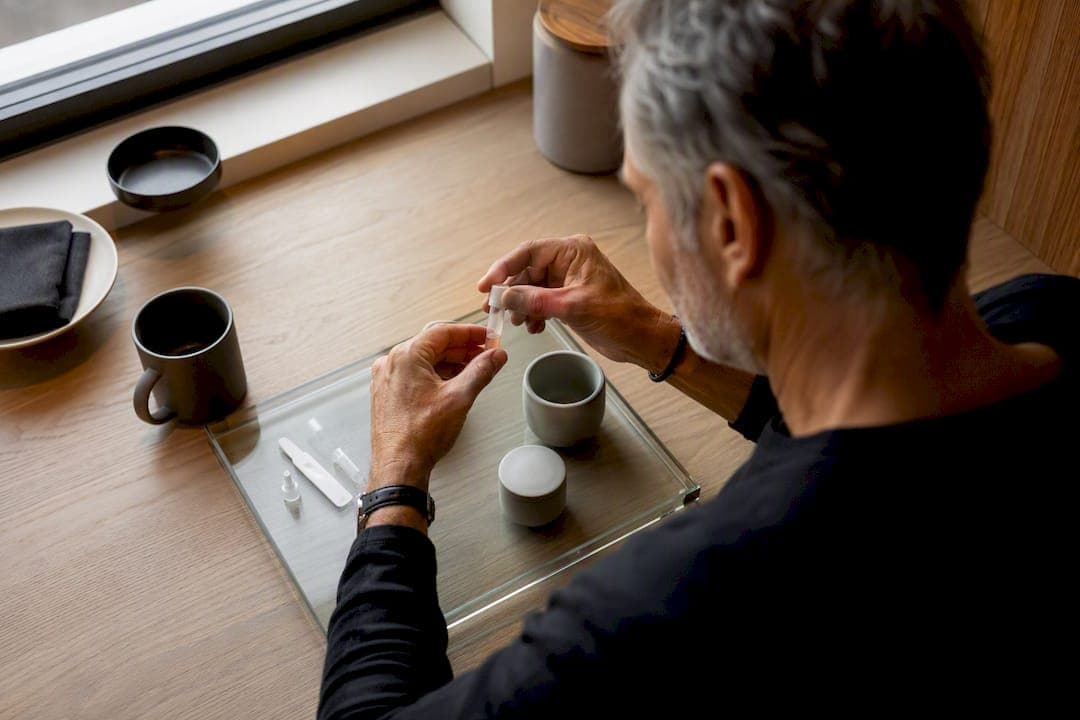
- Consider a salivary diurnal profile if morning blood work looks abnormal. This measures cortisol at multiple points across the day and reveals whether the entire rhythm is flattened or shifted, not just one snapshot.
- Log confounders the week before testing: sleep hours, alcohol intake, caffeine timing, and training intensity. Each of these can distort a single reading independent of your true baseline.
Pro Tip: Book your test for a week that looks like your normal week, not a recovery week or a travel week. Testing during an unusually calm period will underestimate your working baseline, and testing during a crisis will overestimate it.
Recognizing High Versus Low Cortisol Symptoms
Chronic cortisol elevation and cortisol deficiency present almost as mirror images of each other, and men often misattribute both to "just getting older" or "just being busy."
Signs consistent with sustained high cortisol:
- Difficulty falling or staying asleep despite exhaustion
- Fat accumulation concentrated around the abdomen, resistant to diet and training
- Persistent fatigue that doesn't lift with rest
- Elevated blood pressure readings
- Fasting glucose creeping upward on annual bloodwork
Signs consistent with low cortisol or adrenal insufficiency:
- Dizziness or lightheadedness when standing quickly (orthostatic symptoms)
- Unexplained weight loss
- Profound fatigue that feels different from ordinary tiredness, often accompanied by salt cravings or low blood pressure
The overlap problem is real. Fatigue, low mood, and disrupted sleep also show up in thyroid disorders, sleep apnea, and clinical depression. Chronic elevation carries its own downstream risk: sustained high cortisol correlates with metabolic disruption including elevated blood sugar and visceral fat accumulation, which is exactly the profile that warrants a clinical conversation rather than another supplement.
If symptoms are severe, sudden, or include the low-cortisol red flags above, see a physician before attempting any self-directed protocol.
How to Lower Cortisol Naturally: A Priority Sequence
Not every intervention deserves equal attention. Sequence matters more than volume, and the evidence supports a specific order.
-
Fix sleep timing first. A consistent wake time, even on weekends, does more for cortisol regulation than any other single change. Expect early shifts in sleep continuity within 2 to 4 weeks of disciplined timing.
-
Train with intent, not exhaustion. Strength training a few times per week supports healthy cortisol response. Excessive high-intensity sessions without adequate recovery push cortisol in the opposite direction you want.
-
Eat on a schedule, not a whim. Regular, protein-containing meals stabilize blood glucose and blunt unnecessary cortisol spikes. Extended fasting during high-stress periods can work against you rather than for you, since fasting itself is a mild physiological stressor.
-
Get morning light within an hour of waking. Ten to fifteen minutes of outdoor daylight, or a 10,000-lux lamp during darker winter months, helps entrain the cortisol awakening response to the correct time of day.
-
Use breathwork as an acute tool, not a cure. Techniques like 4-7-8 breathing or box breathing produce a measurable, immediate reduction in autonomic arousal. Researchers at Karolinska Institutet have documented how paced breathing directly modulates the body's stress response within minutes, making it a useful pre-meeting or pre-sleep tool rather than a long-term fix.
-
Consider targeted supplementation only after the above are in place. Ashwagandha extracts, specifically the KSM-66 and Sensoril formulations used in clinical research, have shown reductions in salivary cortisol in stressed populations after consistent use for several weeks. These trials also flag interaction cautions for men on thyroid medication or immunosuppressants, so this step deserves a conversation with a physician, not a blind purchase.
The men who see the clearest results are rarely the ones chasing the most aggressive protocol. They are the ones who fixed sleep, held it steady for a month, and only then layered in training and nutrition changes, one variable at a time.
Pro Tip: Resist the urge to change five things simultaneously. If your cortisol markers improve, you want to know which lever pulled it, not guess.
Tracking Progress Without Over-Testing
Two categories of data matter here, and neither one alone tells the full story.
Objective markers worth tracking: a repeat morning cortisol test, an optional salivary diurnal profile if the first result looked skewed, and fasting glucose or insulin if metabolic symptoms were present. Men also weighing testosterone concerns should ask about SHBG and free testosterone alongside cortisol, since the two hormones move in relation to each other.
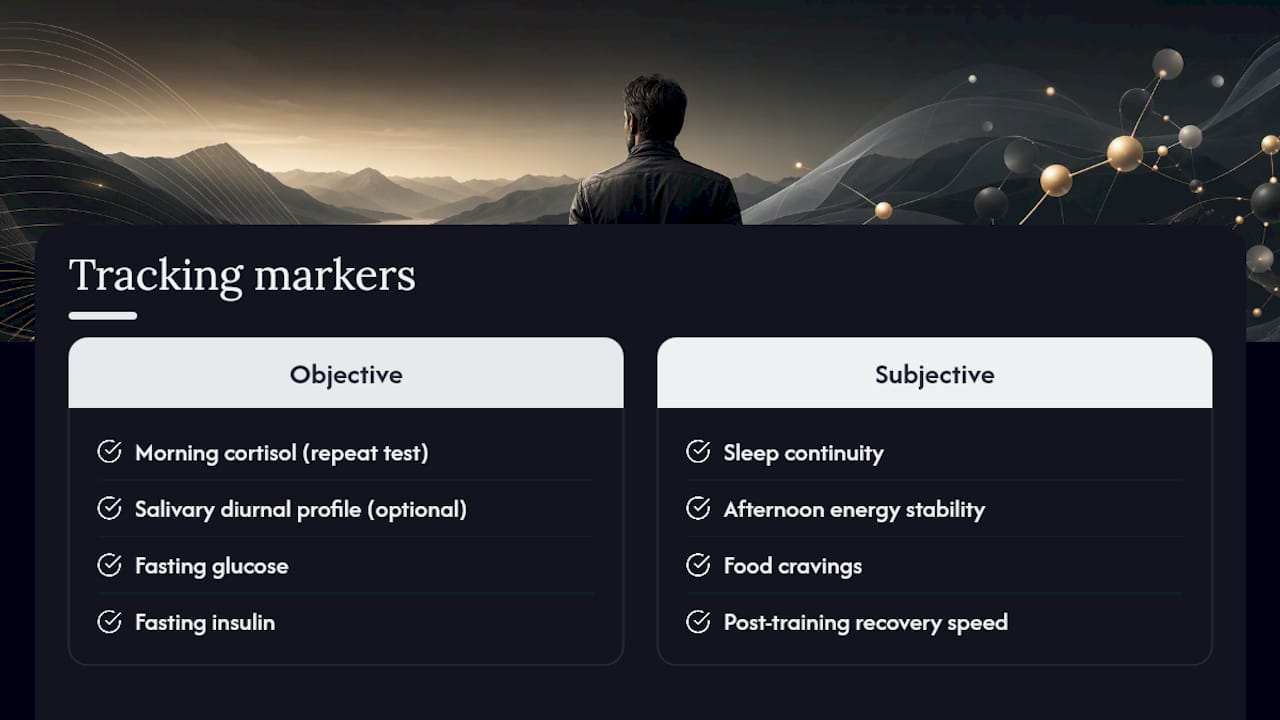
Subjective markers worth tracking: sleep continuity, afternoon energy stability, food cravings, and how quickly you recover after a hard training session.
Realistic timelines matter more than most men expect. Breathwork delivers relief within minutes. Sleep and nutrition changes tend to shift subjective markers, energy, mood, cravings, within the first one to two weeks, while measurable biochemical change in morning cortisol typically takes 2 to 4 weeks of consistent behavior to register. Full HPA-axis recalibration is a slower process, generally requiring 8 to 12 weeks of sustained discipline before you retest.
Escalate to a physician if symptoms worsen despite consistent effort, if low-cortisol red flags appear, or if your repeat testing shows a pattern rather than a one-off anomaly. A clinician-led workup typically includes repeat morning draws, a stimulation test if adrenal insufficiency is suspected, and a review of medications that might be interfering with your results.
Applying This as a Weekly Program
Structure beats intention. A useful build sequence for a demanding schedule:
- Week 1: Fix wake time and get morning light daily. Nothing else changes yet.
- Weeks 2 to 4: Layer in strength training two to three times weekly and stabilize meal timing.
- Weeks 4 to 12: If subjective and objective markers still lag, consider a measured, physician-reviewed supplement like ashwagandha, alongside a retest.
A disciplined man does not need more information. He needs a sequence he will actually follow when the calendar gets hostile.
Joakim's editorial view, shaped by Viridos's work with performance-focused men, is that consistency under real-world pressure separates results from good intentions. A membership-backed structure exists precisely to support that consistency, not to replace the fundamentals above.
Age and Lifestyle Factors That Shift Cortisol in Men
Cortisol regulation does not stay static across a man's forties, fifties, and sixties. Sleep architecture changes with age, deep sleep declines, and that decline alone can blunt the natural nighttime cortisol dip, leaving levels elevated later into the evening than they were a decade earlier.
Lifestyle compounds this. Men in executive or founder roles frequently carry irregular schedules, transatlantic travel, and decision fatigue that keeps the HPA axis engaged well past a normal workday. Add inconsistent training, alcohol used as a wind-down tool, and caffeine extended into the afternoon, and the cortisol curve flattens instead of tapering.
Body composition changes with age also interact with cortisol. Visceral fat tissue itself produces inflammatory signals that can perpetuate elevated cortisol output, creating a cycle that is harder to break the longer it runs. This is one reason the same intervention, say, morning light exposure or a fixed sleep window, tends to produce a slower but still meaningful response in a 55 year old than in a 30 year old.
None of this argues for resignation. It argues for adjusting expectations on timeline and being more disciplined about the fundamentals precisely because the margin for error narrows with age. Men who maintain resistance training and stable sleep well into their fifties consistently show more resilient cortisol patterns than sedentary peers of the same age.
Long-Term Health Risks of Cortisol Imbalance in Men
Sustained cortisol imbalance is not a cosmetic issue. Left unaddressed for years, chronically elevated cortisol contributes to a cluster of risks with real cardiovascular and metabolic weight.
Elevated cortisol promotes visceral fat storage, the metabolically active fat around the abdomen linked to insulin resistance and, over time, elevated blood pressure. That combination raises cardiovascular risk in a way that shows up clearly in long-term health outcomes, which is precisely why the Frontiers review on stress and health frames chronic stress exposure as a legitimate clinical concern rather than a lifestyle inconvenience.
Muscle preservation is the other casualty. Cortisol is catabolic by nature, meaning sustained elevation can accelerate the breakdown of muscle tissue for glucose, working directly against the anabolic signaling that testosterone and resistance training try to build. For men already managing a natural, age-related testosterone decline, chronically high cortisol compounds the problem rather than existing alongside it.
The bone density and immune implications are less discussed but no less real over a long horizon. Years of elevated cortisol can interfere with bone remodeling and blunt immune resilience, consequences that rarely announce themselves until a fracture or a slow-healing illness forces the issue. This is the strongest argument for treating cortisol balance as an ongoing discipline, not a problem you solve once and forget.
The Discipline Gap Nobody Talks About
Most cortisol advice online reads like a supplement catalog: take this herb, drink this tea, buy this device. The research doesn't actually support that hierarchy. The evidence points overwhelmingly toward sleep timing and consistent load management as the dominant levers, with everything else, including supplementation, playing a supporting role at best.
What gets underestimated is how much cortisol dysregulation in driven men is a scheduling problem wearing a biochemical disguise. You cannot supplement your way out of five hours of sleep and a travel calendar that ignores time zones. The men who actually shift their markers are the ones who treat sleep and light exposure as fixed commitments, not flexible ones that bend around the calendar.
Where conventional advice falls shortest is in pretending every man needs the same intervention at the same intensity. A 45 year old founder under acute deal pressure needs a different sequence than a 60 year old executive managing a chronic pattern of poor sleep. Start with the fundamentals, measure honestly, and resist the instinct to reach for a supplement before the basics have had a real chance to work.
— Joakim
A Structured Path for Disciplined Men
The interventions in this article work, but they require consistency most men struggle to maintain alone against a demanding calendar. Viridos was built for exactly that gap: a controlled-access membership offering a precision sublingual formulation, produced in small batches in Sweden, designed for men who need structural support to sustain the habits that actually move cortisol and performance markers.

The membership model mirrors the sequencing in this article. Sleep and light come first, training and nutrition stabilize next, and any targeted formulation support enters only once the fundamentals are in place, not as a substitute for them. Sublingual delivery reflects a philosophy of precision over volume: measured, deliberate application rather than another pill added to a crowded routine.
If you're managing real operational load and want a framework rather than another supplement to remember, review the Viridos performance strategy and see whether the membership fits how you actually work.
This article is general information, not a substitute for advice from a qualified doctor. Consult a qualified healthcare professional about your own circumstances before acting on anything here.
Sources
For readers who want to go beyond the summary here, these sources provide the underlying evidence and clinical framing:
- Kortisol – vad det är, symtom och vad ditt värde betyder | Werlabs
- Sleep, testosterone and cortisol balance, and ageing men | PubMed
- Sänka kortisol naturligt: 9 åtgärder | TestaHemma
- Breathing a key to the body's stress system | Karolinska Institutet news