
TL;DR:
- High-performing executives often sacrifice health, relationships, and long-term vitality due to work demands.
- Practical strategies include scheduling brief wellness blocks, anchoring consistent habits, and tracking key health metrics.
- Long-term success relies on proactive management, flexible planning, and framing health as a competitive advantage.
The higher you climb, the more your health pays the price. Executives and founders running at full capacity for years often discover that the same drive that built their success is quietly eroding their vitality, relationships, and long-term performance. Healthcare CEOs report high rates of adverse impact of work on personal relationships, directly linked to burnout. This guide gives you a structured, realistic approach to recalibrating the balance between your professional demands and physical health, without sacrificing the ambition that defines you.
Table of Contents
- Assessing your current work-health balance
- Practical steps to balance work and health
- Avoiding common pitfalls and troubleshooting
- Measuring results and maintaining long-term balance
- Why conventional work-health advice often fails high-performing executives
- Explore tools and strategies for lasting executive vitality
- Frequently asked questions
Key Takeaways
| Point | Details |
|---|---|
| Self-assessment first | Start by evaluating your current work-health balance with simple checklists for honest insights. |
| Small practical changes | Use evidence-backed steps like time-blocking and micro-workouts to seamlessly integrate health into your routine. |
| Avoid common mistakes | Steer clear of overcommitting and neglecting recovery to minimize setbacks and boost resilience. |
| Track and adapt | Measure your progress and adjust strategies regularly for sustained work-health balance and energy. |
| Rethink conventional wisdom | Executive-level balance requires nuanced strategies—not one-size-fits-all advice. |
Assessing your current work-health balance
Before you can fix anything, you need an honest read on where you actually stand. Most executives underestimate the damage already done because high performance masks the symptoms. You push through fatigue, rationalize missed workouts, and treat sleep as a variable rather than a non-negotiable. That works until it doesn't.
The research is clear: each additional hour worked decreases the odds of maintaining healthy relationships. That's not a soft finding. It's a measurable, compounding cost that shows up in your home life, your cognitive sharpness, and eventually your medical results.
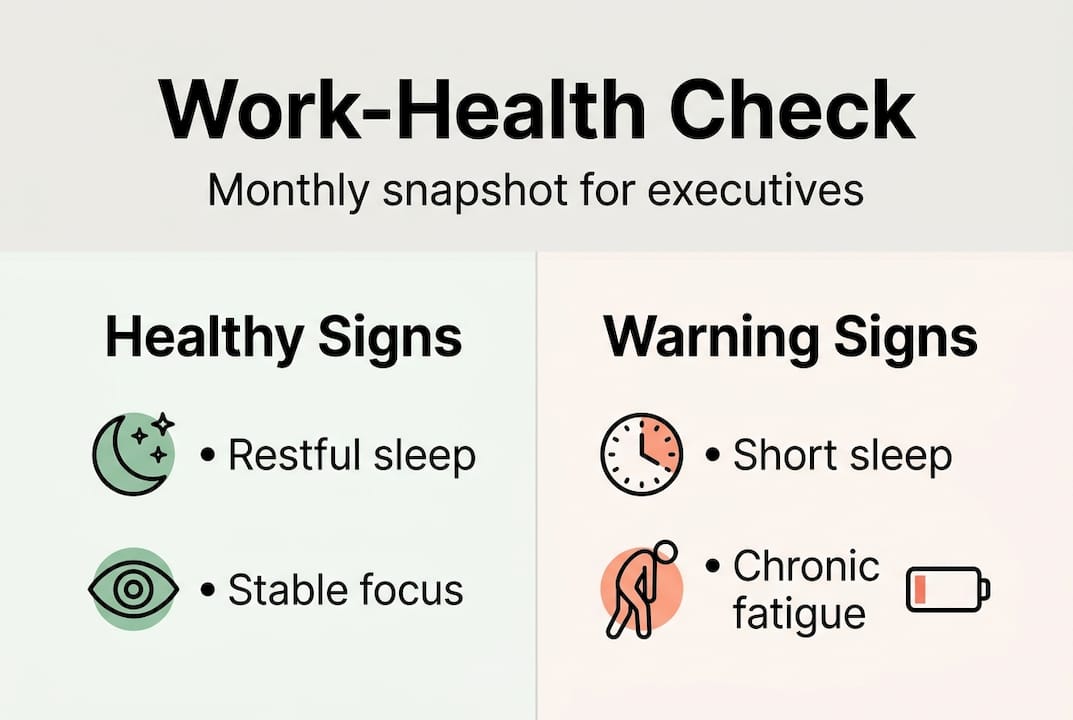
Common warning signs of executive work-health imbalance:
- Waking up tired despite 6 or more hours of sleep
- Skipping meals or relying heavily on caffeine and processed food
- Increased irritability or emotional reactivity in meetings
- Strained communication with a partner or children
- Frequent illness or slow recovery from minor sickness
- Loss of interest in activities you previously found energizing
- Declining focus during tasks that once felt routine
If three or more of these apply to you consistently, your baseline is compromised. That's your starting point, not a judgment.
Quick self-assessment framework:
| Area | Healthy signal | Warning signal |
|---|---|---|
| Sleep | 7 to 8 hours, consistent schedule | Under 6 hours, irregular timing |
| Physical activity | 3 or more sessions per week | Less than 1 session per week |
| Relationships | Regular quality time, low conflict | Frequent tension, emotional distance |
| Energy | Sustained focus through the day | Afternoon crashes, reliance on stimulants |
| Recovery | Able to decompress after work | Difficulty switching off, persistent anxiety |
Use this table as a monthly snapshot, not a one-time check. Patterns matter more than single data points. Pair this with deeper reading on stress management for executives and the practical healthy aging workflow built specifically for men in high-output roles.
Practical steps to balance work and health
Assessment without action is just awareness. The gap between knowing you're out of balance and actually correcting it comes down to execution. Here's a structured approach that fits a demanding schedule without requiring a lifestyle overhaul.
Burnout and poor health outcomes are a direct result of unbalanced work-life integration. The fix isn't less ambition. It's smarter architecture around your energy.
Step-by-step method for embedding health into your week:
- Audit your calendar for the current week. Identify three 30-minute windows that are genuinely low-stakes. These become your initial wellness blocks.
- Anchor one non-negotiable physical activity per day, even if it's a 10-minute walk between calls. Consistency beats intensity at this stage.
- Batch your decision-making by front-loading cognitively demanding work in the morning when cortisol naturally peaks. Protect afternoons for meetings and admin.
- Set a hard stop two nights per week. No email, no Slack, no exceptions. This trains your nervous system to recover and signals to your household that you're present.
- Schedule a weekly review every Sunday for 15 minutes. Rate your energy, sleep, and stress on a 1 to 10 scale. Track the trend, not the number.
Approach comparison:
| Method | Best for | Limitation |
|---|---|---|
| Time blocking | Structured schedules | Breaks down during travel or crises |
| Micro-workouts | Unpredictable days | Requires habit stacking discipline |
| Schedule batching | Deep work protection | Needs calendar control |
| Digital check-ins | Tracking trends | Only useful if reviewed consistently |
Pro Tip: Don't start with five new habits at once. Pick the single change with the highest return for your current bottleneck. If sleep is broken, fix sleep first. Everything else improves downstream. Explore executive wellness strategies and healthy lifestyle routines for deeper frameworks you can layer in over time.
Avoiding common pitfalls and troubleshooting
Even with the right plan, high-performing executives hit predictable walls. Knowing where others have failed saves you months of wasted effort and frustration.
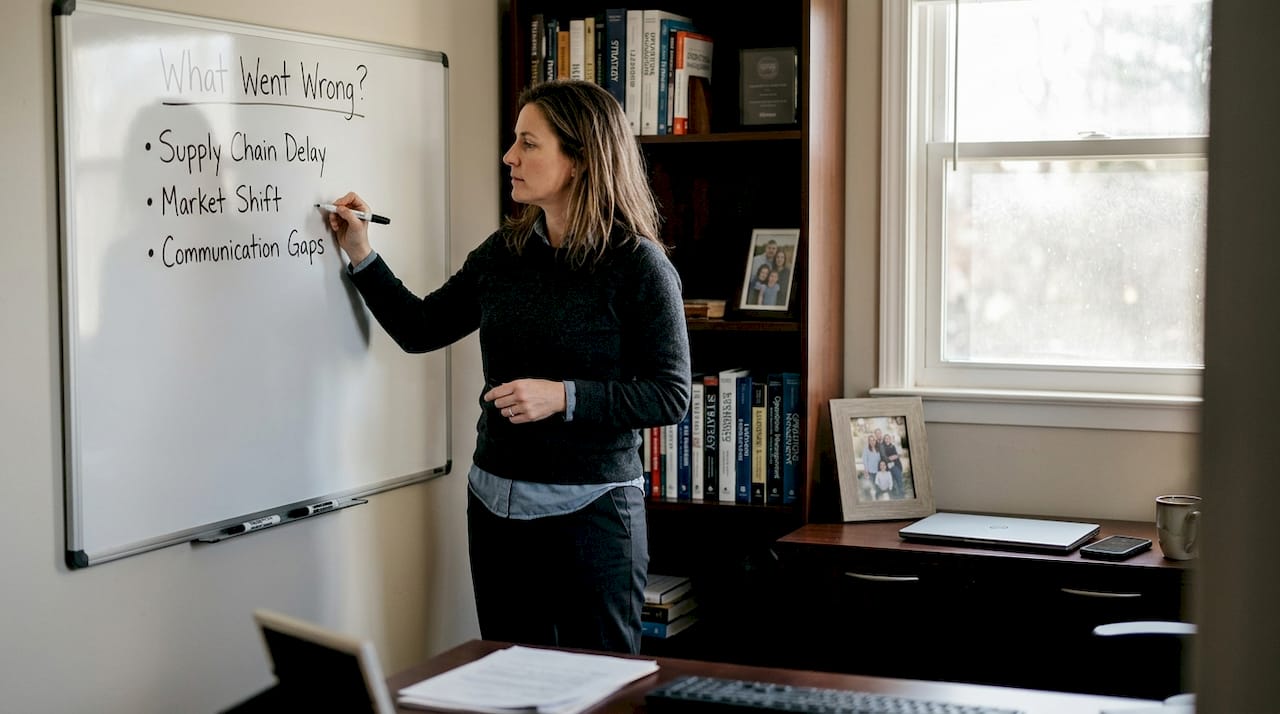
Executives suffer adverse outcomes when they overlook health under pressure. The irony is that the moments you most need to protect your health are exactly when work pressure makes it easiest to abandon the plan.
Most common mistakes executives make:
- Overcommitting to a wellness routine that isn't sustainable during high-demand periods
- Treating recovery as optional rather than structural
- Ignoring early warning signs until they become clinical problems
- Letting travel or quarterly pushes completely erase established habits
- Failing to communicate boundaries to their team, creating a culture of always-on availability
- Measuring success only by output metrics while ignoring health indicators
"The executives who sustain high performance longest are not the ones who grind hardest. They are the ones who recover fastest and protect their baseline with the same discipline they apply to their business."
When setbacks happen, and they will, the protocol is simple. Don't restart from zero. Identify the one habit that anchored your routine and restore that single behavior first. One anchor habit brings the others back faster than trying to rebuild everything simultaneously.
External pressures are real. Family obligations, board expectations, and industry cycles will disrupt your rhythm. Build flexibility into your system by having a "minimum viable health week" defined in advance. This is your floor, not your ceiling. On a brutal week, you hit the floor. On a normal week, you aim higher.
Pro Tip: Tell one person in your household what your minimum viable week looks like. Accountability from someone who sees you daily is more effective than any app. Strengthen your foundation with long-term health tips and practical energy management tips built around the realities of executive life.
Measuring results and maintaining long-term balance
What gets measured gets managed. That principle applies to your health as much as it does to your business. Without tracking, you're operating on feel, and feel is unreliable when you're under pressure.
Work-life integration positively impacts long-term vitality when managed proactively. The key word is proactively. Reactive health management means you only pay attention when something breaks.
Metrics worth tracking consistently:
- Resting heart rate measured each morning. A rising trend over two weeks signals accumulated stress or poor recovery.
- Sleep quality score from a wearable or a simple journal entry rating depth and duration.
- Weekly energy rating on a 1 to 10 scale, logged every Sunday during your review.
- Relationship quality check with a simple question: did I show up for the people I care about this week?
- Quarterly medical benchmarks including bloodwork, blood pressure, and a conversation with your physician about trends.
Habits that sustain long-term balance:
- Protect at least one full recovery day per week with no work-related thinking
- Schedule annual health reviews as non-negotiable calendar events, treated like board meetings
- Revisit your wellness plan every quarter and adjust based on what the data shows
- Build social recovery into your schedule, time with friends or mentors who are not work contacts
- Celebrate consistency over intensity. Showing up imperfectly every week beats showing up perfectly once a month.
Quick wins compound. A 10-minute walk today becomes a 30-minute run in three months. Seven hours of sleep tonight becomes a measurably sharper mind in two weeks. The long game rewards the men who play it consistently. Pair your tracking practice with longevity strategies and holistic performance frameworks designed for executives who think in decades, not quarters.
Why conventional work-health advice often fails high-performing executives
Most wellness advice is built for people with predictable schedules and average stakes. "Exercise more, sleep better, eat clean." Useful in theory. Useless when you're managing a board crisis, closing a deal across time zones, or navigating a company restructure.
High-performing executives don't fail at health because they lack information. They fail because conventional advice doesn't account for the cognitive load, the identity investment in performance, or the asymmetric cost of stopping when momentum is high. Telling a founder to "just disconnect" ignores the reality that their presence is often load-bearing for the organization.
What actually works is a multidimensional approach that treats health as a performance input, not a lifestyle aspiration. When you frame recovery as a competitive advantage and sleep as a cognitive tool, the behavior change becomes logical rather than aspirational. The healthy aging workflow built for executives reflects this reality. It's not about balance as a soft concept. It's about engineering your biology to sustain the output you demand from yourself.
Explore tools and strategies for lasting executive vitality
The strategies in this guide are a strong foundation, but sustained performance requires ongoing structure and the right tools to track your progress over time.
VIRIDOS is built for men who operate at the highest level and refuse to let their health become the bottleneck. The VIRIDOS Performance Journal gives you a structured framework to track energy, recovery, and focus with the same precision you bring to your business. It's not a wellness diary. It's an executive performance tool. Explore the full range of VIRIDOS resources designed to help you build the kind of vitality that compounds over years, not just weeks.
Frequently asked questions
What are early signs of poor work-health balance for executives?
Healthcare CEOs report chronic fatigue, frequent illness, and strained relationships as early indicators of burnout-linked imbalance. Irritability and declining focus during routine tasks are also reliable early signals.
How can executives incorporate health routines into busy schedules?
Micro-workouts, scheduled wellness blocks, and weekly energy reviews are the most practical entry points for executives with unpredictable calendars. Start with one anchored habit and build from there.
What results should I expect from balancing work and health?
With consistent effort over 60 to 90 days, expect improved energy, sharper focus, and stronger relationships. Work-life integration positively impacts long-term vitality when approached with structure and intent.
What if my efforts to balance fail due to unpredictable workloads?
Define a minimum viable health week in advance so you always have a floor to return to. Review and adjust your strategy monthly rather than abandoning it when disruptions hit.
Are there executive-specific resources for optimizing work-health balance?
Yes, structured performance journals and executive wellness frameworks offer targeted guidance that generic health advice cannot. Tools built specifically for high-output professionals account for the complexity of the role.