
TL;DR:
- Executive fitness focuses on performance, cognitive resilience, and energy management rather than aesthetics.
- Key pillars include recovery, Zone 2 cardio, HIIT, and personalized coaching for measurable results.
- Tracking metrics like HRV and sleep enables data-driven adjustments for sustained elite performance.
Most executives assume fitness means logging hours at the gym. That assumption is costing you energy, focus, and years of peak performance. 70 minutes of HIIT weekly can reduce biological age by 3.5 years in sedentary men aged 40 to 65, yet most high-performers never tap this lever. Executive fitness is a precision system built around recovery, energy cycles, and performance metrics. This article breaks down exactly how it works, what separates it from general fitness, and how you can apply these frameworks to sustain your edge for the long term.
Table of Contents
- Defining executive fitness: Beyond the basics
- Core pillars: Recovery, cardio, HIIT, and coaching
- Performance metrics: Tracking executive fitness results
- From confusion to mastery: Applying executive fitness frameworks
- Our take: What most exec guides get wrong about fitness
- Next steps: Optimize your executive fitness journey
- Frequently asked questions
Key Takeaways
| Point | Details |
|---|---|
| Executive fitness fundamentals | It focuses on enhancing performance, resilience, and energy through recovery, cardio, HIIT, and personalized strategies. |
| Data-driven results | Executives rely on tracking metrics like HRV, sleep, and energy to optimize real-world outcomes. |
| Actionable frameworks | Use science-backed routines and coaching for lasting vitality and high executive function. |
| Energy trumps time | Managing energy and recovery cycles is the true secret to sustainable executive performance. |
Defining executive fitness: Beyond the basics
Executive fitness is not a harder version of regular fitness. It is a fundamentally different discipline, one built around performance output, cognitive resilience, and sustained energy rather than aesthetics or basic health markers. If you have ever followed a generic training plan and wondered why your focus still fades by 3 p.m., this distinction matters.
The difference between executive fitness and executive health comes down to intent. Executive health focuses on prevention, managing risk factors like blood pressure, cholesterol, and metabolic disease. Executive fitness goes further. It treats you like an elite athlete in a demanding sport, one that happens to be called leadership. As performance training and preventive medicine are not conflicting but synergistic, the best programs layer both.
| Dimension | Executive health | Executive fitness |
|---|---|---|
| Focus | Disease prevention | Performance optimization |
| Methods | Screenings, medication, diet | HIIT, Zone 2 cardio, recovery, coaching |
| Outcomes | Reduced risk factors | Higher energy, faster decisions, resilience |
| Tracking | Annual checkups | Daily HRV, biometrics, sleep data |
The pillars that define executive fitness are specific and measurable:
- Recovery: Sleep quality and stress management as primary performance levers
- Zone 2 cardio: Sustained, low-intensity aerobic work that builds mitochondrial density
- HIIT: Short, high-intensity intervals that compress maximum benefit into minimal time
- Personalized coaching: Data-driven guidance tailored to your schedule, biology, and goals
"Fit CEOs outpace their peers on engagement, decision-making speed, and long-term strategic clarity. The body is not separate from the boardroom. It is the engine behind it."
Leading research confirms that CEOs use HRV tracking and biometrics alongside recovery and energy management, not just time management, to sustain performance. This is the shift from reactive health management to proactive performance engineering. If you want to go deeper on the preventive side, executive health tips and healthspan for executives are worth your time.
Core pillars: Recovery, cardio, HIIT, and coaching
Knowing what executive fitness is matters less than knowing how to build it into your week. Each pillar has a specific role, a time requirement, and a measurable payoff. Here is how they stack up:
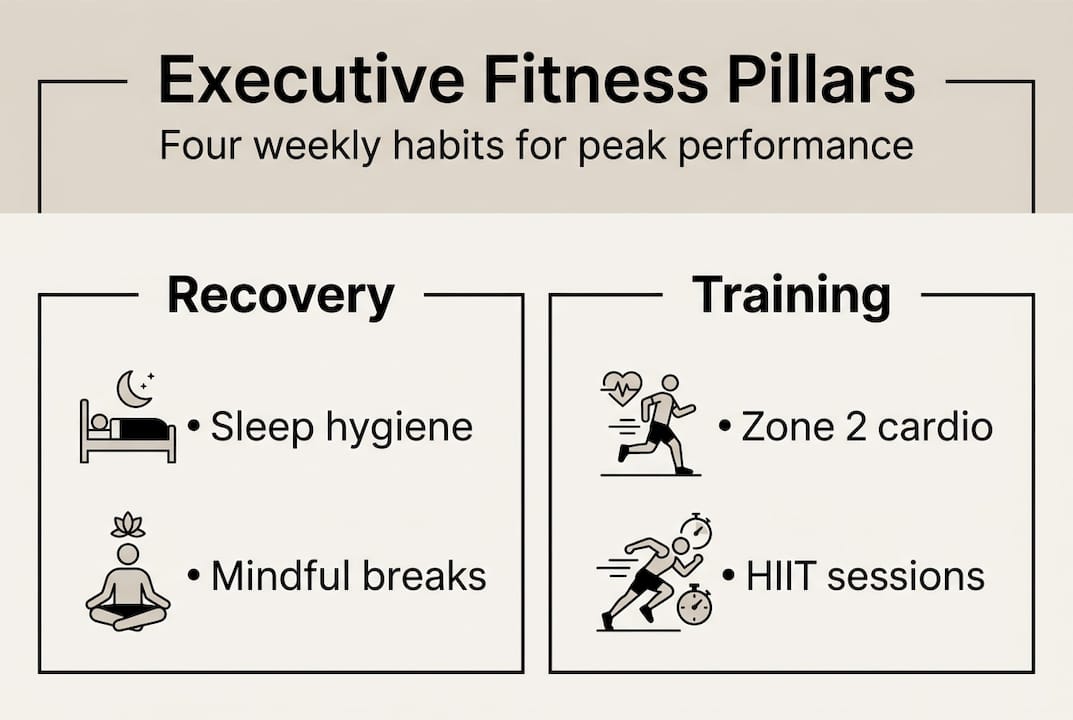
| Pillar | Weekly time | Primary benefit |
|---|---|---|
| Recovery (sleep) | 7 to 8 hours nightly | Hormonal balance, cognitive restoration |
| Zone 2 cardio | 3 to 4 hours | Aerobic base, mitochondrial efficiency |
| HIIT | 70 minutes | Biological age reduction, metabolic boost |
| Personalized coaching | 1 to 2 sessions | Program refinement, accountability |
Research confirms that programs integrating recovery, Zone 2 cardio, and HIIT produce measurable reductions in biological age, specifically 3.5 years in men aged 40 to 65. That is not a marginal gain. That is a structural advantage.
Here is how to integrate each pillar into a realistic executive week:
- Anchor sleep first. Set a non-negotiable 7 to 8 hour sleep window before scheduling anything else. Recovery is not passive. It is when adaptation happens.
- Block Zone 2 sessions on lower-demand days. Three to four hours weekly sounds like a lot until you realize 45-minute morning walks or easy cycling sessions count. Keep intensity conversational.
- Schedule HIIT on high-energy mornings. Two to three sessions per week, 20 to 25 minutes each, covers your 70-minute weekly target. Short, intense, done.
- Use coaching to audit and adjust. A qualified coach reviews your biometric data and adjusts load based on real feedback, not guesswork.
Pro Tip: If you have to choose between an extra workout and an extra hour of sleep, choose sleep. Consistently. Recovery is where performance is built, not during the session itself.
For a broader view of how these pillars connect to long-term output, executive wellness strategies and sustaining elite performance offer practical frameworks. And if you are thinking beyond the next quarter, performance longevity strategies map out the long game.
Performance metrics: Tracking executive fitness results
You cannot manage what you do not measure. For executives, this principle applies to fitness just as sharply as it does to revenue. The difference between a generic wellness routine and a precision performance system is the feedback loop.
The metrics that matter most for executive fitness are:
- Heart rate variability (HRV): The single best daily indicator of recovery quality and readiness to perform
- Sleep quality and duration: Not just hours logged, but time in deep and REM sleep
- Resting heart rate trends: A declining resting heart rate over weeks signals improving cardiovascular fitness
- Energy levels throughout the day: Subjective but trackable. Rate your energy at 9 a.m., 1 p.m., and 5 p.m. daily
- Biometrics: Body composition, blood glucose variability, and cortisol patterns
High-performing executives already understand that data-tracking through HRV and biometrics drives better energy management than traditional time management alone. Knowing your HRV is low on a Monday morning tells you to reschedule the aggressive HIIT session, not push through and dig a deeper recovery hole.
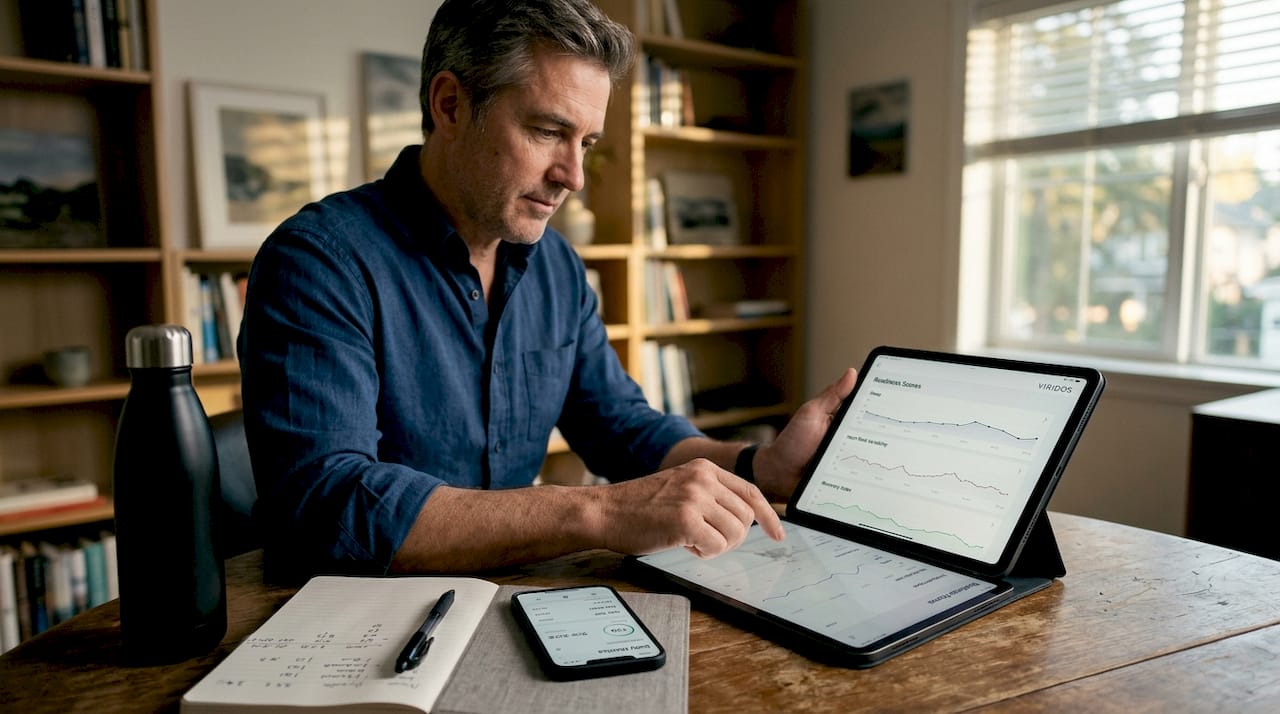
In practice, this looks like wearing a device such as a WHOOP or Oura Ring, reviewing your readiness score each morning, and making training decisions based on data rather than habit or ego. Executives who adopt this approach stop guessing and start calibrating.
The payoff is compounding. When your energy management is data-driven, you stop burning reserves you do not have. Your healthy aging workflow becomes self-correcting. And your performance longevity extends well beyond what most men in your peer group will sustain.
From confusion to mastery: Applying executive fitness frameworks
Most executives who struggle with fitness are not lacking motivation. They are lacking structure. They try to do everything at once, burn out in week three, and conclude that consistent fitness is incompatible with their schedule. It is not. The problem is the approach.
Here is a practical sequence for applying executive fitness frameworks without disrupting your operational rhythm:
- Audit your current baseline. Track sleep, energy, and movement for two weeks before changing anything. You need real data, not assumptions.
- Identify your lowest-hanging recovery gap. For most executives, this is sleep. Fix that first before adding training volume.
- Add Zone 2 cardio as your first active pillar. It is low risk, easy to schedule, and delivers fast improvements in baseline energy.
- Layer in HIIT after four weeks. Once your aerobic base is stabilizing, introduce two short HIIT sessions per week.
- Engage a coach to review your data at the six-week mark. This is where personalization matters most. Generic programs plateau. Coached programs adapt.
- Review and refine monthly. Use your metrics to identify what is working and cut what is not.
Pro Tip: The biggest mistake is treating executive fitness as a project with a finish line. It is an operating system. Refine it continuously based on feedback from your tracking data.
The deeper risk of skipping structure is not just physical. Holistic programs prevent isolation and burnout, fostering sustained cognitive performance over years, not quarters. If you want to go further, holistic executive frameworks and executive health coaching are the logical next steps.
Our take: What most exec guides get wrong about fitness
Most executive fitness guides are repackaged gym programs with a corner-office label. They focus on what to do, rarely on when and why based on your actual biology. That is the gap.
The uncomfortable truth is that for men in high-demand roles, rigid routines often create more stress than they relieve. The real lever is not discipline in the traditional sense. It is intentional energy management. Energy management, not just time management, is the real differentiator behind sustained executive performance.
"Recovery is a competitive advantage. The executive who masters rest outperforms the one who glorifies grind."
Shifting your frame from "how much can I fit in" to "how well am I recovering" changes everything. Your executive wellness insights should be built around this principle first. Performance follows recovery. Not the other way around.
Next steps: Optimize your executive fitness journey
You now have the frameworks, the metrics, and the sequencing. The next move is making it stick. Sustained executive fitness does not come from motivation alone. It comes from systems that create accountability and visible progress over time.

At VIRIDOS, we build tools and resources specifically for disciplined men who operate at the highest levels. The Performance Journal is designed to help you track your energy, recovery, and training data in one place, creating the feedback loop that turns intention into measurable results. If you are serious about sustaining your edge for the next decade, this is where you start.
Frequently asked questions
How is executive fitness different from regular fitness?
Executive fitness integrates recovery, performance metrics, and energy management to optimize leadership and cognitive performance, rather than focusing solely on physical appearance or basic health. Expert nuances distinguish executive fitness from standard preventive health approaches.
What are the essential daily habits for executive fitness?
Prioritize 7 to 8 hours of sleep, track energy and recovery with wearables, integrate Zone 2 cardio and HIIT weekly, and use personalized coaching to adapt your program. Programs integrating these pillars consistently outperform generic routines.
Are HIIT workouts really suitable for busy executives?
Yes. Research shows 70 minutes weekly of HIIT reduces biological age by 3.5 years in men aged 40 to 65, and it fits easily into an executive schedule as two to three short sessions per week.
What metrics help track executive fitness progress?
Key metrics include heart rate variability, sleep quality, resting heart rate trends, and sustained energy levels throughout the day. CEOs using HRV and biometric tracking consistently report sharper decision-making and better energy management.