
TL;DR:
- A longevity routine focuses on daily habits that extend healthspan and maintain vitality for adults aged 40 to 65. It emphasizes sleep, exercise, nutrition, and lifestyle habits, with a strong recommendation to start small and layer habits gradually for long-term success. Tracking functional metrics like VO2 max and grip strength helps optimize and sustain progress in aging well.
A longevity routine is a structured set of daily habits proven to extend healthspan and vitality for adults aged 40 to 65. The term "healthspan" is the recognized clinical standard here. It refers to the years you live in full function, not just the years you live. Research from Harvard Medical School confirms that consistent small behavior changes outperform dramatic lifestyle overhauls for long-term adherence. This guide breaks down the core pillars, a practical daily structure, and the measurement tools that separate men who age with performance from those who simply age.
What are the foundational components of a longevity routine?
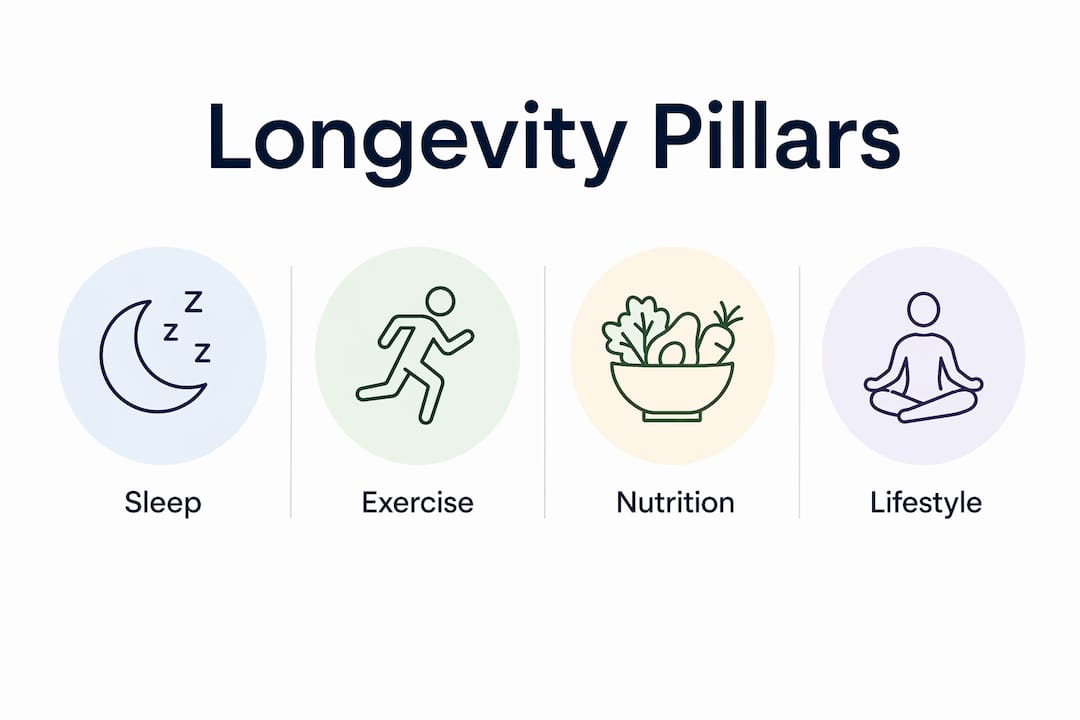
A longevity routine built for men in midlife rests on four pillars: sleep, exercise, nutrition, and lifestyle habits. Each pillar compounds the others. Neglect one and the entire system underperforms.
Sleep
Sleep is the highest-leverage intervention in any long-term health guide. Seven to nine hours with a consistent schedule and a bedroom kept at 65–68°F supports deep, restorative sleep. Deep sleep drives glymphatic clearance, the brain's overnight waste-removal process, which reduces long-term dementia risk. Alcohol within three hours of bed suppresses deep sleep stages even when total sleep time looks adequate. Viridos addresses sleep as a performance variable, not a recovery afterthought.
Exercise
The gold standard for aerobic longevity training is 180–300 minutes of Zone 2 cardio weekly, combined with two to three resistance sessions. Zone 2 means working at a pace where you can hold a conversation but feel challenged. That intensity builds mitochondrial density and metabolic flexibility, which are the two engines of sustained physical performance past 50. Resistance training is non-negotiable. It preserves muscle mass and insulin sensitivity, both of which decline sharply without deliberate stimulus after 40.
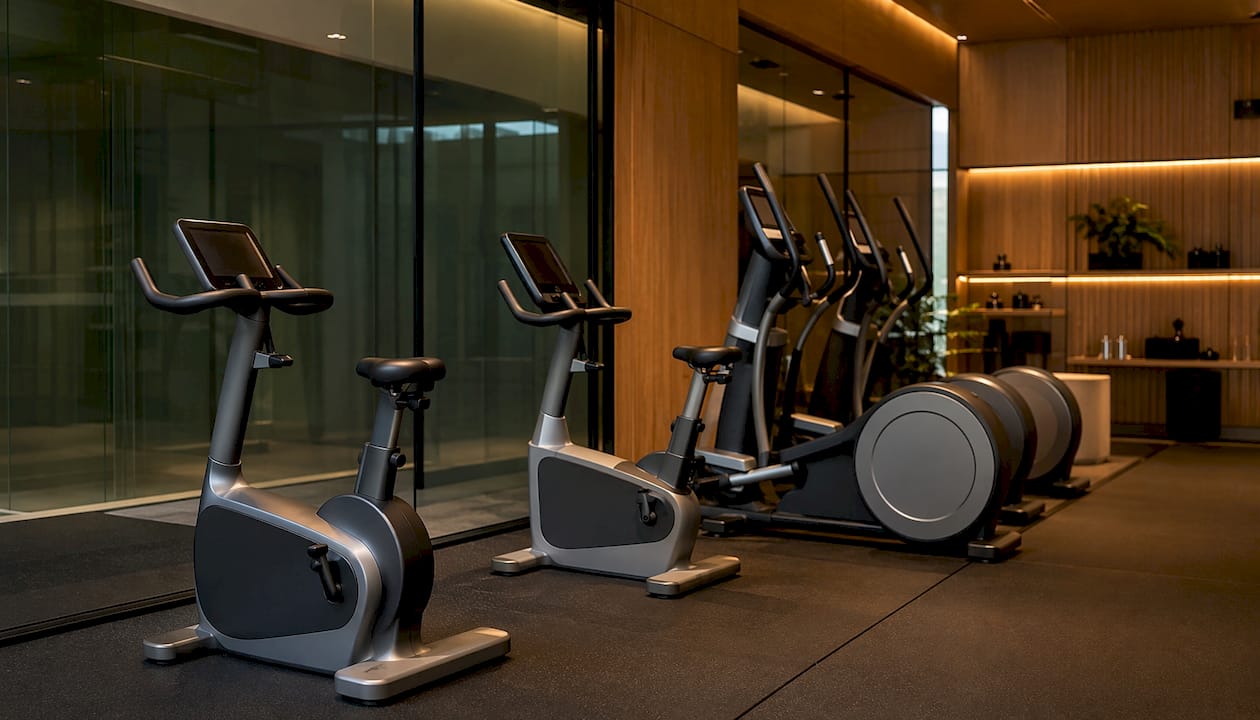
Higher VO2 max is one of the strongest predictors of longevity. Aerobic base training plus intervals builds the metabolic currency that delays functional decline. Think of VO2 max as your body's engine size. You can maintain and even grow it well into your 60s with consistent effort.
Nutrition
Cardiologist Dr. Eric Topol frames longevity nutrition as living against inflammation. That means whole foods, fruits, vegetables, nuts, and olive oil, while cutting ultra-processed foods and excess additives. Protein intake of 1.6–2.2 grams per kilogram of body weight daily is the evidence-based target for muscle preservation in midlife men. Plant-forward eating reduces systemic inflammation, which is the underlying driver of most age-related decline.
Lifestyle habits
Time in nature lowers blood pressure, eases stress, and improves sleep quality. These are not soft benefits. They are measurable physiological outcomes. Consistent social engagement correlates with lower rates of dementia and cardiovascular disease. For high-performing men who default to isolation during demanding periods, this is the most commonly skipped pillar.
Pro Tip: If you can only prioritize two habits, choose sleep and resistance training. These two deliver the highest return per hour invested for men over 40.
How do you build your daily longevity habits step by step?
Building a sustainable daily longevity routine requires sequencing. Most men try to change everything at once and abandon the effort within six weeks.
- Assess your baseline. Track your current sleep duration, weekly movement, and dietary patterns for two weeks before changing anything. You need accurate data, not assumptions.
- Set one anchor habit per pillar. Choose a fixed wake time, one weekly strength session, one whole-food meal per day, and one 20-minute outdoor walk. These are your minimum viable inputs.
- Add morning sunlight exposure. Ten minutes of natural light within 30 minutes of waking sets your circadian rhythm and improves sleep quality that same night. This costs nothing and compounds daily.
- Stack habits onto existing behaviors. Attach your hydration habit to your morning coffee ritual. Attach a five-minute mobility routine to your post-shower sequence. Habit stacking reduces the cognitive load of building new behaviors.
- Plan your training week on Sunday. Assign Zone 2 sessions, strength days, and one full rest day. Treat these like board meetings. They are not optional unless a genuine conflict arises.
- Review and adjust monthly. What is working? What is consistently skipped? Adjust the schedule, not the standard.
The most common failure mode is "protocol overwhelm." Men in demanding roles encounter a new longevity framework and attempt to implement 15 changes simultaneously. Gradual habit layering prevents this. Start with the three foundational inputs: sleep, Zone 2 cardio, and strength training. Add complexity only after those three are automatic.
Pro Tip: Treat your longevity routine with the same rigor you apply to your most important professional systems. Schedule it, measure it, and protect it from ad hoc disruption.
What tools and measurements help track your longevity plan?
Tracking turns intention into data. Data enables adjustment. Without measurement, you are managing by feel, which is the least reliable method available.
- Wearable sleep and activity trackers. Devices like the Oura Ring provide nightly sleep stage data, heart rate variability, and readiness scores. These metrics reveal patterns that subjective assessment misses entirely.
- Annual VO2 max testing. VO2 max and grip strength are more predictive of future healthspan than most standard blood panels. A single annual test gives you a functional age benchmark.
- Grip strength assessment. A simple dynamometer test takes 60 seconds. Declining grip strength is an early marker of systemic muscle loss and cardiovascular risk.
- Dietary protein tracking. Use a food logging app for two to four weeks per year to verify you are hitting your protein target. Most men over 50 are significantly under their requirement without realizing it.
- Stress and mental health self-assessment. Weekly check-ins on sleep quality, mood, and cognitive sharpness catch early signs of overtraining or burnout before they become performance problems.
Understanding athletic longevity as a discipline, not just a concept, changes how you approach these metrics. The goal is not to collect data. The goal is to act on it.
| Metric | Frequency | Why it matters |
|---|---|---|
| VO2 max | Annually | Predicts functional longevity and cardiovascular health |
| Grip strength | Annually | Early marker of muscle loss and systemic decline |
| Sleep quality score | Weekly | Tracks recovery and readiness for training load |
| Dietary protein intake | Quarterly | Confirms muscle preservation targets are being met |
| Resting heart rate | Daily (wearable) | Reflects cardiovascular adaptation and recovery status |
How do you troubleshoot and sustain your routine over time?
Sustainability is the variable most longevity frameworks ignore. A perfect protocol followed for three months delivers less than a good protocol followed for three years.
- Manage intensity, not just volume. Overtraining is a real risk for competitive, high-drive men. If your resting heart rate is elevated and your sleep quality drops for three consecutive days, reduce training load before adding more.
- Build a travel protocol. Identify the minimum viable version of your routine: a bodyweight strength circuit, a 20-minute walk, and a consistent sleep window. Travel disrupts routine. A pre-defined fallback prevents complete abandonment.
- Avoid supplement dependency before foundations are solid. Prioritizing foundational habits over expensive supplements prevents burnout and protocol overwhelm. No supplement compensates for poor sleep or a sedentary week.
- Adjust for life stage. Your routine at 45 should look different at 60. Recovery time increases. Training intensity may shift toward more Zone 2 and less high-intensity interval work. Flexibility and mobility work earns more time in the schedule.
- Use identity, not willpower. Men who frame their longevity lifestyle plan as a professional discipline, not a personal project, show better long-term adherence. You are not trying to be healthy. You are a man who operates at a high level, and this routine is how you maintain that standard.
The research is clear: incremental behavior changes yield significant longevity benefits, scaling to over nine years of additional life expectancy when high-quality habits are combined consistently. That is not a marginal return. It is the difference between a full decade of performance and a decade of managed decline.
Key Takeaways
A longevity routine built on sleep, Zone 2 cardio, resistance training, and whole-food nutrition delivers the highest return for men aged 40–65 seeking sustained vitality and performance.
| Point | Details |
|---|---|
| Sleep is the foundation | Seven to nine hours with a consistent schedule and cool environment drives recovery and brain health. |
| Exercise requires two modalities | Combine 180–300 minutes of Zone 2 cardio weekly with two to three resistance sessions for full metabolic benefit. |
| Nutrition targets inflammation | A whole-food, plant-forward diet with 1.6–2.2 g/kg protein daily preserves muscle and reduces systemic decline. |
| Track functional metrics annually | VO2 max and grip strength predict healthspan more reliably than standard blood panels alone. |
| Layer habits gradually | Start with sleep, Zone 2, and strength training. Add complexity only after those three are automatic. |
What I've learned about longevity that most guides get wrong
Most longevity content treats the routine as a collection of independent habits. Add this supplement, try that breathing technique, track this biomarker. The framing is additive. The reality is systemic.
What I have found, working with and observing high-performing men over many years, is that the men who age best are not the ones doing the most. They are the ones doing the right few things with relentless consistency. Sleep, resistance training, and whole-food nutrition are not three items on a checklist. They are a system. Each one amplifies the others. Resistance training improves sleep quality. Better sleep improves recovery from training. Better recovery allows higher training quality. The loop compounds.
The second thing most guides miss is the identity piece. Willpower is a depleting resource. Men who run demanding organizations know this better than anyone. The ones who sustain their longevity strategies long-term do not rely on motivation. They have built the routine into their professional identity. It is not something they do when they have time. It is part of how they operate.
The third mistake is chasing optimization before mastering the basics. I have seen men spend significant money on advanced diagnostics and premium supplements while sleeping six hours a night and skipping strength training for months. The sequence matters. Foundations first. Measurement second. Optimization third.
— Joakim
Viridos and the discipline of sustained vitality

Viridos is built for men who take their performance seriously enough to support it at the foundational level. The brand's small-batch Swedish production ethos reflects the same principle that drives an effective longevity routine: precision over volume, quality over convenience, and consistency over intensity. Viridos formulations use sublingual delivery, which bypasses the digestive process and delivers active compounds directly into the bloodstream for faster, more reliable absorption. For men who have the sleep, training, and nutrition foundations in place, Viridos offers a premium layer of support designed to match the standard they already hold themselves to. Explore the Swedish production philosophy behind every Viridos product, or visit Viridos to see the full range.
FAQ
What is a longevity routine?
A longevity routine is a structured set of daily habits targeting healthspan extension through sleep, exercise, nutrition, and lifestyle practices. The goal is sustained vitality and functional performance, not just longer life.
How many hours of sleep does a longevity routine require?
Seven to nine hours of consistent, high-quality sleep is the evidence-based target. Sleep variability, not just short duration, increases all-cause mortality risk.
What exercise is most important for longevity after 40?
Zone 2 aerobic training and resistance training are the two highest-priority modalities. Zone 2 builds mitochondrial function; resistance training preserves muscle mass and insulin sensitivity.
How do I avoid burnout when following a longevity routine?
Start with three foundational habits: sleep, Zone 2 cardio, and strength training. Add complexity gradually, and build a minimum viable travel protocol to maintain consistency during disruptions.
What metrics should I track to measure longevity progress?
VO2 max and grip strength are the most predictive functional metrics for healthspan. Track them annually alongside weekly sleep quality scores and quarterly dietary protein intake.