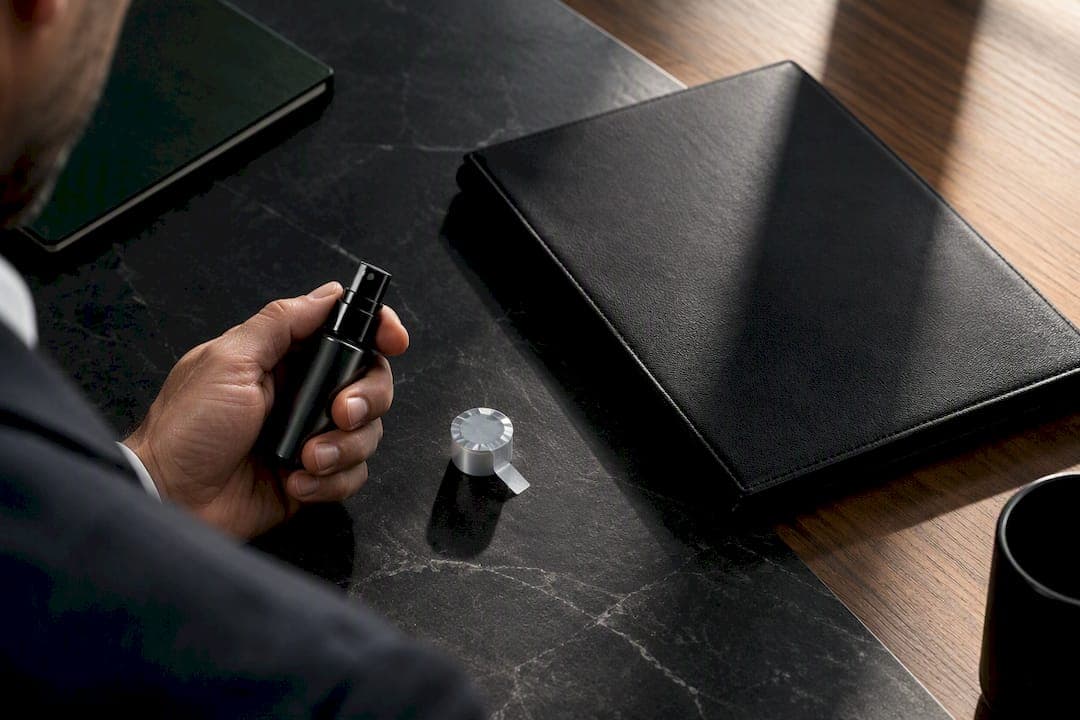
A properly formulated sublingual performance spray typically holds its declared potency for 12 to 24 months when the manufacturer's stability data supports that window, but once opened, the effective in-use period is shorter. The single rule that protects your investment is simple: store the bottle exactly within the temperature and humidity range printed on the label, without exception. Deviate from that range and you introduce variables no stability study accounted for.
TL;DR:
- The effective in-use period after opening is shorter than the sealed shelf life and depends on preservative efficacy testing, storage conditions, and handling.
- Manufacturers must demonstrate stability through testing at specific conditions, with transparent stability studies, container specs, and photostability data to substantiate shelf life claims.
- Proper storage involves keeping bottles upright in a cool, dark place within the specified temperature and humidity range, especially during travel and temperature excursions.
- Signs of degradation include color changes, unusual smells, visible particles, inconsistent spray patterns, or a clogged nozzle, prompting immediate action.
- Small-batch production with batch-specific documentation offers better traceability, tighter quality control, and reliable shelf life verification compared to open retail distribution.
Table of Contents
- What determines a spray's shelf life: stability studies, formulation and packaging
- Sealed storage vs in-use handling: practical rules for executives and travelers
- Label reading and regulatory expectations: what 'best before' and storage statements mean
- Packaging, delivery system and transport: what to inspect or ask suppliers
- Practical indicators a bottle has degraded and steps to take
- Why small-batch testing and traceability matter
- Getting VIRIDOS: membership, batch records and documentation on request
- Authoritative documents and links to verify claims
- Sources
- FAQ
What determines a spray's shelf life: stability studies, formulation and packaging
A shelf-life claim is not a guess. It is the output of a testing protocol that manufacturers are expected to follow before printing a date on a label. Under EMA and ICH guidance, long-term stability studies for products sold in the EU reference 25°C and 60% relative humidity as the standard climatic condition, with accelerated testing at higher temperatures used to simulate stress and shipping exposure over a shorter timeframe. These studies track chemical, physical and microbiological changes in the formulation over time, not just at the moment of manufacture.
The ICH Q1A(R2) guideline%20Guideline.pdf) sets the acceptance criteria manufacturers use to determine when a product has meaningfully degraded, including a significant change threshold such as a 5% shift in assay value. Testing must occur in the actual container-closure system intended for sale, because a bottle, pump and nozzle interact with the formulation in ways a lab beaker does not. Photostability, moisture ingress and solvent loss through the packaging wall are all real risks that can shorten an otherwise sound formulation's working life.
Under EFSA's framework for food supplements, the manufacturer carries the burden of proof: the declared quantity of active compounds must be maintained until the end of the stated shelf life, backed by documentation.
Before committing to a supplier, request the following:
- A summary of stability study results, including the temperature and humidity conditions tested
- Container-closure specifications confirming the packaging matches what was used in testing
- Photostability data if the formulation is light-sensitive
- The significant change threshold the manufacturer used to set the expiration date
A supplier unwilling to share this is asking you to trust a claim it has not proven.
Sealed storage vs in-use handling: practical rules for executives and travelers
Sealed shelf life and in-use life are two different numbers, and conflating them is the most common mistake buyers make. A sealed bottle can remain stable for well over a year under the right conditions. Once opened, repeated nozzle exposure to air, moisture and skin contact introduces microbiological risk that the sealed-shelf figure never accounted for. Reputable manufacturers run preservative efficacy testing to validate a realistic in-use window, distinct from the printed best-before date.
Follow these steps to protect potency from the moment you receive a bottle to the moment you finish it:
- Store sealed bottles in a stable, cool, dark location, never in a car, a bathroom cabinet, or near a heat source.
- Keep the bottle upright to protect the pump mechanism and reduce leakage risk.
- Record the date you open each bottle so you can track it against the manufacturer's stated in-use period.
- Wipe the nozzle after each use and replace the cap fully to limit contamination.
- If a bottle experiences a brief temperature excursion, such as a few hours in a hot car, inspect it closely before continuing use rather than discarding or trusting it blindly.
Travel introduces its own risks. Checked luggage can reach temperature extremes far outside anything a stability study tested for, and cargo holds are not climate-controlled to pharmaceutical standards. Carry performance sprays in your personal bag, ideally in an insulated pouch, and avoid leaving them in direct sun on a hotel windowsill or a car dashboard during transit.
Pro Tip: Let a bottle that has been exposed to heat or cold return to room temperature before using it. Spraying immediately after an extreme can affect dose consistency even if the formulation itself is unaffected.
Label reading and regulatory expectations: what 'best before' and storage statements mean
Food supplements are typically marked with a "best before" date rather than a "use by" date, and under EFSA's guidance, the manufacturer is responsible for ensuring the declared potency holds until that date. This is a manufacturer commitment, not a regulatory guarantee independently verified by an outside body.
Storage statements are not marketing language. EMA guidance is explicit that a label's storage instructions must be "achievable and directly linked to stability data," and it specifically discourages vague phrasing like "room temperature" in favor of a defined range. If a label tells you to store a product at room temperature without specifying degrees, that is a signal the underlying stability work may be incomplete.
In Sweden, Livsmedelsverkets föreskrifter (LIVSFS 2023:3) require supplement labels to carry a date mark, recommended dose and explicit storage instructions. Our legal checklist for oral spray supplements covers these requirements in more depth.
Before buying, request:
- A stability summary, not just a printed shelf-life claim
- A current certificate of analysis (COA) for the specific batch
- Written justification for the storage range on the label
- Clarity on whether "best before" reflects tested data or an estimate
Vague storage language, missing batch numbers, or a reluctance to share a COA are all red flags worth taking seriously.
Packaging, delivery system and transport: what to inspect or ask suppliers
The container is part of the formulation's protection, not an afterthought. An impermeable, well-sealed bottle limits moisture ingress and solvent loss, both of which ICH and EMA guidance identify as contributors to potency decline over time. A semi-permeable container can undermine an otherwise well-formulated product regardless of what the label claims.
Light-sensitive formulations require opaque or UV-protective packaging, and tamper-evident seals confirm the bottle has not been opened before it reaches you. Shipping introduces its own stress: ICH Q1 guidance discusses accelerated testing at conditions such as 40°C and 75% relative humidity specifically to model short-term excursions like those encountered in transit. The concept of mean kinetic temperature, an averaged temperature exposure over a shipping route, is how serious suppliers estimate real-world thermal stress rather than assuming a package travels in ideal conditions.
Before you order, ask a supplier for:
- Container permeability data specific to the packaging used
- Photostability results if the product is light-sensitive
- Evidence of primary-package aging tests, not just formulation-only stability data
- Their protocol for managing last-mile temperature exposure during delivery
Our guide on traveling with traceable supplements covers additional transport considerations relevant to frequent flyers.
Practical indicators a bottle has degraded and steps to take
Trust your senses before you trust the calendar. A formulation that has shifted in color, developed an unusual smell, or shows visible particles has likely degraded regardless of the printed date. Inconsistent spray plume, a clogged nozzle, or noticeably uneven dose per actuation are performance signs worth acting on immediately.

A batch-specific COA is the fastest way to confirm the dose per actuation still matches the manufacturer's original specification. Cross-check the lot number on your bottle against any COA the supplier provides, and note your opening date against the labeled in-use window rather than the sealed shelf life.
If you suspect degradation:
- Stop using the bottle for any performance-critical occasion
- Photograph the batch number, label and any visible abnormality
- Contact the supplier directly and request a current COA or replacement
Why small-batch testing and traceability matter
Most of the failures described above trace back to one root cause: distribution at a scale where nobody can tell you exactly what happened to a specific bottle between the factory and your desk. Small-batch production narrows that gap. It allows tighter process control, batch-specific certificates of analysis, and a documented chain from formulation to shipment. A controlled membership model, rather than open retail distribution, reduces the number of hands and environments a bottle passes through before it reaches you. An executive evaluating a premium supplement should expect nothing less than full access to that documentation on request.
— Joakim
Getting VIRIDOS: membership, batch records and documentation on request
The brand operates on a controlled membership model built around small-batch Swedish production, which is a structure that provides fewer distribution touchpoints, tighter process control, and batch-specific documentation available to members who ask for it.

If the storage and stability questions raised here matter to you, they should shape how you choose a supplier, not just how you store what you already own. Members can request batch COAs and storage condition justifications directly as part of the membership experience. Membership details and current plans are outlined on our pricing page, and a fuller look at how distribution and traceability are managed is available on our membership overview. For a structured way to vet any supplier's documentation before you commit, our COA checklist for executives is a useful starting point.
Authoritative documents and links to verify claims
The claims in this guide draw on EMA's storage condition guideline for label and stability standards, ICH Q1A(R2) for testing methodology, EFSA's supplement framework for manufacturer obligations, and Livsmedelsverkets föreskrifter for Swedish labeling requirements. Our plant extract storage guide expands on practical handling.
This article is general information, not a substitute for advice from a qualified doctor. Consult a qualified healthcare professional about your own circumstances before acting on anything here.
Sources
- EFSA — Food supplements
- EMA — Guideline on declaration of storage conditions in the product information of medicinal products
- Livsmedelsverkets föreskrifter om kosttillskott (LIVSFS 2023:3)
FAQ
How long does a sealed performance spray last before opening?
A well-formulated spray with proper stability data typically holds potency for 12 to 24 months sealed, based on EMA and ICH testing standards. The exact figure depends on the manufacturer's own stability studies for that specific formulation and packaging.
Does the in-use period differ from the printed shelf-life date?
Yes. The printed best-before date reflects sealed stability, while the in-use period after opening is shorter and depends on preservative efficacy testing that accounts for nozzle exposure and contamination risk. Manufacturers that perform this testing can state a realistic window for use after opening.
What temperature should I store a performance spray at?
Follow the exact range stated on the label rather than a general assumption of "room temperature." EMA guidance references 25°C and 60% relative humidity as the standard long-term testing condition for EU products, and a credible label will state a defined range tied to that data.
What should I do if I suspect a bottle has degraded?
Stop using it for any performance-critical occasion, photograph the lot number and label, and contact the supplier for a current certificate of analysis. Visible particles, an altered smell, or inconsistent spray delivery are signs worth acting on rather than ignoring.
How does VIRIDOS document shelf life and batch quality?
VIRIDOS operates on small-batch Swedish production with batch-specific documentation available to members through the membership program described on the pricing page. Members can request storage condition justifications and certificates of analysis directly as part of that structure.