
TL;DR:
- Nutrition fundamentally determines physical and mental performance by providing essential energy, structural, and regulatory nutrients. Prioritizing macronutrient balance, micronutrient sufficiency, hydration, and timing aligned with training optimizes gains and recovery, while supplements support, but do not replace, these core practices. A disciplined, personalized, and periodized nutrition system separates consistent high performers from those with inconsistent results.
Nutrition is the primary determinant of physical and cognitive performance, supplying the energy substrates, structural materials, and regulatory compounds that every system in your body depends on to function under load. The role of nutrition in performance extends well beyond what you eat before a workout. It governs recovery speed, injury resilience, immune competence, and the mental clarity that separates sharp decision-making from cognitive drift. According to a 2026 MDPI review, sports nutrition strategies target performance, recovery, and overall health with meaningful variation by sport, environment, and individual physiology. For executives and athletes operating at the edge of their capacity, that variation is not academic. It is the difference between compounding gains and chronic underperformance.
How do macronutrients impact athletic and mental performance?
Carbohydrates, proteins, and fats each serve distinct and non-negotiable roles in sustaining output. Carbohydrates are the primary fuel for high-intensity muscular work and the brain's preferred energy source. Without adequate carbohydrate availability, both physical power and executive function degrade faster than most people expect. The Springer Nature 4Ps framework recommends 6 to 10 g/kg/day of carbohydrates in the 24 to 36 hours before competition, with 1 to 3 g/kg consumed 3 to 4 hours pre-event. That precision matters because gut tolerance and gastric emptying rates vary significantly between individuals.

Protein drives muscle repair, immune function, and the synthesis of neurotransmitters that regulate focus and mood. The 4Ps framework places pre-competition protein intake at approximately 0.3 to 0.5 g/kg per meal, paired with low-fiber and low-fat choices to reduce gastrointestinal risk. Mass General Brigham nutrition experts confirm that increasing protein and carbohydrate intake yields the largest performance gains for most athletes before any supplement is considered.
Dietary fats support sustained energy during lower-intensity, longer-duration efforts and are required for absorbing fat-soluble vitamins including D, A, E, and K. The common error among high-performing men is not fat avoidance but fat mistiming. Consuming high-fat meals close to training or competition slows gastric emptying and blunts carbohydrate availability at exactly the wrong moment.
Key macronutrient principles for performance:
- Carbohydrates: prioritize 30 to 60 g per hour during sustained efforts lasting more than 60 minutes
- Protein: distribute intake across 3 to 5 meals rather than concentrating it in one sitting
- Fats: schedule higher-fat meals during recovery windows, not pre-performance windows
- Fiber: reduce intake in the 24 hours before competition to protect gut comfort
Pro Tip: If you train or compete in the morning, your pre-sleep meal the night before is your most important pre-performance meal. A moderate-carbohydrate, moderate-protein dinner with low fat and fiber sets your glycogen and amino acid status before you wake.
What role do micronutrients and hydration play in performance and recovery?
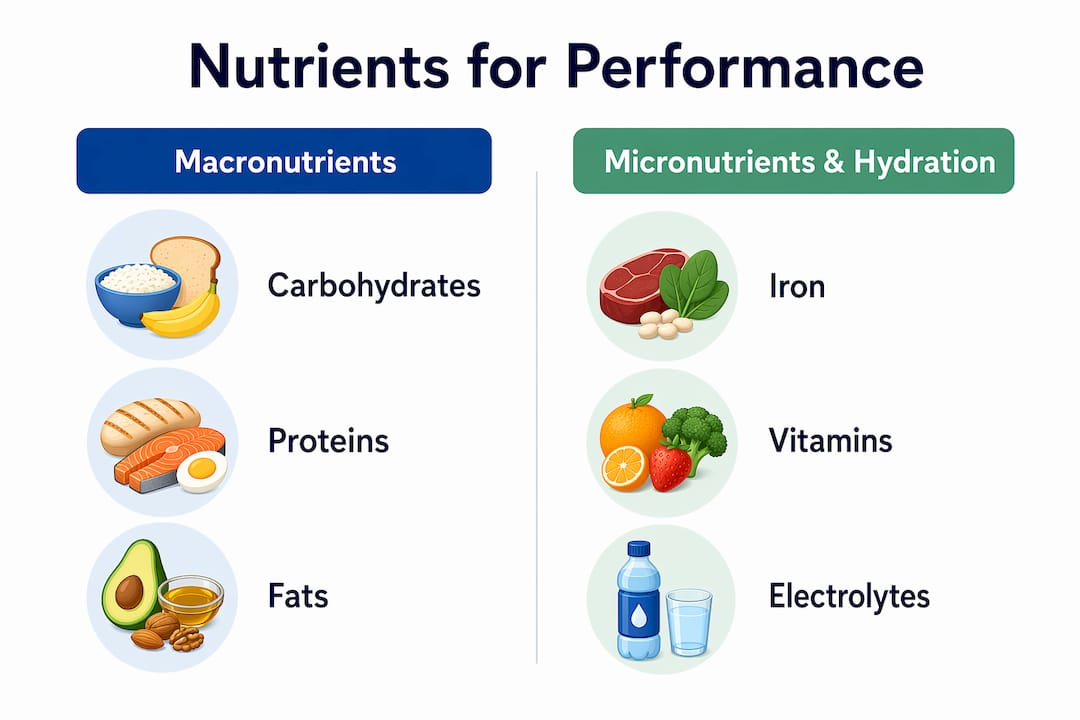
Micronutrients operate at the cellular level, enabling the enzymatic reactions that convert food into usable energy. Selenium, iron, vitamin B12, and vitamin D are among the most performance-critical. Iron deficiency, even without clinical anemia, reduces oxygen transport and aerobic capacity. Vitamin D insufficiency, which is common in northern latitudes and among men who work primarily indoors, impairs muscle function and immune response.
Hydration is equally non-negotiable. Keeping dehydration below 2% of body mass is the threshold at which power output, reaction time, and cognitive accuracy begin to measurably decline. The practical implication: a 90 kg man loses meaningful performance capacity after losing just 1.8 kg of fluid. Pre-event hydration should begin 2 to 3 hours before activity, targeting approximately 7 ml per kg of body weight.
| Micronutrient / Strategy | Performance Role | Practical Target |
|---|---|---|
| Iron | Oxygen transport, aerobic capacity | Monitor serum ferritin; address deficiency before training loads increase |
| Vitamin D | Muscle function, immune defense | 1,000 to 2,000 IU daily; test annually |
| Selenium and zinc | Cognitive function, antioxidant defense | Achieved through whole foods: Brazil nuts, shellfish, red meat |
| Pre-event hydration | Euhydration maintenance | 7 ml/kg body weight, 2 to 3 hours before activity |
| In-event electrolytes | Fluid retention, muscle function | Carbohydrate-electrolyte beverages for efforts over 60 minutes |
Carbohydrate-electrolyte beverages support both hydration and energy delivery during sustained efforts. However, functional ingredients beyond hydration should be interpreted with caution. The evidence for anti-inflammatory or recovery-accelerating claims on commercial sports drinks varies widely by study design and context.
Pro Tip: Weigh yourself before and after a training session. Every kilogram lost represents approximately one liter of fluid. Replacing 150% of that loss over the following two to three hours restores euhydration more reliably than drinking to thirst alone.
How does nutrient timing and periodization optimize performance?
The 4Ps framework from Springer Nature represents the most structured evidence-based approach to performance nutrition available in 2026. It organizes nutritional strategy across four dimensions: Personalize, Periodize, Prefuel, and Prepare. Each dimension addresses a different layer of the performance equation, and together they replace the outdated idea that one diet fits all training contexts.
-
Personalize. Nutrition requirements differ by body composition, training history, metabolic phenotype, and environmental conditions. A 55-year-old executive training for a triathlon has fundamentally different needs than a 30-year-old strength athlete. The American Society for Nutrition confirms that nutrition strategies should be tailored to individual and event-specific needs, with sex and age as significant modifying variables.
-
Periodize. Nutrient intake should align with training microcycles, mesocycles, and macrocycles rather than remaining static year-round. Higher carbohydrate availability during high-intensity training blocks and reduced intake during lower-load recovery phases allows the body to adapt more efficiently. Nutrition interventions interact with long-term training adaptations via cell signaling pathways, which means the timing of nutritional changes relative to training phases has measurable physiological consequences.
-
Prefuel. Carbohydrate loading in the 24 to 36 hours before a high-demand event is the most evidence-supported prefueling strategy. Pre-event meals should be low in fiber and fat to protect gut tolerance and maximize carbohydrate absorption. This is not about eating more overall. It is about shifting the composition and timing of what you already eat.
-
Prepare. Strategic use of ergogenic compounds, primarily caffeine and dietary nitrates, falls within the Prepare phase. Both have strong evidence for delaying power decline and maintaining cognitive function during sustained effort. Hydration status at the start of an event is a physiological constraint that takes precedence over secondary considerations like immune modulation when planning competition-day nutrition.
What is the evidence for supplements in performance enhancement?
Supplements are the most marketed and least understood category in performance nutrition. The foundational principle from Mass General Brigham is clear: most athletes improve most by optimizing macronutrient balance before adding any supplement. That sequence matters because supplements cannot compensate for structural dietary deficiencies.
Where supplements do have strong evidence, the evidence is specific:
- Caffeine: Effective for mental alertness and sustained power output. The Mayo Clinic specifies that oral caffeine for alertness should not exceed 200 mg per dose and should not be repeated more often than every 3 to 4 hours. Safe total daily intake for adults remains below 400 mg. Exceeding these thresholds increases the risk of anxiety, sleep disruption, and cardiovascular stress.
- Dietary nitrates: Found in beetroot and leafy greens, nitrates improve oxygen efficiency and have demonstrated performance benefits in endurance contexts.
- Omega-3 fatty acids: Support membrane integrity, reduce exercise-induced inflammation, and contribute to cognitive resilience.
| Supplement | Evidence Strength | Key Caution |
|---|---|---|
| Caffeine | Strong | Dose-dependent; disrupts sleep above 400 mg/day |
| Dietary nitrates | Moderate to strong | Context-specific; most effective in endurance events |
| Omega-3s | Moderate | Quality and purity vary significantly by brand |
| Antioxidant blends | Mixed | High doses may blunt training adaptation signals |
The unregulated supplement market remains a serious risk for professionals subject to drug testing or concerned about product integrity. Third-party certification from organizations like NSF International or Informed Sport is the minimum standard for any supplement you put in your body. Understanding how to identify a sophisticated supplement brand before purchasing is not optional for men who take their performance seriously.
How does nutrition influence mental performance for active professionals?
Cognitive performance follows the same nutritional rules as physical performance, with some additional nuances that matter specifically for executives and professionals under sustained mental load. Higher intakes of polyunsaturated fatty acids, selenium, zinc, and B vitamins correlate with improved cognitive performance scores across multiple studies. Sleep quality amplifies or undermines these effects, meaning that nutrition and sleep interact as a system rather than operating independently.
Targeted nutrition protocols combining omega-3s, magnesium, B vitamins, antioxidants, and polyphenols have demonstrated improvements in cognitive resilience under conditions of digital overload. These improvements persist after controlling for sleep and physical activity, which confirms that the nutritional effect is specific and not simply a proxy for general health behaviors.
For professionals managing high cognitive loads across long workdays, the practical applications are direct. Skipping breakfast reduces working memory and processing speed by mid-morning. Dehydration of even 1% of body mass impairs attention and short-term recall. Meals high in refined carbohydrates produce glucose spikes followed by energy troughs that coincide with the afternoon cognitive slump most executives attribute to workload rather than nutrition.
Pro Tip: Structure your largest carbohydrate intake around physical training, not around meetings or screen time. Your brain needs glucose, but it does not need the same volume as working muscle. Moderate, steady carbohydrate intake throughout the workday maintains cognitive output without the energy crashes that follow high-glycemic meals.
Key takeaways
Nutrition drives performance outcomes across physical and cognitive domains through macronutrient balance, micronutrient sufficiency, hydration discipline, and periodized timing aligned with training and competition demands.
| Point | Details |
|---|---|
| Macronutrient balance first | Optimize carbohydrate, protein, and fat intake before considering any supplement. |
| Hydration is non-negotiable | Dehydration above 2% of body mass measurably degrades power and cognitive accuracy. |
| Periodize your nutrition | Align carbohydrate and caloric intake with training cycle intensity, not a static daily target. |
| Micronutrients drive cognition | Selenium, zinc, B vitamins, and omega-3s directly support executive function and mental resilience. |
| Supplement with precision | Use caffeine and nitrates with evidence-based dosing; verify all supplements through third-party testing. |
Nutrition, discipline, and the long game
I have worked with enough high-performing men to know that the supplement conversation almost always comes before the diet conversation. That sequence is backwards, and it costs people months of progress they will never recover.
The executives and athletes who sustain output across decades share one nutritional trait: they treat food as a system, not a series of individual choices. They periodize. They hydrate deliberately. They know their pre-competition carbohydrate targets the way they know their quarterly numbers. That level of precision is not obsessive. It is what separates men who perform consistently from men who perform occasionally.
My honest caution is this: fad diets and single-nutrient fixations are the nutritional equivalent of chasing short-term revenue at the expense of long-term margin. Carnivore, extended fasting, and zero-carb protocols all have contexts where they may be appropriate. None of them replace the foundational work of matching macronutrient intake to training load, addressing micronutrient gaps through whole foods first, and building hydration habits that hold under pressure. Start there. Build the system. Then, and only then, add targeted supplementation where the evidence actually supports it.
The men I respect most in this space are not the ones with the most elaborate supplement stacks. They are the ones who can tell you exactly what they ate the day before a major presentation or a long training block, and why.
— Joakim
How Viridos supports your performance nutrition

Viridos is built on the same principles that govern elite performance nutrition: precision formulation, small-batch Swedish production, and an uncompromising standard for ingredient quality. Every Viridos product is designed for men who have already done the foundational work and want targeted support that meets the same evidence threshold they apply to every other decision in their lives. The sublingual delivery philosophy maximizes bioavailability where standard oral supplements fall short. If you are serious about optimizing executive performance through a disciplined, systematic approach to nutrition and supplementation, explore the full Viridos range at viridos.co and find the formulations built for men who perform at the top.
FAQ
What is the role of nutrition in athletic performance?
Nutrition supplies the energy substrates, structural proteins, and regulatory micronutrients that determine how well the body performs, recovers, and adapts to training. Without adequate macronutrient and micronutrient intake matched to training demands, performance and recovery both decline.
How much carbohydrate do athletes need before competition?
The 4Ps framework recommends 6 to 10 g/kg of body weight in the 24 to 36 hours before competition, followed by 1 to 3 g/kg in a pre-event meal 3 to 4 hours before the start. During competition, 30 to 60 g per hour sustains energy availability.
Does nutrition affect cognitive performance and focus?
Higher intakes of polyunsaturated fatty acids, selenium, zinc, and B vitamins correlate with improved cognitive performance scores. Dehydration above 1% of body mass impairs attention and short-term recall, making hydration as important for mental output as it is for physical performance.
Is caffeine safe for performance enhancement?
Caffeine has strong evidence for improving alertness and delaying power decline. The Mayo Clinic specifies a maximum of 200 mg per dose, no more frequently than every 3 to 4 hours, with total daily intake kept below 400 mg to avoid sleep disruption and cardiovascular stress.
Should I prioritize supplements or diet for performance gains?
Diet comes first. Mass General Brigham nutrition experts confirm that increasing protein and carbohydrate intake yields the largest performance improvements for most athletes before any supplement is introduced. Supplements serve a supporting role, not a foundational one.