
TL;DR:
- Managing personal energy across physical, mental, emotional, and spiritual dimensions improves executive performance.
- Structured energy practices like sleep, nutrition, strength training, and recovery enhance decision-making and resilience.
- Building holistic, disciplined systems for energy maintenance extends leadership longevity and effectiveness.
Most executives assume the answer to flagging performance is more hours, more effort, or a better time management system. That assumption is costing them. Structured practices reduce energy intensity by 17%, which means the leaders who optimize their energy outperform those who simply grind harder. For men in demanding roles between 40 and 65, this distinction is not academic. It is the difference between sustained high output and a slow, invisible decline in decision quality, resilience, and presence. This guide breaks down what personal energy optimization actually means, what the science says, and how to build a system that keeps you performing at the top of your game.
Table of Contents
- What does it mean to optimize personal energy?
- The science: How energy optimization enhances executive performance
- Countering age-related energy declines: Strategies that work
- Building an integrated framework for sustained energy and executive longevity
- Our take: What most executives miss about energy optimization
- Take your next steps for optimal energy and performance
- Frequently asked questions
Key Takeaways
| Point | Details |
|---|---|
| Energy beats time | Optimized energy drives better executive outcomes than just working longer hours. |
| Science-backed methods | Structured practices like strength training and regular checks yield measurable performance gains. |
| Target age challenges | Men 40–65 can counter natural declines through focused, proactive strategies. |
| Frameworks matter | An integrated system outperforms isolated hacks for sustaining executive energy. |
What does it mean to optimize personal energy?
Personal energy is not the same as motivation. Motivation is a feeling. Energy is a resource. And unlike time, which is fixed, energy can be expanded, managed, and strategically renewed. For executives, what high-performance living is becomes clearer when you stop thinking about productivity as a scheduling problem and start treating it as an energy management challenge.
Personal energy operates across four distinct dimensions. Each one feeds into the others, and weakness in any single area will drag down your overall output.
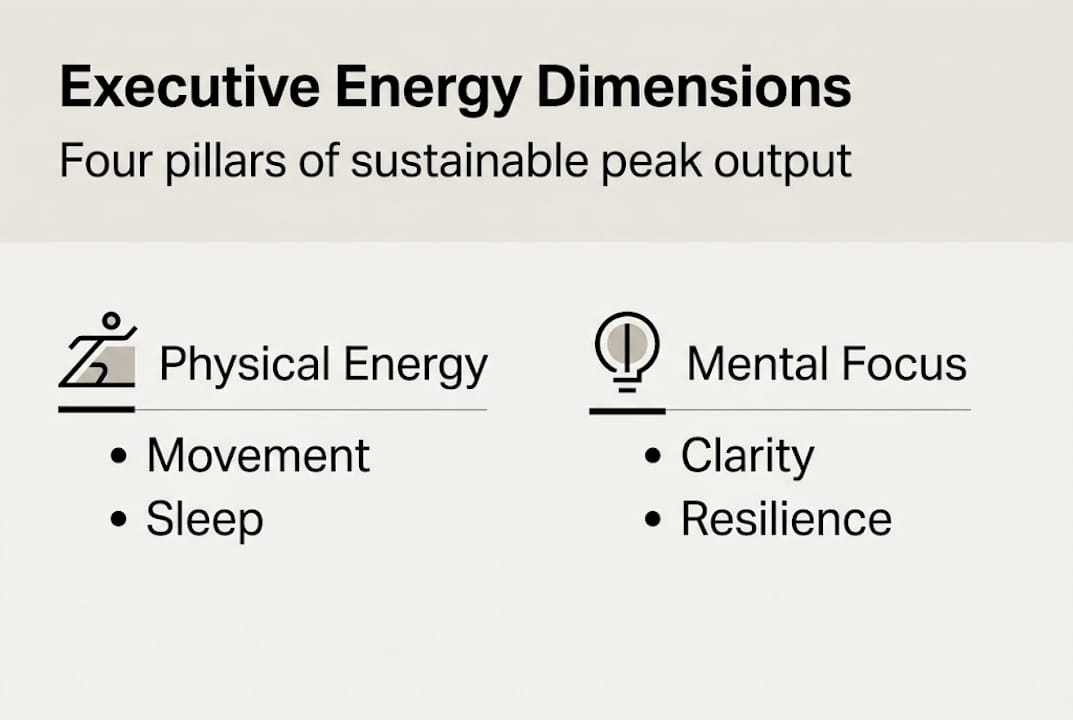
| Dimension | What it covers | Executive example |
|---|---|---|
| Physical | Sleep, nutrition, movement, recovery | Sustained focus through a full board day |
| Mental | Cognitive clarity, attention, decision speed | Evaluating complex data under pressure |
| Emotional | Regulation, empathy, resilience | Staying composed in high-stakes negotiations |
| Spiritual | Purpose, values, long-term drive | Maintaining motivation through organizational change |
These dimensions are not separate buckets. A poor night of sleep degrades emotional regulation. Chronic stress depletes physical recovery. Misalignment between your work and your values erodes mental focus. Optimization means treating all four as one interconnected system.
"The leaders who sustain elite performance over decades are not those who push hardest. They are those who manage their energy with the same rigor they apply to their business strategy."
Strength training enhances cognition and decision speed in executives, which illustrates how physical investment directly upgrades mental output. This is not about being an athlete. It is about understanding that your body is the hardware your leadership runs on. Neglect the hardware, and the software fails regardless of how talented you are.
The distinction from time management is critical. You can have a perfectly optimized calendar and still make poor decisions at 3 p.m. because your energy reserves are depleted. Energy management fills the gap that scheduling tools cannot.
The science: How energy optimization enhances executive performance
The evidence is clear and consistent. Executives who actively manage their energy outperform those who rely on willpower and caffeine to push through the day. Structured energy management practices reduce energy intensity by 17%, meaning the same workload demands significantly less from an optimized leader than from one running on empty.
| Factor | Optimized energy | Unmanaged energy |
|---|---|---|
| Decision quality | High and consistent | Degrades by afternoon |
| Stress response | Measured and adaptive | Reactive and impulsive |
| Team influence | Energizing and clear | Draining and inconsistent |
| Recovery speed | Fast | Slow, often incomplete |
| Long-term output | Sustained over years | Peaks and crashes |
The physiological mechanisms behind this are well established. Key drivers include:
- Mitochondrial health: Your cells' ability to produce energy declines with age and chronic stress. Targeted exercise and nutrition slow this decline significantly.
- Hormonal balance: Testosterone, cortisol, and thyroid function all shape energy levels, cognitive sharpness, and emotional regulation.
- Neurological recovery: Deep sleep consolidates memory, clears metabolic waste from the brain, and resets emotional circuits.
- Psychological capital: Confidence, optimism, resilience, and hope are measurable psychological assets. High psychological capital boosts team engagement and amplifies the impact of every other energy investment you make.
For practical energy management tips for executives, the research consistently points to the same levers: structured movement, quality sleep, targeted nutrition, and deliberate recovery. These are not wellness trends. They are performance infrastructure.
Looking at holistic performance frameworks reinforces this point. The executives who sustain elite output into their 60s are not exceptional because of genetics. They are exceptional because they built systems. An executive fitness boost is not a vanity project. It is a direct investment in cognitive horsepower and leadership longevity.
Countering age-related energy declines: Strategies that work
After 40, the game changes. Testosterone levels drop roughly 1% per year. Mitochondrial efficiency decreases. Recovery takes longer. Sleep architecture shifts, reducing the proportion of deep, restorative sleep. These are biological realities, not excuses. And they are manageable with the right approach.
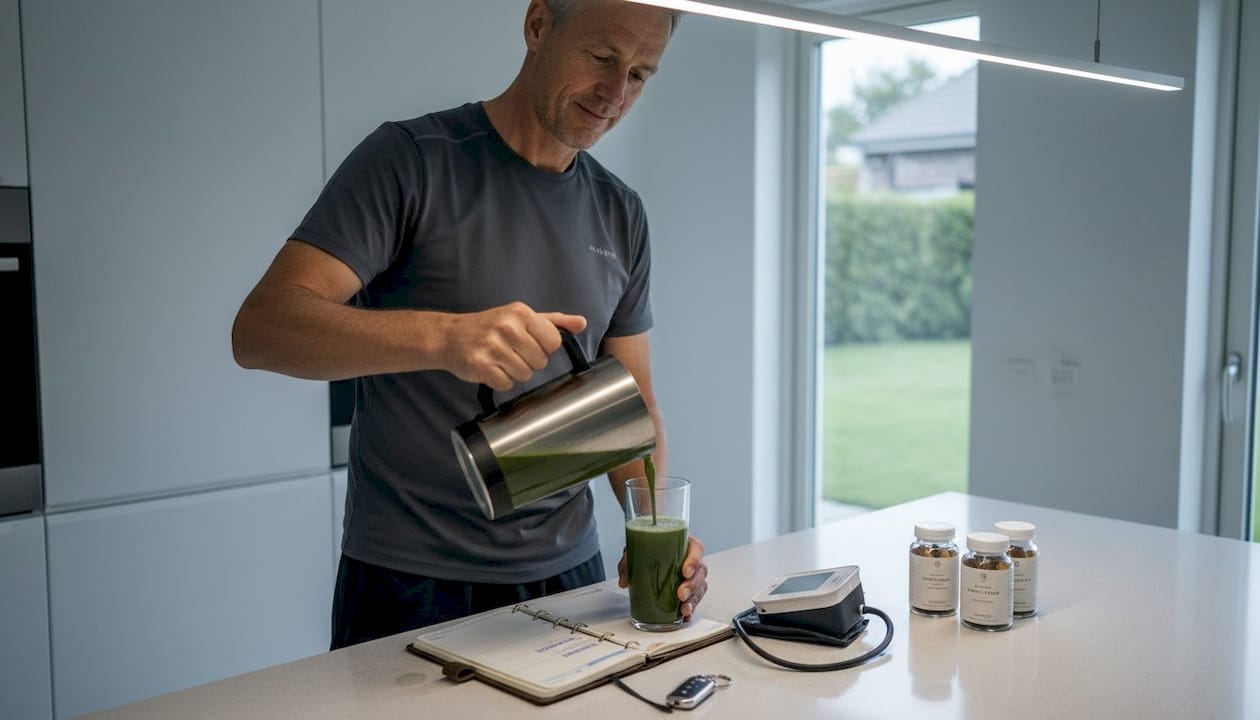
Proactive mechanics like mitochondrial support and hormone checks sustain leadership edge for men in the 40 to 65 bracket. Waiting until you feel the decline is waiting too long. The most effective executives treat energy maintenance as a proactive discipline, not a reactive fix.
Here are five strategies that consistently deliver results:
- Strength training three to four times per week. Resistance exercise is the single most evidence-backed intervention for maintaining testosterone, mitochondrial density, and cognitive function as you age. It is not optional if sustained performance is the goal.
- Protein-forward nutrition with strategic meal timing. Adequate protein supports muscle maintenance, hormonal production, and neurotransmitter synthesis. Skipping meals or eating reactively undermines all of it.
- Non-negotiable sleep standards. Seven to eight hours of quality sleep is not a luxury. It is the recovery window where your brain consolidates decisions, your hormones reset, and your immune system does its maintenance work.
- Quarterly lab work. Tracking testosterone, cortisol, thyroid markers, vitamin D, and inflammatory markers gives you data to act on before symptoms appear. You would not run a business without financial reporting. Apply the same logic to your biology.
- Structured stress management. Chronic cortisol elevation degrades every other system. Whether it is breathwork, deliberate downtime, or physical exertion as a stress outlet, you need a reliable mechanism for cortisol clearance.
Pro Tip: Schedule your quarterly labs the same way you schedule board meetings. Put them in the calendar at the start of the year and treat them as immovable. The data they provide is among the most actionable intelligence available to you.
For a broader view, longevity strategies for men and performance optimization tips over 40 offer additional frameworks that complement these core interventions.
Building an integrated framework for sustained energy and executive longevity
Individual tactics are not enough. A great workout routine undermined by poor sleep is a net loss. Excellent nutrition paired with chronic overwork produces diminishing returns. The executives who sustain peak performance over decades do not rely on isolated habits. They build integrated systems.
High psychological capital and structured routines drive both energy and engagement, which means the architecture of your daily life matters as much as any single intervention. A sustainable energy system includes:
- Sleep hygiene protocols: Consistent sleep and wake times, a cool and dark environment, and a wind-down routine that signals your nervous system to shift gears.
- Structured physical training: Planned sessions with progressive intensity, not sporadic bursts of effort when motivation strikes.
- Nutritional precision: Meals designed around performance goals, not convenience or habit.
- Mindfulness and cognitive recovery: Brief, deliberate mental breaks between high-demand tasks to prevent cognitive fatigue from compounding.
- Scheduled recovery windows: Blocked time in your week that is protected from work, not treated as leftover time after everything else.
Pro Tip: Run a quarterly energy audit. Block two hours to review your sleep data, training consistency, nutrition quality, stress load, and subjective energy levels. Identify the one area with the biggest gap and adjust your system accordingly. Small, targeted corrections compound into significant gains over a year.
Personalization matters here. The executive vitality guide and executive wellness strategies provide frameworks you can adapt to your specific role, travel schedule, and health baseline. The goal is a system that is robust enough to hold under pressure and flexible enough to adjust as your life evolves. Resources on how to balance work and health and health coaching for executives can help you build that balance with expert support.
Our take: What most executives miss about energy optimization
Here is the uncomfortable truth most performance content avoids: the executives who struggle most with energy are not the ones who lack information. They are the ones who keep treating energy as something to fix with the next supplement, the next biohack, or the next productivity app.
Real optimization is not a hack. It is a commitment to building and maintaining a system that gets stronger over time, not one that produces a short burst and then fades. The men who sustain genuine leadership edge into their 60s are not chasing novelty. They are running proven systems with disciplined consistency.
What changes after 40 is not just your biology. It is the stakes. Decisions carry more weight. Teams are larger. The margin for operating below your best gets smaller. That context demands a more serious relationship with your own energy, not a more complicated supplement stack.
"Sustainable energy for leadership is not about optimization tricks. It is about building a life architecture that supports the demands you have chosen to carry."
Exploring holistic frameworks is where that architecture starts to take shape. The shift from reactive to proactive is the most important move you can make.
Take your next steps for optimal energy and performance
If this article clarified one thing, it should be this: energy is your most valuable performance asset, and it responds directly to how well you manage it. The strategies covered here are not theoretical. They are the foundations that high-performing executives use to stay sharp, resilient, and effective year after year.

VIRIDOS exists to support exactly this kind of intentional, long-term performance. The Performance Journal is built for executives who want structured, in-depth strategies tailored to demanding professional lives. And across VIRIDOS resources, you will find content, frameworks, and tools designed for men who take their performance seriously. Your next step is simple: choose one system to build, and start today.
Frequently asked questions
What is the fastest way for executives over 40 to boost personal energy?
Combining sleep, strength training, and nutrition simultaneously delivers the most sustainable gains. Strength training enhances cognition and decision speed, making it a non-negotiable starting point for any executive energy strategy.
How do age-related hormone changes affect executive energy levels?
Natural hormonal declines after 40 reduce energy, recovery speed, and cognitive sharpness, but they are not inevitable performance killers. Proactive mechanics like hormone checks allow you to identify and address deficiencies before they affect your leadership output.
Can optimizing energy really impact team outcomes?
Absolutely. Your energy state sets the tone for every room you walk into. High psychological capital boosts team engagement, meaning your personal energy management is also a team performance lever.
Is energy optimization just another productivity trend?
No. Unlike time management systems that shuffle the same hours around, energy optimization addresses the underlying capacity that determines how effective those hours actually are. Structured practices reduce energy intensity by 17%, making it a foundational driver of sustained executive performance.