
TL;DR:
- Physical vitality is a measure of bodily energy, strength, and stamina vital for daily performance. Regular exercise, quality sleep, proper nutrition, and stress management are essential strategies to maintain high vitality and long-term health. Managing vitality intentionally enhances resilience, reduces frailty, and improves mental and physical performance over time.
Physical vitality is defined as the positive bodily sensation of energy, strength, and stamina that enables vigorous daily functioning and supports long-term healthspan. The Integrative Vitality Scale (IVS) formally distinguishes physical vitality as bodily energy separate from psychological vitality, and validates it as a screening tool for frailty and fatigue. For men in demanding roles, understanding the role of physical vitality is not optional. It is the foundation on which performance, resilience, and longevity are built.
What drives physical vitality at the cellular level?
Physical vitality begins inside your cells. Exercise increases mitochondrial density, which means your body produces more ATP, the fuel that powers every muscular contraction, cognitive process, and recovery cycle. This is the exercise paradox: physical activity creates a cellular energy surplus, not a deficit. Men who train consistently do not get tired faster. They build a larger energy reserve.
Cardiovascular and respiratory efficiency compound this effect. A stronger heart delivers more oxygen per beat. More efficient lungs extract more oxygen per breath. Together, these systems determine how much energy your body can generate and sustain under pressure. Regular exercise maintains cardiovascular and lung function, directly supporting brain health and independence as you age.
Hormonal balance is the third pillar. Testosterone, cortisol, and growth hormone all regulate energy production, tissue repair, and recovery speed. When these hormones fall out of range, fatigue becomes chronic and performance declines regardless of sleep or nutrition. Physical vitality and mental health are tightly linked here: hormonal dysregulation affects mood, motivation, and cognitive clarity simultaneously.
Key physiological drivers of physical vitality:
- Mitochondrial density: More mitochondria per cell means greater ATP output and sustained energy.
- Cardiovascular output: Cardiac efficiency determines oxygen delivery to muscles and the brain.
- Hormonal regulation: Testosterone and growth hormone govern repair, recovery, and drive.
- Respiratory capacity: Lung efficiency sets the ceiling on aerobic performance.
- Autonomic balance: A well-regulated nervous system reduces energy waste from chronic stress.
Pro Tip: Measure resting heart rate each morning. A consistent upward trend over five to seven days signals accumulated fatigue before performance drops become obvious.
What are the proven benefits of high physical vitality?
High physical vitality produces measurable gains across every domain that matters to a high-performing man. The benefits are not abstract. They show up in output, mood, and functional independence.
1 in 5 adults experience fatigue, which directly contrasts with physical vitality. A meta-analysis of 81 randomized controlled trials confirmed that exercise interventions raise vitality with a measurable effect size. That means the gap between a fatigued adult and a vital one is not genetic luck. It is a product of deliberate lifestyle choices.
The proven benefits of maintaining high physical vitality include:
- Muscular strength and endurance. Greater strength reduces injury risk and preserves functional independence well into your 60s and beyond.
- Cognitive sharpness. Exercise improves oxygen delivery to the brain, supporting memory, focus, and decision-making speed.
- Mood regulation. Physical activity modulates serotonin and dopamine, reducing anxiety and depressive symptoms without pharmaceutical intervention.
- Reduced frailty risk. High vitality correlates with lower rates of sarcopenia, the age-related muscle loss that accelerates functional decline.
- Longevity and quality of life. Exercise extends lifespan through cardiovascular, neuro-immune, and metabolic pathways that support cognition and independence simultaneously.
The importance of physical wellness becomes most visible when it declines. Men who neglect vitality in their 40s often face compounding deficits by their late 50s: reduced work capacity, slower recovery, and diminished cognitive edge. Proactive management is far more effective than reactive correction.
Which lifestyle strategies most effectively boost physical vitality?
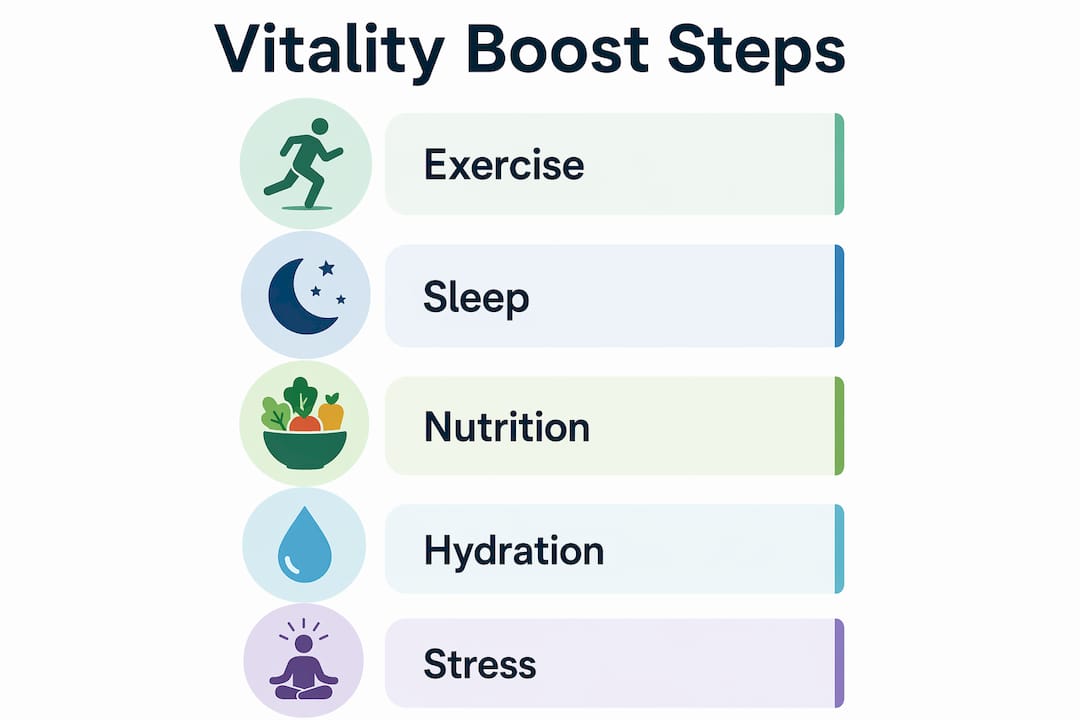
The evidence on ways to boost vitality points to four primary levers: exercise, sleep, nutrition, and stress management. Each one compounds the others.
Exercise: the non-negotiable foundation
Public health guidelines recommend 150 minutes of aerobic exercise plus two strength sessions weekly. That baseline is well established. What most men overlook is the value of "movement snacks," short activity bursts of 10 minutes or less distributed across the workday. Even brief sessions reduce pain, anxiety, and exhaustion. For executives with packed calendars, movement snacks are the most practical entry point into consistent physical activity.

Strength training deserves equal priority alongside aerobic work. Muscle mass is metabolically active tissue. It burns more energy at rest, supports hormonal balance, and protects joints. Men who maintain strength training through their 40s and 50s preserve a physiological buffer that aerobic exercise alone cannot provide. A longevity checklist for men that omits resistance training is incomplete.
Sleep: the recovery multiplier
Adults aged 30–60 require 7–9 hours of quality sleep to maintain functional vitality. Sleep is when growth hormone peaks, tissue repairs, and memory consolidates. Cutting sleep to gain working hours is a net loss. Cognitive output degrades faster than most men recognize, and the deficit accumulates across days.
Morning light exposure resets the circadian rhythm more effectively than any mid-day energy management tactic. Ten to fifteen minutes of natural light within an hour of waking suppresses residual melatonin and sharpens afternoon alertness. This single habit costs nothing and delivers consistent returns.
Nutrition and hydration: the substrate of energy
Protein adequacy is the most underrated nutritional factor in vitality for men over 40. Optimal protein at meals improves function and reduces frailty risk. Distributing protein intake across three meals, rather than concentrating it at dinner, maximizes muscle protein synthesis throughout the day. For active men, protein quality and timing directly affect recovery speed and sustained output.
Hydration is equally non-negotiable. Dehydration of approximately 2% of body weight impairs alertness and increases fatigue. That threshold is reached faster than most men expect, particularly during travel, long meetings, or exercise in warm environments. Drinking water consistently across the day, not reactively when thirsty, prevents this performance drag.
Stress management: protecting the energy floor
Chronic stress depletes vitality through cortisol dysregulation, disrupted sleep, and suppressed immune function. Mindfulness and breathing exercises improve sleep quality and reduce fatigue in both healthy and clinical populations. These are not soft interventions. They are evidence-based tools for protecting the energy floor that physical performance depends on.
Pro Tip: Box breathing (four counts in, four counts hold, four counts out, four counts hold) activates the parasympathetic nervous system within 90 seconds. Use it before high-stakes meetings to lower cortisol and sharpen focus.
How to integrate vitality practices into your daily routine
Knowing what to do and building it into a demanding schedule are two different problems. The men who sustain high physical vitality long term are not those with the most time. They are those with the most consistent systems.
Practical integration principles:
- Anchor workouts to fixed time slots. Morning sessions before the workday begins are the most protected. Evening sessions are the most vulnerable to schedule drift.
- Use active recovery between hard training days. Light movement, walking, or mobility work maintains circulation and reduces soreness without adding stress to the system.
- Track one vitality metric weekly. Resting heart rate, grip strength, or sleep duration each provide a reliable signal of whether your system is recovering or accumulating debt.
- Pace demanding cognitive tasks with movement breaks. Spreading demanding tasks with movement snacks prevents energy crashes and sustains output across a full workday.
- Eat protein at breakfast. Most men concentrate protein at dinner. Shifting a meaningful portion to the morning meal improves muscle protein synthesis and stabilizes energy through the afternoon.
- Set a consistent sleep onset time. Circadian rhythm responds to consistency more than duration. Going to bed at the same time each night, even on weekends, anchors the entire sleep architecture.
Physical vitality in daily life is not a weekend project. It is a set of repeatable behaviors that compound over months and years. The healthy lifestyle routines that sustain vitality long term are simple in design and demanding in execution.
Key Takeaways
Physical vitality is the single most controllable variable in long-term performance, and the men who manage it deliberately outperform those who treat it as a byproduct of hard work.
| Point | Details |
|---|---|
| Cellular energy is trainable | Exercise increases mitochondrial density, creating a surplus of ATP that sustains performance. |
| Sleep is non-negotiable | Adults aged 30–60 need 7–9 hours nightly; morning light exposure sharpens circadian rhythm. |
| Protein timing matters | Distributing protein across three meals maximizes muscle synthesis and reduces frailty risk. |
| Movement snacks work | Ten-minute activity bursts reduce fatigue and sustain cognitive output across the workday. |
| Vitality requires a system | Consistent daily habits, not occasional effort, produce compounding gains in energy and resilience. |
Vitality as a vital sign, not a luxury
I have spent years watching high-performing men treat energy as a renewable resource they can draw on indefinitely. They push through fatigue, skip recovery, and interpret tiredness as a discipline problem rather than a physiological signal. That framing is wrong, and it is expensive.
Physical vitality is emerging as a genuine health vital sign, a leading indicator of functional capacity, not a trailing one. The men I respect most in demanding roles treat their vitality with the same rigor they apply to their finances or their teams. They track it, protect it, and invest in it deliberately.
The most common misconception I encounter is that rest is passive. Recovery is active. Sleep, nutrition, stress management, and movement pacing are all inputs that determine how much energy you have available tomorrow. Ignoring them does not make you tougher. It makes you slower, and eventually it makes you unavailable.
The longevity strategies that actually work are boring by design. They are consistent, evidence-based, and unglamorous. But they compound. A man who protects his vitality at 45 is a fundamentally different performer at 60 than one who does not.
— Joakim
Viridos and the science of sustained performance

Viridos is built for men who take their physical vitality seriously and want formulations that match that standard. The Viridos membership provides controlled access to small-batch Swedish performance formulations designed for executives, founders, and high-agency professionals who cannot afford to operate below their ceiling.
Every formulation reflects a sublingual delivery philosophy that prioritizes absorption and precision over volume. This is not a supplement stack. It is a disciplined approach to sustaining the physiological edge that demanding roles require. If you are ready to treat vitality as the performance asset it is, Viridos membership is the logical next step.
FAQ
What is physical vitality, exactly?
Physical vitality is defined as the positive bodily sensation of energy, strength, and stamina that supports vigorous daily functioning. The Integrative Vitality Scale formally distinguishes it from psychological vitality and validates it as a clinical marker for fatigue and frailty risk.
How many adults actually struggle with low vitality?
1 in 5 adults experience fatigue, which directly contrasts with physical vitality. A meta-analysis of 81 randomized controlled trials confirmed that exercise interventions raise vitality with a measurable effect size.
What is the fastest way to improve physical vitality?
Morning light exposure and consistent sleep timing produce rapid improvements in alertness and energy. Combined with 150 minutes of weekly aerobic exercise and two strength sessions, these habits deliver the most reliable vitality gains.
Does hydration really affect performance that much?
Dehydration of approximately 2% of body weight measurably impairs alertness and increases fatigue. Drinking water consistently across the day, rather than reactively, prevents this performance drag before it registers as a problem.
How does physical vitality affect mental health?
Physical vitality and mental health share overlapping physiological pathways, including hormonal balance, cardiovascular output, and sleep quality. Exercise modulates serotonin and dopamine, reducing anxiety and depressive symptoms while simultaneously improving cognitive sharpness and mood regulation.