
TL;DR:
- High-performance nutrition for professionals involves deliberately managing macronutrients, hydration, and meal timing to sustain cognitive and physical output during demanding workdays. Applying nutritional periodization by aligning intake with calendar peaks and recovery needs enhances focus and resilience, similar to elite athletes. Relying on consistent, simple habits and testing strategies beforehand helps optimize energy, focus, and recovery over time.
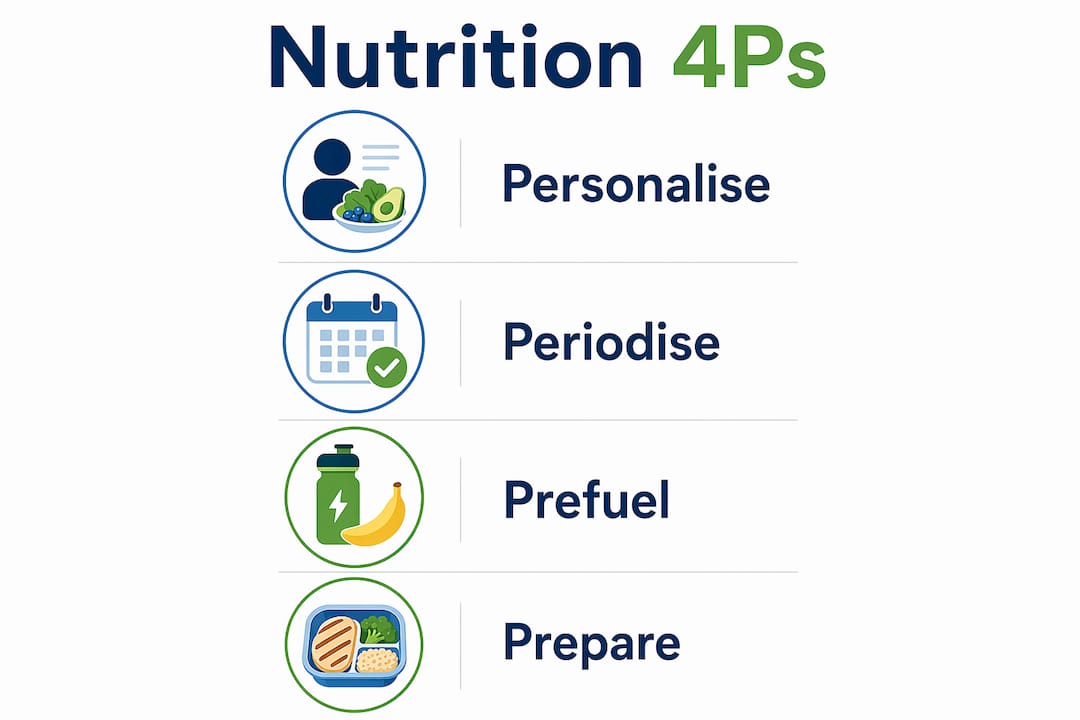
You are running a demanding calendar, making consequential decisions before most people have finished their first coffee, and expecting your mind to stay sharp through a ten-hour day. A high performance nutrition guide built for elite athletes will not cut it here. The principles of sports nutrition, properly adapted, are the missing operating system for executive energy. This guide applies the evidence-based 4Ps framework (Personalise, Periodise, Prefuel, Prepare) to the realities of professional life: boardrooms, travel schedules, back-to-back meetings, and the cognitive load that comes with high-stakes roles.
Key Takeaways
| Point | Details |
|---|---|
| Use the 4Ps framework | Structure your nutrition plan around Personalise, Periodise, Prefuel, and Prepare for targeted results. |
| Periodize around your calendar | Align your highest-quality nutrition windows with your peak-demand workdays, not arbitrary meal schedules. |
| Hydrate with precision | Target roughly 7 mL per kilogram of body mass 2 to 3 hours before demanding sessions to protect cognitive performance. |
| Test caffeine before critical days | Dose caffeine at approximately 3 mg/kg and always trial it on low-stakes days before applying it to high-stakes moments. |
| Measure subjective outcomes | Track energy, focus, and recovery quality as practical indicators that your plan is working before relying on complex metrics. |
What high-performance nutrition actually means for professionals
The term "high-performance nutrition" originates in sports science, where it describes systematically timed, personalized fueling strategies designed to maximize output and recovery. In professional contexts, the underlying logic is identical. The delivery differs. You are not managing a race start or a training block. You are managing cognitive stamina, emotional regulation, and sustained decision-making across demanding days.
Balanced macro- and micronutrient intake supports energy production, tissue maintenance, and recovery, with individual needs varying by load and phase. For executives, this translates directly: carbohydrates are your primary cognitive fuel, protein sustains tissue integrity and mood-regulating neurotransmitter production, and dietary fats support hormonal function and cellular health.
The roles break down clearly:
- Carbohydrates supply glucose, which the brain consumes at a high rate during demanding cognitive work. Depletion shows up as mental fog and poor decision quality.
- Protein repairs and maintains muscle, but also provides precursors to dopamine and serotonin, both critical for motivation and focus.
- Fats support testosterone production, absorb fat-soluble vitamins, and stabilize cell membrane function. Omega-3s, in particular, have documented roles in cognitive performance.
- Micronutrients including magnesium, zinc, B vitamins, and vitamin D are required for hundreds of enzymatic reactions tied to energy metabolism and stress response.
- Hydration is not optional background noise. A fluid loss of just 2% of body mass measurably degrades cognitive function, reaction time, and mood.
The concept of nutritional periodization, borrowed from athletic training, is arguably the most underutilized tool in a professional's performance arsenal. Nutrition interventions should target 24 to 36 hour windows around demanding sessions, matching intake to workload rather than eating on autopilot. Supplements play a supporting role only. They complement a solid nutritional foundation, they do not replace it.
Building your personalized nutrition plan
The 4Ps framework structures a nutrition plan into four sequential stages. Each one builds on the last. Here is how to apply each stage to a professional context.
1. Personalise Audit your current baseline. What are your actual energy demands across a typical week? Do you have consistent training, irregular travel, or variable sleep? Note your food preferences, intolerances, and the gaps between what you currently eat and what demanding days actually require. There is no universal protocol here. Amounts and timing depend on individual characteristics and workload.

2. Periodise Map your calendar. Identify your peak-demand days, whether they involve high-stakes presentations, extended travel, or critical negotiations. Those are your performance windows. Align nutritional focus to your workload calendar, not a generic weekly plan. On lower-demand days, reduce carbohydrate intake and shift focus toward recovery-oriented foods: lean proteins, vegetables, and anti-inflammatory fats.
3. Prefuel The 24 to 36 hours before a peak-demand day are critical. Increase carbohydrate intake moderately to top up glycogen stores. Prioritize sleep-supporting foods in the evening (complex carbs, tryptophan-rich proteins). Hydrate proactively, targeting approximately 7 mL per kilogram of body mass 2 to 3 hours before demanding sessions to maintain cognitive readiness.
4. Prepare In the 1 to 3 hours directly before a high-demand period, eat a moderate meal anchored in complex carbs and moderate protein. Keep fat low at this stage, as it slows gastric emptying and can cause discomfort. This is also the window for deliberate caffeine dosing, approximately 3 mg/kg taken roughly one hour prior. Evaluate any supplements here as well, but only ones you have already tested on low-stakes days.
Pro Tip: Build your peak-day nutrition protocol like a pre-flight checklist. Write it down once, test it on a regular workday, and refine it before your next board meeting or high-stakes event.
Track outcomes. Note your energy levels, focus quality, and how you feel at the end of demanding days. Adjust portion sizes, meal timing, or hydration based on what the data tells you.
Daily execution: meals, hydration, caffeine, and supplements
Theory without execution is just reading. Here is how optimal nutrition strategies translate to daily practice.
Meal timing and composition
Time your largest carbohydrate intake 3 to 4 hours before your highest-focus work blocks. A practical example: if your most cognitively demanding work happens between 9 AM and 1 PM, a breakfast at 6 to 7 AM anchored in oats, whole grain toast, and eggs positions your brain for sustained output. Keep midday meals moderate in carbs and protein-forward to avoid the early-afternoon energy trough that derails most professionals.
For protein, the athlete plate method adjusts meal composition to workload. On high-demand days, increase the carbohydrate portion. On recovery days, emphasize protein and vegetables. Practical targets suggest 3 to 5 protein-containing meals per day, with 30 to 60 grams per meal, roughly a fist-sized portion as a visual guide.
| Meal window | Priority macronutrient | Example foods |
|---|---|---|
| 3 to 4 hours before peak work | Carbohydrates + moderate protein | Oats, eggs, whole grain toast |
| 1 to 2 hours before peak work | Light carbs + low fat | Banana, Greek yogurt, rice cakes |
| Post-peak recovery meal | Protein + vegetables | Salmon, sweet potato, leafy greens |
| Evening (non-demanding day) | Protein + healthy fats | Chicken, avocado, cruciferous vegetables |
Hydration
Do not wait until you are thirsty. By that point, performance is already degrading. Target consistent intake across the day, and for peak days specifically, front-load hydration in the morning. Adding a small amount of electrolytes to water on high-demand days helps maintain fluid balance without overhydrating.
Caffeine and supplements
Caffeine is the most widely used performance compound in professional life. Used correctly, it works. Used carelessly, it accelerates cortisol, disrupts sleep, and creates a dependency cycle that actually undermines performance. The effective dose is approximately 3 mg/kg, taken roughly one hour before peak demand. Higher doses of 3 to 9 mg/kg increase the risk of tachycardia and restlessness without proportionate benefit.
Research on caffeine combined with L-theanine shows task-specific cognitive benefits, but outcomes vary between individuals. Test the combination before using it on any day that matters.
Pro Tip: If you rely on coffee purely out of habit before demanding mornings, run a controlled test. Take one week and shift your largest caffeine dose to 60 minutes before your peak cognitive window rather than immediately on waking. Most men report a marked difference in sustained focus.
Regarding supplements such as creatine and dietary nitrates: effects vary significantly between individuals and depend on baseline diet, dosing, and context. They can support performance when added to a complete nutritional foundation. They accomplish little when that foundation is absent.
For meal prep for athletes and busy professionals, the same rule applies: batch-cook proteins and grains once or twice weekly, pre-portion snacks, and identify two or three reliable restaurants near your office or travel hubs that can anchor your away-from-desk meals.
Common pitfalls that undermine your plan
Even well-intentioned professionals fall into predictable traps. Recognizing them is the first step to avoiding them.
- Under-fueling on busy days. Skipping breakfast or working through lunch to "save time" creates compounding cognitive deficits. Inconsistent intake and under-fueling are among the most frequently cited drivers of poor performance and slow recovery.
- Over-relying on stimulants. Using caffeine to compensate for poor sleep or skipped meals is a short-term fix with long-term costs. It disrupts natural cortisol rhythms and degrades sleep quality in a feedback loop.
- Ignoring hydration until it is obvious. Most professionals are mildly dehydrated by mid-morning. Build hydration into your calendar like any other scheduled commitment.
- Failing to periodize. Eating the same way on a light Tuesday and a high-stakes Wednesday ignores the most powerful lever in performance nutrition.
- Overcomplicating the plan. Complex meal protocols that require significant mental bandwidth to follow will be abandoned under pressure. Simplicity and repeatability matter more than perfection.
- Testing new strategies on critical days. This is non-negotiable. Never introduce a new supplement, meal timing shift, or caffeine protocol on the morning of a consequential event.
Performance nutrition must balance competing demands, including hydration targets, carbohydrate availability, stimulant use, and individual tolerance. Ignoring any one of these variables while optimizing the others creates gaps that undermine the entire system. 4Ps framework
Measuring results and adjusting over time
You do not need sophisticated lab testing to know whether your nutrition plan is working. The signals are available to you every day. The key is paying attention deliberately rather than reactively.
Indicators that your strategy is gaining traction:
- Sustained mental clarity through your highest-demand hours without the need for additional stimulants
- Fewer afternoon energy troughs or mood dips between meals
- Faster recovery after demanding days, both physically and cognitively
- Improved quality of sleep, particularly deeper sleep on evenings following high-output days
- Reduced reliance on caffeine as a crutch rather than a precision tool
For tracking, a simple daily log works. Rate your energy, focus, and recovery on a 1 to 5 scale each evening. Note what you ate, when, and how demanding the day was. After two or three weeks, patterns will emerge. High-energy days will correlate with specific fueling choices. Slumps will trace back to skipped meals, poor hydration, or poor sleep. Adjust based on that data.
Nutrition does not operate in isolation. Sleep and stress management interact directly with how your body uses the fuel you provide. A well-timed, well-composed meal will deliver diminished returns if you are running on five hours of sleep. The strategies for resilience and high performance that hold up over time treat nutrition as one part of a larger system, not the entire solution.
Patience is required. Nutritional periodization takes several weeks to calibrate. Give any new protocol at least four weeks of consistent application before drawing conclusions.
My perspective on nutrition as an executive tool
I have worked with and spoken to enough high-performing men to see the same pattern repeatedly. The ones who think about nutrition at all tend to either obsess over it or completely neglect it. Neither approach works.
What I have come to believe is that nutrition is an operational discipline, not a wellness hobby. It requires the same structured thinking you apply to your calendar, your team, or your capital allocation. You plan it, you test it, you measure it, and you adjust. Guesswork is expensive at this level.
The insight that changed how I think about this was nutritional periodization. The idea that you do not eat the same way every day, that you actively front-load fuel and hydration in the 24 to 36 hours before your highest-demand moments, is something most professionals have never considered. But it is precisely how elite athletes have been operating for decades. There is no reason it should stay in the sports world.
On caffeine: I have seen too many intelligent men run on excessive coffee and call it performance. It is not. It is managed depletion. The executive performance strategies that hold up over multi-year careers are built on genuine energy, not stimulant dependency.
Simple, repeatable habits compound. The executive who eats well 80 percent of the time with minimal friction will outperform the one who has a perfect protocol that collapses under travel pressure. Build for resilience, not perfection.
— Joakim
How Viridos supports your performance nutrition

The principles in this guide require a foundation. Viridos is built for the men who take that foundation seriously. The Viridos Membership provides controlled access to small-batch, science-backed performance formulations developed in Sweden, designed specifically for disciplined men in high-responsibility roles. The approach is precise: sublingual delivery for bioavailability, formulations grounded in biological rationale, and a membership structure that matches the standards of the men it serves. If you are ready to add a precision-formulated layer to a nutrition strategy you are already taking seriously, Viridos is the next step. Explore the science behind Viridos to understand why delivery method and formulation quality are not details, they are the difference.
FAQ
What is high-performance nutrition for professionals?
High-performance nutrition is the deliberate management of macronutrients, micronutrients, hydration, and meal timing to sustain cognitive and physical output across demanding workdays. It adapts principles from sports nutrition science to professional life rather than athletic competition.
How do I apply nutritional periodization to a work calendar?
Identify your highest-demand days in advance and increase carbohydrate intake and hydration in the 24 to 36 hours prior. On lighter days, shift toward protein and recovery-focused foods to reduce unnecessary caloric load.
What is the right caffeine dose for peak cognitive performance?
Research points to approximately 3 mg per kilogram of body weight taken roughly one hour before peak demand. Higher doses increase side effect risk without proportionate benefit. Always test your protocol on a low-stakes day first.
How long before I see results from a nutrition plan?
Most professionals notice improved energy consistency and reduced afternoon slumps within two to three weeks of consistent implementation. Full calibration of a periodized plan typically takes four to six weeks of tracked data.
Do supplements replace a strong nutritional foundation?
No. Supplements such as creatine or L-theanine complement an already solid nutrition plan but deliver minimal benefit when the basics of macronutrient balance, hydration, and meal timing are not in place.