
A planned caffeine pause can, and usually does, meaningfully lower your tolerance within one to four weeks. Most people notice real change in their sensitivity within a few weeks, according to a practical synthesis of reset timelines. Heavy, long-term users sometimes need longer for full receptor normalization.
Two moves matter more than any other. First, decide now whether you can afford a rough week (cold turkey, faster reset) or need to protect performance through a critical stretch (taper, slower reset). Second, commit to zero mini-doses during the reset window. Even small amounts of caffeine can prolong the reset period, according to reset guidance from ScienceInsights.
The evidence behind this isn't guesswork:
- A PMC review at NCBI documents the receptor-level mechanics of caffeine dependence.
- A PLOS ONE experimental study tracked how ergogenic benefits fade with continued daily dosing.
- The Healthline synthesis on tolerance notes dependence can form at doses as low as roughly 100 mg per day.
If you have a cardiac condition, are pregnant, or take medications affecting adenosine or heart rhythm, talk to a clinician before starting any abrupt caffeine change.
Key Takeaways
Resetting caffeine tolerance requires zero mini-doses, a matched cold-turkey or taper approach, and a disciplined, low-dose reintroduction to preserve sensitivity.
| Point | Details |
|---|---|
| Expect 1 to 4 weeks | Most people see meaningful tolerance reduction within two weeks; heavy users may need longer. |
| Match method to workload | Use cold turkey during light-duty stretches, taper through critical deadlines or events. |
| Withdrawal peaks early | Headaches and fatigue typically peak in days 1 to 3, then fade over one to two weeks. |
| Avoid mini-doses | Small caffeine sips during a reset ease symptoms but delay full receptor recovery. |
| Reintroduce at 50 to 100 mg | Restart low and hold there rather than returning to your old daily baseline. |
| Support the transition | Viridos offers small-batch, membership-based performance support as an adjunct during the reset, not a replacement for it. |
Table of Contents
- Cold Turkey Versus Taper: Which Reset Fits Your Schedule?
- Why Does Caffeine Tolerance Develop in the First Place?
- What Withdrawal Symptoms Should You Expect?
- Sample Taper Schedules and a 2-Week Cold-Break Plan
- How Should You Reintroduce Caffeine After the Reset?
- Support Your System While You Cut Caffeine
- Frequently Asked Questions
- Sources
Cold Turkey Versus Taper: Which Reset Fits Your Schedule?
Both paths get you to the same destination. The difference is how much friction you accept along the way.
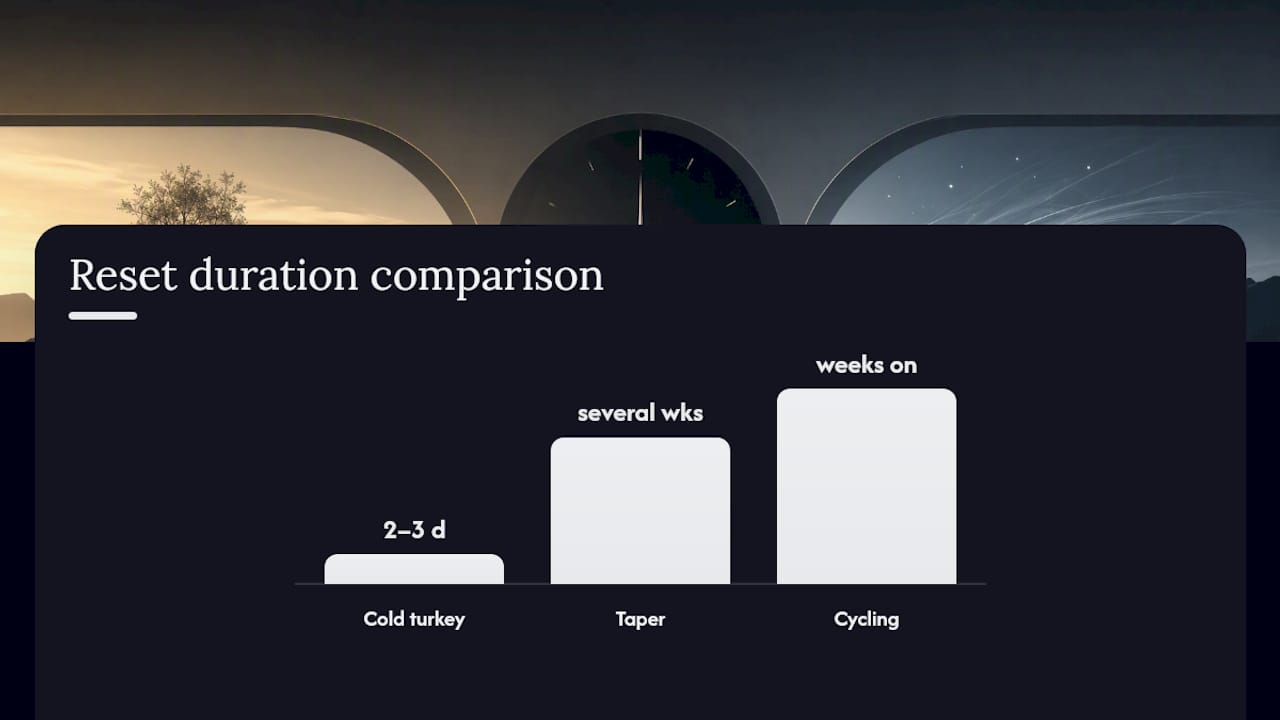
Cold turkey cuts caffeine to zero immediately. It resets tolerance fastest but produces the sharpest withdrawal, typically peaking within a few days. Tapering reduces intake gradually over several weeks. It takes longer to reach the same reset but keeps you closer to functional the entire time, which is why many high-performing professionals default to it despite the longer duration.
Here's a simple framework:
- Choose cold turkey if you can schedule two to three light-duty days, your calendar has no board meetings or client-facing work, and you want the fastest possible reset.
- Choose a taper if you're carrying critical deadlines, leading a team through a launch, or training for an event where cognitive sharpness can't dip.
- Choose cycling (weeks on, then a scheduled break) if you want to protect sensitivity long-term without ever facing a full detox, an approach detailed in MaxFit's cycling framework.
Consider two scenarios. An executive with a board presentation in ten days is better served by a one-week taper that ends before the high-stakes day, not a cold stop that risks a foggy Tuesday. A weekend athlete with six weeks before a race has room for a faster cold-turkey reset, since the rough patch resolves well before competition.
Pro Tip: Time your reset to start on a Friday when possible. You absorb the worst of withdrawal over a quieter weekend and return to the desk on Monday already through the peak.
Notify your team if your reset overlaps with meetings or travel. A single sentence, "running lower-caffeine this week, expect me a touch slower before lunch," removes the guesswork for everyone around you.
Why Does Caffeine Tolerance Develop in the First Place?
Caffeine works by blocking adenosine receptors, the ones responsible for making you feel drowsy as the day wears on. Block them consistently, and your brain adapts by producing more receptors. This is adenosine receptor upregulation, and it's the entire mechanism behind why your morning cup stops working the way it once did.
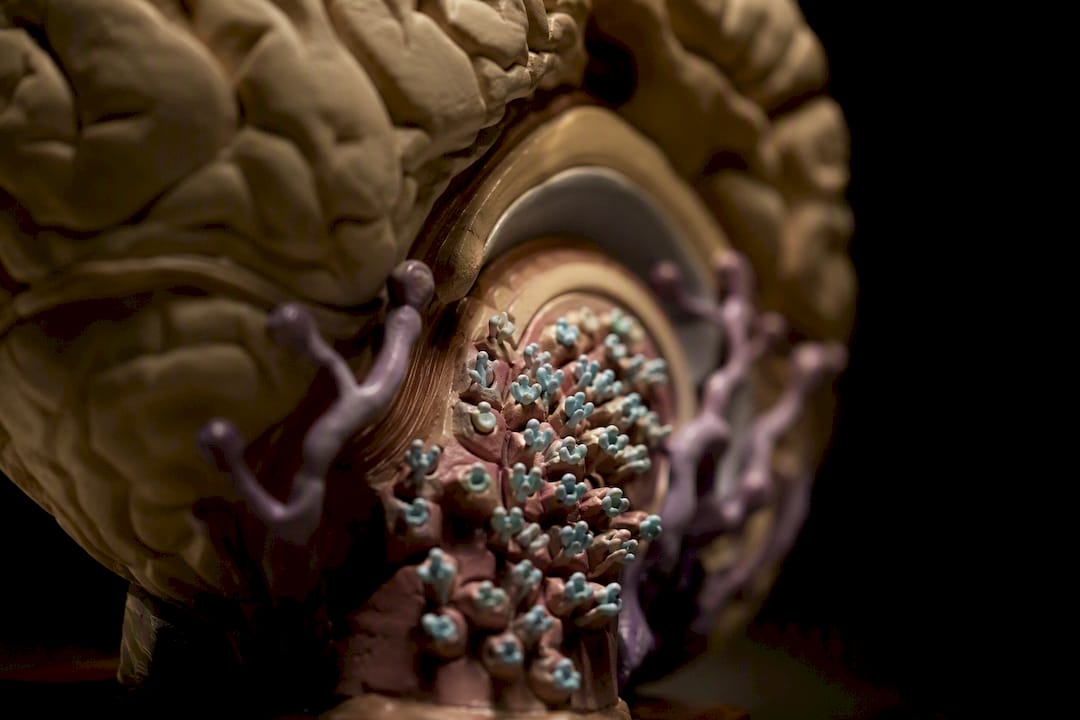
More receptors mean more adenosine can still bind and signal fatigue, even with caffeine in your system. Your body isn't failing you. It's compensating for a stimulus it now expects daily.
The research backs this up in a straightforward way:
- The NCBI review on caffeine dependence links continued intake to measurable receptor-level adaptation, not just subjective "getting used to it."
- A PLOS ONE dosing study recorded strong early performance gains from caffeine that steadily declined across a multi-week daily protocol.
Evidence callout: the same PLOS ONE data shows the decline isn't linear collapse. It's progressive, meaning your tolerance builds in proportion to how consistently you dose, not how much you dose on any single day.
Pro Tip: Increasing your dose to chase the original effect is a losing trade. You get diminishing returns on alertness and rising exposure to jitteriness, disrupted sleep, and elevated heart rate. The reset, not the refill, is the actual fix.
What Withdrawal Symptoms Should You Expect?
Withdrawal is real, predictable, and temporary. Onset typically begins within a couple of days after your last dose, consistent with timing described in the Swedish Wikipedia entry on caffeine. Headache is the signature symptom, often peaking early and fading over the course of days to a couple of weeks.
Common symptoms include:
- Headache, often described as a dull, band-like pressure
- Fatigue and reduced motivation
- Irritability or low mood
- Difficulty concentrating
- Mild flu-like sensations in some heavy users.
Manage the worst days with a short, deliberate list:
- Increase water intake; dehydration compounds caffeine headaches.
- Protect sleep hygiene: consistent bedtime, dark room, no late screens.
- Use an NSAID for headache relief if appropriate for you.
- Consider L-theanine or magnesium in the evening to ease restlessness.
- Take short 15 to 20 minute naps rather than pushing through afternoon fog.
- Swap to decaf for the ritual, not the dose, if you need the routine intact.
If a headache is unusually severe, lasts beyond two weeks, or comes with chest pain, irregular heartbeat, or visual changes, stop self-managing and see a clinician. Withdrawal headaches are common; those symptoms are not part of the normal pattern.
Sample Taper Schedules and a 2-Week Cold-Break Plan
Pick the structure that matches the decision you made above, then follow it without improvising mid-week.
Gentle 2 to 3 week taper
| Week | Daily target | Approximate equivalent |
|---|---|---|
| Week 1 | Cut to 75% of baseline | One fewer espresso shot or half a cup of coffee |
| Week 2 | Cut 50% from baseline | Roughly one small coffee or two cups of black tea |
| Week 3 | Cut sharply | Herbal tea or decaf only |
Faster 1-week taper
| Day | Action |
|---|---|
| Days 1 to 2 | Reduce to 50% of baseline |
| Days 3 to 4 | Reduce sharply |
| Days 5 to 6 | Zero caffeine, decaf swaps only |
Cold-break plan
- First several days: Expect the roughest patch. Headache, fatigue, and low mood peak here. Hydrate aggressively and protect sleep.
- Following days: Symptoms taper. Energy dips remain but headaches usually resolve.
- Up to two weeks: Baseline mood and focus stabilize. Adenosine receptor density begins normalizing, per MaxFit's reset templates.
Quick swap list to preserve your morning ritual without the dose: decaf coffee, rooibos or chamomile tea, sparkling water with citrus, and a short walk in daylight to replace the "wake-up" cue caffeine used to provide. Pairing this with sound nutrition strategy makes the two weeks noticeably easier to sit through.
How Should You Reintroduce Caffeine After the Reset?
Reintroduction is where most resets get wasted. Jump straight back to your old three-cup baseline and you'll rebuild tolerance almost as fast as you shed it.
Start at 50 to 100 mg, roughly half a cup of coffee, and hold there for several days before judging the effect. The Healthline guide on tolerance notes that dependence can form from doses this small when taken daily, so the goal is deliberate, not casual, use going forward.
A few rules of thumb worth keeping permanently:
- Limit caffeine to weekdays or specific high-stakes days rather than defaulting to it daily.
- Stop caffeine at least eight to ten hours before bed; a strict two-hour pre-sleep cutoff is the bare minimum, not the target.
- Reassess your dose monthly. If your usual cup stops delivering a noticeable lift, you're rebuilding tolerance and it's time to taper again.
Pro Tip: Treat your post-reset baseline as a ceiling, not a starting point. Every gram above it accelerates the next tolerance climb.
Pregnant women, people with cardiac arrhythmias, and anyone on medications affecting adenosine pathways should get individualized guidance before restarting caffeine at any dose.
Executive-Performance Perspective: Using Caffeine as a Tactical Tool
The mistake most high performers make is treating caffeine as infrastructure instead of a tool. Infrastructure runs constantly in the background. A tool gets picked up when the job calls for it. Schedule your resets around slow business quarters or off-cycle training blocks, then save your sharpest, lowest-tolerance caffeine hit for the board meeting, the pitch, or the race that actually needs it by following Energy Management Best Practices for Athletes.
Support Your System While You Cut Caffeine
Cutting caffeine strips out a crutch, not the underlying demand for sustained focus, drive, and resilience your role still requires. Viridos was built for exactly that gap: a precision sublingual spray formulated with phytoandrogen-related compounds, designed to support clarity and executive-level performance without asking you to lean on another stimulant.

Viridos is not a substitute for the behavioral work of resetting your tolerance, and it makes no claim to cure or reverse anything. It's an adjunct for disciplined men making a deliberate lifestyle change, produced in small batches in Sweden under a controlled membership model rather than mass-manufactured for a shelf. If you're serious about protecting performance while you cut caffeine, review the Performance Journal to see how the membership structures ongoing support, or explore the longevity and performance strategy for a more complete approach to sustaining your edge beyond the reset window.
Frequently Asked Questions
Is caffeine tolerance reversible? Yes. Tolerance stems from adenosine receptor upregulation, a process that reverses when caffeine intake stops or drops significantly for a sustained period.
How long does a caffeine break need to be to reset tolerance? Most people notice reduced tolerance within one to two weeks, with a full reset typically taking two to four weeks according to ScienceInsights. Heavy, long-term users may need more time.
What are the first withdrawal symptoms to expect? Headache, fatigue, and irritability typically begin 12 to 36 hours after your last dose and peak within the first three days.
Can I have a small amount of caffeine during my reset? It's best avoided. Even small mini-doses can prolong full receptor normalization, slowing the reset you're trying to achieve.
How much caffeine should I take when I start again? Start at a low dose equivalent to about half a standard cup of coffee and hold there for several days before increasing, rather than returning straight to your prior baseline.
Sources
- PMC article at NCBI
- PLOS ONE printable article
- Caffeine tolerance guide — Healthline
- How long does it take to reset caffeine tolerance? — ScienceInsights
- Caffeine tolerance reset — MaxFit