
Raising drive naturally comes down to a small set of proven levers: consistent high-quality sleep, short daily movement, protein and tyrosine-rich meals, small-goal architecture, hydration, and nervous-system regulation through breathing or brief meditation. None of these are novel. What separates men who sustain drive from those who burn out chasing it is consistency of application, not intensity of effort. The methods below are natural, sustainable, and grounded in research on dopamine, sleep physiology, and behavior design.
TL;DR:
- Consistent morning habits like protein intake, light exposure, and movement significantly boost baseline dopamine and energy levels.
- Prioritizing small, process-oriented goals with frequent feedback sustains motivation better than focusing solely on outcomes.
- Managing stress through movement and mindfulness techniques prevents chronic nervous system activation that drains drive.
- Sleep, diet, and daily movement are critical biological pillars that support dopamine production and long-term motivation.
- A structured, repeatable routine with minimal decision-making enhances drive resilience under unpredictable or demanding schedules.
Table of Contents
- What Drive and Motivation Actually Mean
- The Biology Behind Drive: Dopamine, Sleep, Diet, and Movement
- A Daily Routine Built to Raise Drive Naturally
- Designing Goals So Motivation Renews Itself
- Protecting Drive by Managing Stress and the Nervous System
- When Low Motivation Signals Something Beyond Normal Fatigue
- Building a Structured Program Around These Principles
- An Executive's Take on Applying This in Practice
- The Performance Journal: A Structured Path for Men Who Want More Than a Checklist
- Sources
What Drive and Motivation Actually Mean
Drive is the biological willingness to expend effort toward a goal. Motivation is the moment-to-moment force that activates that willingness. They are related but not identical, and the distinction matters for anyone trying to sustain performance over decades rather than quarters.
Psychologists split motivation into two categories. Extrinsic motivation comes from external rewards: bonuses, titles, recognition, market position. Intrinsic motivation comes from internal satisfaction: mastery, autonomy, alignment with personal values. Extrinsic motivation works fast and fades fast. A founder chasing a valuation milestone feels sharp drive right up until the deal closes, then experiences a flat period because the external target disappeared. Intrinsic motivation, by contrast, regenerates itself because the reward is built into the process.
The Goldilocks Rule, a concept borrowed from behavioral psychology, explains why some tasks energize while others exhaust. Work that is too easy bores the brain; work that is too hard triggers avoidance. This is why small, well-calibrated wins do more for sustained motivation than one large, distant goal:
- Small wins generate frequent feedback, which the brain interprets as progress.
- Progress signals trigger anticipatory reward chemistry before the task is even finished.
- Frequent reward signals keep engagement high across long projects, not just at the finish line.
- Oversized goals, without intermediate markers, tend to produce avoidance rather than urgency.
For a professional managing multiple ventures, this means restructuring ambition into a sequence of achievable checkpoints rather than a single distant outcome.
The Biology Behind Drive: Dopamine, Sleep, Diet, and Movement
Dopamine is the neurotransmitter most closely tied to drive, and its role is often misunderstood. Dopamine is not primarily a pleasure chemical. It is an anticipation chemical, released when the brain predicts a reward is coming, not necessarily when the reward arrives. This is why working toward a goal often feels better than achieving it. According to Harvard Health's overview of dopamine, the brain releases dopamine in anticipation of effortful goals, and pursuing achievable, effortful tasks produces a more sustainable response than chasing instant rewards.
That distinction has practical weight. Quick, low-effort dopamine sources, endless scrolling, casual gaming, passive entertainment, spike reward chemistry briefly and then desensitize the system, according to National Geographic's reporting on dopamine and motivation. Over time, the brain needs a bigger hit to feel the same lift, which is precisely backward from what sustained drive requires.
Diet plays a direct role in dopamine synthesis. Tyrosine, an amino acid found in eggs, fish, lean meat, nuts, and legumes, is a direct precursor the brain converts into dopamine, and pairing tyrosine-rich meals with regular physical activity helps sustain motivation according to the Harvard Health dopamine research. A breakfast built around eggs or Greek yogurt does more for afternoon focus than a pastry ever will.
Sleep is the second pillar. Dopamine receptors require consistent, high-quality sleep to reset their sensitivity; without it, motivation flattens even when the underlying ambition is intact. Mayo Clinic's guidance on natural energy identifies consistent sleep, regular hydration, and low-glycemic-index meals as the foundational biological requirements for sustained energy, ahead of any supplement or stimulant.
Exercise closes the loop. Regular physical activity does not just deliver a temporary dopamine spike during the workout. Research summarized by Harvard Health indicates that consistent training may raise baseline dopaminergic function over time, which means the floor of your daily motivation rises, not just the ceiling on workout days.
Three habits, correctly sequenced, do most of the physiological work:
- Protein-forward meals timed early in the day to support dopamine precursor availability.
- A fixed sleep window, protected as rigorously as a board meeting.
- Daily movement, even brief, to maintain baseline dopaminergic tone.
A Daily Routine Built to Raise Drive Naturally
The habits above only work if they are sequenced into a routine you do not have to renegotiate each morning. Decision fatigue is one of the quietest killers of drive, because every choice you defer to willpower is a choice you might eventually lose. The fix is ritual, not motivation.
- Get light exposure within 30 minutes of waking. Natural light regulates circadian timing, which indirectly supports dopamine receptor sensitivity through better sleep architecture the following night.
- Drink a full glass of water before coffee. Mild dehydration is a common, reversible cause of low energy and flat motivation, and it is fixed in under a minute.
- Eat a protein-forward breakfast. Eggs, smoked fish, or Greek yogurt with nuts supply tyrosine early, when dopamine demand for the day's decisions is highest.
- Move for five to ten minutes before starting work. Mobility drills, a brisk walk, or bodyweight movement raises baseline dopaminergic tone without requiring a full training session.
- Ritualize your work start. A fixed sequence, same desk setup, same first task, same starting time, removes the friction of deciding how to begin, which is often the actual source of procrastination.
- Schedule short, high-effort tasks mid-morning. Brief bursts of demanding work, rather than passive tasks, trigger stronger anticipatory dopamine responses than easy busywork.
- Eat low-glycemic-index snacks that combine protein and slow carbs. Nuts with fruit, or a small serving of cottage cheese, prevent the blood-sugar crash that masquerades as low motivation by mid-afternoon.
- Take scheduled movement breaks every 90 minutes. A short walk resets attention and prevents the gradual energy decline that long, uninterrupted sitting produces.
Pro Tip: Treat your morning sequence like a pre-game routine, not a checklist. Athletes do not renegotiate their warmup every day. The value is in the repetition removing the decision, not in any single step being uniquely powerful.
This structure works because it front-loads the biological conditions for drive, hydration, protein, light, movement, before the day's decisions start consuming willpower. Readers who want a more detailed walkthrough of executive-specific energy protocols can review how professionals over 40 sustain high energy daily.
Designing Goals So Motivation Renews Itself
Most goal-setting advice focuses on outcomes: revenue targets, deal counts, competition results. Outcome goals are useful for direction but poor for daily consistency, because they offer almost no feedback until the very end. Process goals, defined as the specific actions you control each day, solve this by generating a completion signal every single time you execute them.
A founder with an outcome goal of "close three enterprise deals this quarter" gets one feedback event, months from now. A founder with a process goal of "send five qualified outreach messages every morning" gets feedback five times a day, every day. The second structure produces far more anticipatory dopamine over the same period, according to NIH research on effort and goal evaluation, because the brain weighs achievable, frequent effort more favorably than distant, uncertain payoff.
The two-minute rule extends this logic to task initiation. Any task that feels too large to start gets broken down until its first visible step takes two minutes or less. Writing a strategic plan feels daunting; opening a document and writing one paragraph does not. The brain resists ambiguous, open-ended tasks far more than it resists small, concrete ones.
Practical tools for sustaining this structure include:
- A daily checklist that tracks process actions, not outcomes, so completion is visible every day.
- Weekly review sessions that adjust the size of micro-goals if they consistently feel too easy or too hard.
- A short personal note connecting each goal category to a stated value, so the goal does not rely purely on external reward.
- Deliberate limits on extrinsic incentives, since over-relying on rewards for tasks that are already intrinsically meaningful can blunt long-term engagement.
Men who tie small, repeatable goals to a personal value, discipline, provision for family, long-term independence, sustain motivation longer than those chasing the next external marker alone. A deeper walkthrough of this approach is available in how to increase drive: a practical plan for professionals.
Protecting Drive by Managing Stress and the Nervous System
Stress is not simply uncomfortable. It is metabolically expensive, and chronic activation of the stress response draws directly from the same physiological reserves that produce drive. A nervous system stuck in a mild, constant state of alert has less capacity left over for anticipatory dopamine, focus, or resilience under pressure.
Harvard Health's guidance on reducing stress through movement and mindfulness identifies integrated movement, mindfulness, and social connection as the most effective everyday counterweights to this drain. Separately, Harvard Health's practical energy tips list stress-reduction practices such as meditation, yoga, and tai chi alongside sleep and exercise as core levers for sustained energy.
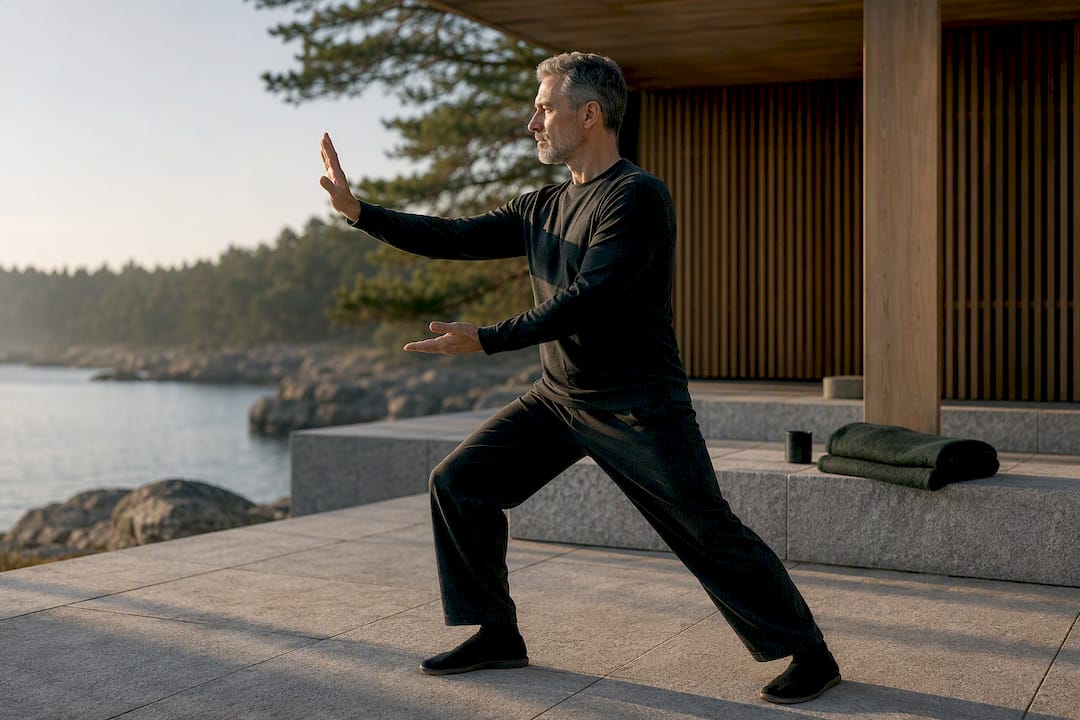
Consistent meditation practice has a measurable physiological effect: one study found meditation can raise baseline dopamine levels by up to 65% when practiced regularly, improving mood stability and reward-processing efficiency over time. That is a significant enough effect that a short daily practice deserves the same scheduling priority as a workout.
Fast, low-friction tools that fit into an executive calendar include:
- Box breathing (four seconds in, four seconds hold, four seconds out, four seconds hold) for two to three minutes before high-stakes meetings.
- A three-minute seated mindfulness practice at midday to interrupt stress accumulation before it compounds.
- Short walks between meetings instead of back-to-back scheduling with no recovery gap.
- A weekly session of yoga or tai chi, which combine movement with regulated breathing for a dual effect.
For structured techniques, Mastering Conflict's guide to stress-reduction exercises offers step-by-step breathing methods worth incorporating into a weekly routine.
Pro Tip: Schedule your hardest cognitive work in the two hours after your calmest part of the day, not your busiest. Nervous-system regulation works best as prevention, not damage control after a stressful stretch has already drained your reserves.
When Low Motivation Signals Something Beyond Normal Fatigue
Everyone experiences dips in drive. The distinction that matters is duration and function. A few difficult days after a demanding project is normal variation. Persistent low motivation lasting several weeks, paired with a loss of pleasure in activities that used to engage you, or a measurable decline in your ability to function at work or home, is a different signal entirely.
Reasonable next steps if that pattern holds:
- Start with your general practitioner to rule out reversible causes such as sleep disorders, thyroid issues, or nutrient deficiencies, since reversible causes of low energy are common and often overlooked.
- Consult a licensed psychologist if the pattern includes persistent low mood, not just low energy.
- Speak with occupational health resources if the issue appears tied specifically to work conditions or chronic overload.
Frame the conversation honestly: describe what has changed and for how long, rather than assuming a label. Not every flat week is a clinical issue, and not every persistent one is normal variation either. A professional can help distinguish the two, which is worth more than guessing in either direction.
Building a Structured Program Around These Principles
The habits above work individually, but they compound when sequenced into a deliberate program rather than applied piecemeal. Viridos develops its content and product philosophy around exactly this kind of structured sequencing, drawing on published research in sleep science, dopamine physiology, and behavioral psychology rather than trend-driven advice.
A few practical extensions worth exploring:
- A two-week dopamine-friendly routine that sequences sleep timing, protein-forward meals, and micro-goal structuring into a single adoptable protocol, detailed in Viridos' two-week plan to raise dopamine naturally.
- Habit-sequencing frameworks for men managing high-responsibility roles, covered in motivation techniques for men.
- Energy-management protocols built specifically for executive schedules, outlined in sustained energy for executives.
Viridos operates as a small-batch Swedish producer with a controlled, membership-based access model, a structure chosen deliberately to keep formulation quality and consistency tight rather than scaling production at the expense of precision. That same principle, depth over volume, applies to the behavioral program above: a handful of well-executed habits will outperform a long list of half-applied ones.
An Executive's Take on Applying This in Practice
Most executives do not lack the discipline to build a routine like this. What they lack is a version simple enough to survive a bad week. I have watched founders design elaborate seven-part morning rituals that collapse the first time a 6 a.m. flight or a crisis call disrupts the sequence. The routines that actually last are the ones with three or four non-negotiables and everything else treated as optional.
If I had to compress this entire framework into a single daily anchor, it would be this: protein before coffee, five minutes of movement before email, and one process goal you can complete before 9 a.m. That sequence takes under fifteen minutes and does most of the physiological work described above. The outcome, over a few consistent weeks, is not a dramatic transformation. It is a flatter afternoon energy curve and fewer days where motivation feels like something you have to manufacture from nothing.
— Joakim
The Performance Journal: A Structured Path for Men Who Want More Than a Checklist
A written framework outperforms a mental one, particularly under executive-level cognitive load. Viridos built the Performance Journal for exactly this reason: a structured, membership-based program that turns the habits covered above, sleep discipline, protein timing, micro-goal architecture, stress regulation, into a daily tracked practice rather than a set of good intentions.

The membership gives you a sequenced framework rather than a generic wellness app, built around the same research on dopamine, effort, and recovery cited throughout this piece, paired with Viridos' small-batch Swedish formulation philosophy and sublingual delivery approach. It suits men who have tried self-directed routines before and found them collapsing under travel schedules, board pressure, or inconsistent weeks, and who want a structure precise enough to hold up under real demands. It complements every behavioral step above rather than replacing it.
If the daily routine outlined in this article resonates but you want it built into a tracked, premium framework instead of memory alone, review the Performance Journal and see whether Viridos' controlled membership model fits how you want to work.
Sources
- PubMed - meditation and dopamine study
- Mayo Clinic - Natural ways to boost energy without caffeine
- Harvard Health - Dopamine: the pathway to pleasure
- National Geographic - How to get high on your own dopamine—naturally