
TL;DR:
- Consistent habits like sleep, nutrition, and movement are key to long-term executive health.
- Building routines around environmental cues and small habits enhances adherence and resilience.
- Personalization and sustainability are more effective than chasing quick biohacking fixes.
After 40, the rules change. Energy dips aren't just fatigue — they're signals that your current routine no longer matches your demands. Executives and founders running at full capacity face a specific challenge: the same drive that built your career can quietly erode your health if you don't build systems to protect it. Timeless habits combining plant-rich nutrition, consistent movement, quality sleep, mindfulness, and social connection reduce chronic disease risk by up to 80%. This guide gives you a practical, evidence-backed framework to build a health routine that fits your life and sustains your edge.
Table of Contents
- What it takes: Science-backed pillars of executive health
- Preparation: Tools, environments, and daily setup
- How to build your health routine: Step-by-step framework
- Tracking progress, troubleshooting, and sustaining results
- Our perspective: The myths, mistakes, and real rewards of executive health routines
- Take your health routine further with the right tools
- Frequently asked questions
Key Takeaways
| Point | Details |
|---|---|
| Pillars matter most | Structure routines around proven pillars like nutrition, movement, sleep, mindfulness, social connection, and purpose. |
| Preparation builds consistency | Set up your tools and space so healthy choices become automatic, not forced. |
| Start small, scale up | Begin with easy daily actions like sunlight and walks, then add more complex practices over time. |
| Track and adapt | Monitor progress and be willing to adjust habits for long-term success rather than chasing perfection. |
What it takes: Science-backed pillars of executive health
Most executives don't fail at health because they lack discipline. They fail because they follow generic advice built for average people with average schedules. The pillars that actually work for high performers are well-established: plant-rich nutrition, regular physical activity, prioritized sleep, mindfulness practices, strong social ties, and a clear sense of purpose. Harvard's research on healthy lifestyle routines confirms these six anchors reduce chronic disease risk by up to 80% when practiced consistently.
Elite performers don't treat these pillars as optional. They structure their days around them. Morning exercise comes before the inbox opens. Sunlight exposure happens within the first hour of waking. Meals follow a pattern, not a mood. The difference between a classic routine and an elite-backed one isn't willpower — it's architecture.
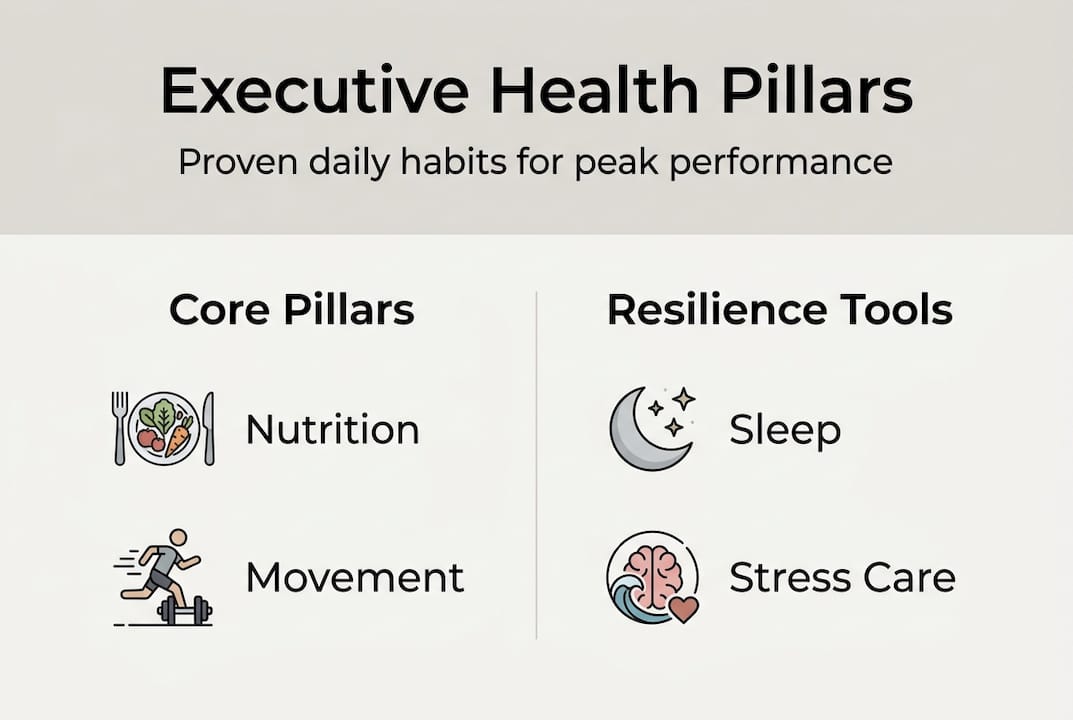
| Wellness pillar | Classic approach | Elite-backed approach |
|---|---|---|
| Nutrition | Eat when convenient | Mediterranean pattern, set meal times, no snacking |
| Movement | Gym when possible | Daily non-negotiable, morning priority |
| Sleep | 6 hours and coffee | 7-9 hours, consistent schedule, wind-down ritual |
| Mindfulness | Skip when busy | 10-20 min daily, non-negotiable |
| Social ties | Networking events | Intentional, quality relationships |
| Purpose | Career goals | Values-driven leadership vision |
The importance of executive health becomes undeniable when you compare output quality across quarters where your routine held versus quarters where it collapsed. The data is personal and immediate.
Here's what the research and top performers agree on:
- Consistency beats intensity every time
- Habits compound over weeks, not days
- Personalization matters more than protocol
- Environment shapes behavior more than motivation
- Recovery is productive, not passive
Review Harvard self-care strategies for deeper context on how each pillar interacts with long-term resilience.
Pro Tip: Before adding anything complex, start with two small wins: get 10 minutes of morning sunlight and take a 10-minute walk after your largest meal. These two habits alone improve cortisol rhythm, digestion, and afternoon focus.
Preparation: Tools, environments, and daily setup
Knowing the pillars is step one. Making them automatic is step two. The environment you operate in either supports your routine or fights it. Most executives underestimate how much friction kills adherence. If your gym gear isn't ready the night before, you'll skip. If your kitchen isn't stocked, you'll default to whatever's fast.
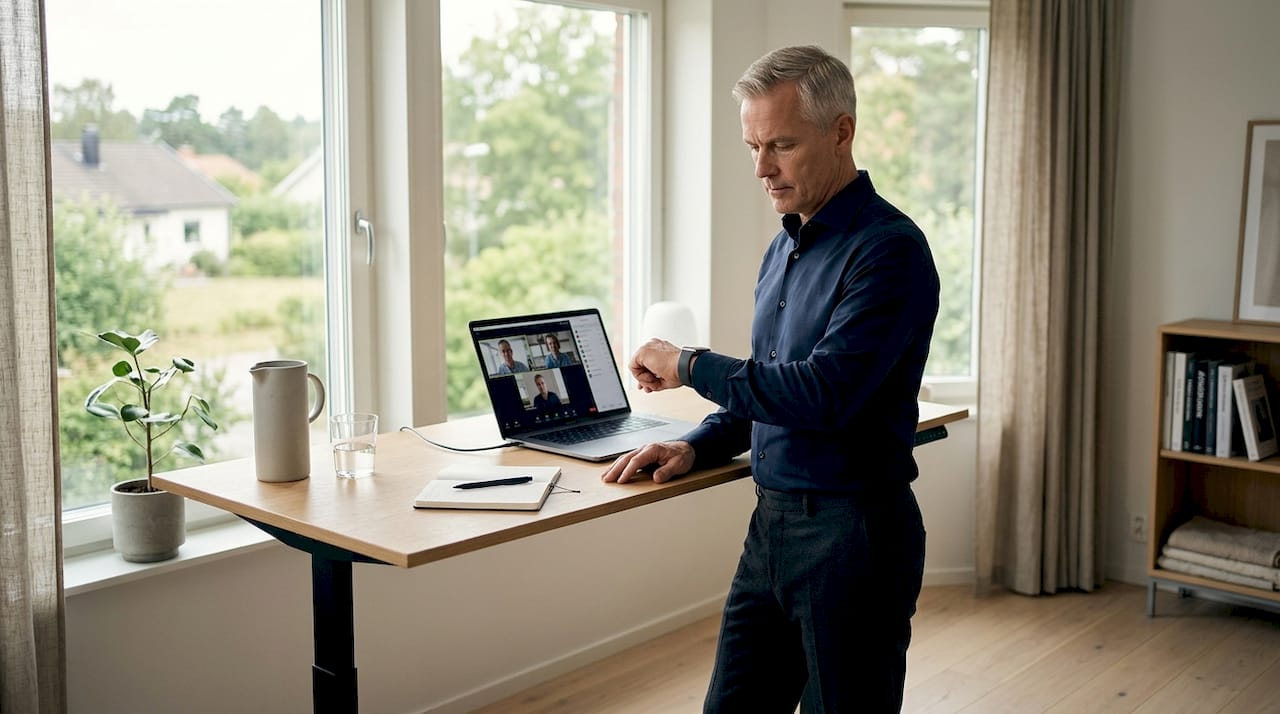
High-performing founders like Dan Go, who outworks professionals half his age, wake between 4:15 and 6am for structured workouts combining strength and endurance, follow a Mediterranean diet with no snacking, use blue light blockers in the evening, and supplement with creatine (10-15g) and omega-3. The Whoop CEO's daily routine follows a similar logic: remove decisions, automate defaults, and protect the non-negotiables.
Here are the tools that remove friction and make adherence natural:
- Adjustable dumbbells or kettlebells for efficient home strength work
- Walking pad or under-desk treadmill for movement during calls
- Sunlight lamp for morning light exposure on dark or travel days
- Blue light blocking glasses for evening wind-down and sleep protection
- Weekly meal planner to remove daily food decisions
- Wearable tracker (Whoop, Oura, or Garmin) for objective recovery data
| Tool | Core habit enabled | Adherence impact |
|---|---|---|
| Walking pad | Daily movement, call+walk stacking | High |
| Sunlight lamp | Morning cortisol reset | High |
| Blue light blockers | Sleep quality, melatonin protection | Medium-High |
| Adjustable weights | Home strength training | High |
| Meal planner | Nutrition consistency | Medium |
| Wearable tracker | Recovery monitoring, accountability | High |
Habit stacking is the most underused tool in balancing work and health. Pair a walking pad with your weekly one-on-one calls. Listen to a learning podcast during your morning walk. Stack your supplement routine with your first coffee. These pairings reduce the mental cost of healthy behavior to near zero.
Pro Tip: Automate your supplement refills and schedule a Sunday 30-minute meal prep session. Decision fatigue is real, and every choice you eliminate before 9am is energy redirected toward your highest-value work.
How to build your health routine: Step-by-step framework
With your environment prepped, the next move is assembling your personalized routine in a sequence that builds momentum without overwhelming you. The biggest mistake most executives make is trying to overhaul everything at once. That approach fails within two weeks.
A 48-year-old CEO's exact routine illustrates the core principle: endurance and strength training mirror the resilience required in leadership. Consistency over intensity. Balance is a myth — what works is deliberate trade-offs, not perfect equilibrium.
Here's a five-step framework to build your routine from the ground up:
- Anchor with sunlight and movement. Get outside or use a sunlight lamp within 60 minutes of waking. Add a 10-minute post-meal walk. These two habits stabilize cortisol, blood sugar, and circadian rhythm.
- Layer in morning exercise. Start with three sessions per week combining aerobic and resistance work. Combined aerobic and resistance training improves executive function and cognition with a meaningful effect size (g=0.32), especially in 13-to-26-week programs.
- Standardize nutrition. Adopt a Mediterranean eating pattern: vegetables, lean protein, healthy fats, whole grains. Set fixed meal times. Eliminate snacking between meals to stabilize energy and reduce inflammation.
- Build a mindfulness practice. Start with 10 minutes of meditation each morning. Use apps like Waking Up or Headspace if you need structure. The goal is mental recovery, not spiritual achievement.
- Protect sleep as a performance asset. Set a consistent bedtime. Use blue light blockers after 8pm. Keep your room cool and dark. Seven to nine hours isn't a luxury — it's the foundation everything else runs on.
"Consistency, not intensity, drives resilience. The executive who trains at 70% every day outperforms the one who trains at 100% twice a week. Expect trade-offs. Build around what you can sustain, not what impresses."
Explore proven executive fitness approaches and strategies for sustaining elite performance as you refine your framework over the first 90 days.
Pro Tip: Track your routine completion with a simple weekly scorecard. Rate each pillar from 1-5. Patterns in your low scores reveal exactly where to focus next.
Tracking progress, troubleshooting, and sustaining results
Once your routine is running, the real work begins: keeping it alive through travel, high-pressure weeks, and the inevitable stumbles. Objective tracking removes the guesswork. Monitor energy levels, sleep quality, memory sharpness, and work output weekly. A journal works. A wearable works better. Both together are best.
The five most common derailers and their fixes:
- Travel disruption: Pack resistance bands and a sleep mask. Find a hotel with a gym. Protect sleep above all else when crossing time zones.
- Workload spikes: Shorten workouts to 20 minutes rather than skipping entirely. Movement at any duration beats zero.
- Social pressure: Communicate your routine to your inner circle. Accountability partners outperform willpower every time.
- Minor injury: Shift to the pillar you can still train. Injured shoulder? Walk more. Injured knee? Upper body work continues.
- Dietary slip-ups: Return to your next scheduled meal without guilt. One bad meal doesn't break a routine — the decision to abandon it does.
The 80% chronic disease risk reduction from consistent healthy habits is one of the most powerful statistics in preventive medicine. That number doesn't come from perfection — it comes from sustained practice over years.
Customizing your routine to your actual lifestyle is what separates lasting change from short-term experiments. Dan Go's approach to starting small — sunlight, post-meal walks, morning exercise — prioritizes adherence over perfection. That's the right sequence.
Review your program every 90 days. Adjust intensity, swap tools, find a new accountability partner if needed. Use performance optimization tips and long-term health guidance to keep your approach evolving as your demands change.
Our perspective: The myths, mistakes, and real rewards of executive health routines
The wellness industry sells executives a seductive lie: that the right biohack, the right stack, or the right morning ritual will unlock a new level of performance. Most of it is noise. Expensive noise.
What actually works is boring by comparison. Consistent sleep. Real food. Progressive training. Quiet mornings. The executives who sustain high performance into their 60s aren't the ones chasing the latest protocol — they're the ones who built simple, personalized systems and protected them fiercely.
Science-based personalization consistently outperforms rigid biohacking protocols. Detection and prevention beat optimization theater. The real reward isn't a better HRV score — it's sustained clarity, sharper decisions, and the capacity to lead with purpose for decades. Build your performance longevity strategy around what you can repeat, not what you can endure.
Take your health routine further with the right tools
Building a health routine is one thing. Sustaining it through the complexity of an executive life is another challenge entirely. The gap between knowing and doing closes fastest with the right structure and accountability around you.
VIRIDOS is built specifically for men who operate at this level. The Performance Journal gives you a structured system to track your pillars, monitor your progress, and stay accountable to the routine you've built. It's not a generic wellness app — it's a precision tool designed for founders, executives, and high-agency professionals who take their performance seriously. Start tracking what matters and watch your consistency compound.
Frequently asked questions
What is the best time to exercise for executive performance?
Morning workouts, ideally between 4:15 and 6am, are most common among top-performing executives for maximizing energy, hormonal alignment, and daily consistency.
How much time should I dedicate weekly to exercise?
Three hours per week of combined aerobic and resistance training efficiently supports both cognitive and physical performance for executives aged 40 to 65.
Can small habits really make a difference in executive health?
Yes. Sunlight exposure and post-meal walks dramatically improve adherence and create the behavioral foundation that larger habits build on.
Is it important to include both strength and aerobic training?
Concurrent aerobic and resistance training improves executive function, cognition, and long-term resilience — making both types essential for executives over 40.
What is the top mistake in executive health routines?
Chasing perfection instead of consistency. Adaptability over perfection is what separates executives who sustain results from those who restart every January.