
TL;DR:
- The executive edge combines leadership presence, strategic execution, and emotional intelligence to outperform in complex environments. Building this system through deliberate practice, strategic sprints, AI tools, and physiological coherence creates a durable competitive advantage for leaders and teams.
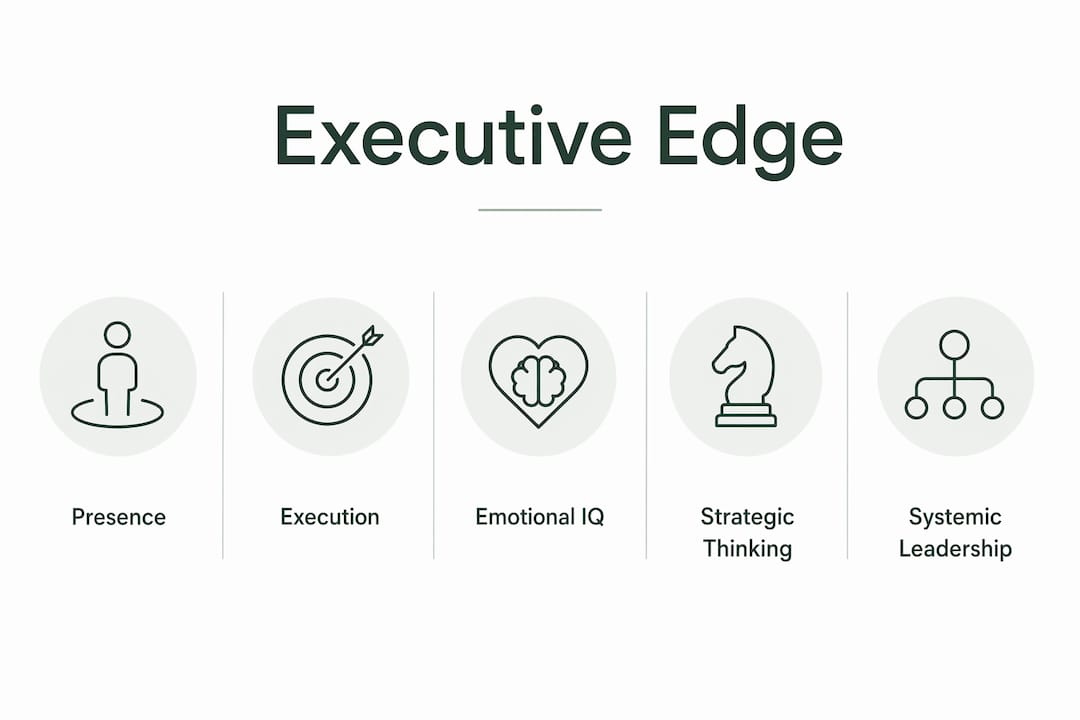
The executive edge is defined as the distinct combination of leadership presence, strategic execution, and emotional intelligence that allows senior professionals to outperform in complex, high-stakes environments. This is not a single skill. It is an operating system. Executives who build this capacity make faster decisions, lead with greater clarity, and sustain high performance without burning out. The concept draws on neuroscience research into presence, the University of South Florida's six-dimension leadership model, and emerging frameworks like EDGEcraft that integrate AI-powered decision-making. Understanding what the executive edge means is the first step toward building it deliberately.
What is the executive edge in modern leadership?
The executive edge is a multidimensional leadership capacity, not a personality trait. The six-dimension model from USF identifies presence, strategic thinking, political navigation, team building, change management, and legacy focus as the core components. Each dimension compounds the others. A leader who thinks strategically but lacks presence loses influence in the room. A leader with presence but no execution discipline loses credibility over time.
"Leadership presence is a measurable capacity supported by neuroscience, improving cognitive clarity, emotional self-regulation, and stress resilience essential for executive success."
Presence is the foundation. Neuroscience research shows that leaders who develop presence respond to pressure rather than react to it. That distinction matters. Reacting burns cognitive resources. Responding preserves them for the decisions that count.
Emotional intelligence functions as an influence multiplier. Executives who read a room accurately, regulate their own state under stress, and communicate with precision build trust faster than those who rely on authority alone. Trust accelerates execution. It reduces the friction that slows most organizations down.

Systemic leadership rounds out the picture. High executive team alignment increases the likelihood of outperforming competitors by 1.76 times. That figure reflects a critical truth: the executive edge is not only personal. It lives in the system the leader builds and maintains around them.
How do strategic sprints sharpen execution velocity?
Strategic sprints are defined as focused, 30-minute work sessions dedicated entirely to high-priority strategic tasks, free from interruptions and reactive demands. They are the practical mechanism for translating leadership clarity into measurable output. Most executives lose the majority of their day to meetings, email, and low-value decisions. Sprints reclaim that time deliberately.
Implementing daily 30-minute sprints yields the equivalent of three additional weeks of strategic execution annually. Three weeks is a meaningful gain in any competitive context. It represents product cycles, hiring decisions, and market moves that competitors miss.
Here is how to build sprints into a leadership routine:
- Block sprint time first. Schedule your sprint before 9:00 AM or immediately after your first commitment. Protect it the way you protect a board meeting.
- Define the single output. Enter each sprint knowing exactly what decision, document, or analysis you will complete. Ambiguity kills velocity.
- Use a metrics dashboard. Track sprint completion rates weekly. Leaders who measure their sprint adherence maintain the habit at a significantly higher rate than those who do not.
- Extend the practice to your team. Sprint culture compounds. When direct reports adopt the same discipline, execution velocity rises across the entire organization.
- Review and adjust monthly. Sprint topics should reflect your current strategic priorities, not last quarter's agenda.
Pro Tip: Treat your sprint block as a non-negotiable appointment. When a conflict arises, reschedule the sprint the same day rather than canceling it. Consistency over perfection is what builds the habit.
The sprint methodology connects directly to executive fitness principles: short, high-intensity effort followed by recovery produces better results than sustained, unfocused work. The analogy is not accidental. The physiology of performance applies in the boardroom as much as it does in training.
How is AI reshaping the executive edge?
The executive edge is evolving. EDGEcraft, a repeatable leadership operating system, integrates AI-powered decision co-pilots to help leaders scan situations, decide faster, and execute with greater precision. The shift is significant. Manual leadership systems rely on memory, habit, and experience. AI-augmented systems add pattern recognition and data synthesis at a speed no individual can match.
The practical benefits of this shift include:
- Faster situation scanning. AI tools surface relevant signals from large data sets in seconds, reducing the time leaders spend gathering context before a decision.
- Reduced decision fatigue. Automating low-stakes decisions frees cognitive capacity for the choices that require human judgment.
- Consistent execution loops. The EDGEcraft five-step decision loop creates a repeatable structure that prevents the drift and inconsistency that derail most leadership routines.
- Burnout prevention. Top executives who use structured micro-rituals and AI-supported decision loops pivot faster than competitors without accumulating the cognitive debt that leads to burnout.
Pro Tip: Start with one AI tool integrated into one recurring decision. A weekly competitive scan or a monthly financial summary is a low-risk entry point. Master the workflow before expanding it.
The risk of over-relying on AI is real. The executive edge requires human judgment at the highest level. AI accelerates the inputs. The leader still owns the output. Executives who understand this distinction use technology as a force multiplier rather than a substitute for thinking. For a deeper look at science-backed performance strategies, the principles of AI integration align closely with evidence-based approaches to executive output.
What role does physiological coherence play in sustaining the edge?
Physiological coherence is defined as the alignment of breath patterns, heart rhythms, and nervous system activity to produce a calm, focused, high-functioning state. HeartMath Institute research identifies coherence as a measurable biological condition that enhances cognitive function and emotional regulation. For executives, this is not a wellness concept. It is a performance discipline.
"Biological coherence linking mind, body, and heart reduces executive burnout and decision fatigue, making wellness core to sustainable high performance."
Decision fatigue is the primary threat to sustained executive performance. A leader who makes 50 decisions before noon arrives at the afternoon's critical choices with diminished judgment. Coherence practices, including controlled breathing, structured recovery, and sleep discipline, reset the nervous system between high-demand periods. They extend the window of peak cognitive function across the full working day.
The table below maps key wellness inputs to their performance outputs for executives:
| Wellness input | Performance output |
|---|---|
| Controlled breathing (coherence practice) | Reduced cortisol, faster emotional recovery |
| Functional lab diagnostics | Personalized nutrition and hormone baseline |
| Structured sleep protocol | Improved working memory and decision quality |
| Stress management training | Lower reactive decision-making under pressure |
| Physical training consistency | Higher energy availability across the workday |
Executive wellness programs that combine functional medicine diagnostics, nutrition, and stress management run 6–12 months with concierge-level personalization. That duration reflects a biological reality. Meaningful changes in stress physiology, hormonal balance, and cognitive resilience take time to consolidate. Quick interventions produce temporary results. Sustained programs produce durable ones.
Burnout prevention is not a soft topic. It is a performance variable. Executives who treat their physical state as a leadership input make better decisions, communicate more clearly, and maintain influence longer than those who treat wellness as optional. The community and accountability structures that support physical training also reinforce the consistency required for coherence practices to take hold.
Key Takeaways
The executive edge is a composite operating system built from presence, execution discipline, AI-augmented decision-making, and physiological coherence that compounds into a durable competitive advantage.
| Point | Details |
|---|---|
| Six-dimension leadership model | Presence, strategic thinking, political navigation, team building, change management, and legacy focus define the full executive edge. |
| Strategic sprints drive output | Daily 30-minute focused sprints yield the equivalent of three extra weeks of strategic execution each year. |
| AI accelerates, not replaces, judgment | EDGEcraft and AI co-pilots speed up scanning and decision loops while the leader retains ownership of outcomes. |
| Team alignment multiplies individual edge | High executive team alignment increases the likelihood of outperforming competitors by 1.76 times. |
| Physiological coherence sustains performance | Wellness inputs like sleep, breathing, and functional diagnostics directly protect decision quality and cognitive endurance. |
The edge is a system, not a trait
Most executives I observe treat the edge as something they either have or they do not. That framing is the first mistake. The edge is built, maintained, and refined through deliberate practice. It is not a fixed attribute of personality or intelligence.
The second mistake is treating each dimension in isolation. I have worked alongside leaders who run flawless strategic sprints but neglect their physical state entirely. By Thursday afternoon, their decision quality drops visibly. The sprint discipline is real. The coherence foundation is missing. The result is inconsistent performance at exactly the moments that matter most.
What actually works is integration. Presence practices feed into cleaner decisions. Cleaner decisions reduce cognitive debt. Reduced cognitive debt extends the window of peak performance. Physical coherence supports all of it. When you build these elements as a connected system rather than separate habits, the compounding effect becomes apparent within weeks, not months.
The leaders I respect most treat their edge the way a precision instrument is maintained. Not with obsession, but with consistency and attention. They protect their sprint time. They track their energy patterns. They invest in their biological baseline. They build teams that amplify their capacity rather than drain it. That is what the definition of executive edge looks like in practice.
— Joakim
Viridos and the tools that support your edge
Executives who take their edge seriously need more than frameworks. They need tools that match their standard.

The Viridos Performance Journal is built for tracking the vitality and execution metrics that matter to leaders in demanding roles. It creates a daily record of energy, focus, and output that reveals patterns most executives never see. The Viridos Membership provides controlled access to Viridos's small-batch Swedish performance formulations, designed for men who want sustained biological support for the demands of executive life. Both are built with the same precision and restraint that define the brand. Explore what Viridos offers for men who hold themselves to a higher standard.
FAQ
What is the executive edge, exactly?
The executive edge is the combination of leadership presence, strategic execution, and emotional intelligence that allows senior professionals to outperform in complex environments. It functions as an integrated operating system rather than a single skill.
How long does it take to develop the executive edge?
Structured executive edge programs typically span 3–6 months, with intensive cohort formats running approximately 12 weeks. Meaningful biological and behavioral changes require sustained practice over that timeframe.
What does physiological coherence have to do with leadership?
Physiological coherence, the alignment of breath, heart rhythms, and nervous system activity, directly enhances cognitive function and emotional regulation. Leaders who practice coherence techniques make clearer decisions under pressure and recover faster from high-demand periods.
How do strategic sprints improve executive performance?
Daily 30-minute sprints dedicated to high-priority strategic work produce the equivalent of three additional weeks of execution annually. They reclaim time lost to reactive demands and build a consistent execution habit.
Is the executive edge relevant for team performance, not just individual leaders?
High executive team alignment increases the likelihood of outperforming competitors by 1.76 times. The edge scales from the individual to the organization when leaders build aligned, high-functioning teams around them.