
TL;DR:
- Adaptogens help the body resist stress by modulating the HPA axis and supporting resilience. They show varying evidence for reducing fatigue and improving cognition, but quality and standardization are crucial. Used alongside core health habits, adaptogens serve as targeted tools for high-performance longevity.
Adaptogens support non-specific stress resistance, helping maintain cognitive and physical capacity under chronic stress when used alongside foundational health habits. For men carrying sustained high-responsibility loads, that is a meaningful distinction from conventional stimulants, which borrow energy rather than build capacity.
The short version:
- Stress modulation: Adaptogens regulate the hypothalamic-pituitary-adrenal (HPA) axis, moderating cortisol without suppressing it entirely. Clinical studies report cortisol reductions in the range of 14–30% for specific extracts in controlled trials.
- Reduced fatigue and cognitive support: Select adaptogens show randomized-trial support for reducing fatigue and improving concentration, particularly under sustained cognitive load.
- Limits: Evidence quality varies by herb and extract. Adaptogens are dietary supplements in the U.S. — not FDA-approved drugs — and product quality is inconsistent across the market.
- Immediate next step: Consult a clinician if you take prescription medications, then run a controlled 6–12 week trial with a standardized extract and objective outcome measures.
Table of Contents
- What qualifies as an adaptogen?
- How do adaptogens actually work in the body?
- What does the clinical research actually show?
- Profiles of the most commonly used adaptogens
- Side effects, interactions, and how long to try an adaptogen
- Regulatory status and how to evaluate product quality
- How adaptogens fit into a high-performance lifestyle
- Should you try adaptogens?
- Key Takeaways
- The case for treating adaptogens as precision instruments
- Viridos and the precision approach to performance support
- Useful sources and further reading
What qualifies as an adaptogen?
The term "adaptogen" was coined by Soviet pharmacologist Nikolai Lazarev in 1947 and refined by Brekhman and Dardymov in the 1960s through systematic research into plant compounds that enhanced endurance and resistance to extreme stress. The concept has deep roots in traditional medicine, including Ayurveda and Traditional Chinese Medicine (TCM), where many of these herbs were used for centuries before modern pharmacology named them.
Three criteria define a true adaptogen:
- Non-toxic at normal doses: Safe for regular use without significant adverse effects at therapeutic amounts.
- Non-specific stress resistance: Increases resistance to a broad range of stressors — physical, chemical, biological — rather than targeting a single pathway.
- Normalizing effect: Helps return physiological parameters toward homeostasis, whether elevated or depressed.
That last criterion is what separates adaptogens from stimulants. A stimulant pushes output up regardless of baseline state. An adaptogen tends to modulate toward balance. The Cleveland Clinic describes them as herbs and mushrooms that may reduce stress, fatigue, and improve concentration — framed explicitly as dietary supplements, not approved medicines.
Adaptogens are not a single chemical class. Ashwagandha contains withanolides; rhodiola contains rosavins and salidroside; ginseng contains ginsenosides. Each herb has a distinct phytochemical profile, which is why evidence must be evaluated herb by herb, extract by extract.
How do adaptogens actually work in the body?
The direct answer: adaptogens modulate the HPA axis, enhance non-specific resistance, and act pleiotropically across neuroendocrine-immune and metabolic pathways. Unlike single-target pharmaceuticals, they engage multiple systems simultaneously.

Core mechanisms
| Mechanism | Practical effect | Molecular evidence |
|---|---|---|
| HPA-axis modulation | Normalizes cortisol; reduces stress-driven fatigue | GR binding, JNK suppression, NPY signaling |
| Hsp70 induction | Cellular resilience to oxidative and metabolic stress | Heat-shock protein upregulation via hormesis |
| NF-κB / SAPK regulation | Reduced neuroinflammation under chronic load | Anti-inflammatory pathway modulation |
| PI3K/Akt and AMPK/SIRT1 | Mitochondrial support; sustained ATP production | Improved energy metabolism under stress |
| Nrf2/ARE activation | Antioxidant and detoxifying gene expression | Cellular defense against oxidative damage |
The HPA axis functions like a thermostat. Chronic stress jams it in the "on" position: corticotropin-releasing hormone (CRH) triggers ACTH release, which drives cortisol up. Sustained high cortisol impairs memory, concentration, and recovery. Adaptogens normalize this feedback loop by attenuating JNK signaling (which blocks glucocorticoid receptors) and activating Hsp70, which restores the cortisol thermostat's sensitivity.
Statistic callout: Research on molecular mechanisms shows adaptogens prevent stress-induced increases in nitric oxide, keeping ATP production efficient — a direct mechanism for sustained physical and cognitive performance under load.
One underappreciated feature is the biphasic dose response. At low doses, adaptogens act as mild stress-mimetics, priming adaptive signaling. At excessive doses, the effect can reverse. This is not a theoretical concern — it is the primary reason that "start low and measure" is the only rational protocol for a performance-focused individual. The pleiotropic, multi-target activity also explains why whole-extract integrity matters more than isolated marker compounds.
What does the clinical research actually show?
Some adaptogens have genuine randomized controlled trial (RCT) support for reducing fatigue, anxiety, and improving cognitive function. The evidence is not uniform, and the Merck Manual is direct about this: each adaptogen should be evaluated on its own merits, and supplements do not replace core health measures or medical care.
Where evidence is strongest:
- Ashwagandha (KSM-66 and Sensoril extracts): Multiple RCTs show reductions in perceived stress, cortisol, and anxiety. Cortisol reductions of 14–30% have been reported in clinical trials for specific standardized extracts.
- Rhodiola rosea (SHR-5 extract): RCTs support reduced mental fatigue and improved cognitive performance under stress. The NCCIH has reviewed this evidence and notes it as one of the better-studied adaptogens.
- Panax ginseng: Meta-analyses show cognitive benefits and fatigue reduction, though effect sizes vary and study quality is inconsistent.
Common limitations across the literature:
- Small sample sizes (many trials under 100 participants)
- Short durations (4–8 weeks), limiting conclusions about long-term use
- Inconsistent extract standardization across studies
- Heterogeneous outcome measures, making cross-study comparison difficult
UCLA Health notes that 47% of Americans reported higher stress since the pandemic began — a figure that reflects the scale of demand for resilience tools, but also the risk of overpromising. Clinical signals are often product- and dose-specific. A positive trial for KSM-66 ashwagandha at 300 mg twice daily does not validate every ashwagandha product on the market.
Profiles of the most commonly used adaptogens
Each of the seven adaptogens below has a distinct mechanism, evidence base, and practical application. Forms matter: standardized extracts used in clinical trials differ substantially from bulk powders or low-potency teas.

| Adaptogen | Primary use | Typical clinical form | Key active compounds |
|---|---|---|---|
| Ashwagandha | Stress, anxiety, sleep quality, testosterone support | Standardized root extract (KSM-66, Sensoril) | Withanolides |
| Rhodiola rosea | Mental fatigue, cognitive performance under stress | Standardized extract (SHR-5; 3% rosavins, 1% salidroside) | Rosavins, salidroside |
| Panax ginseng | Cognitive function, energy, immune support | Standardized root extract (4–7% ginsenosides) | Ginsenosides |
| Holy basil (tulsi) | Stress, cortisol modulation, anti-inflammatory | Leaf extract or tea | Eugenol, ursolic acid |
| Cordyceps | Endurance, oxygen utilization, fatigue | Mycelium or fruiting body extract | Cordycepin, adenosine |
| Reishi | Immune modulation, sleep, stress adaptation | Dual-extracted (water + alcohol) | Beta-glucans, triterpenes |
| Schisandra | Cognitive stamina, liver support, stress resilience | Standardized berry extract | Schisandrins, gomisins |
Practical notes by herb:
- Ashwagandha is the most clinically studied for stress and sleep. Best taken in the evening for men prioritizing cortisol normalization and recovery.
- Rhodiola is better suited to morning use for cognitive load days. Its fatigue-reducing effects tend to appear within 2–4 weeks at therapeutic doses.
- Panax ginseng supports executive performance without the dependence profile of stimulants, though it can be stimulating for some men and is better avoided late in the day.
- Holy basil is accessible as a tea but standardized extracts deliver more consistent phytochemical content.
- Cordyceps is particularly relevant for men pairing adaptogen use with structured training, given its support for ATP synthesis and oxygen utilization.
- Reishi requires dual extraction (water and alcohol) to access both beta-glucans and triterpenes; many commercial products use only one method.
- Schisandra is underused relative to its evidence base for cognitive stamina and stress resilience, particularly in men with high sustained cognitive load.
Effects depend on extract standardization and formulation. Single-ingredient trials differ from multi-herb products, and synergistic combinations may produce effects not achievable by any single herb independently.
Side effects, interactions, and how long to try an adaptogen
Adaptogens are dietary supplements in the U.S. That regulatory status means manufacturers are responsible for safety and labeling — the FDA does not pre-approve them. Most well-studied adaptogens have favorable safety profiles at therapeutic doses, but interactions with prescription medications are a real consideration for men in their 40s–60s who are managing multiple health variables.
Pre-trial checklist:
- Review your medications. Adaptogens can interact with sedatives, immunomodulators, thyroid medications, anticoagulants, and blood pressure drugs. Ashwagandha, for example, may potentiate thyroid hormone activity.
- Start with one adaptogen. Introducing multiple new variables simultaneously makes it impossible to attribute effects or side effects accurately.
- Begin at the lower end of the therapeutic range. Biphasic dose responses mean more is not always better.
- Set a trial length of 4–12 weeks. Early signals on fatigue and sleep quality typically appear at 4–8 weeks; functional changes in cognitive performance and recovery at 8–12 weeks.
- Monitor for stop signals: persistent headaches, GI distress, sleep disruption, or mood changes warrant discontinuation and clinician review.
- Escalate to clinician testing if you are managing autoimmune disease, organ transplant, or are on multiple prescription medications.
Who should avoid adaptogens or seek clinician input first:
- Pregnant or nursing women
- Men with autoimmune conditions (some adaptogens are immunostimulatory)
- Organ transplant recipients on immunosuppressants
- Anyone on multiple prescription medications without clinician review
Regulatory status and how to evaluate product quality
In the U.S., adaptogens are sold as dietary supplements under the Dietary Supplement Health and Education Act (DSHEA). The FDA does not approve them as drugs, does not verify efficacy claims before sale, and does not require pre-market safety testing. Manufacturers are responsible for product safety and accurate labeling.
That regulatory gap makes quality selection the most consequential decision in an adaptogen trial. Network pharmacology and omics research confirms that whole-extract integrity and synergistic phytochemical profiles matter for reproducible effects — which means the product you choose determines whether the trial is valid.
Quality checklist:
- Standardized extracts: Look for declared marker compounds (e.g., 3% rosavins and 1% salidroside for rhodiola; 5% withanolides for ashwagandha; 4–7% ginsenosides for ginseng).
- Third-party testing: USP, NSF International, or ConsumerLab verification confirms label accuracy and absence of contaminants.
- Transparent sourcing: Country of origin, part of plant used (root vs. leaf vs. mycelium), and extraction method should be stated.
- Batch certificates: Reputable manufacturers provide certificates of analysis (COA) on request.
- Conservative dosing information: Products that provide clear, evidence-referenced dose ranges signal scientific credibility.
Avoid products that list "proprietary blends" without declared amounts, or that make disease-treatment claims — both are regulatory red flags. The precision lifestyle approach treats supplement quality as non-negotiable: a poorly standardized product does not give you a valid data point, it gives you noise.
How adaptogens fit into a high-performance lifestyle
Adaptogens deliver the most durable benefit when they are adjunctive tools, not primary interventions. Prioritized sleep, structured exercise, sound nutrition, and deliberate stress management are the foundation. Adaptogens work within that structure, not instead of it.
A practical trial timeline for executives:
- Weeks 0–2: Establish baseline. Track sleep quality (HRV if available), perceived fatigue, and a focused productivity metric. Hold all other variables steady.
- Weeks 2–8: Early signals. Most men notice changes in sleep quality, morning recovery, and stress reactivity in this window. Fatigue reduction is often the first measurable shift.
- Weeks 8–12: Functional changes. Cognitive stamina, sustained focus under load, and physical recovery tend to show clearer trends by week 10–12.
- Week 12: Decision point. Assess objective measures against baseline. Continue, adjust dose, switch herb, or discontinue based on data.
Pro Tip: Pair your adaptogen trial with one objective measure you already track — HRV, sleep score, or a weekly cognitive load rating. Without a baseline, you cannot distinguish the adaptogen's effect from seasonal variation, workload changes, or placebo response.
Timing matters. Rhodiola and Panax ginseng are better suited to morning use given their activating profiles. Ashwagandha and reishi tend to support evening recovery. Avoid introducing a new adaptogen at the same time as a major training change, travel schedule shift, or dietary overhaul. Controlled conditions are what separate a useful experiment from an anecdote.
For men over 40 managing sustained energy demands, the combination of structured lifestyle habits and a well-chosen adaptogen trial represents a disciplined, evidence-aware approach to performance longevity. Mental toughness training protocols, such as those used in golf pressure training, follow the same logic: controlled exposure, measured response, progressive adaptation.
Should you try adaptogens?
The honest answer depends on where you are in your performance stack.
Strong candidates:
- Men under chronic cognitive and professional stress with disciplined sleep, training, and nutrition already in place
- High-responsibility professionals experiencing fatigue, reduced stress tolerance, or declining cognitive stamina without an identified medical cause
- Men seeking a non-stimulant approach to sustained performance
Borderline cases:
- Men who have not yet addressed sleep quality, exercise, or nutrition — adaptogens will not compensate for those deficits
- Men with significant lifestyle variability who cannot hold other variables steady during a trial
Poor candidates:
- Men managing active autoimmune conditions, organ transplants, or complex medication regimens without clinician oversight
- Anyone expecting rapid or dramatic effects — adaptogens work over weeks, not days
Concrete next steps:
- Consult your physician or a functional medicine clinician, particularly if you take prescription medications.
- Select one standardized, third-party-tested product matched to your primary goal (stress/sleep: ashwagandha; cognitive fatigue: rhodiola; energy/cognition: Panax ginseng).
- Set objective baseline measures before you start.
- Run a controlled 6–12 week trial with consistent dosing.
- Evaluate against baseline and decide.
Key Takeaways
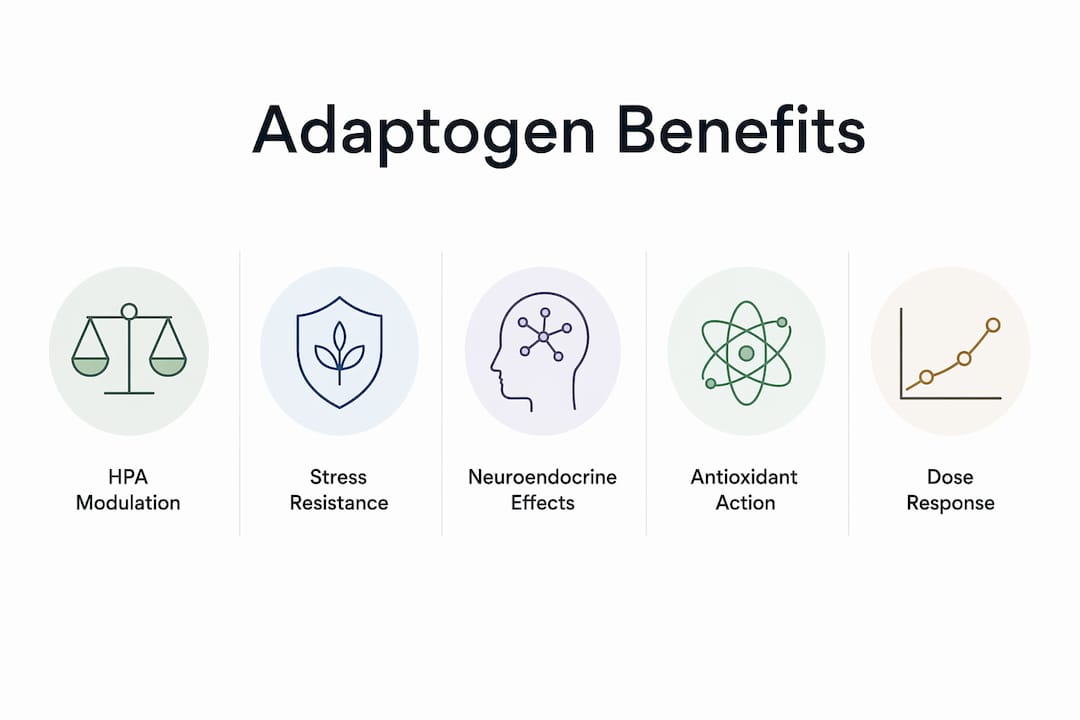
Adaptogens support stress resilience through HPA-axis modulation, antioxidant activity, and pleiotropic neuroendocrine effects — but their value depends entirely on product quality, correct dosing, and a disciplined lifestyle foundation.
| Point | Details |
|---|---|
| HPA-axis modulation | Adaptogens normalize cortisol feedback, reducing chronic stress-driven fatigue and cognitive impairment. |
| Clinical evidence is herb-specific | Cortisol reductions of 14–30% are reported for specific standardized extracts; do not generalize across all products. |
| Quality determines validity | Standardized extracts with third-party testing (USP, NSF, ConsumerLab) are the minimum for a meaningful trial. |
| Trial protocol matters | Run 6–12 weeks with objective baseline measures; start low, hold other variables steady, and monitor for stop signals. |
| Viridos approach | Viridos applies small-batch Swedish precision and controlled formulation to deliver a performance supplement built for disciplined, high-responsibility men. |
The case for treating adaptogens as precision instruments
Most coverage of adaptogens falls into one of two traps: uncritical enthusiasm or blanket skepticism. Neither serves a performance-focused man well.
The enthusiasm camp overstates the evidence and undersells the importance of product quality. The skepticism camp dismisses a body of mechanistic and clinical research that, while imperfect, points consistently toward real physiological effects for specific extracts at specific doses. The honest position is more demanding than either: adaptogens are tools with genuine utility, narrow conditions for optimal use, and significant quality variance in the market.
What I find most compelling about the adaptogen literature is not any single trial result. It is the mechanistic coherence. The HPA-axis modulation, Hsp70 induction, Nrf2/ARE activation, and mitochondrial support pathways all converge on the same practical outcome: a system better equipped to sustain output under load without degrading. For men in demanding roles, that is not a wellness trend. It is a physiological priority.
The discipline required to run a proper adaptogen trial, baseline measures, controlled variables, standardized product, consistent dosing, is the same discipline that separates men who sustain performance through their 50s and 60s from those who attribute decline to inevitability. The tool is only as good as the protocol around it.
Viridos and the precision approach to performance support
Most adaptogen products on the market are formulated for volume, not precision. Viridos takes a different position: small-batch Swedish production, controlled member access, and a formulation philosophy built around phytoandrogen-related compounds and sublingual delivery for men who perform at the top of demanding roles.

The Viridos performance spray is designed for men who have already built the foundation and want a precision tool that matches their standard of rigor. Sublingual delivery bypasses first-pass metabolism, supporting more consistent absorption than standard capsule formats. Production is controlled, batch-tested, and limited by design.
Adaptogens are one dimension of a broader performance architecture. For men who want to track their response with the same precision they apply to their work, the Viridos Performance Journal provides a structured framework for objective measurement across a trial period.
Membership access is controlled and application-based. If you are ready to approach performance support with the same discipline you bring to everything else, explore what Viridos offers and apply for membership at viridos.co.
Useful sources and further reading
A curated list of authoritative references for men who want to verify the evidence directly:
- PubMed: Adaptogen CNS effects and molecular mechanisms — Primary mechanistic review covering HPA-axis modulation, Hsp70 induction, and pleiotropic activity. Best starting point for understanding how adaptogens work at a molecular level.
- Nutrients (MDPI): System-level mechanisms of selected plant adaptogens — Detailed review of herb-specific active compounds (withanolides, salidroside, ginsenosides), pathway-level evidence, and cortisol data from clinical trials.
- Wiley: Evolution of the adaptogenic concept — Comprehensive review of traditional medicine roots, modern pharmacology, network pharmacology approaches, and the case for whole-extract synergy over isolated markers.
- Cleveland Clinic: What are adaptogens? — Accessible consumer-facing overview of common adaptogens, typical uses, and safety framing. Useful for a grounded, non-hype baseline.
- UCLA Health: Should you be taking adaptogens? — Clinician-reviewed guidance on adjunctive use, stress prevalence data, and the case for consulting a healthcare provider before starting.
- Merck Manual: Adaptogens — Authoritative medical reference covering evidence variability, safety considerations, and the supplemental (non-drug) status of adaptogens in the U.S.
- NCCIH: Rhodiola — National Institutes of Health review of rhodiola evidence, safety, and current research status. Useful for evaluating one of the best-studied adaptogens independently.
This article is general information, not medical advice. Consult a qualified healthcare provider before starting any supplement, particularly if you take prescription medications or manage a chronic health condition.