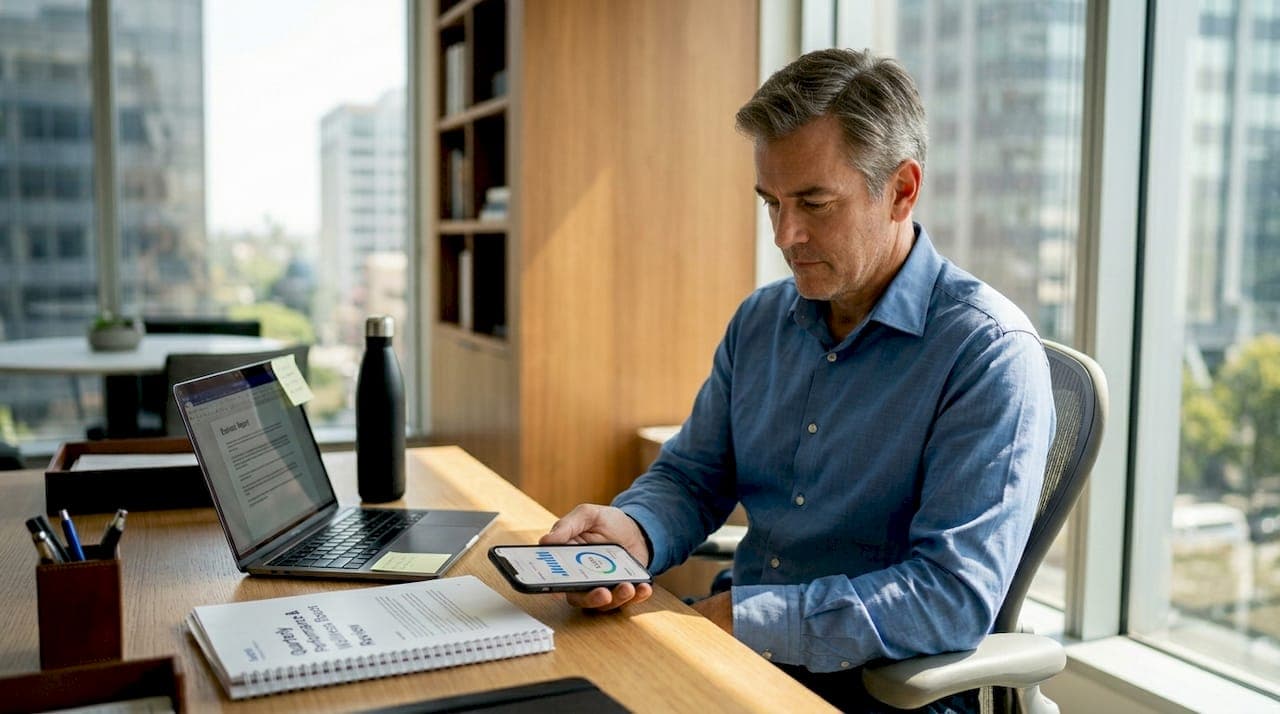
Most accomplished executives hit a point where raw willpower stops compensating for poor recovery, fragmented sleep, and accumulated stress. The body keeps score, and at 45 or 55, the margin for error shrinks fast. Healthy aging strategies have been shown to improve both physical and cognitive performance in executives, yet most high performers treat health reactively rather than strategically. This guide gives you a repeatable, structured workflow to take control of how you age, so your performance compounds instead of decays.
Table of Contents
- Why healthy aging requires a workflow approach
- What you need to build your healthy aging workflow
- Step-by-step: Your healthy aging workflow for executives
- Troubleshooting: Avoiding common mistakes in your aging workflow
- Measuring success: Signs your healthy aging workflow is working
- Take the next step for sustained executive vitality
- Frequently asked questions
Key Takeaways
| Point | Details |
|---|---|
| Workflow over willpower | Systematic routines outperform willpower in sustaining healthy aging for busy professionals. |
| Integrate and adapt | Individualize and update your workflow to match career and lifestyle shifts. |
| Measure what matters | Track physical, cognitive, and emotional signs to verify your workflow’s success. |
| Plan for disruption | Anticipate travel and stress events and have backup routines ready. |
Why healthy aging requires a workflow approach
Most executives are exceptional at building systems for their businesses. They track KPIs, run quarterly reviews, and optimize processes relentlessly. Yet when it comes to their own health, they improvise. That gap is where aging accelerates.
Reactive health management means you respond to problems after they surface: fatigue after a brutal quarter, weight gain after a year of travel, or a concerning lab result that could have been caught earlier. A proactive workflow flips that model. You build healthy lifestyle routines that run in the background of your career, not in competition with it.
Structured workflows can improve outcomes for executives who are prone to stress-related aging and health issues. The difference is systematization: when healthy habits are embedded into your daily and weekly schedule, they require less willpower and deliver more consistent results.
A solid workflow rests on four core elements:
- Assessment: Know your current baseline across energy, biometrics, and cognitive performance
- Planning: Set specific, measurable health goals tied to your professional calendar
- Action: Execute daily and weekly habits with precision and flexibility
- Review: Evaluate what is working, what is not, and recalibrate regularly
Longevity is not a retirement goal. It is a competitive advantage. The executive who sustains healthy aging strategies across decades outperforms peers who burn bright and fade fast.
What you need to build your healthy aging workflow
Before you build the workflow, you need the right inputs. Think of this as your pre-flight checklist. Skipping it means flying blind.
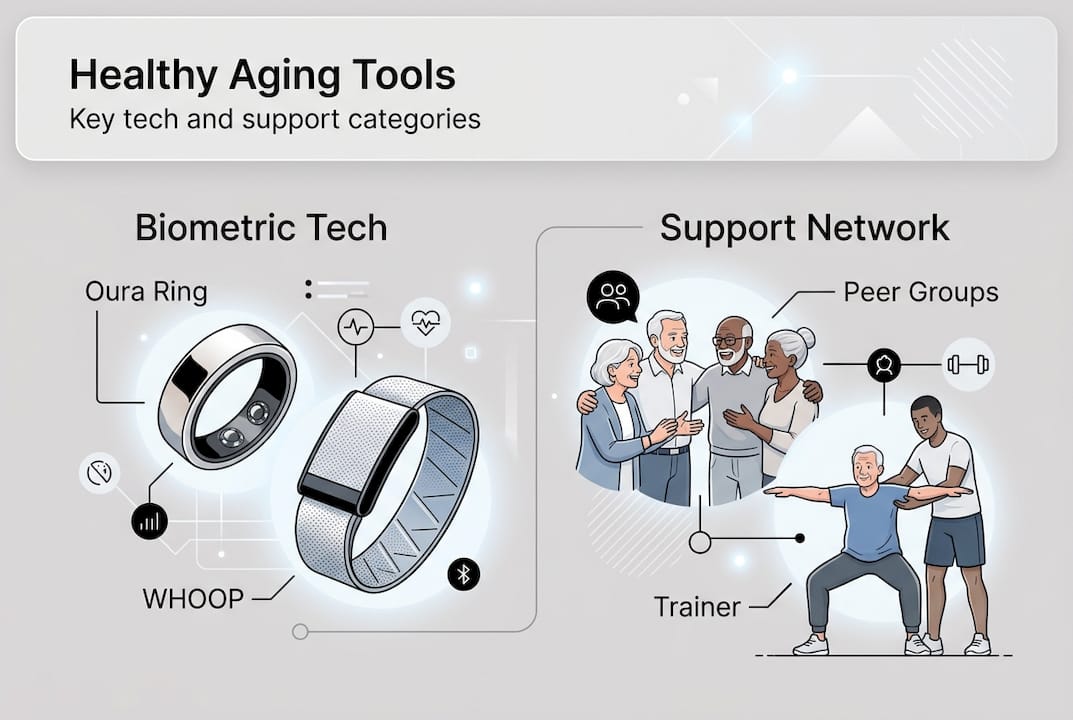
Self-assessment tools are your foundation. Wearables like WHOOP or Oura Ring track sleep quality, heart rate variability, and recovery scores daily. Regular bloodwork, ideally every six months, gives you objective data on hormones, inflammation markers, and metabolic health. Tracking apps help you spot trends over time rather than reacting to single data points.

Professional input matters more than most executives admit. A functional medicine physician, a performance-focused trainer, and a nutritionist who understands the demands of executive life are not luxuries. They are leverage. The right support systems increase the likelihood of healthy aging habit adoption significantly.
Peer accountability is underrated. Executive roundtables or small wellness-focused peer groups create social reinforcement for health behaviors. When your peers are also optimizing, the culture shifts.
| Tool category | Examples | Primary benefit |
|---|---|---|
| Biometric tracking | Oura Ring, WHOOP, Apple Watch | Daily recovery and sleep data |
| Lab testing | Quarterly bloodwork, hormone panels | Objective health benchmarks |
| Professional support | Functional MD, performance coach | Expert recalibration |
| Peer networks | Executive wellness groups | Accountability and motivation |
| Environment design | Ergonomic workspace, time blocking | Reduces friction for healthy habits |
You can also explore CDC aging resources for evidence-based frameworks to layer into your planning. And for practical executive health tips tailored to demanding schedules, the groundwork is already laid.
Step-by-step: Your healthy aging workflow for executives
This is where strategy becomes practice. Follow these steps in sequence, then iterate.
- Baseline assessment and goal-setting. Get a full health snapshot: bloodwork, body composition, sleep quality, and a cognitive baseline. Set three to five specific goals tied to your professional performance, not just aesthetics.
- Daily workflow integration. Stack nutrition, movement, and rest into your existing schedule. Morning protein within 30 minutes of waking, a 20-minute walk between meetings, and a hard stop on screens 60 minutes before bed are small moves with outsized returns.
- Weekly and monthly tracking. Review your biometric data every Sunday. Monthly, assess whether your energy, focus, and recovery trends are moving in the right direction.
- Quarterly professional recalibration. Meet with your health advisor or physician every 90 days. Adjust your protocol based on lab results and performance data, not just how you feel.
Structured routines tailored to individual needs deliver superior health and energy benefits. The key is personalization, not perfection.
Pro Tip: Use habit stacking to reduce friction. Attach new health behaviors to existing anchors in your day. Supplements with your morning coffee, mobility work while reviewing your calendar, a short walk after your first call block.
| Workflow model | Characteristics | Best for |
|---|---|---|
| Rigid workflow | Fixed times, strict protocols | Stable schedules, home base weeks |
| Flexible workflow | Outcome-focused, adaptable | Heavy travel, variable schedules |
For deeper frameworks on longevity strategies and self-optimization strategies, the principles translate directly into your daily execution. Forbes also outlines practical executive aging tips worth reviewing as you build your model.
Troubleshooting: Avoiding common mistakes in your aging workflow
Even well-designed workflows break down. Knowing where and why is half the battle.
Travel is the most common disruptor. Time zone shifts, hotel food, and compressed schedules can unravel weeks of consistency in 72 hours. The fix is a minimal effective routine: three non-negotiables you protect no matter where you are. For most executives, that means sleep duration, protein intake, and some form of movement.
"Awareness of pitfalls such as over-scheduling, neglecting rest, or ignoring feedback loops is crucial for workflow success."
The most common mistakes are predictable:
- Ignoring sleep in favor of more work hours, which degrades decision quality within days
- Refusing to adapt the workflow when life changes, treating any deviation as failure
- Self-criticism spirals that cause executives to abandon the entire system after one bad week
- Overtraining without adequate recovery, which accelerates inflammation and hormonal disruption
- Under-recovering by treating rest as laziness rather than a performance input
Pro Tip: Build a crunch-period protocol in advance. When a major deadline hits, you should already know which habits you will protect and which you will temporarily scale back. Decide this when you are calm, not when you are under pressure.
The HBR framework on managing energy, not time is directly applicable here. Energy is the actual currency of executive performance. Protecting it is not soft. It is strategic. For a broader view on how to optimize performance longevity, the principles align tightly with what you are building here.
Measuring success: Signs your healthy aging workflow is working
Data tells you what your subjective experience cannot. Here is what to track and what it means.
Physical markers are the most objective. Consistent energy through the afternoon without caffeine dependency, stable or improving sleep scores, and biometric trends moving toward optimal ranges are all green lights. If your resting heart rate is dropping and your heart rate variability is rising, your nervous system is recovering well.
Cognitive signs are equally important for executives. Faster decision-making, sharper recall during high-stakes conversations, and sustained focus during deep work blocks all indicate that your brain is benefiting from the workflow. These are not soft metrics. They are measurable health metrics that yield actionable insights.
Emotional resilience is the third pillar. Notice how quickly you recover from setbacks, how you respond under pressure, and whether your stress response feels proportionate. Improved resilience is one of the clearest signs that your workflow is compounding.
Key indicators your workflow is working:
- Waking rested without an alarm most mornings
- Sustained mental clarity from morning through early evening
- Stable mood and lower baseline irritability
- Improved lab markers across inflammation, hormones, and metabolic health
- Faster recovery after intense work periods or travel
If you are not seeing these signs within 60 to 90 days, the workflow needs adjustment, not abandonment. Consult your health advisor and review your data before making changes. The executive vitality guide offers additional benchmarks, and AARP's overview of signs of healthy aging provides a useful external reference point.
Take the next step for sustained executive vitality
You now have the framework: assess, plan, execute, and review. The workflow is only as powerful as your commitment to tracking and refining it over time. That is where most executives stall, not from lack of knowledge, but from lack of a system to capture and act on their data.
The VIRIDOS Performance Journal is built specifically for this. It gives you a structured tool to log your health inputs, track your progress, and identify patterns that drive your best performance. Paired with the broader VIRIDOS executive wellness ecosystem, it is the operational layer your workflow needs to move from intention to measurable results. If you are serious about aging on your own terms, this is where you start.
Frequently asked questions
What is a healthy aging workflow?
A healthy aging workflow is a repeatable, structured set of actions and routines that support long-term health, energy, and resilience for high performers. Structured routines tailored to individual needs consistently deliver superior health and energy outcomes.
How do I personalize an aging workflow for my demanding career?
Start with a realistic baseline assessment, then adapt routines to fit your actual schedule, focusing on small, high-impact habits and regular tracking. The right tools and support systems significantly increase the likelihood of sustained habit adoption.
What are warning signs that my workflow isn't working?
Frequent fatigue, poor sleep, low motivation, and increased stress response all suggest your workflow needs review or adjustment. Pitfall awareness around over-scheduling and neglecting recovery is essential for long-term workflow success.
How often should I update my healthy aging workflow?
Review your workflow at least quarterly or after any major lifestyle or career change. Professional recalibration and regular data review are what separate executives who sustain results from those who plateau.