TL;DR:
- Adopting daily rituals like consistent wake times, strength training, and high-protein meals can significantly improve healthspan and energy levels. These habits are supported by institutions such as CDC, Harvard, and Mayo Clinic, emphasizing fundamentals over biohacks. Maintaining discipline in sleep, exercise, and nutrition yields the most reliable long-term health benefits.
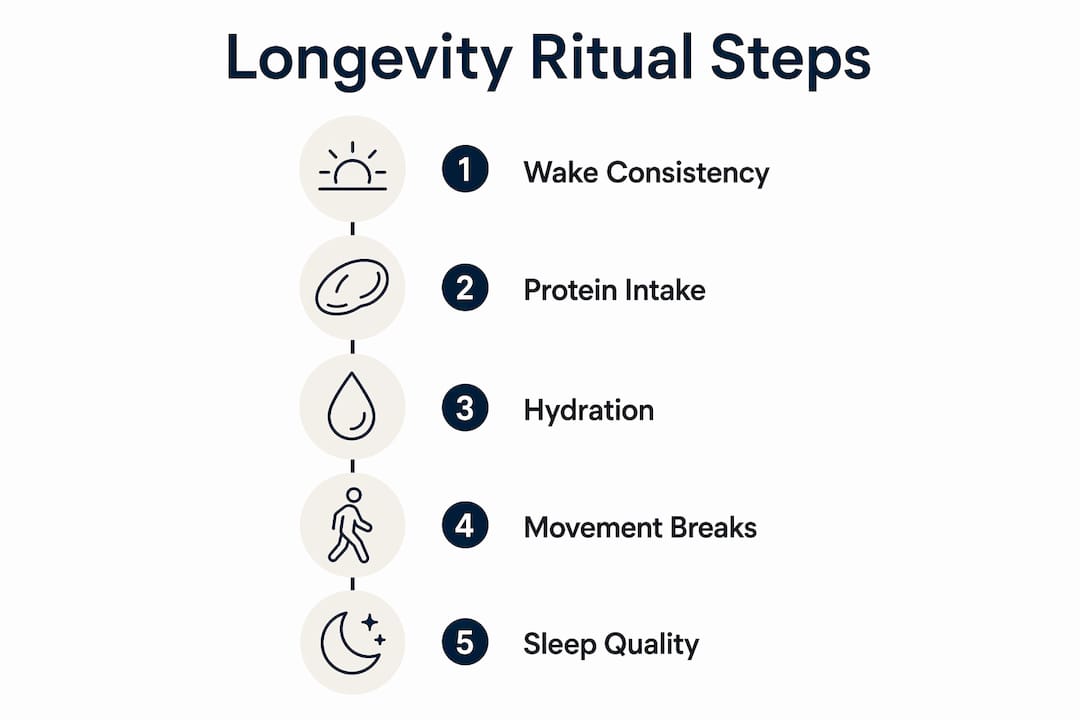
Adopt these eight daily rituals to materially raise your odds of a longer healthspan and sustained executive energy. The evidence behind them comes from CDC physical activity guidelines, Harvard Health, and Mayo Clinic — not from biohacking forums.
Your core daily checklist:
- Circadian priming: Bright light within 10 minutes of waking
- Rehydration: 300–500 mL water immediately after rising
- Brief morning movement: 5–15 minutes of mobility or a brisk walk
- Protein-forward breakfast: 25–40 g protein at your first meal
- Consistent wake time: Same time daily, including weekends
- Resistance training: Two or more sessions per week
- Social connection: One scheduled weekly slot for relationship maintenance
- Measured recovery: 7–8 hours sleep; sauna 2–4× weekly where available
TL;DR: The sections below give you a sample executive day, a metric checklist, and implementation tactics for each ritual. Read the morning and weekly sections first if time is short. See the full longevity checklist for men for a companion reference.
Table of Contents
- How does your morning ritual prime the body for the whole day?
- Daytime structure that keeps your performance steady through long workdays
- What does an effective evening wind-down actually look like?
- Which weekly practices deliver the highest longevity return?
- A realistic sample day for a busy executive
- What metrics should you track, and when will you see results?
- Common mistakes that undercut high-performers' routines
- What does the evidence actually say about these rituals?
- Key Takeaways
- Consistency beats complexity every time
- Viridos membership as a precision tool within your routine
- Useful sources for further reading
How does your morning ritual prime the body for the whole day?
A 20–45 minute circadian priming window after waking materially affects alertness, metabolic control, and energy stability for the hours that follow. The mechanism is the Cortisol Awakening Response (CAR): cortisol peaks 30–45 minutes post-waking and sets the hormonal tone for the day. You can support that peak deliberately, or let it dissipate into a screen-scroll.
The sequence that works:
- Wake at a fixed time. Consistency is more important than the specific time chosen.
- Get bright light exposure within 10 minutes — outdoors is best; a 10,000-lux light panel works on dark mornings.
- Drink 300–500 mL of water. Add a small electrolyte dose if you train within the next two hours.
- Move for 5–15 minutes: mobility drills, a brisk walk, or light resistance work.
- Eat a protein-forward first meal within 60–90 minutes of waking.
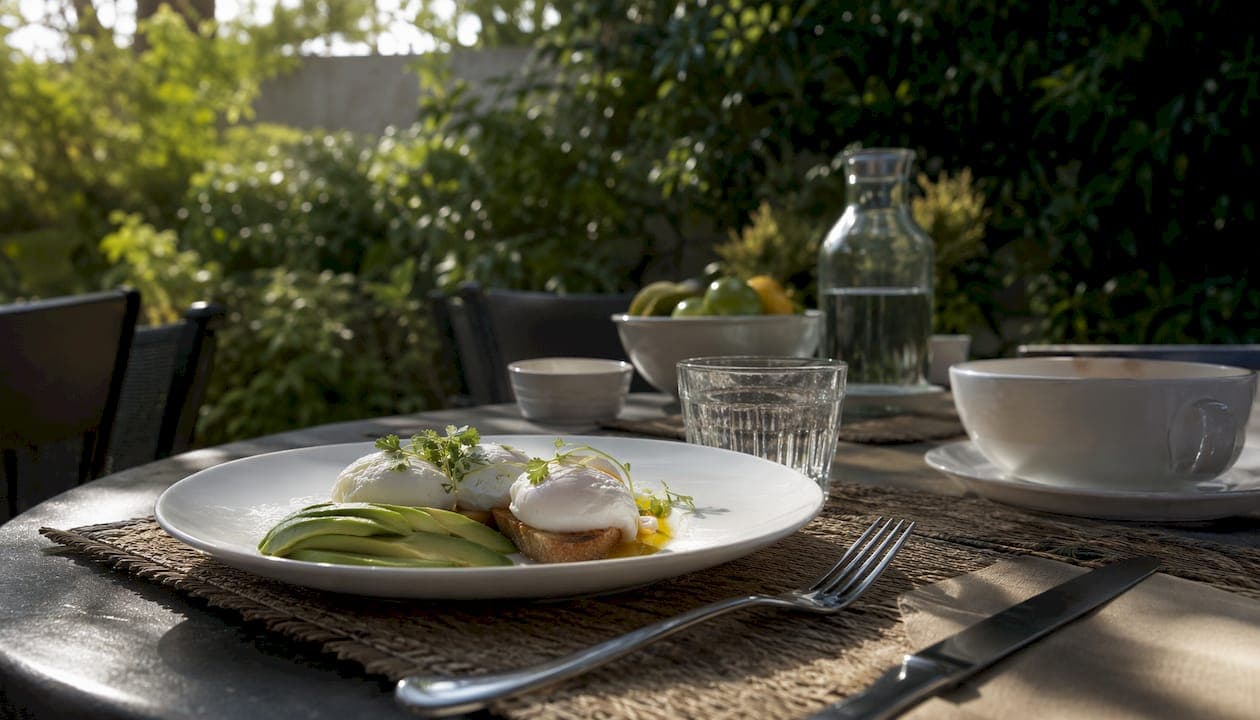
For breakfast, anchor adequate protein alongside fiber and healthy fats to blunt early glucose spikes. Practical options: Greek yogurt with berries and mixed seeds; two to three eggs with sautéed vegetables; a protein smoothie with greens and nut butter. Nutritional rituals for health built around protein adequacy at each meal compound over weeks into measurable metabolic resilience.
Pro Tip: Habit-stack your morning movement onto a fixed trigger — the moment your coffee starts brewing or immediately after brushing your teeth. Removing the decision removes the friction.
Daytime structure that keeps your performance steady through long workdays
Structured daytime rituals — timed movement breaks, protein-led meals, and deliberate hydration — sustain executive performance across a 10–12 hour workday far better than caffeine alone.

Work in 90–120 minute focused blocks. Every 60–90 minutes, take a 5–10 minute movement break: stand, walk the corridor, do a set of bodyweight squats. Walking meetings are not a wellness cliché; they are a practical tool for maintaining daily step counts without adding gym time.
Nutrition timing through the day:
- Anchor every meal with protein, fiber, and a healthy fat source.
- Avoid large refined-carbohydrate meals eaten alone — they produce the glucose spike and subsequent energy trough that kills afternoon focus.
- Aim for roughly consistent protein distribution across meals rather than front- or back-loading.
Hydration: Plain water handles most of the day adequately. For sessions exceeding 45 minutes of heavy exertion, add electrolytes for performance. Front-load caffeine in the morning and cut it by early afternoon to protect sleep architecture.
Pro Tip: Schedule two or three walking calls per day. A 30-minute walking call contributes meaningfully to your daily step target and requires zero additional time allocation.
What does an effective evening wind-down actually look like?
Consistent wake time and a brief pre-sleep wind-down are more influential on metabolic and cognitive health than marginally longer sleep hours. Harvard Health's five longevity pillars place sleep consistency alongside movement, nutrition, stress reduction, and social connection as non-negotiable foundations.
Evening checklist:
- Fix your wake time and work backward to a consistent bedtime targeting 7–8 hours.
- Reduce blue light 60–90 minutes before bed: dim screens, use warm lighting.
- Keep your bedroom at 62–68°F. Cool temperature accelerates sleep onset.
- Avoid alcohol within three hours of sleep and heavy meals within two hours.
- A brief wind-down practice — light stretching, reading, or box breathing — signals the nervous system to downshift.
"Keeping a consistent bedtime and wake-up time is essential for circadian rhythm and cortisol alignment. Many people go to bed late and sleep in on the weekends, but if you really want to improve your sleep, sticking with the same time every day is crucial." — Dr. Wood, Northwestern Medicine
Mayo Clinic guidance targets 7–9 hours for adults, with quality and consistency weighted above raw duration. Use melatonin for circadian misalignment — jet lag, shift changes — not as a nightly substitute for good sleep hygiene.
Which weekly practices deliver the highest longevity return?
A weekly structure combining resistance training two to three times and aerobic activity totaling 150 minutes of moderate or 75 minutes of vigorous intensity is the single highest-yield investment a middle-aged man can make in his long-term function. Stanford Medicine confirms that preserving muscle mass and bone density through resistance training and steady cardio reduces chronic disease risk materially for men in their 40s and 50s.
Sample weekly template:
| Day | Session |
|---|---|
| Monday | Strength (45–60 min) |
| Tuesday | Zone 2 cardio (30–45 min) |
| Wednesday | Strength (45–60 min) |
| Thursday | Zone 2 cardio or rest |
| Friday | Strength (45–60 min) |
| Saturday | Interval or VO2 session (20–30 min) |
| Sunday | Active recovery, long walk |
Target a daily step count in the range often recommended as a baseline, independent of structured sessions. For bone health and aging, weight-bearing work two to three times weekly is the primary protective lever.
Recovery and screening priorities:
- Sauna 2–4 sessions weekly where available; cold exposure is optional but well-tolerated by most.
- Annual or semi-annual labs: ApoB, fasting glucose, HbA1c, hs-CRP, and a lipid panel.
- Schedule one recurring weekly social slot — a call, a walk, or a shared meal. Social connection is among the strongest observational predictors of long-term brain health and emotional resilience in midlife.
A realistic sample day for a busy executive
This schedule integrates the core rituals without requiring a career change.
6:00 AM — Wake. Immediate bright light exposure (outdoors or light panel). Drink 400 mL water. 6:10 AM — 10 minutes of mobility or a short walk. 6:30 AM — Protein-forward breakfast: eggs, vegetables, and whole-grain toast, or Greek yogurt with seeds. 7:00–9:00 AM — First deep-work block. Phone on silent. 9:00 AM — 5-minute movement break. Stand, walk, stretch. 12:30 PM — Midday strength session (40–50 min) or Zone 2 run. Protein-anchored lunch after. 1:30–5:30 PM — Afternoon work blocks with walking calls where possible. 6:00 PM — Last caffeine cutoff has already passed. Dinner with protein, vegetables, and healthy fat. 9:00 PM — Screens down. Wind-down begins. 10:00 PM — Sleep.
Travel or heavy-meeting day substitutions:
- Hotel room: resistance bands, bodyweight circuit (20 min), and a 15-minute walk between sessions.
- Meeting-heavy day: replace gym session with three 10-minute walking breaks and a walking lunch.
- Daily targets to check: protein intake across meals, step count above 7,000, and a midday energy self-rating (1–5 scale).
For a deeper framework on optimizing daily routines around executive schedules, the Viridos blog covers scheduling architecture in detail.
What metrics should you track, and when will you see results?
Expect sleep quality and daily energy improvements within 1–3 weeks of consistent practice. Body composition and lipid shifts typically emerge in 8–16 weeks. Hard vascular markers take longer.
| Metric | Earliest change | Tracking cadence |
|---|---|---|
| Sleep consistency | 1–2 weeks | Weekly (self-report) |
| Resting HR / HRV | 2–4 weeks | Daily (wearable) |
| Body weight / waist | 4–8 weeks | Monthly |
| Fasting glucose / HbA1c | 8–12 weeks | Quarterly (lab) |
| ApoB / lipid panel | 12–16 weeks | Semi-annual (lab) |
| VO2 max proxy | 8–16 weeks | Quarterly (field test) |
Priority biomarkers for midlife longevity planning: ApoB, fasting insulin, HbA1c, and hs-CRP. Periodic DEXA scans and VO2 max testing add performance context once the basics are consistent.
Minimal tracking checklist for executives:
- Weekly: sleep/wake consistency, active minutes, step count.
- Monthly: body weight, waist circumference, subjective energy trend.
- Quarterly: blood panel including ApoB and fasting glucose.
Common mistakes that undercut high-performers' routines
The most common error is inconsistent basics — irregular sleep, inadequate protein, and skipped resistance sessions — followed by over-investing in speculative hacks before the fundamentals are locked.
Frequent mistakes:
- Irregular wake times on weekends, which fragment circadian rhythm across the week.
- Under-eating protein, particularly at breakfast and lunch.
- All-or-nothing training: missing one week and abandoning the schedule entirely.
- Skipping resistance work in favor of cardio only.
- Excessive alcohol, particularly late-evening, which fragments sleep architecture.
- Excessive evening screen time delaying sleep onset.
Red flags that warrant attention:
- Persistent daytime fatigue despite seven-plus hours of sleep.
- Declining strength numbers over four or more weeks.
- Rising fasting glucose on consecutive quarterly labs.
- Frequent sleep fragmentation or early waking.
Smoking and binge drinking are the two lifestyle behaviors with the clearest dose-dependent negative impact on healthspan. No supplement stack offsets either. Address them before optimizing anything else.
If red flags persist beyond two to four weeks, review primary metrics and consult a physician. A professional's guide to personal vitality covers the diagnostic framework for executives in more detail.
What does the evidence actually say about these rituals?
These rituals align directly with CDC physical activity guidelines, Harvard Health's five longevity pillars, and Mayo Clinic's healthy aging recommendations. The convergence across independent institutions is the signal.
Primary evidence anchors:
- CDC / ODPHP: 150 min moderate or 75 min vigorous aerobic activity weekly; resistance training at least twice weekly.
- Harvard Health: Five pillars — movement, nutrition, sleep, stress reduction, social connection — with consistent wake time weighted above total sleep quantity.
- Mayo Clinic: 7–9 hours sleep, regular physical activity, high-fiber whole-food diet for healthy aging.
- Stanford Medicine: Resistance training and cardio for muscle and bone preservation in midlife men.
- RecoveryStack longevity protocol: Zone 2 cardio, strength three times weekly, protein adequacy, and targeted biomarker testing as the realistic high-leverage stack.
The evidence does not support exotic biohacks as a substitute for foundational habits. Sleep consistency, protein adequacy, and structured exercise produce the largest and most reliable effects — physical interventions outperform digital-only wellness tools for stress resilience in high-agency professionals.
Viridos is designed as a precision adjunct within this framework, not a replacement for it. Small-batch Swedish production and a controlled membership model reflect the same discipline the rituals themselves require.
Key Takeaways
Consistent execution of sleep, protein, and structured exercise delivers more measurable longevity benefit than any supplement or biohack introduced before those three are stable.
| Point | Details |
|---|---|
| Fix your wake time first | Consistent wake time, including weekends, is the highest-leverage sleep intervention. |
| Hit 25–40 g protein per meal | Protein adequacy at each meal supports muscle preservation and metabolic stability. |
| 150 min aerobic + 2× strength weekly | This is the CDC-backed minimum that produces measurable longevity benefit for middle-aged men. |
| Track ApoB and fasting glucose quarterly | These two biomarkers give the earliest objective signal of metabolic and cardiovascular trajectory. |
| Viridos membership as a disciplined adjunct | After foundational habits are consistent, Viridos precision supplementation supports sustained executive performance. |
Consistency beats complexity every time
The men who sustain performance into their 50s and 60s are not the ones with the most sophisticated supplement protocols. They are the ones who protect their sleep window, train twice a week without exception, and eat enough protein at every meal. That discipline is the foundation.
Gadget-chasing and exotic stacks are seductive because they feel like progress without requiring the harder work of behavioral consistency. They rarely are. The longevity research is unambiguous: physical interventions — structured movement, sleep architecture, social patterns, and daylight exposure — produce larger and more reliable effects than most digital wellness tools or one-off biohacks.
Supplements belong in the picture, but only after the fundamentals are locked. Introducing a precision formulation into a chaotic routine is like adding a high-performance fuel to an engine running on poor maintenance. The sequence matters.
Viridos membership as a precision tool within your routine
Viridos is built for men who have already done the work on the fundamentals and want a disciplined, precision adjunct to support sustained drive, clarity, and vitality. The Viridos Performance Journal is designed to track the exact metrics this guide covers — sleep consistency, daily protein, training sessions, and weekly energy ratings — so your routine stays measurable and accountable.
The Viridos membership operates on a controlled-access model: approved members receive small-batch, precision-formulated oral spray supplements produced in Sweden, with a delivery method designed for biological relevance. This is not a mass-market product. It is a considered tool for men who take their performance seriously and want consistent support within a disciplined system.
If your foundational habits are in place and you want to explore what precision supplementation adds, apply for membership and see whether Viridos fits your protocol.
Useful sources for further reading
The sources below are the primary references behind this guide. Each covers a distinct pillar of the longevity framework.
- CDC Healthy Aging — Physical activity, nutrition, mental functioning, and social well-being guidelines for healthy aging in the U.S.
- Harvard Health — Pathways to Longevity — Comprehensive evidence review covering diet, movement, sleep, stress, and social connection.
- Harvard Health — Five Pillars of Longevity — The five-pillar framework with emphasis on sleep consistency and metabolic health.
- Mayo Clinic — Healthy Aging — Practical guidance on sleep, activity, and diet for middle-aged adults.
- Stanford Medicine — Healthy Habits for Longevity in Your 40s and 50s — Muscle preservation, bone density, and preventive screening for midlife men.
- RecoveryStack — Longevity Protocol — Realistic daily routine framework covering Zone 2 cardio, strength, protein targets, and biomarker testing.
Prioritize the fundamentals in this guide before investing in advanced testing or supplementation. The evidence consistently points in the same direction: sleep, movement, and nutrition first.
This article is general information, not medical advice. Confirm any health, screening, or supplementation decisions with a qualified physician for your specific situation.