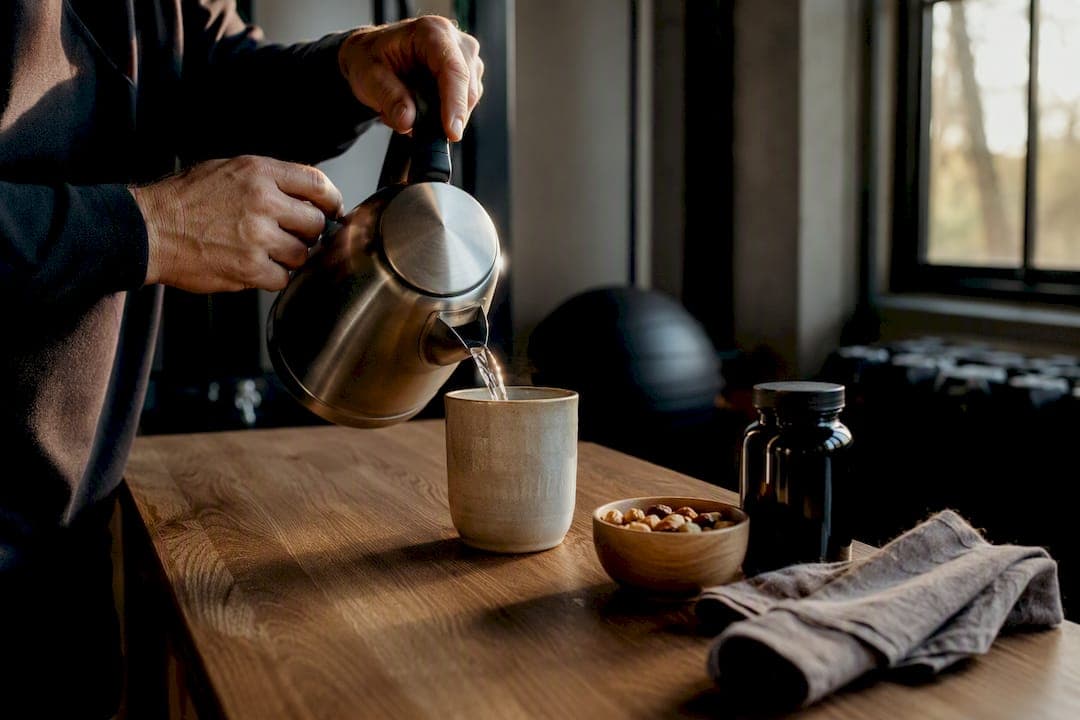
Restore alertness quickly with three moves: stand and walk for several minutes, drink some water, then eat a protein-containing snack. That sequence interrupts the early-afternoon dip in blood glucose and arousal that hits most adults between 2:00 and 3:00 PM. The dip itself traces to a well-documented biological rhythm, not weak discipline, and the fix has two layers: what you do right now, and what you build into your week so the dip stops arriving with the same force.
- Stand up and walk for 5 minutes, ideally outdoors in daylight
- Drink 250ml of water immediately
- Eat a snack that includes protein, such as Greek yogurt, nuts, or hummus with vegetables
Pro Tip: Keep a protein snack at your desk before noon. Waiting until the dip hits to plan your response costs you the ten minutes you need to act on it.
Key Takeaways
The afternoon dip is a predictable biological rhythm, not a discipline failure, and it responds reliably to movement, hydration, protein-forward meals, timed caffeine, and short naps taken before 3:00 PM.
| Point | Details |
|---|---|
| Act within minutes | Walk for 5 to 10 minutes, drink 250ml water, and eat a snack with 5g+ protein. |
| Build lunches around protein | Target a reasonable protein intake per main meal to blunt the post-lunch glucose crash. |
| Set a caffeine cutoff | Avoid caffeine intake late in the day to protect that night's sleep quality. |
| Nap short and early | Cap naps at 10 to 20 minutes and finish before 3:00 PM to avoid sleep inertia. |
| Consider a disciplined adjunct | Viridos offers a small-batch Swedish sublingual formula for men who have already built the lifestyle foundation and want additional support. |
Table of Contents
- Why the Eftermiddagsdip Solution Works: The Science Behind It
- What Can You Do Right Now to Beat the Slump?
- Which Foods Actually Prevent the Post-Lunch Crash?
- Should You Drink Coffee to Fight the Afternoon Dip?
- How Long Should a Power Nap Be to Help, Not Hurt?
- What Daily Habits Reduce Afternoon Dips Long Term?
- When Does Afternoon Fatigue Signal Something More Serious?
- What Does the Research Actually Say About the Afternoon Dip?
- An Adjunct Worth Considering for Sustained Performance
- Sources
Why the Eftermiddagsdip Solution Works: The Science Behind It
Your body runs on more than a 24-hour clock. Researchers call the secondary dip in alertness a circasemidian rhythm, a twice-daily pattern layered on top of your main circadian cycle. It shows up reliably in the early afternoon regardless of how well you slept the night before, though poor sleep, a heavy lunch, dehydration, and a sedentary morning all deepen it.
The trough in alertness typically lasts a limited period and occurs regardless of lunch timing, which is why the same executive can feel sharp at an earlier afternoon time and foggy a little later without having done anything differently.
The NIOSH module on circadian rhythms frames this window, roughly 2:00 to 3:00 PM, as a predictable low point in human alertness cycles. A lunch heavy in refined carbohydrates amplifies the crash; a lunch built around protein and fiber blunts it, according to Johns Hopkins Medicine.
What Can You Do Right Now to Beat the Slump?
Sequence matters. If you're dehydrated, water comes first. If you're not, movement or light exposure works faster.
- Drink a glass of water immediately (especially if you skipped hydration since lunch)
- Take a 5 to 10 minute walk, outside if possible, to combine movement with bright light
- Stretch for 1 to 2 minutes at your desk if you can't leave (shoulder rolls, hamstring stretch, standing back extension)
- Splash cold water on your face or wrists for a 2 minute reset
- Step near a window or step outside for 5 minutes of bright light exposure
- Do a 2 minute breathing drill, four seconds in, six seconds out, to lower stress-driven fatigue
- Stand and do isometric holds (wall sit, calf raises) if you're desk-bound in back-to-back meetings
Movement and bright light are the two fastest levers you have, according to Rush University Medical Center, which found that brief aerobic activity or a few minutes outdoors reliably lifts alertness within minutes.
- If back-to-back calls prevent a walk, stand for the entire call and shift weight between feet
- Isometric moves work at your desk with zero equipment
Pro Tip: Set a recurring calendar block at 1:45 PM labeled "reset." A five-minute walk you plan for beats one you never get around to.
Which Foods Actually Prevent the Post-Lunch Crash?
The lunch you eat at noon determines how hard the dip hits at two. Meals heavy in refined carbohydrates, white bread, pasta, sugary drinks, can cause a rapid rise and subsequent drop in blood glucose, which also affects alertness. A lunch built around protein, fiber, and healthy fats slows that curve and keeps you level for hours, a pattern Cleveland Clinic has documented in its guidance on natural energy management.

Aim for a moderate amount of protein at lunch and at least some protein in any afternoon snack. Pair carbohydrates with protein or fat rather than eating them alone, and favor low-to-moderate glycemic-index carbs, lentils, quinoa, oats, over white rice or white bread.
| Meal or Snack | What It Delivers |
|---|---|
| Grilled chicken, quinoa, roasted vegetables | protein, fiber, moderate-GI carbs |
| Greek yogurt with almonds | ~15g protein, healthy fat, minimal sugar spike |
| Hummus with carrot and cucumber sticks | ~6g protein, fiber, low glycemic load |
| Salmon, lentils, mixed greens | protein, fiber, omega-3 fats |
| Apple with a handful of walnuts | ~5g protein, fiber slows sugar absorption |
| Cottage cheese with berries | protein, low sugar impact |
Clinicians interviewed by Verywell Mind specifically warn against reaching for candy, pastries, or energy drinks as a quick fix. The insulin spike that follows a sugar hit produces a sharper crash than the one you started with.
Pro Tip: Eat vegetables and protein before any carbohydrate on your plate. Sequencing food this way slows the glucose rise that triggers the crash later.
Should You Drink Coffee to Fight the Afternoon Dip?
Caffeine works, but timing determines whether it helps tomorrow or sabotages it. A cup after 2:00 or 3:00 PM can still be in your system at bedtime, degrading sleep quality even when you don't consciously feel "wired." A review published in PMC confirms caffeine is genuinely effective for short-term alertness, but late or excessive intake creates a cycle: worse sleep tonight produces a worse dip tomorrow.
- Set a personal cutoff, generally no caffeine after 2:00 PM
- If you need a boost later, choose tea over a second coffee or an energy drink
- Split your intake earlier in the day rather than loading it all before noon
Individual sensitivity varies widely, so treat your cutoff as a starting point, then adjust based on how you sleep.
How Long Should a Power Nap Be to Help, Not Hurt?
A short nap is one of the most effective tools you have, if you keep it inside a narrow window. BBC Science Focus reports that naps of roughly 10 to 20 minutes, taken before 3:00 PM, restore alertness without producing the grogginess or nighttime sleep disruption longer naps cause.
- Set an alarm for 20 minutes before you close your eyes
- Nap before 3:00 PM to avoid interfering with nighttime sleep
- Build in a 5 minute wake buffer before your next task to shake off any residual grogginess
Pro Tip: If a nap isn't practical in your role, a 15 minute walk delivers a comparable alertness lift without the optics of sleeping at your desk.
What Daily Habits Reduce Afternoon Dips Long Term?
The dip you feel today reflects choices made over the past week, not just the past hour. Consistent sleep, 7 to 9 hours on a fixed schedule, reduces the depth of the circasemidian trough more reliably than any single afternoon tactic. Our guide on sleep hygiene and executive performance covers the specific routine adjustments that matter most for high-responsibility schedules.
- Take a 10 to 15 minute walk after lunch daily, not just when you feel the crash coming
- Break up long sitting blocks with brief "exercise snacks," a few minutes of movement every hour
- Get bright daylight exposure in the morning to anchor your circadian rhythm
- Schedule routine, low-cognitive tasks for the 2:00 to 3:00 PM window instead of fighting it with high-stakes work
- Practice a brief stress-reduction technique daily; chronic stress amplifies fatigue independent of sleep
Building recovery and discipline into your executive routine compounds over months in a way no single afternoon fix can match.
Pro Tip: Protect your highest-focus hours by moving email and admin work into the dip window. You lose less by working at 70 percent capacity on routine tasks than by forcing peak-focus work through a trough.
When Does Afternoon Fatigue Signal Something More Serious?
Most afternoon dips are normal biology. Persistent, severe daytime sleepiness despite consistent sleep is not, and it deserves medical attention rather than another lifestyle adjustment.
- Excessive sleepiness despite 7 to 9 hours of sleep most nights
- Loud snoring, gasping, or witnessed pauses in breathing during sleep
- Rapidly worsening fatigue over weeks with no clear cause
- Unexplained weight change alongside persistent tiredness
- Fatigue that started or worsened after beginning a new medication
Bring a short log of your sleep duration and daytime sleepiness frequency to a primary care visit; it speeds up screening for conditions like sleep apnea, thyroid disorders, or anemia.
What Does the Research Actually Say About the Afternoon Dip?
The circasemidian rhythm is well established: alertness dips in a predictable window, generally lasting a couple of hours, independent of what you ate for lunch, according to NIOSH. The practical numbers worth memorizing:
- Naps: 10 to 20 minutes, taken before 3:00 PM
- Protein: 20 to 35g at main meals, at least 5g per snack
- Caffeine: personal cutoff around 2:00 PM, moderation over volume
- Movement: brief walks or exercise snacks every hour outperform one long workout
These figures come from a consistent body of guidance across Johns Hopkins Medicine, Cleveland Clinic, and BBC Science Focus, and they hold up regardless of profession or age.
A Perspective on Discipline and the Afternoon Dip
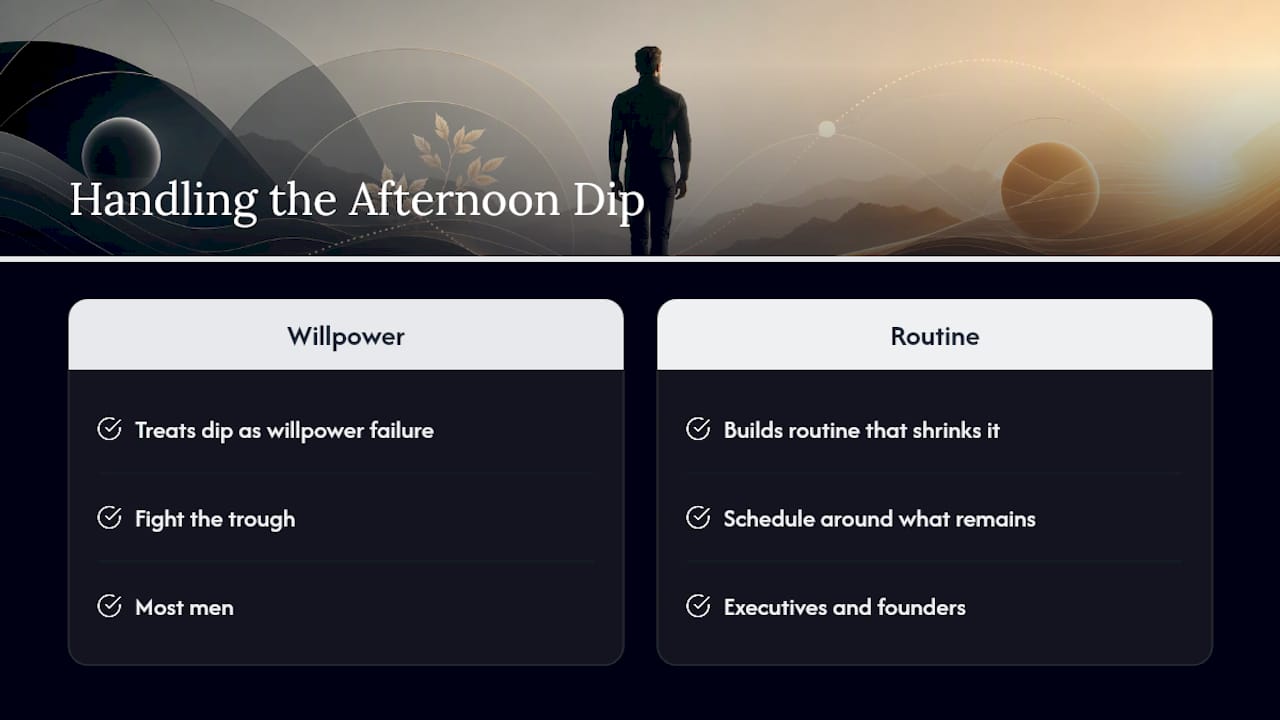
Most men treat the afternoon dip as a willpower failure. It isn't. The men who handle it best don't fight the trough, they build a routine that shrinks it and schedule around what remains. This applies most directly to executives and founders whose calendars don't bend for biology. It rewards the same disciplined structure Viridos writes about in sustained energy for executives.
An Adjunct Worth Considering for Sustained Performance
Lifestyle discipline, sleep, protein-forward meals, timed movement, and smart caffeine use forms the foundation of any real solution to the afternoon dip. No supplement replaces that foundation. For men who have already built the routine and want a precision-formulated adjunct to support drive and clarity through demanding afternoons, Viridos offers a sublingual spray developed and produced in small batches in Sweden, with strict production standards behind every cohort.

The production-Sweden page details the manufacturing precision behind each batch, built for men who apply the same standards to their own routines that they demand from their teams. If sustained performance and vitality are part of your long-term strategy, review the longevity performance strategy page to see how membership access works and whether it fits your current routine.
Sources
- NIOSH — Work Hours and Sleep (module excerpt on circadian rhythms)
- Caffeine review (PMC)
- Natural energy boosters to battle afternoon slump — Cleveland Clinic newsroom
- Overcoming your midafternoon energy slump — Johns Hopkins Medicine
This article is general information, not a substitute for advice from a qualified doctor. Consult a qualified healthcare professional about your own circumstances before acting on anything here.