
The fastest, most reliable way to strengthen mitochondria naturally is consistent Zone 2 endurance training paired with resistance work, disciplined sleep, controlled eating windows, and a polyphenol-rich diet, with supplements like CoQ10 or creatine layered in only after those fundamentals hold. Clinician guidance and NIH research both point to exercise as the strongest single lever. Expect early energy and recovery shifts within two to four weeks, with measurable gains in performance markers building over two to three months.
TL;DR:
- Consistent Zone 2 endurance training and resistance work are crucial to naturally increasing mitochondrial density and supporting long-term performance gains.
- Incorporating polyphenol-rich foods and time-restricted eating enhances mitochondrial health by providing raw materials and triggering cellular quality-control processes.
- Supplements like CoQ10, PQQ, creatine, and NAD+ precursors can support mitochondrial function but should only be introduced after two to three months of disciplined exercise, sleep, and diet.
- Sleep quality and regularity are essential for mitochondrial repair, with targeted practices such as cool, dark bedrooms and morning sunlight being highly effective.
- Environmental toxin reduction and moderate cold exposure further optimize mitochondrial resilience through minimized chemical stress and hormetic adaptations.
Table of Contents
- Exercise Protocols That Build Mitochondrial Density
- What Foods Actually Support Mitochondrial Function?
- Which Supplements Actually Support Mitochondria?
- How Does Sleep Affect Mitochondrial Repair?
- How Stress and Overeating Undermine Mitochondrial Efficiency
- A 30-Day Starter Plan for Mitochondrial Health
- The VIRIDOS View on Executive Mitochondrial Health
- Impact of Environmental Toxins on Mitochondrial Health
- Effect of Cold Exposure and Thermogenesis on Mitochondria
- Mitochondrial-Targeted Therapies and What's on the Horizon
- Author's Take: Realistic Expectations and Cautions
- Precision Support for a Long-Term Performance Program
- Sources
- FAQ
Exercise Protocols That Build Mitochondrial Density
Exercise remains the most potent trigger for mitochondrial biogenesis, the process by which cells generate new mitochondria in response to demand. It works by activating PGC-1α, a protein that switches on genes governing mitochondrial replication. Per Andersson notes that continuous, moderate-intensity aerobic work performed several times a week is the most effective stimulus, though gains plateau past an optimal dose and short sedentary stretches can quietly erode function.
For a demanding schedule, the protocol breaks down cleanly:
- Zone 2 training: sessions weekly at a pace where conversation stays comfortable. This builds mitochondrial density over time.
- HIIT: One or two short sessions weekly to push capacity beyond what steady-state work achieves, as BodySpec's research confirms.
- Resistance training: regular sessions to preserve muscle mass, which houses a significant share of the body's mitochondrial volume.
- Daily movement: Brief walks or stair intervals between meetings counter the metabolic cost of prolonged sitting.
Men managing existing cardiovascular conditions or returning from a long training layoff should calibrate intensity with a physician before adding HIIT. For further detail on sequencing endurance and interval work without burning out a packed week, see advanced strategies for executives.
What Foods Actually Support Mitochondrial Function?
Diet shapes mitochondrial health through two channels: raw materials for energy production and protection against oxidative damage. A 2025 narrative review finds that dietary polyphenols modulate mitochondrial pathways including SIRT1, PGC-1α, and AMPK, supporting the cellular quality-control process known as mitophagy, though the authors caution that human evidence is still constrained by bioavailability and inconsistent biomarkers.
Practical food choices matter more than any single "superfood":
- Extra-virgin olive oil, berries, and dark leafy greens for polyphenol density.
- Fatty fish like salmon or mackerel twice weekly for omega-3s, which support mitochondrial membrane integrity.
- Nuts and legumes for magnesium, a cofactor in over 300 enzymatic reactions including ATP synthesis.
- Whole grains and dark chocolate (70%+ cacao) for additional polyphenol variety.
Pairing matters: Gesundefakten's research points out that combining water-soluble antioxidants like vitamin C with fat-soluble ones like CoQ10 offers broader protection across the mitochondrial environment than either alone.
Time-restricted eating, such as a 12:12 or 16:8 window, gives cells a genuine energy deficit. The NIH's coverage notes that this kind of metabolic fasting triggers the quality-control processes that clear damaged mitochondria. Treat it as a maintenance tool, not a weight-loss tactic. Whole foods should always come first. Isolated compounds rarely replicate what a varied, polyphenol-rich plate delivers, largely because bioavailability drops sharply outside a food matrix. For a deeper framework on sequencing meals around training and work demands, review nutrition strategies for performance.
Which Supplements Actually Support Mitochondria?
Supplements belong after lifestyle fundamentals are in place, not before them. MitoHacker's synthesis of Zone 2 training, resistance work, and supplement research lists a handful of compounds with genuine mechanistic backing:
- CoQ10 (ubiquinol form): Supports the electron transport chain; may help men with statin use or age-related decline in endogenous production.
- PQQ: Preliminary signal for stimulating new mitochondrial growth, though human trials remain limited.
- Creatine: Among the best-studied compounds for cellular energy buffering, with a strong safety record.
- NAD+ precursors (NMN, NR): Early-stage evidence on restoring cellular NAD+ pools; a 2014 preclinical study on resveratrol's effect on SIRT1 and PGC-1α shows a similar mechanistic pattern that has not yet fully translated to human biomarkers.
Pro Tip: Start supplementation only after two to three months of consistent training and sleep discipline. Introduce one compound at a time, at the low end of the studied dose, and discuss it with a physician if you take other medications. For a broader look at which vitamins matter most for this age group, see top vitamins for male executives.
How Does Sleep Affect Mitochondrial Repair?
Sleep is when the bulk of cellular repair, including mitochondrial maintenance, actually happens. Target 7 to 9 hours on a consistent schedule, even across time zones. Irregular sleep undermines the circadian signaling that governs mitochondrial turnover.
- Keep the bedroom cool, fully dark, and free of screens for at least 30 minutes before lights out.
- Get 10 minutes of morning sunlight to anchor your circadian rhythm and improve evening sleep onset.
- Track HRV if you already use a wearable; rising resting heart rate or falling HRV often signals under-recovery before fatigue sets in.
- Use sauna or cold exposure deliberately, not as a substitute for sleep, but as a complementary hormetic stress once rest is solid.
How Stress and Overeating Undermine Mitochondrial Efficiency
Chronic stress keeps cortisol elevated, and sustained cortisol exposure increases oxidative load on mitochondrial membranes. Combine that with constant snacking, which never gives cells the energy deficit needed to clear damaged mitochondria, and the system stays under low-grade strain indefinitely.
- Build a 5 to 10 minute daily breathing practice, ideally paired with HRV feedback if available, before your first meeting.
- Schedule two or three micro-breaks daily, even 90 seconds away from a screen, to interrupt sustained cortisol elevation.
- Close the kitchen after dinner. Continuous grazing blocks the metabolic signals that training and sleep are trying to reinforce.
These three habits compound with exercise and sleep rather than compete with them. A rested, disciplined system extracts more benefit from every training session.
A 30-Day Starter Plan for Mitochondrial Health
- Week 1: Fix sleep timing first. Lock a consistent wake time and add three 30-minute Zone 2 sessions.
- Week 2: Add two resistance sessions. Introduce a 12-hour eating window if you currently eat later than 8 p.m.
- Week 3: Extend Zone 2 to four sessions weekly and tighten the eating window to 14 or 16 hours if tolerated well.
- Week 4: Evaluate. If sleep, energy, and training performance are trending up, consider adding one supplement at a conservative dose.
Pro Tip: Track three markers only: morning energy on a 1 to 10 scale, resting heart rate, and how you feel 20 minutes into your hardest weekly session. Overcomplicating tracking is the fastest way to abandon the plan. Travel weeks call for a floor, not perfection: one Zone 2 session, consistent sleep timing, and a 12-hour eating window are enough to hold ground until your schedule normalizes. For habit-formation tactics suited to frequent travel, see tips for sustained vitality.
The VIRIDOS View on Executive Mitochondrial Health
Precision matters as much in daily practice as in formulation. Viridos was built on the same principle: small-batch Swedish production, exact dosing, and a philosophy that consistency beats intensity. For men managing demanding calendars, that means treating recovery discipline as seriously as any board decision, a theme explored further in building recovery discipline for executive performance.
Impact of Environmental Toxins on Mitochondrial Health
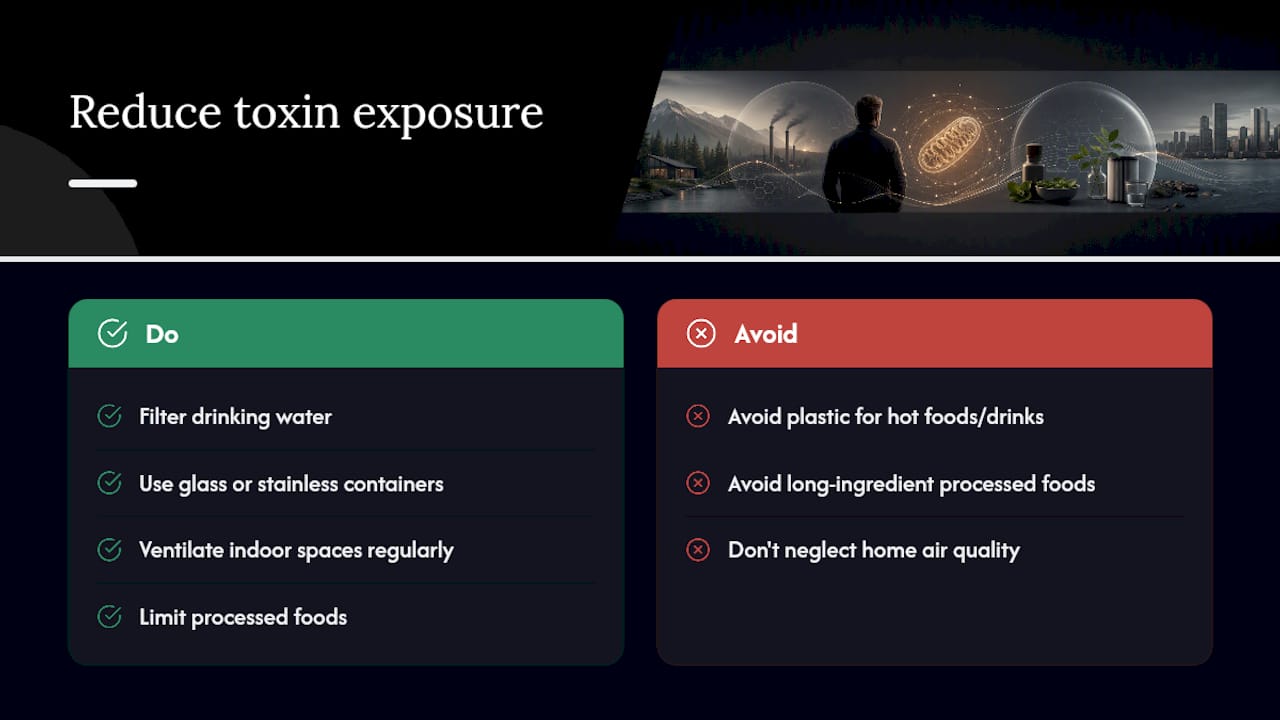
Environmental toxins impose a quiet, cumulative burden on mitochondrial function. Heavy metals, certain pesticide residues, and airborne particulate matter interfere with the electron transport chain and increase oxidative stress, forcing mitochondria to work harder for the same output.
Exposure reduction does not require an overhauled lifestyle. It requires a handful of consistent choices:
Filter drinking water where local supply quality is uncertain, particularly for heavy metals and chlorination byproducts. Choose glass or stainless steel over plastic for food storage and hot beverages, since heat accelerates the leaching of certain plastic compounds. Ventilate indoor spaces regularly, especially in older buildings where off-gassing from furnishings and finishes can accumulate. Limit processed foods with long ingredient lists, since some preservatives and packaging chemicals carry their own oxidative burden.
None of this demands obsessive avoidance. The goal is reducing baseline load so that mitochondria are not fighting a constant low-grade chemical stress on top of the metabolic demands of a full professional life. Men who travel frequently or work in industrial or high-pollution environments may benefit from paying closer attention to indoor air quality at home, since that is one exposure point fully within their control.
Effect of Cold Exposure and Thermogenesis on Mitochondria
Cold exposure activates a specific kind of mitochondrial adaptation tied to thermogenesis, the process of generating heat. Brief, controlled cold stress, whether through cold showers, cold plunges, or outdoor exposure in winter, prompts the body to recruit brown and beige fat tissue, which is dense with mitochondria built specifically for heat production rather than ATP storage.
This is a hormetic stressor: a controlled, moderate challenge that triggers adaptive signaling rather than damage. The same AMPK and PGC-1α pathways activated by exercise respond to cold exposure, which is why the two are often discussed together as complementary levers.
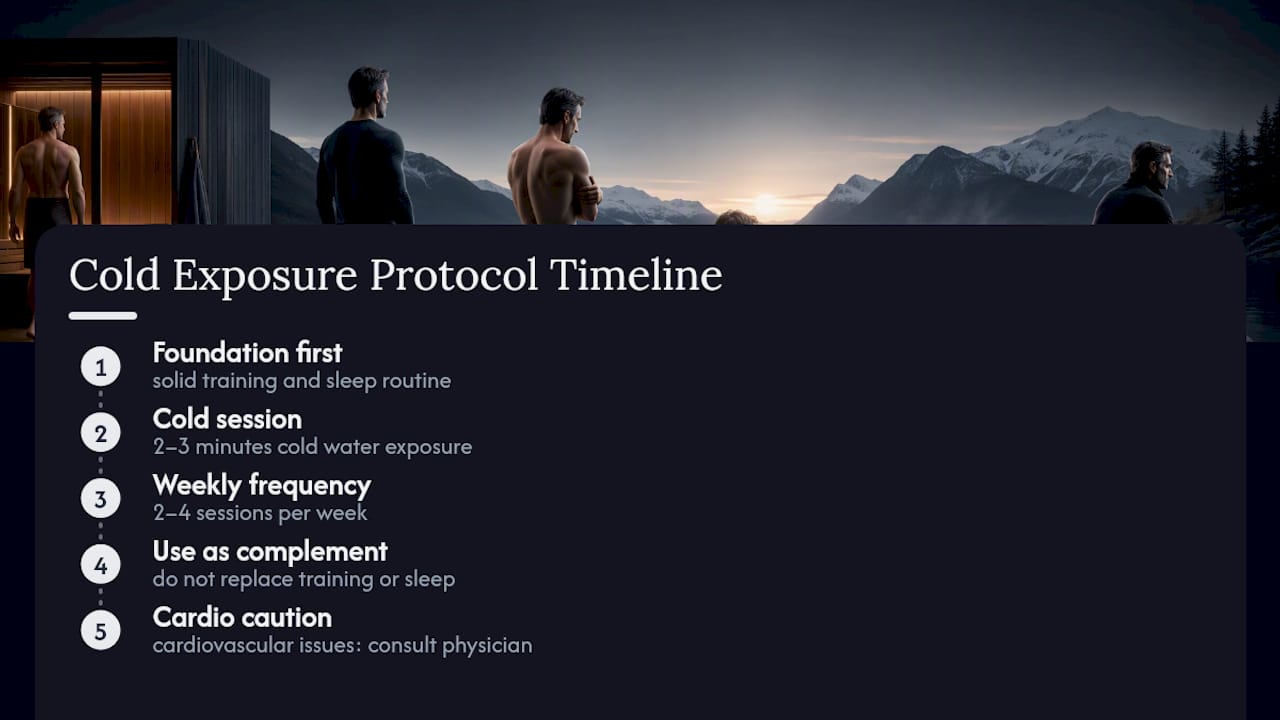
Practical application stays simple. Two to three minutes of cold water exposure, two to four times weekly, is enough to provide a stimulus without adding meaningful physiological strain for most healthy adults. Men with cardiovascular conditions should treat cold exposure with the same caution applied to high-intensity exercise and confirm with a physician before starting. Cold exposure works best as a complement to a solid training and sleep foundation, not as a substitute for either. Layering it onto an already inconsistent routine adds stress without the recovery capacity to benefit from it.
Mitochondrial-Targeted Therapies and What's on the Horizon
Research into compounds and interventions that act directly on mitochondrial pathways continues to expand, though most remain in early clinical stages rather than established practice. Urolithin A, a gut-derived metabolite of certain polyphenols, has drawn particular interest for its role in mitophagy, the selective clearance of damaged mitochondria.
Emerging research also explores mitochondrial transplantation and peptide therapies aimed at directly restoring function in damaged tissue, though these remain largely confined to specialized clinical and research settings rather than general use. For the disciplined professional optimizing long-term performance today, the practical takeaway is patience: the fundamentals covered here, exercise, sleep, nutrition, and stress management, carry the most robust evidence and the most immediate, controllable impact. Targeted therapies may eventually complement that foundation, but they do not yet replace it. Staying informed without chasing every emerging compound is itself a form of discipline.
Author's Take: Realistic Expectations and Cautions
Nothing here works overnight, and skepticism toward anything promising fast results is warranted. The fundamentals, trained consistently, outperform any shortcut. If you carry a complex medical history, loop in a physician before making major changes. Track your markers honestly, adjust, and give the process the months it actually needs.
— Joakim
Precision Support for a Long-Term Performance Program
Lifestyle fundamentals build the foundation; precision support helps sustain it once the discipline is in place. Viridos offers a plant-derived performance supplement delivered as a precision oral spray, built through small-batch Swedish production and available through a controlled membership rather than open retail. That structure exists for a reason: consistency and quality control matter more than volume when the goal is sustained performance over years, not a single season.

Membership is available at two tiers. Plan details and pricing are provided on the pricing page. Neither replaces the training, sleep, and nutrition work outlined above. Both are designed to complement it for men who have already committed to the fundamentals and want a precision layer on top. If disciplined, long-term performance support fits where you are headed, review the plans and apply for membership through the pricing and membership page.
This article is general information, not a substitute for advice from a qualified doctor. Consult a qualified healthcare professional about your own circumstances before acting on anything here.
Sources
- Träna dina mitokondrier och öka immunförsvar och flås | MåBra
- Mitochondria and health | National Institutes of Health (NIH)
- Polyphenols in mtDNA Repair, Mitochondrial Biogenesis, and Mitophagy: An Integrative Review
- How to Optimize Your Mitochondria | MitoHacker
FAQ
How do you increase mitochondria naturally?
Consistent Zone 2 endurance training combined with resistance work is the most effective way to increase mitochondrial density, since it directly activates the PGC-1α pathway responsible for mitochondrial biogenesis, as Per Andersson notes. Sleep, a polyphenol-rich diet, and time-restricted eating windows reinforce that stimulus. Supplements can support the process but do not replace it.
Which supplements are good for mitochondria?
CoQ10, PQQ, creatine, and NAD+ precursors like NMN or NR carry the strongest mechanistic support among commonly used compounds, according to practitioner summaries. They work best layered onto an established foundation of exercise and sleep rather than used in isolation. The precision supplement approach reflects the principle of quality formulation as a secondary layer, not a replacement for lifestyle fundamentals.
What are the symptoms of mitochondrial dysfunction?
Persistent fatigue, slow recovery after exercise, and reduced exercise tolerance are common signs that mitochondrial function may be underperforming. Cognitive fog and unexplained muscle weakness can also appear when cellular energy production is compromised. These symptoms overlap with many other conditions, so a physician should evaluate persistent or severe cases rather than attributing them to lifestyle alone.
How long does it take to see mitochondrial improvements?
Early shifts in energy and recovery often appear within two to four weeks of consistent training and sleep discipline. More measurable performance gains typically build over two to three months as mitochondrial density and efficiency improve with sustained stimulus.
Does intermittent fasting help mitochondrial function?
Time-restricted eating creates an energy deficit that triggers mitophagy, the process that clears damaged mitochondria, according to NIH research. A 12:12 or 16:8 eating window is a reasonable starting point for most healthy adults. It works best framed as a metabolic maintenance tool rather than a primary weight-loss strategy.