
TL;DR:
- Most CEO burnout stems from emotional labor, decision fatigue, and calendar overload.
- Recovery routines like micro-rests and breathwork enhance resilience and decision-making.
- Building systems of delegation, energy management, and strategic recovery sustains long-term high performance.
Seven out of ten C-suite leaders report burnout despite knowing, intellectually, that their health matters. That gap between knowing and doing is not a character flaw. It is the signature challenge of a high responsibility lifestyle, where your calendar, your decisions, and your people all pull from the same finite pool of energy. This guide breaks down why elite leaders deplete so fast, what the research says about recovery, and how to build a framework that lets you perform at your peak for decades, not just quarters.
Table of Contents
- Understanding high responsibility lifestyle: The executive paradox
- Core stressors and pitfalls: Why energy drains happen
- Sustainable vitality: Recovery as a performance multiplier
- From confusion to application: Building your own high responsibility framework
- Why most advice on executive burnout misses the mark
- Take your high responsibility lifestyle to the next level
- Frequently asked questions
Key Takeaways
| Point | Details |
|---|---|
| Burnout is widespread | Most executives experience energy depletion from emotional labor, decision fatigue, and overloaded schedules. |
| Recovery boosts performance | Strategic rituals like micro-rests and breathwork are proven to replenish energy and uplift resilience. |
| Mindset shift matters | Redefining excellence as strategic, not perfect, is key to sustainable executive vitality. |
| Framework enables longevity | Building integrated health routines and distributing ownership allows leaders to thrive long-term. |
| Science-backed solutions available | Advanced programs and membership options enhance executive performance with proven methods. |
Understanding high responsibility lifestyle: The executive paradox
What separates a high responsibility lifestyle from ordinary professional stress is not volume. It is the relentless, compound nature of the demands. Founders and senior executives do not just manage tasks. They absorb the emotional weight of their organizations, serve as final arbiters on decisions that carry real financial and human consequences, and stay present for stakeholders across every time zone. Every hour carries cognitive and emotional freight that most professionals never encounter.
The paradox is stark. The same attributes that make you effective, your high standards, your ownership mentality, your drive toward excellence, become the exact mechanisms through which your energy erodes. Decision fatigue sets in well before noon. Calendar overload leaves no white space for reflection or recovery. Emotional labor, meaning the constant management of your own state so that others can function well, is invisible in every performance review but costs more than almost any other demand.
"The executive's edge is not willpower. It is energy management. And most leaders have never been taught to manage it."
The data confirms the scale of this problem. One third of healthcare leaders experience high burnout, a sector where performance under pressure is considered standard. And 72% of C-suite leaders report burnout across industries. This is not anecdotal. It is structural. The architecture of executive life, as it is typically practiced, drains energy faster than it replenishes it.
| Leadership demand | Primary energy cost | Common consequence |
|---|---|---|
| Continuous decision-making | Cognitive depletion | Poorer choices late in day |
| Emotional labor | Emotional bandwidth | Reduced empathy and connection |
| Calendar overload | Recovery deficit | Chronic fatigue and poor sleep |
| High standards culture | Willpower expenditure | Perfectionism loop |
Understanding this is not an excuse to slow down. It is the foundation you need to build a smarter operating system. Our executive vitality guide goes deeper on the principles of high-performance living for men in exactly this position.
Core stressors and pitfalls: Why energy drains happen
With the context defined, understanding the precise sources of energy drain is the next critical step. Most leaders can name their stressors. Fewer know which ones actually cost the most and why.
The biggest drain is rarely the obvious one. It is not the board presentation or the quarterly close. It is the ambient, low-grade emotional labor that runs continuously in the background. Managing up, managing down, reading the room, holding space for a struggling direct report, and then pivoting to a strategic decision, all within the same hour. That cognitive context-switching burns energy at a rate that no amount of caffeine can offset.
The primary energy drains for executives include:
- Perfectionism cycles that generate rework and delay strategic progress
- Excessive willpower use in environments without strong systems or routines
- Poorly defended boundaries that allow low-value demands to crowd out high-value thinking
- Absence of recovery rituals between high-intensity commitments
- Sleep impairment, which silently multiplies every other stressor
That last point is not subtle. Sleep impairment raises burnout risk by OR=1.29 per point on standardized scales, meaning every degree of sleep degradation compounds your vulnerability to full burnout, not linearly, but exponentially.
The strategic answer to perfectionism is delegation. Not handing off tasks you dislike, but genuinely distributing ownership and redefining excellence as strategic rather than perfect. When you hold yourself to a standard where every output must be flawless, you are burning energy at a rate that is incompatible with longevity. Strategic excellence means directing your full capacity to decisions that only you can make, and trusting your team with everything else.
Pro Tip: Track your energy, not just your time. For one week, rate your energy level from 1 to 10 at 9am, 1pm, and 5pm. You will quickly see which activities and people drain you most, and that map becomes your first system design tool.
Regular physical activity is also not optional for executives managing this level of stress. Running and aerobic training measurably reduce anxiety, improve sleep quality, and build the mental resilience that translates directly to board room performance. Our full breakdown of stress management for executives covers the specific protocols worth integrating.
Sustainable vitality: Recovery as a performance multiplier
Now that pitfalls are clear, let's focus on practical ways to convert stressors into sustained vitality through strategic recovery. The highest-performing leaders we observe share one discipline that sets them apart from their burned-out peers. They treat recovery as a professional skill, not a personal indulgence.
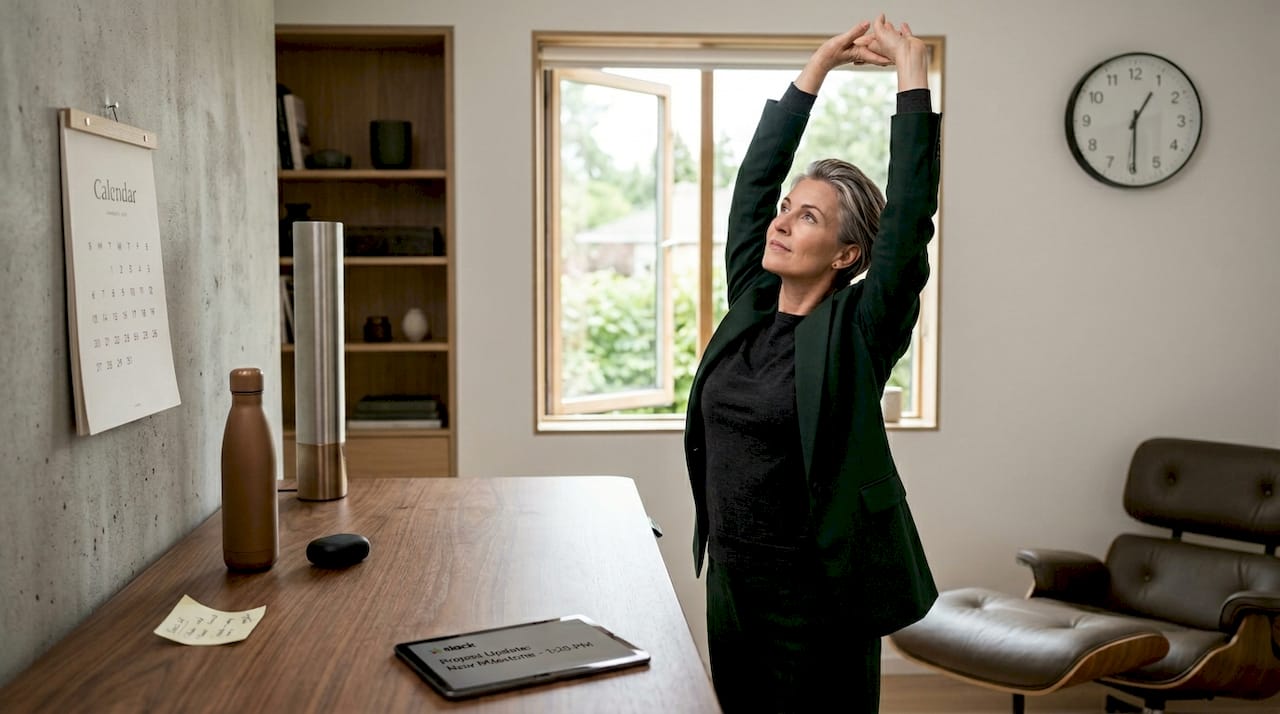
High-vitality leaders use recovery rituals such as micro-rests, breathwork, and deliberate power breaks, and they integrate health systems across nutrition, physical training, and mindset. This is not spa culture. It is performance engineering.
Recovery practices ranked by executive applicability:
- Micro-rests (5 to 10 minutes): A brief, screen-free pause between meetings. No phone, no email. Sit with your eyes closed or look out a window. This resets your prefrontal cortex and measurably improves decision quality in the next session.
- Breathwork protocols: Box breathing (4 counts in, 4 hold, 4 out, 4 hold) activates the parasympathetic nervous system in under two minutes. Used before high-stakes conversations, it produces calm clarity rather than reactive tension.
- Strategic exercise blocks: Even 20 minutes of movement mid-day breaks the cortisol accumulation cycle. Mind mastery techniques developed for endurance athletes apply directly to executive performance under sustained pressure.
- Nutrition timing: High-glycemic meals mid-afternoon predictably tank cognitive performance. Executives who eat for function rather than convenience maintain more consistent energy across the full working day.
- Defined end-of-day rituals: Closing routines that signal the brain that work has ended allow for genuine recovery during off-hours, which is when physical and cognitive repair actually occurs.
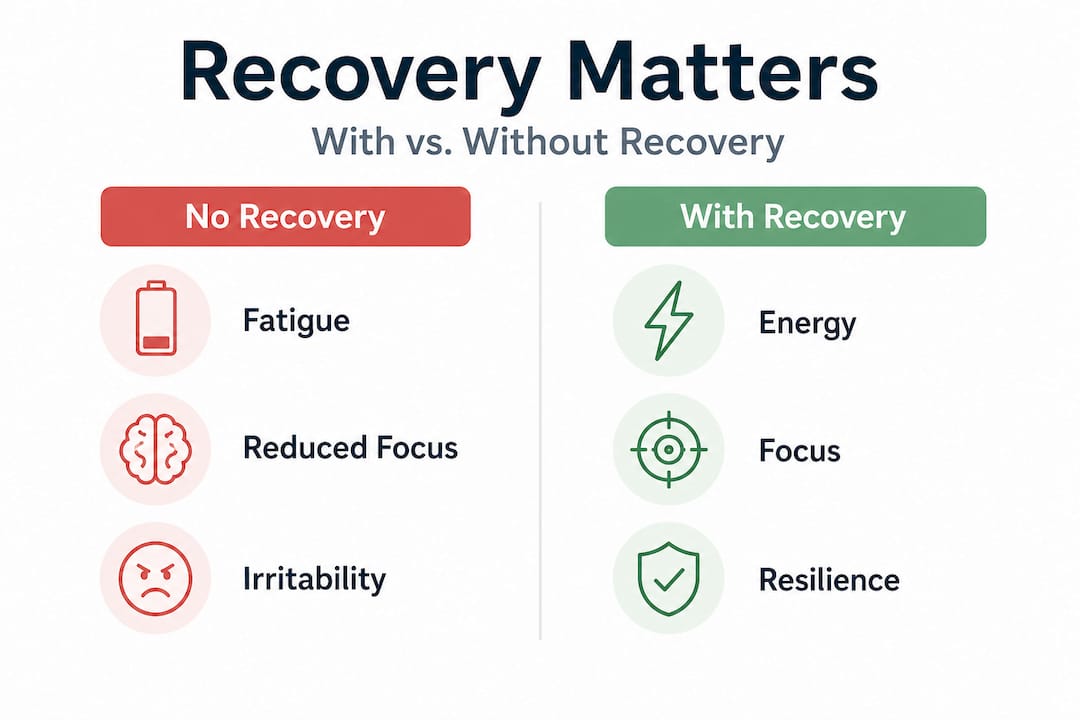
| Without recovery practices | With recovery practices |
|---|---|
| Cognitive decline after 3pm | Consistent output across the day |
| Reactive decision-making | Deliberate, strategic choices |
| Chronic fatigue accumulation | Resilient baseline energy |
| Higher emotional reactivity | Greater stakeholder influence |
| Increased burnout trajectory | Sustained performance longevity |
Pro Tip: Block one 20-minute recovery period in your calendar every afternoon, labeled it as a meeting. Treat it with the same commitment you give a client call. Over 30 days, your afternoon output will become one of your most productive windows.
For executives ready to operationalize these principles, our executive energy management tips and deeper guide to personal energy optimization lay out the exact protocols, stacked by role intensity and lifestyle constraints.
From confusion to application: Building your own high responsibility framework
With actionable recovery methods covered, it is time to bring clarity to applying a high responsibility lifestyle to your day-to-day executive life. Knowing the principles is one thing. Designing a system that actually fits your specific role, schedule, and energy profile is another.
The most effective frameworks share a structural logic. They are built on clarity about what only you can do, disciplined delegation of everything else, and recovery systems that are as non-negotiable as your most important meetings.
Step-by-step framework for sustainable high responsibility living:
- Audit your decision load. For one week, log every decision you make, trivial to critical. Most executives discover they are depleting strategic capacity on decisions that could be systematized or delegated.
- Identify your peak energy windows. Most high-performers have a 90 to 120 minute window of peak cognitive function. Schedule your most complex, high-stakes work here without exception.
- Redefine excellence strategically. Distributing ownership and releasing perfectionism is not lowering standards. It is applying your standard where it creates the greatest leverage.
- Build integrated health routines. Sleep, nutrition, movement, and mindset are not separate tracks. They are an integrated system, and weakness in one degrades all others. Design them together, not as afterthoughts.
- Install accountability structures. Whether it is a coach, a peer group, or a protocol-driven membership program, external accountability closes the gap between intention and execution.
Markers of a well-designed high responsibility framework:
- You know which three decisions only you can make each week
- You have at least one full recovery window protected daily
- Your team operates with clear ownership and does not require you to hold every thread
- Your health routines are scheduled, not aspirational
- You feel stretched but not depleted by Friday afternoon
Real-world application looks different across roles. A founder managing a 200-person organization may use a chief of staff to filter decision flow. A managing partner in a private equity firm may use a standing Friday shutdown ritual to preserve weekend recovery. A C-suite executive may block the first 90 minutes of each day for deep work before the organization's demands begin. The form varies. The logic is the same.
Consistency over brilliance is the core principle. Practice routines built for consistency outperform sporadic peak efforts in almost every high-skill domain, and executive performance is no exception. Our guides on performance longevity strategy and wellness optimization strategies give you the full architecture for making this sustainable across your career.
Why most advice on executive burnout misses the mark
Most articles on executive burnout give you a list of tips. Meditate more. Sleep eight hours. Take more vacations. This advice is not wrong in isolation. But it consistently fails to produce lasting change because it treats burnout as a behavior problem when it is actually a systems problem.
Surface-level tips create surface-level change. They work for a week, maybe two, until the next crisis absorbs your calendar and your micro-rest block evaporates. The advice is technically correct but architecturally incomplete. It gives you a tool without giving you a structure to hold it.
What high-vitality leaders actually practice is a fundamental reframe: recovery is strategic, not remedial. It is not what you do after the work. It is part of the work. This distinction changes everything about how you schedule, how you delegate, and how you evaluate your own performance.
The second gap in conventional advice is its reluctance to address ownership and identity. Many executives carry a deep, often unexamined belief that their value is proportional to how much they personally produce and control. That identity structure makes delegation feel like weakness and recovery feel like laziness. Until that belief is examined and replaced with a more accurate model, no set of tactics will hold.
The real edge comes from redefining what a high-performance identity actually looks like. It looks like a leader whose team executes with confidence because ownership is genuinely distributed. It looks like someone who brings full capacity to every room rather than fractional attention spread across everything. Our insights on longevity strategies for leaders explore exactly this territory.
The men who sustain peak performance into their 50s and 60s are not the ones who pushed hardest. They are the ones who built the most intelligent systems around themselves and had the discipline to protect them.
Take your high responsibility lifestyle to the next level
You now have a clear picture of why energy drains happen, how recovery multiplies performance, and what a sustainable executive framework actually looks like in practice.

VIRIDOS is built for exactly this moment. Our science-based approach to men's performance longevity translates the research behind executive vitality into precision protocols, small-batch Swedish formulations, and a premium membership structure designed for men who are serious about their edge. Whether you are optimizing for the next decade of leadership or recovering from a season that pushed past your limits, the VIRIDOS performance hub has what you need. Explore the science behind executive performance or take a closer look at what our VIRIDOS executive membership delivers for sustained, measurable results.
Frequently asked questions
What is the most common cause of burnout among high-responsibility executives?
Persistent emotional labor, willpower depletion, and calendar overload combine to drain energy faster than it recovers. 72% of C-suite leaders experience burnout even while recognizing the importance of their health.
How does sleep impairment relate to executive burnout?
Sleep loss compounds burnout risk at a measurable rate. Each point of sleep impairment raises burnout odds by approximately 29%, making sleep quality one of the highest-leverage health priorities for any executive.
What are quick recovery practices for high-responsibility leaders?
Micro-rests, box breathing, and mid-day movement blocks are the three most immediately implementable tools. High-vitality leaders use these as non-negotiable daily rituals rather than occasional stress relief.
How should leaders redefine excellence to avoid burnout?
Strategic excellence means directing your best thinking where it creates the most leverage. Distributing ownership and releasing perfectionism reduce burnout risk without sacrificing organizational performance.
Do high-performing executives need to choose between business success and personal well-being?
No. Integrated health systems and strategic recovery allow executives to perform at their highest level professionally while maintaining the physical and cognitive vitality that makes sustained leadership possible.
Recommended
- How to sustain elite performance for executives in 2026
- Build a performance longevity strategy for executives
- What is high-performance living: a guide for executive vitality
- Executive vitality: The complete guide for high achievers
- Attorney Assistant CEO & COO Practice What They Preach: Achieving Work-Life Balance Through Delegation - Attorney Assistant | Attorney Assistant
- How to elevate your lifestyle: step-by-step holistic guide – RICH FIT BITCH