SHBG, sex hormone-binding globulin, is the protein that carries testosterone in your blood. When it runs high, less of your total testosterone is available to your tissues. The disciplined way to bring it down is in this order: confirm the result with a morning fasting test, rule out the medical causes with your physician, then adjust the levers you control: energy intake, protein, alcohol, body composition and sleep. Plant-derived compounds belong in that plan as a support, not a shortcut. At VIRIDOS we build our sublingual spray around this logic: measure first, support deliberately, retest.
TL;DR
- SHBG binds testosterone. A high value means less of your total testosterone is free for tissues, so read it together with total testosterone, never alone.
- A high result can come from liver or thyroid problems, certain medicines or anabolic steroid use. Have these ruled out by a physician before you try to change the number yourself.
- The levers with the most support are adequate protein, avoiding prolonged severe calorie restriction, moderating alcohol and keeping body composition healthy.
- Stinging nettle root is the most studied plant source for SHBG binding, but the data are laboratory-level, not a promise of a lower blood value.
- Retest in 8 to 12 weeks, fasting, in the morning, at the same lab.
Table of Contents
- What SHBG does, and why a high number matters
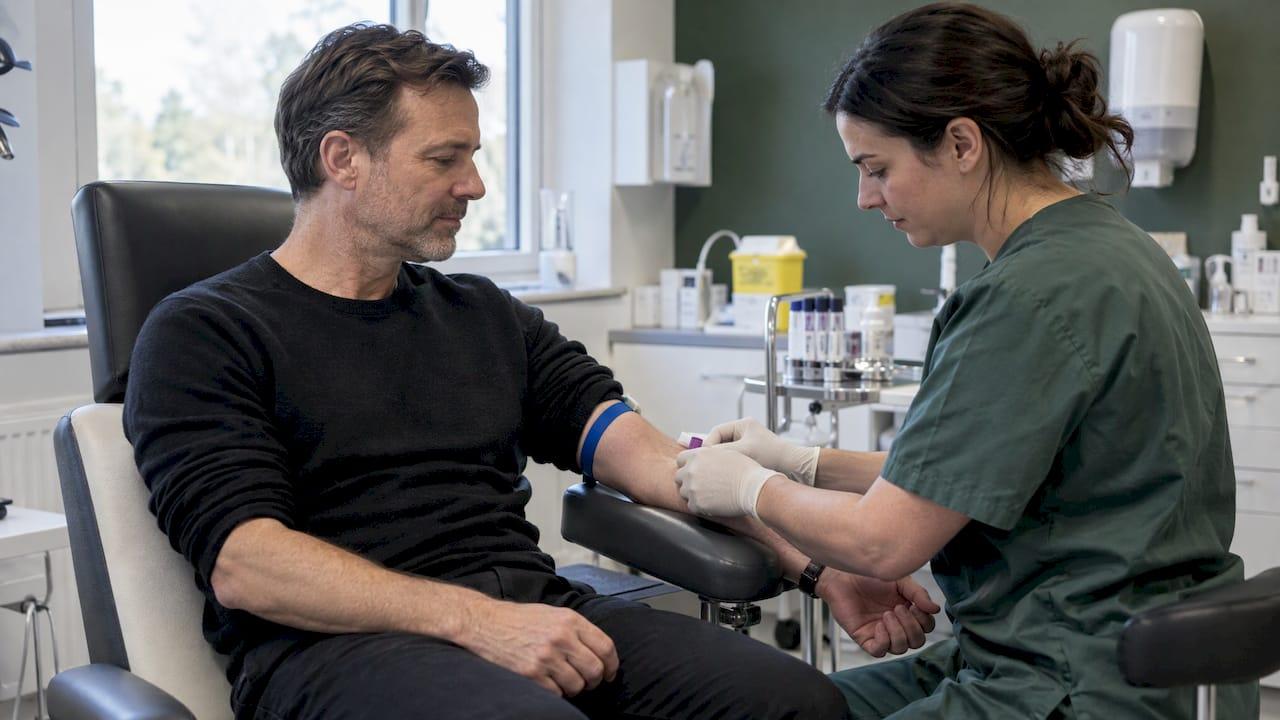
- Test first, and test properly
- Why SHBG runs high: rule out medical causes first
- Lifestyle levers with real evidence behind them
- Plant compounds and SHBG: stinging nettle root
- A 12-week sequence for disciplined men
- How VIRIDOS fits into the plan
- Our perspective
- FAQ
- Sources
What SHBG does, and why a high number matters
Testosterone travels in the blood in three forms: bound tightly to SHBG, loosely bound to albumin, and free. Your tissues can use the free fraction and, to a lesser extent, the albumin-bound fraction. SHBG is the binder that holds testosterone out of play.
MedlinePlus explains that when SHBG is too high, less of your total testosterone is available for tissues to use. That is why two men with the same total testosterone can feel very different: the one with higher SHBG has less working hormone. Drive, recovery, strength and mental sharpness are the areas executives usually notice first, but those are also shaped by sleep, stress and training load, so the number is a clue, not a verdict.
This is also why the question "how do I reduce SHBG" is incomplete. The better question is: what is my free testosterone, and why is my SHBG where it is? Our guide to free testosterone for performance-focused men walks through how the three numbers relate.
Test first, and test properly
A single casual blood draw tells you little. Testosterone follows a daily rhythm and is highest in the morning. Swedish regional guidance reflects this. Region Uppsala's 2024 guideline recommends a fasting testosterone sample between 7 and 10 AM. If the value is below 12 nmol/L, the guideline says to take a new sample and add SHBG to the request.
Region Gävleborg's sampling guidance points the same way: morning sampling from 07:00 to 10:00, with reference intervals of 8.6 to 29.0 nmol/L for men aged 20 to 49 and 6.7 to 25.7 nmol/L for men 50 and older. It also states that SHBG should be considered when interpreting testosterone, especially in older men and in men with hypothyroidism. Laboratories and regions use their own ranges, so compare your result with the interval printed on your own report.
A practical testing routine:
- Book a morning draw, fasting, between 7 and 10 AM.
- Ask for total testosterone and SHBG together, so free testosterone can be calculated.
- Avoid a hard training session and heavy alcohol the evening before.
- Repeat the draw at the same lab and the same time of day when you retest.
If you are choosing where to test, our overview of how to choose a hormone lab for men 40–65 covers what to look for. For a sense of where your total value sits for your age, see the age-by-age testosterone chart.
Why SHBG runs high: rule out medical causes first
This is the part many articles on the subject skip, and it matters most. A high SHBG is sometimes a signal from another system, not a lifestyle problem.
MedlinePlus lists liver disease, hyperthyroidism, certain eating disorders, estrogen-containing medicines and decreased sex hormone production in males among the conditions that may be related to high SHBG. In a ten-year review of 45 men with raised SHBG, the most frequent identified causes were hepatic dysfunction (12 men), medications such as carbamazepine and phenytoin (8), hyperthyroidism (5), anabolic steroid use (5), type 1 diabetes (3) and increased age (3). SHBG normalized after anabolic steroids were stopped.

Region Uppsala's guideline adds age, HIV, hepatitis and cirrhosis, certain antiepileptics, estrogen and a polymorphism in the SHBG gene to the list. Its advice is to investigate the cause of an abnormal SHBG and to involve an endocrinologist when needed. It also states that medical therapy is indicated only for hypogonadism, meaning low testosterone together with symptoms that fit testosterone deficiency. For men with metabolic syndrome or abdominal obesity where other causes have been excluded, the same guideline recommends lifestyle intervention.
See your physician, in Sweden usually your vårdcentral, before acting on your own if any of these apply:
- You take antiepileptic medicine, estrogen-containing medicine or any hormonal product.
- You have or suspect liver or thyroid problems, or you have unexplained weight loss, palpitations or heat intolerance.
- You have used anabolic steroids or related compounds.
- Your SHBG is markedly above the lab's range, or your total testosterone is below 12 nmol/L with symptoms.
That is the safe frame. Within it, the levers below are the ones a disciplined man can pull himself.
Lifestyle levers with real evidence behind them
The research on diet and SHBG is mostly observational. It shows associations, not guaranteed outcomes, so treat each lever as a reasoned adjustment to be confirmed by your own retest.
Do not under-fuel
This is the most relevant finding for men who run lean and disciplined. In a cross-sectional study, men who had practiced long-term calorie restriction had higher SHBG and lower total testosterone than matched endurance runners and sedentary controls. The authors note the design cannot establish cause and effect, but the pattern is clear enough to act on: chronic, aggressive under-eating is a plausible driver of high SHBG.
If you fast, keep the eating window and the total intake adequate for your training. Our notes on keeping strength and libido while intermittent fasting and on 16:8 fasting and men's hormones cover how to structure it.
Set a protein target and meet it
An older review of diet and SHBG by Longcope concluded that low protein intake in elderly men may be associated with higher SHBG and lower testosterone bioactivity. Busy executives often under-eat protein on travel days and at lunch, then compensate at dinner. Logging intake for two weeks shows the real pattern. A daily protein intake guide explains the per-kilogram targets used in current discussions, and a food log makes it easy to see where you fall short.
Look at the whole dietary pattern, not a single food
A 1990 comparison found that 51 male vegans had 23% higher SHBG than 57 omnivores, with little difference in total or free testosterone. A 2022 analysis of 1,376 middle-aged men found no statistically significant link overall between Prudent, Western or AHEI-2010 dietary patterns and SHBG, although among obese men a more prudent diet was associated with higher SHBG. The lesson is that no single "SHBG diet" exists. What you can control is adequacy: enough energy, enough protein, enough micronutrients. Our eight-week testosterone-friendly diet turns this into a plan.
Moderate alcohol and late-night eating
Alcohol strains the liver, and the liver produces SHBG. Liver disease is one of the best-documented causes of high SHBG. Heavy drinking is therefore a poor idea for anyone with an elevated result. A four-week reset, with alcohol limited to a few drinks at most and the last meal two to three hours before bed, is a reasonable experiment that also improves sleep. Both are standard habit changes, not hormone tactics, and they cost nothing.
Micronutrients: confirm, then correct
Zinc, magnesium and vitamin D status shape androgen health, but only a blood test shows whether you are short. Test, correct any shortfall, then retest in 8 to 12 weeks. We set this out in zinc and androgens: an 8–12 week protocol and in micronutrients for androgen health.
Sleep, strength training and body composition
Resistance training, seven to nine hours of regular sleep and a waist that trends down are the foundation of every hormonal profile. They are also the levers in the Region Uppsala guidance for men with metabolic syndrome or abdominal obesity. None of them produces a result in a week. Judge them on a 12-week horizon.

Plant compounds and SHBG: stinging nettle root
Search results for this topic are full of herbs. Stinging nettle root is the one with a credible mechanism. A 2020 University of Helsinki study used crystallographic methods to show that a compound from nettle root extracts, DVT, binds SHBG with relatively low affinity and competitively displaces testosterone in a cell culture system, increasing testosterone activity there. The Alternative Medicine Review monograph on nettle similarly reports that nettle root lignans may interfere with the binding of SHBG to testosterone, while nettle lectins and sterols did not show this effect.
Two points follow for a careful reader. First, the mechanism is displacement at the binding site, so the logic is about making more testosterone available, not necessarily about changing the SHBG number on your lab report. Second, these findings come from laboratory and mechanistic work. They show why plant compounds are of scientific interest and why the quality and standardization of the extract matter. They do not predict an individual result, which is why the retest remains your yardstick.
A 12-week sequence for disciplined men
- Week 0: baseline. Fasting morning draw: total testosterone, SHBG, and the markers your physician advises, such as liver and thyroid values. Keep the printed ranges.
- Weeks 1 to 2: rule out causes. Review medicines with your physician. If anything is flagged, follow that path first.
- Weeks 1 to 4: stabilize intake. Set a daily protein target, end chronic calorie deficits, cut alcohol to a minimum and finish eating two to three hours before bed.
- Weeks 3 to 12: train and sleep. Two to four resistance sessions a week, a fixed sleep window, and a waist measurement every two weeks.
- Weeks 4 to 12: add targeted support. Correct any confirmed micronutrient shortfall. Consider a plant-derived formulation as a consistent daily routine, not a rescue.
- Weeks 8 to 12: retest. Same lab, same time of day, same fasting state. Change one variable at a time so you know what moved the number.
If SHBG stays high with low total testosterone and symptoms, that is a conversation with an endocrinologist, not another round of experiments.
How VIRIDOS fits into the plan
VIRIDOS is a plant-derived performance supplement for men, delivered as a precision oral spray and made in small batches in Sweden. It is built around phytoandrogen-related compounds and a sublingual delivery philosophy, and it is designed to support drive, clarity and strength in men who already manage the fundamentals above. Access is by application, with two membership levels: Member at $99 per month and Professional at $299 per month. Details are on the pricing page, and the membership page explains how approval works.

The Performance Journal carries further reading for men who prefer to understand a decision before they make it.
Our perspective
Most men come to SHBG the wrong way round. They see a high number and look for a lever to push it down. We start with the question behind it: what is happening with free testosterone, and what is the cause?
That is the standard we hold ourselves to. Measure properly. Rule out the medical explanations with your physician. Correct the basics: protein, adequate energy, sleep, training, alcohol. Only then add support, and retest.
Our formulation is plant-derived and delivered sublingually, in small batches made in Sweden, because precision and consistency matter more to a man in a demanding role than novelty. We design VIRIDOS to support the biology of men who are still in the arena, and to sit inside a disciplined routine, not replace one.
Your own retest is the judge. Keep the records, change one variable at a time, and let the data guide the next decision.
Joakim
FAQ
What is the fastest way to lower SHBG?
There is no reliable fast route, and a quick drop is not the right goal. SHBG reflects liver function, thyroid status, medicines, age and energy intake, so the first step is a fasting morning test and a physician's review of causes. After that, adequate protein, avoiding chronic calorie restriction and moderating alcohol are the levers to apply over 8 to 12 weeks.
How are SHBG and testosterone related?
SHBG binds testosterone in the blood and keeps it from tissues. High SHBG means less of your total testosterone is available, and low SHBG means more is free. That is why SHBG and total testosterone are requested together and interpreted together.
Does stinging nettle lower SHBG?
A compound in nettle root extracts has been shown in laboratory work to bind SHBG and displace testosterone from it. That is a mechanism, not a guaranteed change in your blood value. If you try it, do so alongside the lifestyle basics, check with your physician if you take medicines, and use your retest to see what happened.
How long before I should retest?
Eight to twelve weeks is a sensible interval for lifestyle changes to show in a blood panel. Use the same lab, a fasting morning sample between 7 and 10 AM, and the same conditions as your baseline so the comparison is clean.
When should I see a doctor about high SHBG?
See your physician if the result is clearly above the lab's range, if you take antiepileptic or estrogen-containing medicines, if you have liver or thyroid symptoms, or if you have used anabolic steroids. Swedish regional guidance calls for investigating the cause of an abnormal SHBG and involving an endocrinologist when needed.
Sources
- SHBG Blood Test: MedlinePlus
- Raised sex hormone binding globulin levels in men (Endocrine Abstracts)
- Region Uppsala: Handläggning av misstänkt manlig hypogonadism, 2024
- Region Gävleborg: Provtagningsanvisning Testosteron
- Long-term effects of calorie restriction on serum sex hormone concentrations in men (PubMed)
- Testosterone, SHBG and calculated free testosterone in vegan and omnivore men (PubMed)
- Prudent, Western and Alternate Healthy Eating Index patterns and SHBG (PMC)
- Molecular interactions between SHBG and nettle root compounds (University of Helsinki)
- Urtica dioica monograph (Alternative Medicine Review)